Best Pre-Run Foods: What to Eat Before Running for Energy and Performance
Eat wrong before a run = cramps. Eat nothing = hitting the wall. Honey matches commercial gels (research). 12 best pre-run foods with timing guide
by BiteBrightly
5/1/202618 min read
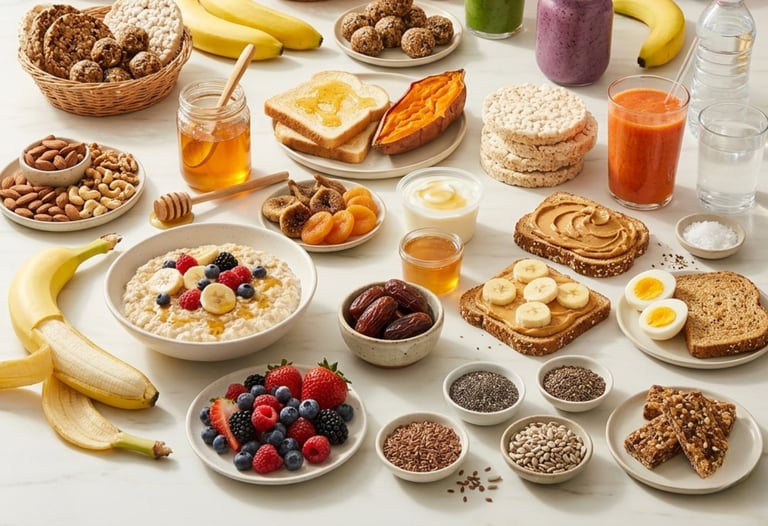
Best Pre-Run Foods: What to Eat Before Running for Energy and Performance
By BiteBrightly 1 May 2026: This post might contain affiliate links.
What you eat before a run can be the difference between a great session and a miserable one. Eat the wrong things and you are dealing with stomach cramps, side stitches, and heavy legs before you have gone a mile. Eat nothing and you hit the wall early, running on fumes. Eat the right things at the right time, and your body has exactly the fuel it needs to perform well, recover faster, and feel good the whole way.
The good news is that pre-run nutrition is not complicated once you understand a few basic principles. This guide covers exactly what to eat before a run — whether you are heading out first thing in the morning, running at lunchtime, or training in the evening — with specific food recommendations, timing guidelines, and the science behind why each one works.
Key Takeaways
Your muscles run on glycogen — glucose stored in muscle tissue and the liver. Your primary pre-run nutrition goal is to top up these glycogen stores without overfilling your stomach
The timing of your pre-run meal matters enormously — a large meal needs two to three hours to digest; a small snack needs thirty to sixty minutes. Eating too close to running causes GI distress; eating too far in advance leaves your glycogen levels dropping before you finish
Carbohydrates are the main fuel source for running, particularly at moderate to high intensity. The faster you run, the more your body relies on carbohydrates over fat for energy
Fat and fiber slow digestion significantly — great for everyday meals, but not ideal immediately before a run because undigested food sitting in your gut causes cramping, nausea, and GI distress during exercise
Research published in the Journal of the International Society of Sports Nutrition confirmed that consuming carbohydrates before endurance exercise significantly improves performance, time to exhaustion, and overall running economy — making pre-run nutrition one of the most evidence-supported performance variables available to recreational and competitive runners
Every runner is different — what works perfectly for one person causes cramps for another. Use the guidance in this guide as a starting framework, then experiment with your own body to find what works best for you
How Your Body Fuels a Run
Before we get into the food, a quick look at what is actually happening in your body when you run — because understanding this makes the food choices obvious.
Your Two Main Fuel Sources
Glycogen — glucose stored in your muscles and liver. This is your primary fuel for moderate to high-intensity running. Think of glycogen as your car's petrol tank. When it is full, your engine runs smoothly and powerfully. When it empties, performance drops sharply. At easy pace, you have enough glycogen for approximately 90–120 minutes of running. At faster paces, it depletes faster.
Fat — stored throughout your body in adipose tissue and within muscle fibres. Fat provides a virtually limitless energy supply but it can only be used at lower intensities — your body needs oxygen to burn fat, and at higher running intensities, your cardiovascular system cannot supply oxygen fast enough for fat to keep up with demand.
This is why the intensity of your run affects what you need to eat beforehand:
→ Easy, short run (under 45 minutes at easy pace): Glycogen stores from your last meal are likely sufficient. Light carbohydrate snack or nothing needed.
→ Moderate run (45–90 minutes at comfortable effort): Pre-run carbohydrates are beneficial, particularly if it has been several hours since your last meal.
→ Long run or hard effort (90+ minutes or intervals): Pre-run carbohydrates are important. If running more than 90 minutes, you will also need to fuel during the run.
Why Fat and Fibre Are the Enemy Right Before a Run
High-fat foods and high-fibre foods both slow gastric emptying — the rate at which food moves from your stomach into your small intestine. This is helpful in everyday life (it keeps you full longer), but before running it is a problem. Food sitting in your stomach during a run causes:
→ Nausea and stomach cramps — the stomach is being jostled while still digesting → Side stitches — the diaphragm spasms partly from GI discomfort → A heavy, bloated feeling that slows you down → In severe cases: vomiting or the dreaded mid-run GI emergency
This is why the best pre-run foods are relatively low in fat and fibre — not because fat and fibre are bad (they are excellent for general health), but because they belong in meals eaten well before training, not in the snack eaten thirty minutes before you head out the door.
Pre-Run Timing Guide
3–4 Hours Before Running: A Full Meal
At this distance from your run, you have time to eat a normal, balanced meal. Include carbohydrates, moderate protein, and some healthy fat — the full meal will be digested well before you start running.
Good options: Rice with grilled chicken and vegetables. Pasta with lean meat sauce. Whole grain toast with eggs and avocado. Oatmeal with fruit and a small amount of nut butter. A proper breakfast with whole grains, eggs, and fruit.
Avoid: Extremely high-fat or extremely high-fibre meals that may linger — very fatty foods, very large portions of legumes, or very large meals in general.
1–2 Hours Before Running: A Light Meal or Larger Snack
At this timing, you want something easier to digest — moderate carbohydrates with some protein, lower in fat and fibre than a full meal.
Good options: Banana with peanut butter on whole grain toast. Greek yogurt with honey and fruit. A bowl of oatmeal with banana. Rice cakes with nut butter and honey. A smoothie with fruit, Greek yogurt, and honey.
30–60 Minutes Before Running: A Small, Easy-Digesting Snack
Close to your run, you want simple carbohydrates that digest quickly and raise blood sugar gently without stressing your gut.
Good options: A banana. A few medjool dates. A slice of white bread with honey or jam. A handful of rice cakes. Sports gel or chews if specifically trained to use them. A small sports drink.
Immediately Before Running (under 15 minutes): Minimal or Nothing
Unless you are specifically fuelling for a very long run and have trained your gut to handle pre-run food, eating within fifteen minutes of starting is risky. If you need something, a gel or a few sips of sports drink is the safest option.
The 12 Best Pre-Run Foods
1. Banana
The banana is the world's most popular pre-run food — and it has earned this reputation through genuine nutritional logic. It is one of the most perfectly designed natural pre-exercise foods available.
Why it works: A medium banana provides approximately 27g of carbohydrates in the ideal pre-run form: a combination of glucose, fructose, and sucrose that is absorbed quickly and efficiently, raising blood sugar gently without an extreme spike. The natural sugar in banana is rapidly converted to muscle glycogen, topping up your fuel stores without burdening your digestive system.
Potassium (422mg per medium banana) is one of the most important pre-run electrolytes. Potassium governs the electrical activity of muscle cells — it is required for every muscle contraction in your legs as you run. Runners lose significant potassium through sweat, and starting a run with good potassium levels reduces cramping risk and maintains neuromuscular function through the session.
Vitamin B6 from banana is a cofactor for energy metabolism enzymes — particularly the aminotransferases that help your body efficiently convert amino acids to fuel during exercise when glycogen is being depleted.
The banana's natural packaging (its peel) makes it the most portable pre-run food available. You can carry it in your kit bag, eat it in the car, and be running fifteen minutes later with no digestive concern for runs under an hour.
When to eat it: 30–60 minutes before any run. Works as a standalone snack for shorter runs or combined with a small amount of nut butter or Greek yogurt for longer efforts.
2. Oatmeal
Oatmeal is the best pre-run breakfast for runners doing morning sessions with more than an hour before the run. It provides complex carbohydrates that release energy steadily throughout your training, alongside meaningful amounts of B vitamins, iron, and zinc that support endurance performance.
Why it works: Beta-glucan — the soluble fibre in oats — forms a viscous gel in your stomach that slows the digestion of the oats' carbohydrates into a slow, steady stream of glucose. This produces a stable blood sugar curve that avoids the spike-and-crash pattern of high-glycemic breakfast foods, providing sustained energy for the duration of your run rather than a burst of energy followed by a drop.
Research has shown that a low-to-moderate glycemic index pre-exercise meal produces better endurance performance and more stable energy than a high-glycemic meal of equal carbohydrate content — partly because the gradual glucose release maintains blood sugar in the optimal range for sustained performance, and partly because the more controlled insulin response preserves fat oxidation capability at easier running intensities.
Iron from oats (2mg per half cup dry) contributes to the daily iron intake that is critical for runners — iron is required for haemoglobin, the protein in red blood cells that carries oxygen to working muscles. Runners, particularly female runners and those training at high volume, are at high risk of iron deficiency that impairs endurance performance.
When to eat it: 1.5–2.5 hours before a moderate to long run. Keep the topping simple for pre-run purposes — banana and honey rather than heavy nut butters or seeds close to training time.
3. White Rice or White Toast (With Simple Toppings)
White rice and white bread are lower-fibre, lower-fat options that digest faster than their whole grain equivalents — making them better choices specifically in the hour before a run when you want carbohydrates to reach your muscles quickly without lingering in your digestive system.
Why it works: White rice has a glycemic index of approximately 72 — higher than brown rice or oats. This means it is absorbed relatively quickly, raising blood sugar and replenishing glycogen stores faster. For pre-run fuelling, this faster absorption is actually an advantage — you want the carbohydrates arriving in your muscles before you start running, not still sitting in your intestine when you are five kilometres in.
White bread with honey or jam provides simple carbohydrates that are absorbed within thirty to sixty minutes — making it one of the best options for runners who are eating in the last hour before a session. The low fibre and low fat mean almost nothing sits in the stomach to cause discomfort during the run.
This principle is used by elite runners globally — many elite marathon runners eat white rice with a small amount of simple condiment (honey, jam, or banana) as their pre-race breakfast, specifically because its predictability and digestibility makes GI problems during the race less likely.
When to eat it: 30–90 minutes before a run. One to two slices of white toast with honey, or a small bowl of white rice with a light topping.
4. Sweet Potato
Sweet potato is one of the best pre-run foods for moderate to long runs eaten two to three hours before training — providing complex carbohydrates, potassium, beta-carotene, and vitamin C in a form that digests well without causing the digestive distress that high-fat or high-fibre foods can cause close to exercise.
Why it works: Sweet potato has a glycemic index of approximately 44–63 depending on cooking method — moderate, meaning it provides sustained energy rather than a short burst. The complex carbohydrates top up muscle glycogen stores over a ninety-minute to two-hour digestion window, delivering fuel gradually rather than all at once.
Potassium content (438mg per medium sweet potato) supports the electrolyte balance critical for running performance. Beta-carotene from sweet potato is converted to vitamin A, which supports the mucosal immune function that can be temporarily suppressed by intense training — particularly relevant for high-mileage runners who are more susceptible to upper respiratory infections during heavy training blocks.
The natural sweetness of sweet potato makes it genuinely enjoyable as a pre-run meal component, and its moderate fibre content (3.8g per medium potato) is low enough that it does not cause GI distress when eaten two or more hours before running.
When to eat it: As part of a meal two to three hours before a moderate to long run. Works particularly well as a base for a pre-run lunch or an early dinner before an evening run — with grilled chicken or eggs alongside for additional protein.
5. Greek Yogurt
Greek yogurt is one of the best pre-run foods for runs starting ninety minutes to two hours after eating — providing a combination of fast-digesting carbohydrates (from lactose) and complete protein that supports both energy delivery and muscle protection during the run.
Why it works: The carbohydrates in Greek yogurt (9–12g per cup from lactose) combined with a simple carbohydrate addition (honey, banana, or berries) provide pre-run energy. The protein (17–20g per cup) is particularly valuable before longer runs — consuming protein before endurance exercise reduces muscle protein breakdown during the effort, helping preserve muscle mass during high-volume training.
Greek yogurt is also a meaningful source of calcium — a mineral required for muscle contraction. Every muscular contraction in your legs and core during a run is triggered by a calcium signal inside the muscle cell. Adequate calcium intake supports the neuromuscular function that determines running efficiency and form, particularly as fatigue accumulates in the later stages of a long run.
When to eat it: 90 minutes to two hours before a run. Always choose plain Greek yogurt and add your own toppings — flavoured yogurts often contain significant added sugar that can cause a blood sugar spike and crash. Add a banana and drizzle of honey for optimal pre-run carbohydrate loading in a portable, practical format.
6. Dates and Dried Fruit
Medjool dates are one of the best natural alternatives to commercial energy gels — providing fast-absorbing simple sugars in a highly portable, natural format that is particularly useful in the thirty to sixty minutes before a run or during a long run.
Why it works: Two to three Medjool dates provide approximately 36–54g of carbohydrates, primarily as glucose and fructose — the same carbohydrate forms used in most commercial sports gels and chews. The glucose is absorbed directly from the small intestine into the bloodstream; fructose uses a different absorption transporter, meaning the two sugars can be absorbed simultaneously at a higher combined rate than glucose alone.
The natural fibre in dates (approximately 1.6g per date) is low enough that two to three dates do not cause significant digestive delay, yet provides a small buffer to the glucose absorption rate that prevents the extreme blood sugar spike of pure glucose.
Dates provide potassium (167mg per date), magnesium, and B vitamins alongside their carbohydrate content — making them nutritionally superior to most commercial gels while being comparably digested and absorbed when used in appropriate quantities.
When to eat them: Two to three dates in the thirty to sixty minutes before a run, or one to two dates every thirty to forty minutes during a long run as a natural mid-run fuelling option. Carry them in a small zip-lock bag in your pocket or running vest.
7. Honey
Honey is one of the simplest, most effective, and most easily digested pre-run carbohydrate sources available. One tablespoon provides approximately 17g of carbohydrates as a near-equal mix of glucose and fructose — exactly the carbohydrate combination that endurance sports science research has established as optimal for absorption and utilisation during exercise.
Why it works: The glucose-to-fructose ratio in honey (approximately 1:1) allows both the glucose and fructose intestinal transporters (SGLT1 and GLUT5) to operate simultaneously during absorption — achieving approximately thirty to fifty per cent higher carbohydrate absorption rates than glucose alone. This is the same principle behind the "2:1 glucose-fructose" sports nutrition products sold for endurance fuelling — honey delivers it naturally.
Research has confirmed that honey performs comparably to commercial glucose gel for maintaining blood sugar during endurance exercise and improving performance in time trials — establishing it as a whole-food equivalent to engineered sports nutrition products at a fraction of the cost.
Raw honey additionally provides trace minerals, B vitamins, and antimicrobial compounds — making it nutritionally richer than pure glucose or sucrose.
When to eat it: One to two tablespoons on toast, stirred into oatmeal, or added to a pre-run smoothie, thirty to sixty minutes before running. Also excellent during long runs — many runners carry a small squeezable tube of honey as a natural mid-run energy gel.
8. Rice Cakes
Plain rice cakes are one of the most practical and stomach-friendly pre-run carbohydrate options — providing fast-digesting carbohydrates in a very low-fat, very low-fibre format that makes them among the safest foods to eat close to running time.
Why it works: Plain rice cakes have a glycemic index of approximately 70–85 — meaning the carbohydrates are absorbed quickly. This makes them effective for raising blood sugar and contributing to glycogen stores in the thirty to sixty minutes before a run when you need carbohydrates to arrive in your muscles quickly.
Their extremely low fat content (less than 0.5g per rice cake) and low fibre content means virtually nothing stays in your stomach for long after eating them — making them one of the least likely foods to cause GI distress when eaten close to running time.
The combination of rice cakes with a simple, easy-to-digest topping creates a complete pre-run snack. Honey or jam provides fast carbohydrates. A thin spread of peanut butter adds a small amount of protein and fat for a slightly more sustained energy effect — appropriate when eating sixty to ninety minutes before running.
When to eat them: Two to three rice cakes with honey or jam in the thirty to sixty minutes before a run. Elite cyclists and triathletes frequently use rice cakes as a portable mid-event fuelling food — they are similarly practical for runners on long training runs.
9. Whole Grain Toast With Peanut Butter and Banana
This combination is one of the most popular pre-run breakfast choices among recreational and competitive runners — and it earns its reputation. It combines complex carbohydrates from the toast, simple carbohydrates from the banana, a small amount of protein and healthy fat from the peanut butter, and potassium and B6 from the banana in one genuinely satisfying and practical meal.
Why it works: The whole grain toast provides complex carbohydrates (approximately 25–30g for two slices) that digest over one to two hours, delivering a sustained energy curve rather than a short burst. The banana adds immediate-absorbing simple carbohydrates for rapid glycogen contribution alongside potassium for electrolyte pre-loading. The peanut butter adds protein and fat in amounts small enough that they slow gastric emptying only slightly — giving the meal staying power without causing the heavy stomach feeling that a large fat content would produce.
This combination is often described as feeling "light but satisfying" by runners — which is exactly the subjective experience you want from a pre-run meal. You feel fuelled but not full. Ready to run but not weighed down.
When to eat it: 60–90 minutes before a moderate run. For longer or faster efforts, eat it 90–120 minutes before to allow slightly more digestion time.
10. A Simple Fruit Smoothie
A blended fruit smoothie is one of the most efficient pre-run foods — delivering carbohydrates, electrolytes, and hydration simultaneously in a liquid format that is absorbed faster than solid food and is extremely easy on the digestive system.
Why it works: Liquid food empties from the stomach significantly faster than solid food — making a smoothie more appropriate close to running time than a solid meal with similar ingredients. A smoothie digests in thirty to sixty minutes rather than the ninety to one hundred and twenty minutes a solid meal requires.
The best pre-run smoothie formula is simple: banana (fast carbohydrates + potassium), a small handful of frozen berries (carbohydrates + antioxidants + vitamin C), a tablespoon of honey (glucose-fructose for rapid absorption), a small amount of Greek yogurt or a scoop of protein (modest protein without excessive fat), and water or coconut water (hydration + electrolytes).
This combination provides approximately 40–55g of fast-absorbing carbohydrates alongside potassium, vitamin C, and B vitamins — everything you need for a well-fuelled run, in a format your stomach handles with ease.
When to eat it: 45–90 minutes before a run. The liquid format and simple ingredients make this one of the best options for runners who are not hungry in the morning but need to eat before training.
11. Eggs (for Meals 2–3 Hours Before)
Eggs are not an ideal food in the sixty minutes immediately before a run — the protein and fat content takes time to digest. But as part of a full pre-run meal eaten two to three hours before training, eggs are excellent, providing complete protein that reduces muscle breakdown during the run alongside energy-supporting B vitamins.
Why it works: The protein in eggs (6g per egg, with all nine essential amino acids) taken two to three hours before a long run or hard workout supports what sports scientists call "protein pre-loading" — consuming protein before endurance exercise to reduce muscle protein catabolism (breakdown) during the effort. During long runs particularly, your body breaks down some muscle protein for fuel when glycogen is low — pre-run protein intake reduces the extent of this breakdown.
Choline from egg yolks is a precursor to acetylcholine — the neurotransmitter controlling muscle contraction. Adequate choline supports neuromuscular efficiency during exercise, particularly as fatigue accumulates in the later stages of long runs.
B vitamins from eggs — particularly B12, B2 (riboflavin), and B5 (pantothenic acid) — are directly involved in the cellular energy metabolism of every muscle cell during exercise. These vitamins support the mitochondrial processes that convert glycogen and fat into ATP — the energy currency of muscular contraction.
When to eat them: As part of a full pre-run meal two to three hours before running. Scrambled or poached eggs on whole grain toast with fruit is a classic pre-long-run breakfast that provides balanced macronutrients in good timing for a morning session.
12. Sports Drinks and Coconut Water
For many runners — particularly those running in the morning without appetite, or those running in hot conditions where significant sweat loss is expected — a pre-run sports drink or coconut water provides carbohydrates and electrolytes simultaneously in a quickly absorbed, stomach-friendly format.
Why it works: A standard 500ml sports drink provides approximately 30–35g of carbohydrates (typically glucose-fructose or maltodextrin-fructose for optimal absorption) alongside 400–500mg of sodium and 100–150mg of potassium. In liquid form, these carbohydrates and electrolytes are absorbed within twenty to thirty minutes — faster than any solid food option.
Sodium in sports drinks is particularly important for pre-run hydration — sodium helps retain the fluid you drink rather than losing it rapidly through urine, meaning the hydration effect of the drink is more sustained. For hot weather running, this pre-loading of sodium and water can meaningfully reduce the rate of dehydration during the run itself.
Coconut water is a natural alternative providing approximately 600mg of potassium per cup — more than any commercial sports drink — alongside naturally occurring sodium and carbohydrates. Its lower sodium content than sports drinks makes it most appropriate for shorter runs or cooler conditions rather than very long efforts in the heat.
When to drink it: 30–45 minutes before running. For morning runners with no appetite, a 250–500ml sports drink or coconut water with a banana may be the most practical pre-run fuelling strategy available.
Pre-Run Foods to Avoid
High-Fat Foods (Within 2 Hours of Running)
Avocado, nuts, nut butters in large amounts, cheese, fatty meats, and oily dressings all slow gastric emptying significantly. While excellent foods generally, they belong in meals eaten well before running, not in snacks eaten close to training time.
High-Fibre Foods (Within 2 Hours of Running)
Large portions of legumes (beans, lentils, chickpeas), brassica vegetables (broccoli, cauliflower, cabbage), raw vegetables with tough skins, and high-fibre cereals all produce gas and slow digestion when eaten close to running. The fibre that supports gut health in everyday life creates the conditions for GI discomfort during running.
Caffeinated Drinks on an Empty Stomach
While caffeine before running improves performance (consistently confirmed in sports science research), coffee on a completely empty stomach can cause nausea, jitteriness, and GI urgency during running for many people. If using caffeine before running, consume it alongside a small carbohydrate snack and ensure adequate hydration alongside it.
Very Large Portions of Anything
Even the best pre-run foods cause problems in excessive quantities. The goal is to top up glycogen without filling your stomach. A medium banana, not three bananas. A small bowl of oatmeal, not a large one. Portion size matters for GI comfort just as much as food choice.
The Morning Run Problem — What to Do When You Cannot Eat Before Running
Many runners train first thing in the morning and simply cannot eat — either because of appetite, timing, or discomfort eating early. Here is the practical approach:
If you are running 45 minutes or less at easy to moderate effort: A small banana or a few dates is sufficient, or nothing at all if your last meal was adequate. Your glycogen stores from the previous evening's eating will support a short, easy morning run.
If you are running 45–90 minutes: A banana, dates, or a sports drink 30–45 minutes before provides meaningful glycogen support without requiring you to eat a full meal.
If you are running more than 90 minutes: This is where skipping pre-run fuel meaningfully hurts your performance. A smoothie (easier than solid food for appetite-challenged morning runners), a banana with a small amount of nut butter, or a small bowl of white rice with honey thirty to sixty minutes before is worth the effort.
Frequently Asked Questions
Should I eat before a morning run?
For runs under 45 minutes at easy to moderate effort, eating before a morning run is optional — your glycogen stores from the previous evening are likely sufficient. For runs over 45 minutes, particularly those involving any hard effort, eating something before makes a meaningful difference to energy levels and performance. Even a banana fifteen to thirty minutes before makes a difference for moderate-length morning runs.
Is it bad to run on an empty stomach?
Fasted running — running without eating first — is practiced by many runners and has some research support for improving fat adaptation (your body's ability to burn fat as fuel, which matters for ultra-endurance performance). For most recreational runners, fasted running for short easy sessions is fine. For runs involving hard efforts, long distances, or sessions where performance matters, eating before is better for most people. Chronic fasted running at high intensity can increase muscle breakdown and impair recovery.
What should I eat before a race?
Race morning nutrition is where pre-run eating matters most — because the stakes are highest and experimenting with new foods is riskiest. The principle: eat what you have practiced in training. Your race morning meal should be a food you have eaten before every long run or hard workout — no surprises. The most common race morning breakfast for distance runners: plain white toast or white bagel with honey or jam, a banana, and plenty of water, eaten two to three hours before the start. Simple, fast-digesting, familiar.
How much should I eat before a run?
Portion size should be proportional to the run duration and intensity. Short easy run (under 45 minutes): 20–30g of carbohydrates maximum. Moderate run (45–90 minutes): 30–60g of carbohydrates. Long run (90+ minutes): 60–100g of carbohydrates from a meal two to three hours before, potentially with a small top-up snack thirty to sixty minutes before.
References and Further Reading
Burke LM et al. — Journal of Sports Sciences (2011) — Carbohydrates for training and competition Comprehensive review of carbohydrate nutrition for endurance sport — establishing the evidence base for pre-exercise carbohydrate loading, timing guidelines, and food source recommendations for recreational and competitive runners.
Thomas DT et al. — Journal of the Academy of Nutrition and Dietetics (2016) — Position of the Academy of Nutrition and Dietetics, Dietitians of Canada, and the American College of Sports Medicine: Nutrition and Athletic Performance The authoritative professional position statement on sports nutrition including pre-exercise carbohydrate recommendations, timing guidelines, and practical food guidance for endurance athletes.
Kern M et al. — Journal of Strength and Conditioning Research (2007) — Honey versus glucose gel: pre-exercise carbohydrate fuelling Research confirming that honey performs comparably to commercial glucose gel for maintaining blood sugar and improving performance in endurance exercise — establishing the scientific basis for using natural honey as a pre-run fuelling option.
Jeukendrup A — Sports Medicine (2017) — Training the Gut for Athletes Research on gut adaptation to pre-exercise and during-exercise feeding — confirming that runners can train their gut to tolerate carbohydrates better before and during exercise with consistent practice, and providing practical guidance for developing individual pre-run nutrition strategies.
About the Author
I'm Judith, a wellness enthusiast and Applied Bio Sciences and Biotechnology graduate behind BiteBrightly. With a deep-rooted belief in the healing power of food, my nutrition journey began with a personal transformation—I improved my eyesight through targeted dietary changes. This life-changing experience sparked my mission to empower others by sharing evidence-based insights into food as medicine.
Drawing on my scientific background, personal experience, and ongoing research into nutrition and health, I focus on breaking down complex health topics into clear, practical, and actionable guidance. My approach combines scientific credibility with real-world application, making evidence-based nutrition accessible to everyone.
Follow me on Pinterest for daily health tips, recipes, and wellness inspiration.
Important Notice: The information in this article is for educational purposes only and is not intended as medical or sports medicine advice. Individual nutritional needs vary based on training volume, body size, running intensity, health status, and personal digestive tolerance. People with diabetes, gastrointestinal conditions, or other health conditions affecting nutrition and exercise should work with a registered dietitian or sports nutritionist. These statements have not been evaluated by the FDA.
Connect
Join our newsletter for fresh health tips
© 2026. All rights reserved.