Fermented Foods Beyond Yogurt: Ancient Foods for a Modern Gut
Vinegar-pickled food is NOT the same as fermented food. Your gut has 38 trillion microorganisms. Here are the 10 best fermented foods for gut health — explained simply.
by BiteBrightly
4/25/202619 min read
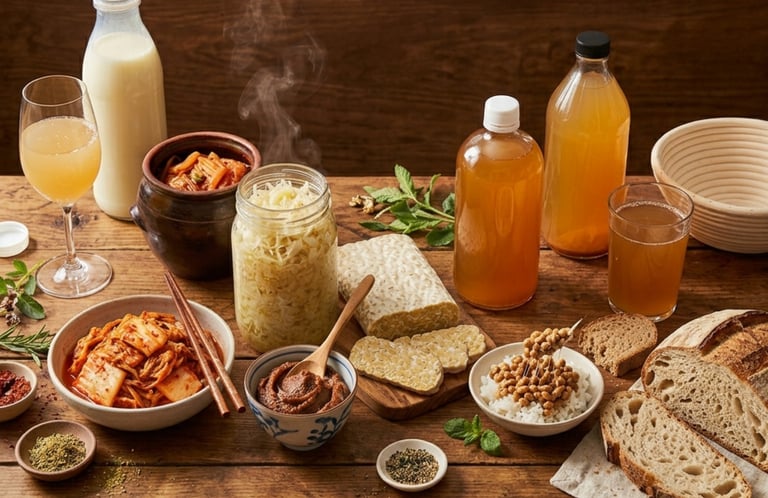
Fermented Foods Beyond Yogurt: Ancient Foods for a Modern Gut
By BiteBrightly 25 April 2026: This post might contain affiliate links.
Fermented foods are one of the oldest technologies in human history. Long before refrigerators, before preservatives, before we had any understanding of bacteria or microbiology at all — our ancestors were fermenting. Every culture on every continent developed fermented foods independently, guided by nothing more than observation and necessity: these foods lasted longer, tasted better, and made people feel well.
What our ancestors figured out by instinct, modern science is now confirming in extraordinary detail. The bacteria in fermented foods — known as probiotics — are directly involved in digestion, immunity, inflammation, mental health, metabolism, and even the regulation of hormones. The gut microbiome, the community of trillions of microorganisms living in your digestive system, turns out to be one of the most important systems in your entire body. And what you eat is the single most powerful way to shape it.
Most people know yogurt is good for gut health. That is great — yogurt is genuinely excellent. But yogurt is just one entry point into an entire world of fermented foods that range from mild and creamy to sharp and funky, from familiar to excitingly unfamiliar. Each brings its own community of bacteria, its own bioactive compounds, and its own unique contributions to your gut microbiome.
This guide covers the most important fermented foods beyond yogurt — where they come from, what they do in your body, how they taste, and how to start eating them if you never have. All of it explained in plain, clear language.
Key Takeaways
Fermented foods have been part of every human culture for thousands of years — from Korean kimchi to Turkish kefir to Japanese miso to Eastern European sauerkraut to West African ogi — because fermentation preserved food before refrigeration and because humans evolved alongside these foods
Your gut microbiome contains approximately 38 trillion microorganisms — more than the number of cells in your human body — and these microorganisms regulate digestion, immunity, inflammation, mental health, metabolism, and much more
A landmark study from Stanford University published in Cell found that a high-fermented-food diet significantly increased gut microbiome diversity and reduced 19 markers of inflammation in the immune system — one of the most important pieces of evidence that fermented food consumption directly improves gut and immune health
Fermented foods provide two things: living probiotic bacteria that colonize and diversify your gut microbiome, and postbiotics — the compounds produced during fermentation (short-chain fatty acids, bioactive peptides, vitamins) that have health benefits independent of the live bacteria
The most gut-diverse people in the world eat a wide variety of fermented foods — not just one type consistently. Rotating between different fermented foods provides different bacterial strains that support different aspects of gut function
Raw, unpasteurized fermented foods have live bacterial cultures; pasteurized fermented foods have had bacteria killed by heat but may still provide postbiotic benefits. Always look for "live cultures" or "unpasteurized" on the label for probiotic benefit
What Is Fermentation and Why Does It Matter?
The Simple Science
Fermentation is what happens when microorganisms — bacteria, yeasts, or molds — consume sugars and starches in food and produce acids, alcohols, or gases as byproducts. This process:
Preserves the food — the acids produced (lactic acid, acetic acid) create an environment too hostile for harmful bacteria to survive, making the food safe to eat for longer without refrigeration.
Changes the flavor — fermentation creates hundreds of new flavor compounds. The sour tang of sauerkraut, the complex umami depth of miso, the slight fizz of kombucha — all created by microbial activity that did not exist in the original ingredient.
Increases nutritional value — fermentation breaks down antinutrients (compounds that block mineral absorption), produces new vitamins (particularly B vitamins and vitamin K2), and makes nutrients more bioavailable. Fermented dairy is better tolerated by lactose-sensitive people because bacteria partially digest the lactose during fermentation.
Creates live probiotics — in lacto-fermented foods (where the fermentation is driven by lactic acid bacteria), the finished product contains billions of live, beneficial bacteria that survive digestion and colonize the gut.
Why Your Gut Microbiome Is So Important
Your gut contains approximately 38 trillion microorganisms — bacteria, viruses, fungi, and archaea — living primarily in your large intestine. This community, called the gut microbiome, is not just along for the ride. It is actively involved in:
Digestion: Gut bacteria digest the dietary fiber that your own digestive enzymes cannot break down, producing short-chain fatty acids (SCFAs) — particularly butyrate, propionate, and acetate — that feed the cells lining your gut, reduce inflammation, and signal satiety to your brain.
Immunity: Approximately 70–80% of your immune system lives in and around your gut. Your gut microbiome directly trains your immune cells, determining whether they respond appropriately to real threats or overreact to harmless substances (producing allergies and autoimmune conditions).
Inflammation: A healthy, diverse microbiome produces anti-inflammatory SCFAs and maintains the gut barrier that prevents inflammatory bacterial products (like LPS endotoxin) from escaping into your bloodstream. When the gut microbiome is disrupted — a state called dysbiosis — gut barrier integrity decreases and systemic inflammation rises.
Mental health: The gut-brain axis connects your gut microbiome to your brain through the vagus nerve. Gut bacteria produce neurotransmitters including serotonin (your gut makes approximately 95% of your body's total serotonin), GABA, dopamine precursors, and short-chain fatty acids that influence mood, anxiety, and cognitive function.
Metabolism: Your gut microbiome influences how your body processes and stores energy, how sensitive your cells are to insulin, and the production of hormones that regulate appetite.
The 10 Best Fermented Foods Beyond Yogurt
1. Kefir
Kefir is the most probiotic-rich fermented food available — and if you are going to add just one new fermented food to your diet, this is the one to start with. It is a fermented milk drink that originated thousands of years ago in the Caucasus mountains (the region between modern-day Russia, Georgia, and Turkey), where it was traditionally made in animal skin bags.
What makes it special: Kefir contains 30–50 different probiotic strains — compared to the 2–5 strains in most commercial yogurts. This diversity is the key difference. More bacterial strains means more diverse colonization of your gut microbiome, which means more functional coverage across the different jobs that gut bacteria perform. Kefir is made using kefir grains — rubbery clusters of bacteria and yeasts that ferment the milk — and the complex, multi-species community in these grains produces a far more diverse probiotic food than single-strain fermented products.
Kefir is also approximately 99% lactose-free — the bacteria consume nearly all the lactose during fermentation — making it well-tolerated by most people who are sensitive to regular dairy.
Research has found that regular kefir consumption improved gut microbiome diversity, reduced inflammatory markers, and improved lactose digestion in lactose-intolerant adults — confirming the clinical relevance of its exceptionally high probiotic diversity.
What it tastes like: Tangy, slightly fizzy, thinner than yogurt. Plain kefir tastes similar to a drinkable yogurt with a more pronounced sour edge. It is refreshing cold, particularly in summer.
How to use it: Drink plain (the most direct probiotic delivery). Blend into smoothies with banana and berries — the natural flavors completely mask the tanginess. Use as a base for salad dressings or dips (replacing buttermilk or sour cream). Pour over granola instead of milk. Use in overnight oat preparations.
2. Kimchi
Kimchi is Korea's most iconic food — a fermented vegetable dish most commonly made with napa cabbage and Korean chili paste, but with hundreds of regional and seasonal variations across Korean culinary tradition. It has been eaten in Korea for thousands of years and is now recognized globally as one of the most health-supporting fermented foods available.
What makes it special: Kimchi provides a combination of benefits that yogurt and kefir cannot: the probiotic bacteria of lacto-fermentation (particularly Lactobacillus plantarum, one of the most studied beneficial gut bacteria), the anti-inflammatory compounds of cruciferous vegetables (from the cabbage), and the antioxidant and anti-inflammatory power of garlic, ginger, and chili — all combined in a single food that has been naturally preserved through fermentation.
The Lactobacillus species in kimchi are particularly resilient — they are adapted to survive in the acid environment of your stomach and successfully colonize the intestine. L. plantarum specifically has been shown to strengthen the gut barrier (reducing leaky gut), reduce inflammatory cytokines, and improve the composition of the gut microbiome in a way that favors diversity.
Research has found that regular kimchi consumption significantly improved gut microbiome diversity and reduced BMI, fasting blood glucose, and waist circumference in a clinical study of overweight adults — establishing it as a fermented food with specific metabolic health benefits beyond general probiotic action.
What it tastes like: Sour, spicy, pungent, and deeply savory — a completely unique flavor that most people either love immediately or take a few tries to appreciate. Aged kimchi is more sour and pungent than fresh kimchi, which is milder and crunchier.
How to use it: Two to four tablespoons alongside any savory meal as a condiment — it pairs particularly well with eggs, rice dishes, noodles, and grain bowls. Kimchi fried rice is one of the most beloved uses globally. Kimchi grilled cheese is surprisingly delicious. Add to ramen or any noodle soup. Eat straight from the jar as a side.
3. Sauerkraut
Sauerkraut is fermented cabbage — one of the simplest, oldest, and most widely produced fermented foods in the world, eaten across Germany, Poland, Russia, and throughout Central and Eastern Europe for centuries. It is made from just two ingredients: cabbage and salt. And yet it is nutritionally extraordinary.
What makes it special: Traditional, raw, unpasteurized sauerkraut is teeming with Lactobacillus bacteria — particularly Leuconostoc mesenteroides, Lactobacillus plantarum, and Pediococcus cerevisiae, each of which contributes different beneficial effects in the gut. Sauerkraut is additionally one of the best dietary sources of vitamin K2 — the form of vitamin K that activates the proteins directing calcium to bones rather than to arterial walls, making it uniquely important for bone health and cardiovascular protection.
During fermentation, the bacteria produce isothiocyanates from the glucosinolates in cabbage — the same anti-cancer compounds produced when you chew broccoli or kale. Fermented cabbage provides these protective compounds in a highly bioavailable form.
The critical caveat: most supermarket sauerkraut has been pasteurized — heated to kill the bacteria for shelf stability. Pasteurized sauerkraut has no live bacterial content and provides no probiotic benefit. Always look for raw, unpasteurized sauerkraut, found in the refrigerated section, not on the ambient shelf. The label should say "live cultures," "raw," or "unpasteurized."
What it tastes like: Sour, tangy, and mildly salty — with a satisfying crunch. The flavor is cleaner and simpler than kimchi, without the heat or complexity of Korean spices.
How to use it: Two tablespoons alongside any meal as a condiment — particularly with sausages, pork, eggs, sandwiches, and grain bowls. Mix into potato salad for an authentic German-style preparation. Top avocado toast for a probiotic-boosted breakfast. Stir into hummus for a tangy dip. Do not cook sauerkraut if you want the probiotic benefit — heat kills the live cultures.
4. Miso
Miso is a fermented soybean paste that has been central to Japanese cuisine for over 1,000 years. It is made by fermenting soybeans with salt and koji — a mold (Aspergillus oryzae) that produces the complex umami flavor and the enzymes that break down proteins and starches into their more digestible components.
What makes it special: Miso is the richest dietary source of isoflavones — phytoestrogenic compounds from soybeans that have adaptive estrogen receptor modulating effects (supporting estrogen-deficient states like menopause while moderating estrogen excess in younger women). It is also one of the richest dietary sources of vitamin K2 (MK-7 form in natto-style preparations) and provides B vitamins, zinc, manganese, and copper in meaningful amounts.
The fermentation of miso produces a range of bioactive peptides — short protein fragments with specific biological activities including ACE inhibitor effects (lowering blood pressure naturally), antioxidant activity, and immune-modulating properties. These postbiotic compounds provide health benefits that are entirely distinct from any probiotic action of live cultures.
Interestingly, traditional miso is often used in hot soup — which kills any live cultures. But the postbiotics and bioactive compounds remain intact after heating. So miso soup provides different benefits than cold-application of miso, but genuine ones nonetheless.
What it tastes like: Deeply savory, salty, and complex — the quintessential umami flavor. Different varieties range from mild and slightly sweet (white/shiro miso, fermented for a shorter time) to intensely rich and pungent (red/aka miso, fermented for longer). Most people find white miso the most approachable starting point.
How to use it: Dissolve in warm (not boiling) water for miso soup — add tofu, seaweed, and spring onion for a traditional preparation. Use as a marinade for fish, chicken, or tofu. Stir into salad dressings and sauces for depth of flavor. Mix with tahini, lemon, and garlic for a remarkable dipping sauce. Add to ramen broth. A small spoonful of miso transforms any savory dish.
5. Tempeh
Tempeh is a fermented soybean food from Indonesia that is genuinely one of the most nutritionally impressive foods in the world. It is made by fermenting cooked soybeans with Rhizopus mold, which binds them into a dense, firm cake with a nutty, earthy flavor.
What makes it special: Tempeh beats plain tofu in almost every nutritional category — more protein (15–17g per half cup), more fiber, more minerals, and dramatically better mineral bioavailability. Here is why: soybeans naturally contain phytic acid — a compound that binds to minerals like zinc and iron and prevents their absorption. The fermentation process in tempeh production breaks down phytic acid, making the zinc and iron in tempeh significantly more bioavailable than in unfermented soy.
Tempeh also provides complete protein — all nine essential amino acids your body cannot make itself — making it one of the most valuable plant protein sources available, particularly for people eating plant-based diets who need reliable complete protein sources.
The Rhizopus fermentation additionally produces beta-glucans — the same soluble fiber responsible for oat's cholesterol-lowering and blood sugar-stabilizing effects. These beta-glucans add prebiotic function to tempeh, feeding Bifidobacterium in the gut and supporting the gut microbiome diversity that underpins long-term health.
What it tastes like: Firm, dense, and chewy with a nutty, earthy, slightly mushroom-like flavor. Unlike tofu, which has almost no flavor on its own, tempeh has genuine character. It absorbs marinades and flavors enthusiastically and develops a deeply satisfying crispy exterior when pan-fried.
How to use it: Slice thin and pan-fry in olive oil or sesame oil until golden and crispy — this is the most universally loved tempeh preparation. Marinate in soy sauce, garlic, ginger, and lemon before cooking for extraordinary flavor. Crumble and use as a meat substitute in tacos, bolognese, or grain bowls. Steam for 10 minutes before marinating to open the texture and help it absorb flavor better.
6. Kombucha
Kombucha is a fermented tea drink that has been consumed in China for over 2,000 years — originally for its perceived health-giving properties — and has become one of the most widely available fermented beverages globally. It is made by fermenting sweet tea with a SCOBY (Symbiotic Culture of Bacteria and Yeast) — a rubbery disc of microorganisms that converts the sugar in the tea into organic acids, B vitamins, and a small amount of carbon dioxide that gives kombucha its characteristic fizz.
What makes it special: Kombucha provides a different type of fermented benefit than dairy-based probiotics — the bacterial strains are different (primarily Acetobacter and Gluconobacter alongside various Lactobacillus species) and the acetic acid produced during fermentation has its own antimicrobial and metabolic benefits. The B vitamins produced during fermentation (B1, B6, B12, folate) are produced by the yeast component of the SCOBY and contribute meaningfully to daily B vitamin intake.
The organic acids in kombucha — particularly glucuronic acid — have been traditionally associated with liver support and detoxification, as glucuronic acid is involved in the liver's phase II detoxification pathway (conjugating toxins for excretion). While the direct clinical evidence for kombucha's detoxification effects is limited, the biochemical rationale is real.
The important caveat: Commercial kombucha quality varies enormously. Raw, live-culture kombucha from independent producers (found in the refrigerated section) has genuine probiotic content. Many commercially pasteurized kombuchas sold on ambient shelves have no live cultures and are essentially just flavored acidic drinks with some residual B vitamins. Additionally, some commercial kombuchas contain significant amounts of added sugar — always check the label. The best kombuchas are refrigerated, unpasteurized, and contain less than 5g of sugar per 100ml.
What it tastes like: Tangy, slightly fizzy, and tea-flavored — somewhere between sparkling water, vinegar, and iced tea. The flavor ranges from mild and sweet (fresh kombucha) to sharply acidic (well-aged kombucha). Most people find it a pleasant replacement for fizzy drinks once they acquire the taste.
How to use it: Drink as a replacement for fizzy drinks and sparkling water — 200–300ml daily. Use as a salad dressing base with olive oil and Dijon. Mix into smoothies for a light fermented tang. Use as a marinade for fish or chicken.
7. Natto
Natto is a traditional Japanese fermented soybean food that may be the most nutritionally powerful food on this entire list — but it is also, undeniably, one of the most challenging for people unfamiliar with it. It is made by fermenting soybeans with Bacillus subtilis natto bacteria, which creates the food's distinctive sticky, stringy texture and strong, pungent flavor.
What makes it special: Natto is the single richest dietary source of vitamin K2 (MK-7 form) in the world — a 100g serving provides approximately 1,000mcg of K2, compared to 10–30mcg in most other fermented foods. Vitamin K2 MK-7 is the form with the longest half-life in the blood and the strongest evidence for cardiovascular protection (directing calcium away from arteries and toward bones) and bone density maintenance.
Natto is also one of the only dietary sources of nattokinase — a fibrinolytic enzyme that breaks down fibrin (the protein forming blood clots), supporting cardiovascular health through a mechanism entirely distinct from its vitamin K2 content. The Bacillus subtilis natto in natto produces a different community of health-promoting compounds than the Lactobacillus in most fermented foods, providing gut diversity benefits from a completely different bacterial lineage.
What it tastes like: Strong, pungent, ammoniac, and intensely savory — with a sticky, stringy, mucilaginous texture that is genuinely unlike anything else. Many people find it deeply off-putting at first. Traditional Japanese consumption involves stirring it vigorously (to develop the strings and mix in the included sauce), then eating it over hot rice. Persistence pays off — many people who initially reject natto find they develop a genuine appreciation for it over repeated exposure.
How to use it: Over hot rice with the provided mustard and soy sauce (traditional). Mixed into miso soup. In a natto roll (sushi). For beginners: the smallest possible amount mixed thoroughly with strong flavors like soy sauce, spring onion, and chili can make it significantly more approachable.
8. Apple Cider Vinegar (Raw, with The Mother)
Raw apple cider vinegar — specifically the unfiltered, unpasteurized kind with "the mother" (the cloudy sediment of beneficial bacteria and enzymes) — is a fermented food with a long history of traditional use and a small but real evidence base for specific health benefits.
What makes it special: Raw ACV with the mother contains acetic acid bacteria (Acetobacter aceti) and a small amount of live probiotic activity. The acetic acid itself — the compound responsible for vinegar's characteristic tang — has documented effects on blood sugar: it inhibits alpha-amylase and sucrase enzymes in the intestine, slowing the digestion and absorption of starch and sugar and blunting postprandial blood glucose spikes. Multiple clinical trials have found that consuming one to two tablespoons of apple cider vinegar before or with high-carbohydrate meals reduces the postprandial blood glucose response by 19–34%.
The polyphenols from the apple fermentation have prebiotic effects — feeding beneficial gut bacteria including Lactobacillus and Bifidobacterium. The "mother" itself contains strands of proteins, enzymes, and bacteria that contribute a small probiotic effect, though the concentration is much lower than in kefir or kimchi.
What it tastes like: Sharp, acidic, and distinctly apple-flavored — much more complex than plain white vinegar. Undiluted, it is unpleasantly acidic. Always dilute before consuming.
How to use it: One to two tablespoons in a large glass of water before meals — particularly before carbohydrate-heavy meals where blood sugar stability is desired. Use as a salad dressing base. Add to soups and stews as a flavor brightener. Use in marinades. Never drink undiluted — the acidity can damage tooth enamel and esophageal tissue. Always rinse your mouth with water after consuming.
9. Kvass
Kvass is a traditional Eastern European fermented beverage made from rye bread — and it is one of the most ancient fermented drinks still consumed today, with a history going back at least a thousand years in Russia, Ukraine, and Poland. It tastes like a very mild, lightly sour, earthy beer — with just a trace of alcohol (typically 0.5–1%).
What makes it special: Kvass made from whole rye bread is a prebiotic powerhouse — rye contains arabinoxylan, one of the most potent prebiotic fibers for Bifidobacterium, which significantly improves gut microbiome diversity and reduces the systemic inflammatory markers associated with gut dysbiosis. The fermentation of rye bread produces B vitamins, amino acids, and organic acids, alongside the Lactobacillus bacteria from the sourdough starter typically used to initiate fermentation.
Kvass is particularly interesting for digestive health — the organic acids and enzymes in kvass have traditionally been used to aid digestion and relieve constipation, and modern research supports this through the prebiotic fiber and lactic acid content.
What it tastes like: Mild, slightly sour, earthy, and bread-flavored — like a cold, fizzy, sourdough-flavored drink. Most people find it much more approachable than kombucha or kefir, particularly those who are new to fermented beverages.
How to use it: Drink chilled as a refreshing beverage — traditional Russian cold soups (okroshka) use kvass as the soup base. Use in bread-based recipes. Available in health food stores and Eastern European grocery shops; also relatively easy to make at home from rye bread, sugar, water, and a starter.
10. Sourdough Bread
Sourdough is the oldest form of bread baking known to humanity — made through a slow fermentation using wild yeast and Lactobacillus bacteria that have been cultivated in a "starter" — a living culture of flour and water maintained over days, weeks, or years. It is not typically thought of as a fermented health food in the same category as kefir or kimchi, but authentic sourdough is genuinely different from commercial bread in ways that matter significantly for gut health.
What makes it special: The long fermentation of authentic sourdough (12–48 hours) produces several changes that make it more gut-friendly than regular bread: the lactic acid bacteria partially digest the gluten, reducing its quantity and changing its structure (this is why some gluten-sensitive — though not celiac — people tolerate sourdough better than commercial bread); phytic acid in the flour is broken down during fermentation, making minerals like zinc, iron, and magnesium more bioavailable; the lactic acid produced lowers the glycemic index of the bread significantly (sourdough bread has a GI of approximately 50–54 compared to white bread's 70–75); and small amounts of short-chain fatty acids are produced during fermentation that support gut lining health.
The important caveat: most commercially sold "sourdough" is not genuine sourdough — it uses commercial yeast with added acidifiers to mimic the flavor without the long fermentation. Genuine sourdough is made only from flour, water, salt, and a live starter culture, through a slow fermentation. Look for small-batch bakeries or bread that lists only these ingredients. If it is soft and fresh for days like commercial bread, it is probably not genuine.
What it tastes like: Mildly to deeply tangy (depending on fermentation length), with a chewier, more complex crumb than commercial bread and a crustier exterior. Many people who "do not like bread" find genuine sourdough deeply satisfying in a way commercial bread is not.
How to use it: As the primary bread in your diet — toast with eggs and avocado, with nut butter, with olive oil and tomato, alongside soups. The most practical health upgrade available for bread-eating people is simply to switch from commercial bread to genuine sourdough.
How to Start Eating More Fermented Foods
Start Small and Go Slowly
Fermented foods are powerful. If you introduce too many too quickly — particularly if you have been eating a low-fiber, low-fermented-food diet — you may experience bloating, gas, and digestive discomfort as your gut microbiome adjusts to the new bacterial input. This is normal and temporary, but it is uncomfortable enough to put people off.
Start with one small serving daily — two tablespoons of kimchi or sauerkraut, half a cup of kefir, a small serving of miso soup. Let your gut adjust for one to two weeks before increasing portion sizes or adding new fermented foods.
Aim for Variety, Not Volume
The Stanford Cell study found that a high-fermented-food diet increased gut microbiome diversity and reduced 19 inflammatory markers. The study emphasized variety across fermented food types — not high volumes of any single one. A tablespoon of kimchi, a tablespoon of sauerkraut, a cup of kefir, and miso in a soup provides four different bacterial communities from four different fermented foods in the same day. This variety approach is more beneficial than eating a large amount of any single fermented food.
Read Labels Carefully
Not all commercially sold "fermented" foods contain live cultures:
✅ Look for: "live cultures," "raw," "unpasteurized," "naturally fermented" ❌ Avoid: Pasteurized versions on ambient shelves (heat has killed all bacteria) ❌ Watch out for: High sugar content (some commercial kombuchas and yogurts), added vinegar instead of natural fermentation (many "sauerkrauts" are just pickled in vinegar — not fermented)
Frequently Asked Questions
How much fermented food should I eat each day?
Research suggests that a "high-fermented-food diet" — the level associated with significantly increased gut microbiome diversity in the Stanford Cell study — involves approximately four to six servings of fermented food daily. A serving is defined as approximately half a cup of yogurt or kefir, two to three tablespoons of kimchi or sauerkraut, one cup of kombucha, or a tablespoon of miso in soup. This sounds like a lot if you are starting from zero — work up to it gradually over several weeks, starting with one small serving daily.
Is vinegar-pickled food the same as fermented food?
No — this is one of the most important distinctions to understand. Fermented foods (like genuine kimchi, sauerkraut, and kombucha) are produced through natural lacto-fermentation where bacteria convert sugars to lactic acid. Vinegar-pickled foods (most commercial pickles, many commercial "sauerkrauts") are simply preserved in acid — they are not fermented and contain no live bacterial cultures. Both can taste similar but the probiotic benefit is entirely absent from vinegar-pickled products.
Can fermented foods help with IBS or digestive issues?
Research shows mixed but generally promising results for fermented foods in IBS. Some people with IBS find that high-FODMAP fermented foods (kefir, sauerkraut) worsen symptoms initially — this typically reflects die-off reactions or the adjustment period as gut microbiome composition shifts. Starting very small (one tablespoon of sauerkraut daily) and increasing slowly gives the gut time to adjust. Low-FODMAP fermented options (lactose-free kefir, miso) are often better tolerated initially. If you have diagnosed IBS or inflammatory bowel disease, discuss dietary changes with a gastroenterologist before significantly increasing fermented food intake.
Do I need to take probiotic supplements if I eat fermented foods?
Fermented foods and probiotic supplements serve overlapping but not identical purposes. Fermented foods provide diverse communities of bacteria alongside the nutritional matrix of the food itself — providing prebiotic fiber, postbiotics, vitamins, and minerals alongside live bacteria. Supplements provide high concentrations of specific, well-researched strains. For general gut health maintenance, fermented foods are the more comprehensive and sustainable approach. For specific clinical situations — antibiotic recovery, IBS, specific digestive disorders — targeted probiotic supplementation (with specific strains and doses matched to the condition) may provide benefits that fermented food alone does not. Ideally, use both.
References and Further Reading
Sonnenburg JL et al. — Cell (2021) — Gut-microbiota-targeted diets modulate human immune status The landmark Stanford study demonstrating that a high-fermented-food diet significantly increased gut microbiome diversity and reduced 19 markers of immune activation — including IL-6, IL-12p70, and GDF15 — establishing fermented food consumption as one of the most evidence-supported dietary interventions for gut microbiome health and systemic immune regulation.
Marco ML et al. — Current Opinion in Biotechnology (2017) — Health benefits of fermented foods: microbiota and beyond Comprehensive review of the health benefits of fermented foods across categories — establishing the evidence base for probiotic, postbiotic, and nutritional benefits of kefir, kimchi, miso, tempeh, sauerkraut, and other fermented foods, with specific mechanisms for each.
Wastyk HC et al. — Cell (2021) — Gut-microbiota-targeted diets modulate human immune status Same landmark Stanford Cell paper — additional analysis confirming that fermented food consumption was superior to high-fiber dietary intervention for increasing gut microbiome diversity in the short term, with implications for dietary strategies to improve immune function and reduce chronic inflammatory disease risk.
Park KY et al. — Journal of Medicinal Food (2014) — Health benefits of kimchi (Korean fermented vegetables) as a probiotic food Review of kimchi's specific health benefits including anti-obesity, anti-diabetic, anti-atherogenic, and anti-cancer properties — establishing kimchi as one of the most comprehensively studied fermented foods for human health outcomes beyond general probiotic benefits.
About the Author
I'm Judith, a wellness enthusiast and Applied Bio Sciences and Biotechnology graduate behind BiteBrightly. With a deep-rooted belief in the healing power of food, my nutrition journey began with a personal transformation—I improved my eyesight through targeted dietary changes. This life-changing experience sparked my mission to empower others by sharing evidence-based insights into food as medicine.
Drawing on my scientific background, personal experience, and ongoing research into nutrition and health, I focus on breaking down complex health topics into clear, practical, and actionable guidance. My approach combines scientific credibility with real-world application, making evidence-based nutrition accessible to everyone.
Follow me on Pinterest for daily health tips, recipes, and wellness inspiration.
Important Notice: The information in this article is for educational purposes only and is not intended as medical advice. I am not a medical doctor, registered dietitian, or gastroenterologist. People with specific digestive conditions including IBS, inflammatory bowel disease, SIBO (small intestinal bacterial overgrowth), or those on immunosuppressant medications should consult a qualified healthcare provider before significantly increasing fermented food consumption. Fermented foods, while beneficial for most people, can worsen symptoms in specific conditions. People on blood-thinning medications (warfarin/Coumadin) should be aware that the high vitamin K2 content of natto can significantly affect anticoagulation and must discuss dietary changes with their prescribing physician. These statements have not been evaluated by the FDA.
Connect
Join our newsletter for fresh health tips
© 2026. All rights reserved.