Foods That Improve Digestion: End Bloating and Constipation
End bloating and constipation naturally! 32 digestion foods: kefir, prunes, ginger, kiwi & more. Fiber guide + probiotic tips. Relief in 3-5 days.
by BiteBrightly
2/18/202621 min read
Foods That Improve Digestion: End Bloating and Constipation
By BiteBrightly 18 February 2026: This post might contain affiliate links.
You finish dinner and immediately feel it—the familiar bloating that puffs your stomach tight as a drum. Your pants feel uncomfortably snug. By evening, you're uncomfortable, gassy, and exhausted from simply eating a meal. Then there's the constipation that has plagued you for weeks: straining, waiting, the frustrating feeling of incompleteness that follows you through every day. You've tried more water. You've tried walking after meals. You've tried over-the-counter remedies that provide temporary relief but never solve the underlying problem. You've normalized this misery, assuming digestive discomfort is simply part of life. Meanwhile, the bloating affects your confidence—you've stopped wearing fitted clothes, declined social events after meals, and become anxious about eating in public. What if chronic bloating, constipation, and digestive discomfort aren't inevitable? What if specific foods—not expensive supplements or medications—could transform your gut health, restore comfortable digestion, and eliminate the bloating and constipation that have stolen your quality of life? If you're searching for foods that improve digestion, backed by science and proven effective, you're about to discover that a comfortable, functioning gut isn't a luxury—it's achievable through strategic, targeted eating.
Digestive disorders are extraordinarily common. According to research from the American Gastroenterological Association, approximately 60-70 million Americans are affected by digestive diseases, and functional digestive complaints—bloating, constipation, irregular bowel movements, gas, and discomfort—affect an even larger portion of the population. Constipation affects approximately 16% of adults and up to 33% of adults over 60. Bloating affects an estimated 15-30% of people regularly, with many experiencing it daily.
The gut is increasingly recognized as central to overall health—not just digestion. According to research published in the journal Gut Microbes, the gut microbiome (the trillions of bacteria, viruses, and fungi inhabiting your digestive tract) profoundly influences digestion, immune function, mental health, metabolic health, and even disease risk. What you eat directly shapes your gut microbiome composition—feeding beneficial bacteria or harmful ones based on your dietary choices.
The mechanisms are clear. Dietary fiber is the primary driver of healthy bowel function—it adds bulk to stool, feeds beneficial gut bacteria, speeds intestinal transit time, and prevents constipation. Probiotics (live beneficial bacteria in fermented foods) directly restore and maintain healthy gut microbiome balance. Prebiotics (fiber that feeds beneficial bacteria) amplify the benefits of probiotics. Adequate hydration keeps stool soft. Anti-inflammatory foods reduce gut inflammation that contributes to bloating. Specific foods contain digestive enzymes that break down food components, reducing bloating and discomfort.
According to research in the American Journal of Gastroenterology, dietary interventions are among the most effective strategies for managing functional digestive symptoms including bloating, constipation, and irritable bowel syndrome. The evidence base for specific foods (fiber, fermented foods, probiotic foods) improving digestive function is strong and consistent.
This comprehensive guide reveals the best foods for digestion organized by mechanism and category, why each food improves gut function at the cellular level, foods that worsen digestion (the bloating triggers you should limit), strategic eating patterns that prevent constipation and reduce bloating, sample high-fiber digestion-optimized days, and realistic timelines for digestive improvement with dietary changes.
Key Takeaways
60-70 million Americans affected by digestive disease; bloating affects 15-30% regularly
The gut microbiome contains 100 trillion microorganisms that profoundly influence digestion and overall health
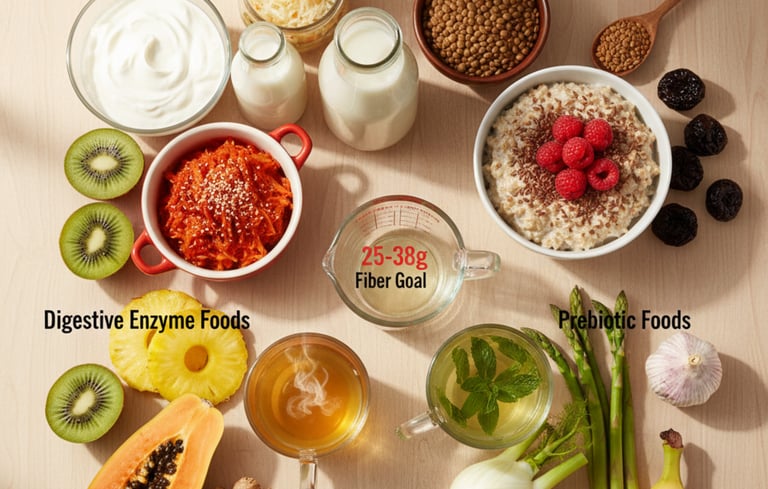
Dietary fiber is the #1 factor in preventing constipation—most Americans get only 15g daily (target: 25-38g)
Two types of fiber matter: soluble (slows digestion, feeds good bacteria) and insoluble (adds bulk, speeds transit)
Probiotics (fermented foods) restore healthy gut bacteria; prebiotics (specific fibers) feed them
Best foods: Legumes, whole grains, vegetables, fruits (especially prunes, kiwi, berries), fermented foods, ginger
Worst for digestion: Processed foods, artificial sweeteners (sorbitol), excess red meat, fried foods, alcohol
Drinking 8-10 cups of water daily is essential—fiber without water causes MORE constipation
Timeline: Constipation improves in 3-5 days with dietary changes; bloating may take 2-4 weeks
Long-term gut microbiome transformation requires 4-8 weeks of consistent dietary changes
Understanding Your Digestive System
How Healthy Digestion Works
The digestive tract is a 30-foot tube with multiple specialized sections, each contributing to breaking down food, absorbing nutrients, and eliminating waste.
Stomach: Breaks down food with acid and enzymes, churns into liquid (chyme).
Small intestine: Primary site of nutrient absorption. Enzymes (from pancreas and small intestine lining) break down proteins, carbohydrates, and fats into absorbable components.
Large intestine (colon): Absorbs water and electrolytes from remaining material. Gut bacteria ferment undigested fiber, producing short-chain fatty acids (SCFAs) that feed colon cells and support immune function. Forms and eliminates stool.
Gut microbiome: 100 trillion microorganisms in the colon profoundly influence digestion, gut motility, inflammation, and the integrity of the gut lining.
What Causes Bloating?
Bloating has multiple causes:
Gas production: Gut bacteria ferment undigested foods (particularly certain carbohydrates—FODMAPs) producing gas (hydrogen, methane, carbon dioxide). Normal fermentation produces some gas; excessive fermentation (from bacterial imbalance or too many fermentable carbs eaten at once) produces uncomfortable bloating.
Slow gut motility: When food moves slowly through the gut, more fermentation occurs in the wrong places. Constipation causes bloating—backed-up stool creates gas and distension.
Gut dysbiosis: Imbalanced gut microbiome (too many gas-producing bacteria, too few beneficial ones) creates excessive fermentation and bloating.
Food intolerances: Lactose intolerance, gluten sensitivity, fructose malabsorption cause gas and bloating when trigger foods are consumed.
Swallowing air: Eating quickly, chewing gum, carbonated beverages.
Constipation: Backed-up stool is a primary driver of bloating.
What Causes Constipation?
Inadequate fiber: #1 cause. Fiber adds bulk to stool and retains water, making stool soft and easy to pass.
Inadequate hydration: Without water, even fiber-rich diets don't prevent constipation. Fiber needs water to swell and soften stool.
Sedentary lifestyle: Physical activity stimulates intestinal motility (gut contractions that move stool forward).
Gut dysbiosis: Certain gut bacteria (specifically those producing butyrate) stimulate colon motility. Dysbiosis impairs this.
Stress: Stress hormones affect gut motility—can cause both constipation and diarrhea.
Medications: Many medications (opioids, antidepressants, iron supplements, antacids) cause constipation.
Hypothyroidism: Underactive thyroid slows metabolism including gut motility.
Normal variation: "Normal" bowel frequency ranges from 3x/day to 3x/week. Less than 3x/week with straining is clinically constipation.
Best Foods for Digestion
Category 1: High-Fiber Legumes (The Constipation Cure)
Legumes are the single most fiber-dense common foods and exceptionally powerful against constipation.
1. Lentils
Why they transform digestion: 1 cup cooked lentils provides 15.6g fiber—both soluble (prebiotic, feeds good bacteria, softens stool) and insoluble (adds bulk, speeds transit). Also provides resistant starch that feeds beneficial gut bacteria.
How they end constipation: The fiber in lentils adds significant bulk to stool, retains water making stool soft, and feeds Bifidobacterium and Lactobacillus species that improve gut motility.
For bloating: Soak lentils overnight (reduces oligosaccharides that cause gas). Start with smaller portions (1/4 cup) and gradually increase. Red lentils are easier to digest than green/black.
How to use: 1/2 to 1 cup 4-5 times weekly. Lentil soup, dal, salads, tacos.
2. Chickpeas
Why they work: 1 cup cooked chickpeas provides 12.5g fiber plus resistant starch. High inulin content (prebiotic) specifically feeds Bifidobacteria linked to reduced bloating and improved gut motility.
For bloating: Canned chickpeas (rinsed) cause less gas than dried/home-cooked. Hummus (blended) is easier to digest than whole chickpeas.
How to use: 1/2 to 1 cup regularly. Hummus with vegetables, roasted chickpeas, chickpea curry.
3. Black Beans
Why they work: 1 cup cooked black beans provides 15g fiber and exceptional prebiotic content. Particularly high in resistant starch.
How to use: 1 cup 3-4 times weekly. Black bean soup, burritos, salads.
Category 2: Whole Grains (Fiber + Gut-Motility Support)
Whole grains provide insoluble fiber that is essential for bowel regularity.
4. Oats
Why they're exceptional: Oats contain beta-glucan—a unique soluble fiber that forms a gel in the intestine, slowing digestion, feeding beneficial gut bacteria, and producing short-chain fatty acids (SCFAs) that nourish colon cells.
1 cup cooked oats (from 1/2 cup dry) provides 4g fiber including 2g beta-glucan.
For constipation: The gel-forming beta-glucan retains water in stool, keeping it soft and easy to pass.
For bloating: Oats are generally well-tolerated (not high FODMAP) and don't typically cause gas. Soak overnight to improve digestibility.
How to use: 1/2 cup dry oats daily. Overnight oats, oatmeal, add to smoothies.
5. Barley
Why it's powerful: 1 cup cooked barley provides 6g fiber with exceptional beta-glucan content—even higher than oats. Among the highest fiber whole grains.
For constipation: Barley's beta-glucan and insoluble fiber combination is particularly effective at regulating bowel movements.
How to use: 1/2 to 1 cup 3-4 times weekly. In soups, stews, salads, as side dish.
6. Whole Wheat (Genuine Whole Grain)
Why it works: 2 slices truly whole grain bread provides 4-6g fiber. The bran (outer layer) contains insoluble fiber that adds bulk to stool.
Key: Choose bread with "whole wheat flour" as first ingredient AND 3g+ fiber per slice. Not "wheat bread" which is often refined grain with caramel coloring.
How to use: 1-2 slices daily in sandwiches, toast.
7. Brown Rice
Why it helps: 1 cup cooked brown rice provides 3.5g fiber (vs. 0.6g in white rice). The bran layer contains insoluble fiber promoting regularity.
How to use: 1/2 cup per meal in place of white rice.
Category 3: Fermented Foods (Probiotic Powerhouses)
Fermented foods contain live beneficial bacteria (probiotics) that restore and maintain healthy gut microbiome balance—essential for reducing bloating and improving digestion.
8. Yogurt (Plain, Live-Culture)
Why it's transformative: Plain yogurt with "live and active cultures" contains Lactobacillus and Streptococcus thermophilus—probiotics that improve lactose digestion, reduce bloating, speed gut transit, and support gut barrier integrity.
Research: Multiple randomized controlled trials show yogurt consumption reduces bloating, improves stool frequency, and enhances gut microbiome diversity.
Choose: Plain, unsweetened yogurt with "live and active cultures" on label. Greek yogurt has higher protein and concentrated probiotic content. Avoid flavored yogurts loaded with sugar (feeds harmful bacteria).
How to use: 1 cup daily. Breakfast with berries, smoothies, dips.
9. Kefir
Why it's superior to yogurt: Kefir is a fermented milk drink with 30+ strains of beneficial bacteria and yeasts—more diverse than yogurt. Contains kefiran (prebiotic fiber) and enzymes. Research shows it significantly improves constipation, reduces bloating, and enhances gut microbiome diversity.
How to use: 1 cup daily. Drink plain, add to smoothies, use as milk substitute in oatmeal.
Note: Even people with lactose intolerance often tolerate kefir—the bacteria largely digest the lactose during fermentation.
10. Sauerkraut
Why it works: Naturally fermented cabbage contains Lactobacillus plantarum and other probiotics that reduce gut inflammation, improve gut barrier function, and reduce bloating. Also provides fiber and vitamin C.
Key: Choose refrigerated sauerkraut (not shelf-stable/canned—heat kills probiotics). "Raw" or "unpasteurized" on the label.
How to use: 2-4 tablespoons daily as condiment, side dish, or in sandwiches.
11. Kimchi
Why it's powerful: Korean fermented vegetables (usually cabbage and vegetables) with diverse Lactobacillus species plus prebiotic fiber. Research shows kimchi improves gut microbiome diversity, reduces inflammation, and supports digestive function.
How to use: 2-4 tablespoons daily. Side dish, in stir-fries, bowls, eggs.
12. Tempeh
Why it's unique: Fermented soybean product. Fermentation produces beneficial bacteria AND breaks down phytates and oligosaccharides that cause gas, making it much easier to digest than regular soybeans.
How to use: 4-6 oz serving 3-4 times weekly. Stir-fries, bowls, sandwiches.
13. Miso
Why it helps: Fermented soybean paste with beneficial bacteria, enzymes, and prebiotic fiber. Miso soup (made with warm—not boiling—water to preserve probiotics) is a traditional digestive tonic.
How to use: 1-2 tablespoons daily in miso soup, salad dressings, marinades.
Category 4: Prebiotic Foods (Feed Your Good Bacteria)
Prebiotics are specific fibers that selectively feed beneficial gut bacteria, amplifying the effects of probiotics and supporting digestion.
14. Garlic
Why it's exceptional: Garlic contains inulin and fructooligosaccharides (FOS)—powerful prebiotics that specifically feed Bifidobacteria and Lactobacillus. Research shows garlic consumption increases beneficial gut bacteria populations and reduces harmful bacteria.
For bloating: Some people find raw garlic causes gas initially as gut bacteria adjust. Start with cooked garlic and small amounts.
How to use: 2-4 cloves daily in cooking. Sauté in virtually every savory dish.
15. Onions
Why they work: Onions contain FOS and inulin—same prebiotics as garlic, equally powerful. Also contain quercetin, an anti-inflammatory compound that reduces gut inflammation contributing to bloating.
How to use: 1/4 to 1/2 cup daily in cooking. Sautéed as base for most savory dishes.
16. Jerusalem Artichokes (Sunchokes)
Why they're prebiotic superstars: Jerusalem artichokes have the highest inulin content of any vegetable (up to 20g per 100g!). Extraordinary prebiotic effect. However, this very potency means they cause significant gas initially in people with dysbiosis.
How to use: Start with very small amounts (1-2 tablespoons) and increase slowly. Roasted as side dish, in soups.
17. Asparagus
Why it helps: Asparagus contains inulin and FOS prebiotics. Also mild diuretic effect that reduces water retention contributing to bloating.
How to use: 4-6 spears 3-4 times weekly. Roasted, steamed, grilled.
18. Bananas (Slightly Unripe)
Why they work: Slightly unripe bananas are high in resistant starch—a powerful prebiotic that feeds Bifidobacteria and produces butyrate (SCFA that nourishes colon cells and stimulates motility). Ripe bananas have less resistant starch (converted to regular sugar as they ripen) but provide soluble fiber.
For constipation: The fiber and resistant starch promote regularity.
How to use: 1 medium banana daily. In oatmeal, smoothies, plain snack.
Category 5: Specific Fruits with Digestive Power
19. Prunes (Dried Plums)
Why they're famous for a reason: The gold-standard for constipation relief. Prunes contain sorbitol (natural laxative that draws water into colon), insoluble fiber (4.6g per 1/2 cup), chlorogenic acids (stimulate gut motility), and phenolic compounds.
Research: A randomized controlled trial in Alimentary Pharmacology & Therapeutics found prunes more effective than psyllium husk for treating mild to moderate constipation—12 prunes daily significantly increased stool frequency and consistency.
How to use: 4-8 prunes daily. Eat plain, add to oatmeal, blend into smoothies. Or drink 4-8 oz prune juice (though whole prunes are more effective—more fiber).
20. Kiwi
Why it's underrated: Kiwi contains actinidin—a unique digestive enzyme that breaks down proteins and improves gastric emptying. Research shows kiwi significantly increases bowel movement frequency and reduces bloating.
Research: Multiple studies show 2 kiwis daily significantly improve constipation and reduce bloating in 4 weeks.
How to use: 2 kiwis daily. Eat plain (skin is edible and fiber-rich!), in fruit salads, smoothies.
21. Berries (All Varieties)
Why they work: Berries are high in soluble and insoluble fiber plus polyphenols that act as prebiotics—feeding beneficial gut bacteria specifically. Blueberries increase Bifidobacterium populations.
1 cup raspberries provides 8g fiber—one of the highest-fiber fruits.
How to use: 1 cup daily. In oatmeal, yogurt, smoothies, plain.
22. Apples
Why they help: Apples contain pectin—a soluble fiber that feeds beneficial gut bacteria, forms a gel that softens stool, and slows digestion beneficially. Also contain quercetin and polyphenols.
"An apple a day keeps the gastroenterologist away"—genuinely supported by digestive research.
How to use: 1 apple daily with skin (fiber is in skin). Plain snack, with nut butter.
Category 6: Vegetables with Digestive Benefits
23. Broccoli and Cruciferous Vegetables
Why they work: Broccoli contains sulforaphane—a compound that reduces gut inflammation and supports beneficial gut bacteria. Also provides fiber (5g per cup cooked) for regularity.
Note: Raw cruciferous vegetables can cause gas in some people. Steaming or roasting reduces gas-causing compounds while preserving fiber.
How to use: 1-2 cups cooked 4-5 times weekly. Steamed, roasted, stir-fried.
24. Leafy Greens (Spinach, Kale, Swiss Chard)
Why they help: Leafy greens provide insoluble fiber for regularity and magnesium (which draws water into colon, softening stool—natural laxative effect). Spinach is particularly high in magnesium.
How to use: 1-2 cups cooked 4-5 times weekly. Sautéed, in soups, smoothies.
25. Sweet Potatoes
Why they're gentle: Sweet potatoes provide both soluble and insoluble fiber (4g per medium potato) and are exceptionally gentle on the digestive system—well-tolerated even by people with sensitive guts. Often recommended for people recovering from digestive issues.
How to use: 1 medium potato 3-4 times weekly. Baked, roasted, mashed.
Category 7: Digestion-Specific Superfoods
26. Ginger
Why it's exceptional: Ginger contains gingerols and shogaols—compounds that stimulate digestive enzymes, speed gastric emptying (reduces bloating), reduce gut inflammation, and have anti-nausea effects. One of the most well-researched digestive remedies.
Research: Multiple studies show ginger significantly reduces bloating, speeds gastric emptying by 25%, and reduces nausea.
How to use: 1-2 teaspoons fresh grated ginger or 1/2 teaspoon ginger powder daily. Add to tea, smoothies, stir-fries, soups.
27. Papaya
Why it's a digestive enzyme powerhouse: Papaya contains papain—a proteolytic enzyme that breaks down proteins, reduces bloating after protein-heavy meals, and improves digestive comfort. Green papaya has highest papain content.
How to use: 1 cup fresh papaya daily. Plain, in fruit salads, smoothies.
28. Pineapple
Why it works: Pineapple contains bromelain—another powerful proteolytic enzyme that aids protein digestion, reduces bloating, and has anti-inflammatory properties.
Note: Bromelain is heat-sensitive—fresh or frozen pineapple is most effective (canned/cooked has reduced enzyme activity).
How to use: 1 cup fresh pineapple after protein-heavy meals.
29. Fennel
Why it's a bloating remedy: Fennel contains compounds (anethole, fenchone) that relax intestinal muscles, reduce spasms, and relieve gas. Traditional digestive remedy for centuries, now supported by research.
How to use: Fennel tea (steep fennel seeds in hot water), raw fennel in salads, roasted as side dish.
30. Peppermint
Why it's powerful: Peppermint oil relaxes the smooth muscle of the intestinal wall, reducing spasms and cramping. Well-researched for IBS and functional bloating. Peppermint tea provides some of these benefits.
Research: Meta-analyses show enteric-coated peppermint oil significantly reduces IBS symptoms including bloating.
How to use: Peppermint tea (1-3 cups daily). Especially after meals for gas and bloating relief.
Category 8: Hydration Sources
31. Water
Why it's non-negotiable: Fiber without water causes MORE constipation, not less. Water keeps stool soft, maintains gut motility, and supports all aspects of digestion.
Target: 8-10 cups (64-80 oz) daily—more if active or in hot climate.
Timing: Drink throughout day. Warm water or lemon water first thing in morning stimulates gut motility.
32. Herbal Teas
Peppermint tea: Reduces bloating and gas (muscle relaxant)
Ginger tea: Speeds gastric emptying, reduces nausea and bloating
Fennel tea: Relieves gas and intestinal spasms
Licorice root tea: Soothes gut lining (use with moderation)
Chamomile tea: Anti-inflammatory, reduces gut spasms
Foods That Worsen Digestion (Limit or Avoid)
Bloating Triggers
Processed foods: Low fiber, artificial additives, preservatives disrupt gut microbiome.
Artificial sweeteners (sorbitol, mannitol, xylitol): Found in sugar-free gum, candies, low-calorie products. Poorly absorbed, rapidly fermented by gut bacteria = massive gas and bloating.
Carbonated beverages: Introduce air directly into digestive tract.
Fried foods: Slow gastric emptying, heavy on digestive system, promote bloating.
Excess salt: Causes water retention that worsens bloating sensation.
Dairy (for lactose intolerant): Undigested lactose fermented by bacteria = gas, bloating, cramps.
Beans/legumes (for some): Contain oligosaccharides (raffinose, stachyose) that humans can't fully digest. Solution: Soak thoroughly, start with smaller portions, enzyme supplement (Beano).
Raw cruciferous vegetables: Contain raffinose—fermentable carbohydrate. Cooking breaks it down. Cook broccoli, cauliflower, Brussels sprouts to reduce gas.
FODMAP foods (for IBS): Certain fermentable carbs cause significant bloating in IBS sufferers. These include: certain fruits (apples, pears in large amounts), wheat, onions/garlic in large amounts, dairy. The low-FODMAP diet can help identify specific triggers.
Constipation Triggers
Low-fiber diet: Insufficient fiber is the primary cause of constipation.
Excess processed/refined foods: White bread, white rice, pastries—stripped of fiber.
Excess red meat: Provides protein and fat but essentially zero fiber. Displaces high-fiber foods.
Excess dairy (for some): Cheese and dairy products can slow gut motility in constipation-prone individuals.
Alcohol: Dehydrates, disrupts gut bacteria, slows gut motility.
Caffeine excess: While moderate caffeine stimulates bowel movements, excessive caffeine dehydrates (worsening constipation).
Strategic Eating Patterns for Digestive Health
The Digestion-Optimizing Plate
Fiber-rich base (50% of meal): Vegetables and/or legumes providing bulk and prebiotic fiber.
Probiotic element (daily): Plain yogurt, kefir, or fermented vegetables at one meal.
Adequate protein: Lean protein (easier to digest than fatty cuts).
Healthy fats (moderate): Olive oil, avocados, nuts—support gut barrier function. Avoid fried/greasy foods.
Digestive herbs: Ginger, fennel, turmeric as seasonings.
Eating Habits That Improve Digestion
Eat slowly: Chewing thoroughly begins digestion. Eating quickly introduces air (causes bloating) and overwhelms digestive enzymes.
Don't overeat: Large meals stretch stomach, slow gastric emptying, cause bloating. Smaller, more frequent meals if prone to bloating.
Eat at regular times: Consistent meal timing trains digestive muscles (peristalsis) to work efficiently.
Walk after meals: Even a 15-minute walk stimulates gut motility and significantly reduces post-meal bloating.
Avoid lying down immediately after eating: Lying down immediately after eating slows gastric emptying.
Manage stress: Stress directly impairs digestion through the gut-brain axis. Mindful eating (no screens, relaxed environment) improves digestive function.
Sample Digestion-Optimising Days
Sample Day 1: Anti-Bloating + Constipation Relief
1/2 cup steel-cut oats + 2 tablespoons ground flaxseed + 1/2 cup blueberries + cinnamon
1 cup plain kefir (probiotics)
Ginger tea
Mid-Morning:
2 kiwis (actinidin enzyme + fiber)
6-8 prunes (if constipated)
Large salad: 3 cups mixed greens, cucumbers, cherry tomatoes, fennel
1 cup chickpea salad (chickpeas + lemon + olive oil)
4 oz grilled chicken
2 tablespoons sauerkraut (probiotics) on side
Afternoon:
1 apple with 1 tablespoon almond butter (pectin fiber + protein)
4-5 oz grilled salmon
1.5 cups roasted broccoli and sweet potato (olive oil, garlic)
1/2 cup cooked barley
Fresh ginger-lemon water
Evening:
Peppermint tea (bloating relief)
1/2 cup plain yogurt with 1/4 cup raspberries (probiotic + 8g fiber!)
Daily totals:
Fiber: 40-50g ✅ (exceeds 25-38g target)
Water: 8-10 cups ✅
Probiotics: Kefir + sauerkraut + yogurt ✅
Prebiotics: Garlic + onions + inulin-containing vegetables ✅
Sample Day 2: Gentle Approach (Starting From Scratch)
For people new to high-fiber eating—introduce gradually to avoid gas!
Breakfast:
1/2 cup oatmeal + 1 medium banana + 1 tablespoon chia seeds
1/2 cup plain yogurt (probiotics)
1 small apple
Lunch:
Sandwich: 2 slices whole grain bread + 4 oz turkey + spinach + tomato + avocado
Side: 1/2 cup black bean soup
Snack:
Celery sticks + 2 tablespoons hummus (1/4 cup chickpeas)
Dinner:
4 oz baked chicken
1 cup steamed broccoli
1/2 cup brown rice
1/4 cup kimchi on side
Evening:
Ginger chamomile tea
Daily totals:
Fiber: 28-32g ✅ (meets target)
Probiotics: Yogurt + kimchi ✅
Water: 8 cups ✅
NOTE: If switching from a low-fiber diet, increase fiber gradually over 2-3 weeks and drink plenty of water. Sudden dramatic fiber increase causes temporary gas and bloating.
Timeline: When Will You See Results?
Days 1-3: If severely constipated, prunes + increased water + fiber can produce bowel movement within 24-48 hours. Initial improvements in stool consistency.
Days 3-5: More regular bowel movements establishing. Constipation resolving for most people with consistent dietary changes.
Week 1-2: Regularity established. Post-meal bloating beginning to reduce. Energy improving as constipation resolves.
Week 2-4: Significant reduction in bloating as gut microbiome begins shifting. Better tolerance of high-fiber foods (less gas). Stool quality consistently improved.
Month 1-2: Gut microbiome meaningfully transformed. Sustained reduction in bloating. Regular, comfortable bowel movements. Reduced gas production as microbiome adapts to fiber-rich diet.
Month 2-3+: Long-term microbiome transformation. Optimal digestive function. The changes are sustainable and self-reinforcing—better gut bacteria produce fewer gas-causing metabolites and better regulate gut motility.
Special Considerations
IBS (Irritable Bowel Syndrome)
IBS causes hypersensitive gut reactions to fermentable carbohydrates (FODMAPs). Standard high-fiber advice can worsen IBS symptoms.
Low-FODMAP diet identifies and eliminates specific fermentable carbs that trigger IBS:
Avoid (high FODMAP): Wheat, garlic, onions (in large amounts), lactose, certain fruits (apples, pears, watermelon), legumes in excess
Include (low FODMAP): Rice, oats, lactose-free dairy, blueberries, strawberries, carrots, bell peppers
Work with a registered dietitian for proper low-FODMAP implementation.
Introducing High-Fiber Foods Gradually
If you currently eat a low-fiber diet (under 15g daily), suddenly jumping to 35-40g will cause gas and bloating.
Protocol:
Week 1: Add 5g more fiber daily
Week 2: Add another 5g
Week 3-4: Continue increasing slowly
Always increase water simultaneously
This gives gut bacteria time to adapt without excessive gas production.
When to See a Doctor
Dietary changes help functional digestive symptoms. See a doctor if:
Blood in stool (red or black)
Significant unexplained weight loss
Constipation with severe abdominal pain
Sudden change in bowel habits after age 50
Alternating diarrhea and constipation (could be IBS, but rule out other causes)
Symptoms not improving after 4-6 weeks of dietary changes
These can indicate more serious conditions (celiac disease, inflammatory bowel disease, colorectal cancer) requiring medical evaluation.
Conclusion
Bloating, constipation, and digestive discomfort aren't inevitable features of modern life—they're almost always the predictable result of a diet low in fiber, fermented foods, and gut-supporting nutrients, combined with inadequate hydration. The Western diet, high in processed foods and refined carbohydrates and low in fiber and fermented foods, is fundamentally incompatible with healthy digestion. The result is the epidemic of digestive complaints that affects more than half the population.
The solution isn't complicated, but it does require consistent dietary changes. The most fiber-dense foods—lentils (15.6g per cup), black beans (15g per cup), raspberries (8g per cup), barley (6g per cup)—should become dietary staples. Fermented foods (plain yogurt, kefir, sauerkraut, kimchi) should appear daily, introducing and maintaining the beneficial bacteria that regulate gut motility, reduce inflammation, and minimize excessive gas production. Prebiotic foods (garlic, onions, asparagus, slightly unripe bananas) should season and accompany most meals, feeding the beneficial bacteria established by fermented foods.
Three specific foods deserve special emphasis for their proven digestive benefits: prunes (the evidence-backed constipation remedy—more effective than psyllium in research), kiwi (actinidin enzyme + fiber dramatically reduces constipation and bloating in 2-4 weeks of daily consumption), and ginger (speeds gastric emptying 25%, reducing post-meal bloating). These deserve a place in your daily or near-daily diet.
Water is not optional. Every recommendation in this article depends on adequate hydration—fiber without water makes constipation worse. Drink 8-10 cups daily and increase fiber intake gradually to avoid the transitional gas that comes with sudden dietary changes.
Eating behaviors matter alongside food choices. Eat slowly. Chew thoroughly. Don't overeat. Walk after meals. Manage stress. These behaviors profoundly influence digestive function independent of what you eat.
Be patient. Constipation typically resolves within 3-5 days of dietary changes. But true gut microbiome transformation—the kind that produces sustained reduction in bloating, optimal gut motility, and robust digestive function—takes 4-8 weeks of consistent dietary changes. You are literally rebuilding the ecosystem of trillions of organisms that govern your digestion. That takes time.
The uncomfortable bloating, the straining, the sluggishness, the anxiety about eating—these don't have to define your life. Your gut is remarkably adaptable. Feed it the right foods consistently, and it will reward you with the comfortable, effortless digestion that is its natural state.
To a comfortable gut, regular digestion, and a life free from bloating!
References and Further Reading
National Institute of Diabetes and Digestive and Kidney Diseases - Constipation Overview
International Foundation for Gastrointestinal Disorders - About Bloating
Sonnenburg Lab, Stanford University - Gut Microbiome and Diet Research
Frequently Asked Questions
What foods immediately relieve constipation?
For quick constipation relief, the most effective foods are: prunes (4-8 daily—contains sorbitol, a natural laxative, plus fiber and compounds that stimulate gut motility), prune juice (4-8 oz), kiwi (2 daily), coffee (for some people—caffeine stimulates bowel contractions), and warm water with lemon first thing in the morning (stimulates digestive activity). Combine these with increased overall fiber (lentils, oats, vegetables) and water intake (8-10 cups daily). Most people see improvement within 24-48 hours of implementing these changes. If no improvement after 3-5 days, consult a doctor.
Why does eating more fiber cause more gas and bloating initially?
When you increase fiber intake, your gut bacteria have to adjust. Beneficial bacteria ferment fiber to produce short-chain fatty acids (important for gut health), but this fermentation also produces some gas (hydrogen, methane, carbon dioxide). If you dramatically increase fiber suddenly, more fermentation happens than your gut bacteria can efficiently manage, causing temporary excessive gas and bloating. The solution: increase fiber gradually over 2-3 weeks (add 5g more daily per week) while simultaneously increasing water intake. After 3-4 weeks, your gut bacteria adapt, become more efficient, and gas production normalizes even with high fiber intake.
What are the best probiotic foods for bloating?
The best probiotic foods for reducing bloating are plain yogurt (daily), kefir (daily—30+ bacterial strains), sauerkraut (2-4 tablespoons daily of refrigerated/raw variety), kimchi (2-4 tablespoons daily), and tempeh. For bloating specifically, Lactobacillus acidophilus and Bifidobacterium species are most studied—both found in quality plain yogurt and kefir. Consistency matters more than amount—daily small servings of fermented foods outperform occasional large servings. Give probiotics 2-4 weeks to meaningfully shift gut microbiome and reduce bloating.
Is it true that dairy causes bloating? Should I avoid it?
Dairy causes bloating only in people with lactose intolerance—an inability to fully digest lactose (milk sugar) due to insufficient lactase enzyme. When undigested lactose reaches the colon, gut bacteria ferment it, producing gas and causing bloating, cramps, and diarrhea. Approximately 65% of the world's adult population has some degree of lactose intolerance (varying widely by ethnicity—higher in Asian, African, and Latino populations; lower in Northern European populations). If dairy causes your bloating, try: lactose-free dairy, hard aged cheeses (lower lactose), or kefir and yogurt (bacteria largely digest lactose during fermentation, often tolerated even by lactose-intolerant people). Test by eliminating dairy for 2 weeks to see if bloating resolves.
How much water do I need to drink for healthy digestion?
Target 8-10 cups (64-80 oz or approximately 2 liters) of water daily for healthy digestion. This is particularly critical with high-fiber diets—fiber absorbs water in the gut to soften stool. Without adequate water, high-fiber intake can actually worsen constipation. Practical strategies: Drink 1-2 cups of warm water (or lemon water) immediately upon waking, carry a water bottle and sip throughout day, drink a cup of water before each meal, have herbal tea after meals. Increase intake if exercising or in hot weather. Urine color is a simple guide: pale yellow = adequate hydration, dark yellow = drink more.
Can stress cause bloating and constipation?
Absolutely. The gut-brain axis creates bidirectional communication between your brain and gut. Stress and anxiety directly affect gut function through multiple pathways: activating the sympathetic nervous system (which slows digestion), releasing stress hormones (cortisol, CRH) that alter gut motility and inflammation, and disrupting gut microbiome composition. Chronic stress commonly causes both constipation and bloating. Strategies: Mindful eating (eating slowly without screens), regular exercise (reduces stress AND stimulates gut motility), adequate sleep (sleep deprivation worsens gut function), and stress management techniques (meditation, deep breathing, yoga). For people with IBS, stress management is often as important as dietary changes.
What's the difference between soluble and insoluble fiber for digestion?
Both types are essential but work differently. Soluble fiber (in oats, legumes, apples, flaxseeds, psyllium) dissolves in water forming a gel, which slows digestion, feeds beneficial gut bacteria (prebiotic effect), softens stool, and moderates blood sugar. Insoluble fiber (in whole wheat bran, vegetables, nuts) doesn't dissolve—it adds bulk to stool and speeds intestinal transit time, primarily preventing constipation by moving waste through the colon faster. For constipation relief, insoluble fiber is most effective (speeds transit). For gut microbiome health and reducing bloating, soluble fiber (as prebiotic) is essential. Most whole plant foods provide both types, which is why whole foods are superior to isolated fiber supplements.
Are there any foods that help with both bloating AND constipation?
Yes! Several foods address both: kiwi (actinidin enzyme + fiber improves both in research), plain yogurt/kefir (probiotics improve gut motility for constipation AND reduce gas production that causes bloating), oats (beta-glucan softens stool for constipation AND feeds bacteria that reduce bloating), sweet potatoes (gentle fiber that relieves constipation AND is easy to digest without causing gas), ginger (stimulates gut motility for constipation AND speeds gastric emptying to reduce bloating), and lentils when properly prepared (soaked overnight, started gradually). These foods are ideal for people suffering from both problems simultaneously.
Why do prunes work so well for constipation?
Prunes are extraordinarily effective for constipation for multiple reasons working simultaneously: sorbitol (a natural sugar alcohol that draws water into the colon, softening stool—found in much higher concentrations in prunes than other fruits), dietary fiber (4.6g per 1/2 cup providing both soluble and insoluble fiber), chlorogenic acids (stimulate gut motility), and phenolic compounds that have laxative effects. A clinical trial directly comparing prunes to psyllium husk found prunes significantly more effective at increasing stool frequency and consistency. Dose: 4-8 prunes daily is the research-backed amount. Effects usually felt within 6-24 hours. Prune juice is helpful but less effective than whole prunes (less fiber).
About Author
Judith Tsanga is an Applied Biosciences & Biotechnology graduate with an Advanced Level qualification in Food Science, and the founder of BiteBrightly. Her passion for food as medicine began with her own experience: after making targeted dietary changes, she noticed a meaningful improvement in her eyesight — a personal transformation that inspired her mission to share evidence-based nutrition insights that help others eat well and heal boldly. Content on BiteBrightly is for educational purposes and isn't a substitute for advice from your doctor or dietitian.
Follow on Pinterest for daily health tips, recipes, and wellness inspiration.
Important Notice: The information in this article is for educational purposes only and is not intended as medical advice or to replace professional medical treatment. Always consult your healthcare provider before making significant dietary changes, especially if you have diagnosed digestive conditions (IBS, IBD, celiac disease, Crohn's disease), other medical conditions, or take medications. Persistent digestive symptoms—especially blood in stool, significant unintentional weight loss, or severe abdominal pain—require prompt medical evaluation. Food intolerances and digestive conditions are best diagnosed and managed with professional guidance. Individual responses to dietary changes vary significantly.
Related posts
Connect
Join our newsletter for fresh health tips
© 2026. All rights reserved.