Foods for Energy: Beat Fatigue and Boost Vitality Naturally
Discover 25 foods for energy that beat fatigue naturally. Science-backed solutions for exhaustion, afternoon crashes, and low vitality.
by BiteBrightly
1/31/202620 min read
Foods for Energy: Beat Fatigue and Boost Vitality Naturally
By BiteBrightly 31 January 2026 : This post might contain affiliate links.
Exhausted by 2 PM every single day. You've had 8 hours of sleep, maybe even 9, but you wake up feeling like you never slept at all. Your alarm goes off and the thought of getting out of bed feels impossible. You drag yourself through the morning with multiple cups of coffee, experience a brief window of productivity, then crash hard after lunch. If you're searching for foods for energy that actually work—not another cup of coffee or energy drink that leaves you more depleted—you're about to discover the science-backed nutrition strategies that can transform your energy levels naturally and sustainably.
The afternoon slump becomes your new normal. You need another coffee by 3 PM just to function. You're irritable with colleagues and family. Simple tasks feel overwhelming. Your brain feels foggy. You can't focus. Exercise? Forget it—you're too tired. Social plans? You cancel constantly because you have no energy.
Meanwhile, you watch others seemingly breeze through their days with boundless energy while you're barely surviving. You've tried everything: more sleep (doesn't help), B12 supplements (minimal effect), cutting carbs (made you even more exhausted), drinking more water (helped a little but not enough), and energy drinks (brief spike followed by brutal crash).
Here's what most people don't understand about energy: it's not about willpower or simply getting more sleep. Energy is the result of complex biochemical processes requiring specific nutrients, balanced blood sugar, optimal mitochondrial function, sufficient iron and B vitamins, proper hydration, and healthy thyroid and adrenal function. According to research in Nutrients, dietary patterns profoundly affect energy levels through multiple mechanisms including blood glucose regulation, micronutrient status, inflammation, and gut health.
The quick-fix approach—caffeine, sugar, energy drinks—provides temporary stimulation followed by inevitable crashes. These create a vicious cycle: energy spike → crash → need more stimulant → bigger crash. Over time, this pattern depletes your adrenal glands, disrupts blood sugar regulation, worsens fatigue, and creates dependency.
The food-based approach is fundamentally different. Strategic nutrition provides sustained energy by stabilizing blood sugar (preventing crashes), supporting mitochondrial ATP production (cellular energy), correcting nutrient deficiencies (iron, B12, magnesium), supporting thyroid function (metabolic rate), reducing inflammation (energy drain), and optimizing digestion and nutrient absorption.
Research in the American Journal of Clinical Nutrition shows that specific dietary strategies can significantly improve energy levels, reduce fatigue, enhance physical and mental performance, stabilize mood and focus, and create sustained improvements without crashes or dependency.
This comprehensive guide reveals the most powerful energy-boosting foods backed by nutritional science, the specific mechanisms by which they enhance vitality, optimal combinations and timing for maximum energy, what to avoid (many "healthy" foods actually drain energy), and how to create an eating pattern that supports consistent, natural energy throughout the day.
Key Takeaways
Energy levels are directly influenced by blood sugar stability, micronutrient status, mitochondrial function, and inflammation
Iron deficiency is one of the most common causes of fatigue, especially in women—food sources are critical
B vitamins are essential for converting food into cellular energy (ATP); deficiencies cause severe fatigue
Complex carbohydrates provide sustained energy while simple sugars cause crashes
Protein stabilizes blood sugar and prevents energy crashes between meals
Chronic fatigue often results from multiple deficiencies working together—comprehensive nutrition is key
The timing and combination of foods matters as much as the foods themselves
Most people experience noticeable energy improvements within 1-2 weeks of strategic dietary changes
Understanding Energy Production and Why You're Exhausted
Before diving into specific foods, understanding how your body creates energy helps you make strategic choices.
How Your Body Produces Energy
Energy isn't mystical—it's biochemistry. Your cells produce energy (ATP) through several pathways:
Glucose metabolism: Carbohydrates break down into glucose → enters cells → mitochondria convert it to ATP through cellular respiration. This requires B vitamins (especially B1, B2, B3), iron, magnesium, and coenzyme Q10. Deficiency in any component impairs energy production.
Fat metabolism: Fats break down into fatty acids → mitochondria convert them to ATP through beta-oxidation. This pathway provides sustained energy but requires L-carnitine, B vitamins, and optimal mitochondrial function.
Protein (as backup): When carbs/fats are insufficient, protein breaks down into amino acids → converted to glucose or used directly for energy. This is inefficient and depletes muscle.
Mitochondrial function: Your mitochondria are cellular "power plants" producing ATP. According to research in Biochimica et Biophysica Acta, mitochondrial dysfunction from nutrient deficiencies, oxidative stress, or inflammation dramatically reduces energy production, causing chronic fatigue.
Common Nutritional Causes of Fatigue
Different deficiencies create specific energy problems:
Iron deficiency: The most common nutritional cause of fatigue globally. Iron is essential for hemoglobin (oxygen transport) and mitochondrial enzymes. Without adequate iron, cells can't produce ATP efficiently. Symptoms include extreme fatigue, weakness, pale skin, shortness of breath, cold hands/feet, and difficulty concentrating. Women, vegetarians, and those with heavy periods are highest risk.
B vitamin deficiencies: B vitamins are cofactors in energy metabolism. B12 deficiency causes severe fatigue, weakness, brain fog, and neurological symptoms. Folate deficiency causes fatigue and poor cell division. B1, B2, B3, B5 deficiencies all impair ATP production. Vegans, those with digestive issues, and elderly are at risk.
Magnesium deficiency: Magnesium is required for over 300 enzymatic reactions including ATP synthesis. Deficiency (affecting 48% of Americans) causes fatigue, muscle weakness, cramps, and poor exercise performance.
Vitamin D deficiency: Low vitamin D correlates strongly with fatigue and muscle weakness. Vitamin D receptors exist in muscle tissue and affect energy production.
Dehydration: Even mild dehydration (2% body weight) significantly impairs physical and cognitive performance, causing fatigue, difficulty concentrating, and reduced endurance.
Blood sugar dysregulation: Reactive hypoglycemia (blood sugar crashes after meals) causes intense fatigue, brain fog, irritability, and energy crashes. This results from high-sugar/refined carb diets causing insulin spikes followed by sharp drops.
The Blood Sugar-Energy Connection
Blood sugar stability is critical for sustained energy:
Stable blood sugar: Eating balanced meals with protein, healthy fats, and complex carbs creates steady glucose release → consistent energy → no crashes.
Blood sugar rollercoaster: Eating high-sugar or refined carb meals causes rapid glucose spike → insulin surge → glucose crash → intense fatigue, brain fog, irritability, cravings for more sugar → repeat cycle.
The standard American breakfast (sugary cereal, juice, pastries) creates the perfect storm for energy crashes by mid-morning.
Inflammation and Energy Drain
Chronic inflammation is an energy vampire. When your immune system constantly fights inflammation (from poor diet, gut dysfunction, stress, toxins), it diverts enormous energy resources away from daily function. According to research in Frontiers in Immunology, inflammatory cytokines directly cause fatigue and reduce mitochondrial function.
Common inflammatory triggers:
Processed foods and added sugars
Industrial seed oils (high omega-6)
Food sensitivities (gluten, dairy for some)
Poor gut health (leaky gut, dysbiosis)
Chronic stress
Environmental toxins
Reducing inflammation through diet often produces dramatic energy improvements within weeks.
Thyroid and Adrenal Function
Thyroid: Your thyroid regulates metabolic rate. Hypothyroidism (underactive thyroid) causes severe fatigue, weight gain, cold intolerance, brain fog, and depression. Thyroid function requires iodine, selenium, zinc, iron, and vitamin D. Dietary support is essential.
Adrenals: Chronic stress and stimulant dependency (caffeine, sugar) can lead to adrenal dysfunction characterized by extreme fatigue (especially morning), difficulty handling stress, salt cravings, and dependence on caffeine to function. Supporting adrenals through nutrition and stress management is critical.
Foods That Boost Energy Naturally and Sustainably
Category 1: Complex Carbohydrates (Sustained Energy Release)
Unlike simple sugars that spike and crash, complex carbs provide steady glucose release.
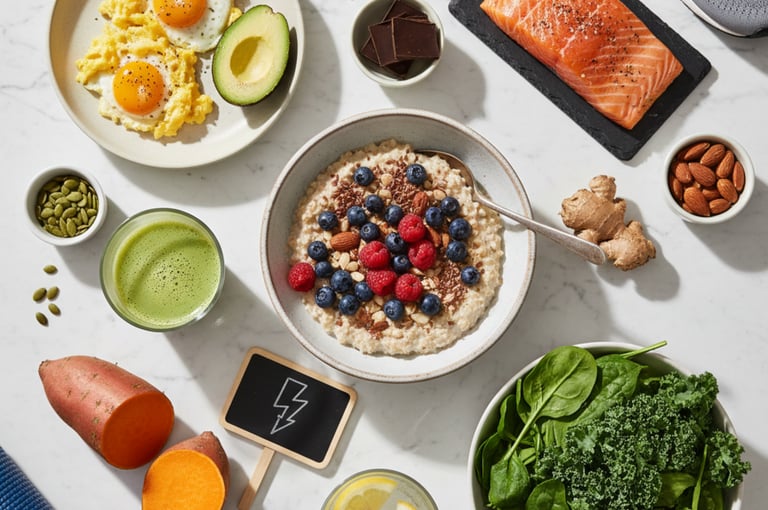
1. Oats (Steel-Cut or Rolled)
One of the best breakfast foods for sustained energy.
Why they work: Oats provide complex carbohydrates with soluble fiber (beta-glucan) that slows digestion and provides steady glucose release for hours. They're rich in B vitamins (thiamin, riboflavin, niacin) essential for energy metabolism, iron, magnesium, and manganese. The combination creates sustained energy without crashes.
How to use: 1/2 to 1 cup cooked oatmeal for breakfast. Steel-cut oats have lower glycemic index than instant. Add protein (nuts, seeds, Greek yogurt) and healthy fats to further stabilize blood sugar.
Timeline: Notice sustained morning energy (no 10 AM crash) within days of consistent use.
2. Sweet Potatoes
Nutrient-dense carb source with additional energy-supporting compounds.
Why they work: Sweet potatoes provide complex carbs for sustained energy plus vitamin A (immune function), vitamin C (iron absorption and adrenal support), manganese (energy metabolism), and potassium (electrolyte balance). The fiber content slows digestion, preventing blood sugar spikes.
How to use: Medium sweet potato (with skin) as part of lunch or dinner. Pair with protein and healthy fat. The purple varieties have extra antioxidants.
3. Quinoa
Complete protein grain alternative.
Why it works: Quinoa provides all nine essential amino acids (complete protein) plus complex carbs, making it superior to most grains for sustained energy. It's rich in iron (combats fatigue), magnesium (ATP production), and B vitamins. The protein content helps stabilize blood sugar.
How to use: 1/2 to 1 cup cooked quinoa with meals. Use as rice alternative, in salads, or for breakfast porridge.
4. Brown Rice
Whole grain with sustained release.
Why it works: Brown rice provides complex carbs, B vitamins (especially B1 thiamin for energy metabolism), magnesium, and selenium. The fiber and nutrient density create steady energy release compared to white rice's rapid spike.
How to use: 1/2 to 1 cup cooked brown rice with meals. Basmati has lower glycemic index. Pair with protein and vegetables.
Category 2: Iron-Rich Foods (Combat Fatigue at the Source)
Iron deficiency is the most common nutritional cause of fatigue globally.
5. Grass-Fed Red Meat (Beef, Bison)
Most bioavailable iron source.
Why it works: Red meat provides heme iron (absorbed 15-35%) which is far superior to plant-based non-heme iron (absorbed 2-20%). It also provides B12, zinc, and complete protein. According to research in the Journal of Nutrition, heme iron from meat is the most effective dietary treatment for iron deficiency anemia.
How to use: 3-4 oz serving 2-3 times weekly. Choose grass-fed for better omega-3 profile. Don't overcook (destroys nutrients).
Important: Women with heavy periods, vegetarians/vegans, and those with digestive issues are highest risk for iron deficiency.
6. Liver (Beef or Chicken)
Nature's multivitamin with exceptional iron content.
Why it works: Liver is the most nutrient-dense food on earth. Provides massive amounts of iron (especially heme form), B12 (often 1000%+ daily value in one serving), folate, vitamin A, copper, and CoQ10. One serving of beef liver provides more bioavailable nutrients than most supplements.
How to use: 3-4 oz once weekly. Freeze fresh liver, grate frozen into ground meat, or make pâté. The taste takes adjustment but nutrient density is unmatched.
7. Oysters and Shellfish
Exceptional nutrient density for energy.
Why they work: Oysters provide massive zinc (immune function and hormone production), iron, B12, selenium, and copper—all critical for energy production. Six oysters provide more zinc than most people get in a week.
How to use: 3-6 oysters weekly. Also consume clams, mussels, shrimp. Ensure fresh, quality sources.
8. Dark Leafy Greens (Spinach, Kale, Swiss Chard)
Plant-based iron plus other energy nutrients.
Why they work: Dark leafy greens provide non-heme iron, folate (B vitamin for energy), magnesium (ATP production), vitamin C (enhances iron absorption when eaten together), and antioxidants. While non-heme iron absorbs less efficiently than heme iron, consuming with vitamin C sources improves absorption.
How to use: 2-3 cups daily (raw) or 1-2 cups (cooked). Sauté in olive oil or add to smoothies. Combine with vitamin C foods (lemon, tomatoes, peppers).
9. Pumpkin Seeds
Rich plant-based iron and magnesium source.
Why they work: Pumpkin seeds provide iron, magnesium (essential for energy), zinc, tryptophan (serotonin precursor), and healthy fats. The magnesium-iron combination supports energy production at cellular level.
How to use: 1-2 tablespoons daily. Add to oatmeal, salads, or eat as snack. Raw or lightly roasted.
Category 3: B Vitamin-Rich Foods (Energy Metabolism)
B vitamins are cofactors in converting food to cellular energy (ATP).
10. Eggs (Especially Yolks)
Complete B vitamin package.
Why they work: Eggs provide B12, B2 (riboflavin), B5 (pantothenic acid), folate, and choline. The yolks contain most B vitamins plus iron and vitamin D. Eggs also provide complete protein for blood sugar stability. This combination directly supports energy metabolism.
How to use: 2-3 eggs daily. Don't skip yolks (that's where nutrients are). Pasture-raised have superior nutrient profile.
11. Wild-Caught Salmon
Omega-3s plus B vitamins for sustained energy.
Why it works: Salmon provides B12, B6, niacin (B3), and thiamin (B1)—all essential for energy production. It also provides omega-3 fatty acids that reduce inflammation (energy drain), vitamin D, selenium, and complete protein. The anti-inflammatory omega-3s improve mitochondrial function.
How to use: 4-6 oz serving 2-3 times weekly. Wild-caught superior to farmed. Don't overcook.
12. Nutritional Yeast
Vegan B vitamin powerhouse.
Why it works: Fortified nutritional yeast provides massive B vitamin content including B12 (often lacking in plant-based diets), B1, B2, B3, B6, and folate. It's especially important for vegans who struggle to get adequate B12 from food.
How to use: 1-2 tablespoons daily. Sprinkle on foods for cheesy flavor. Add to smoothies, popcorn, pasta, or soups.
Category 4: Magnesium-Rich Foods (Cellular Energy Production)
Magnesium is required for ATP synthesis—the energy currency of cells.
13. Almonds and Cashews
Convenient magnesium sources with healthy fats.
Why they work: Almonds provide magnesium (76mg per oz), vitamin E, healthy fats, and protein. The combination supports energy production, reduces oxidative stress (improves mitochondrial function), and provides sustained energy through healthy fats.
How to use: 1 oz (23 almonds) daily as snack or added to meals. Raw or dry-roasted (avoid oils and excess salt).
14. Dark Chocolate (70%+ Cacao)
Healthy indulgence with energy benefits.
Why it works: Dark chocolate provides magnesium, iron, copper, and theobromine (mild stimulant more sustained than caffeine). The flavonoids improve blood flow, enhancing oxygen and nutrient delivery to cells. Contains small amounts of caffeine for gentle energy boost.
How to use: 1-2 oz (1-2 squares) of 70-85% dark chocolate daily. Too much provides excess caffeine. Enjoy as afternoon energy boost.
15. Avocados
Healthy fats plus magnesium and B vitamins.
Why they work: Avocados provide monounsaturated fats for sustained energy, magnesium, potassium (electrolyte balance), B vitamins (B5, B6, folate), and fiber. The healthy fats slow digestion and stabilize blood sugar, preventing crashes.
How to use: 1/2 to 1 avocado daily. Add to breakfast, salads, or smoothies. The fats enhance absorption of fat-soluble vitamins.
Category 5: Protein Foods (Blood Sugar Stability)
Protein prevents energy crashes by stabilizing blood sugar and providing sustained fuel.
16. Greek Yogurt (Plain, Full-Fat)
Protein-rich with additional benefits.
Why it works: Greek yogurt provides protein (15-20g per cup) that stabilizes blood sugar, preventing crashes. It also provides B12, calcium, and probiotics. The probiotics support gut health, improving nutrient absorption. Full-fat versions provide sustained energy and don't spike blood sugar like low-fat versions with added sugars.
How to use: 1 cup as snack or breakfast component. Choose plain (add own fruit/honey). Pair with berries and nuts for complete meal.
17. Wild-Caught Sardines
Convenient, shelf-stable energy food.
Why they work: Sardines provide complete protein, omega-3s (anti-inflammatory), B12, vitamin D, calcium, iron, and CoQ10. The nutrient density is exceptional. The omega-3s improve mitochondrial function while protein stabilizes energy.
How to use: One can (3-4 oz) several times weekly. Eat on salads, crackers, or straight. Choose BPA-free cans in olive oil or water.
18. Lentils and Beans
Plant-based protein with iron and fiber.
Why they work: Legumes provide protein plus iron, folate, magnesium, and resistant starch (feeds beneficial gut bacteria). The combination of protein and fiber creates very stable blood sugar, preventing crashes. Lentils are particularly rich in iron and folate.
How to use: 1/2 to 1 cup cooked legumes daily. Soak dried beans overnight to reduce gas-producing compounds. Start with lentils (most digestible).
Category 6: Adaptogenic and Energizing Foods
Certain foods help your body adapt to stress and support sustained energy.
19. Matcha Green Tea
Sustained caffeine without the crash.
Why it works: Matcha provides caffeine (gentle, sustained release) plus L-theanine (amino acid that promotes calm focus). This combination creates alert relaxation without jitters or crashes typical of coffee. It also provides antioxidants (EGCG) that support mitochondrial function and reduce oxidative stress.
How to use: 1-2 cups daily, morning or early afternoon. Whisk 1/2 to 1 teaspoon powder in hot water. Provides 3-4 hour sustained energy versus coffee's spike and crash.
20. Beets and Beet Juice
Improves oxygen delivery and exercise performance.
Why they work: Beets provide nitrates that convert to nitric oxide, improving blood flow and oxygen delivery to muscles and brain. Research shows beet juice improves exercise performance and reduces fatigue. Also provides iron, folate, and natural sugars for quick energy.
How to use: 1 cup cooked beets or 4-8 oz beet juice several times weekly. Consume before workouts for enhanced performance. Expect pink urine (normal).
21. Ginger
Improves digestion and reduces inflammation.
Why it works: Ginger enhances digestion and nutrient absorption, reduces nausea, and has anti-inflammatory properties that reduce fatigue. Better digestion means better energy. The warming effect also stimulates circulation.
How to use: Fresh ginger (1-inch piece grated) in tea, smoothies, or meals daily. Or 1/2 to 1 teaspoon powdered ginger.
22. Maca Powder
Peruvian adaptogen for energy and endurance.
Why it works: Maca is an adaptogenic root that supports adrenal function, balances hormones, and enhances energy and endurance. Research shows improvements in energy, mood, and sexual function. Rich in B vitamins, vitamin C, iron, and amino acids.
How to use: 1-3 teaspoons maca powder daily in smoothies, oatmeal, or coffee. Start small (some find it stimulating). Gelatinized maca is easier to digest.
Category 7: Hydrating Foods and Beverages
Dehydration is a common and overlooked cause of fatigue.
23. Water (Plain and Infused)
The most important "food" for energy.
Why it works: Even mild dehydration (2% body weight loss) significantly impairs physical and cognitive performance. Every cellular process requires water. Blood volume decreases with dehydration, reducing oxygen delivery and causing fatigue, brain fog, and poor concentration.
How to use: Minimum 64 oz (8 cups) daily, more if exercising or in hot climates. Drink consistently throughout day. Add lemon, cucumber, or mint for flavor.
Signs of dehydration: Fatigue, dark urine, dry mouth, headache, dizziness.
24. Coconut Water
Natural electrolyte replenishment.
Why it works: Coconut water provides potassium, magnesium, sodium, and calcium—electrolytes critical for energy, muscle function, and nerve transmission. Particularly useful after exercise or in heat. Natural sugars provide quick energy.
How to use: 8-16 oz after exercise or when needing electrolyte replenishment. Choose unsweetened varieties.
25. Watermelon and Cucumbers
Hydrating foods with added benefits.
Why they work: These foods are 90%+ water, helping with hydration. Watermelon provides natural sugars for quick energy plus citrulline (improves blood flow). Cucumbers provide minerals and help maintain fluid balance.
How to use: 1-2 cups as snacks or in salads. Especially helpful in summer or after exercise.
Foods and Habits That Drain Your Energy
Sugar and Refined Carbohydrates
Why they're problematic: Create rapid blood sugar spike → insulin surge → sharp drop → intense fatigue, brain fog, irritability. This rollercoaster depletes energy and creates cravings for more sugar.
What to avoid: Candy, soda, juice, pastries, white bread, sugary cereals, energy bars with added sugar.
Swap to: Complex carbs with protein and fat for stable energy.
Excessive Caffeine
Why it's problematic: While moderate caffeine can enhance energy and focus, excessive intake (400mg+/day) causes dependency, disrupted sleep (even if consumed in afternoon), adrenal stress, anxiety/jitters, and brutal crashes when it wears off.
Recommendation: Limit to 200-300mg daily (2 cups coffee), cut off by noon, consider matcha for more sustained energy. If dependent, gradually reduce to reset adrenal function.
Alcohol
Why it's problematic: Impairs sleep quality (you feel tired despite hours in bed), disrupts blood sugar, depletes B vitamins and magnesium, dehydrates, and causes next-day fatigue. Even moderate drinking affects energy.
Recommendation: Minimize consumption, especially evening. If drinking, limit to 1-2 drinks max, consume with food, hydrate thoroughly.
Large Meals
Why they're problematic: Large meals divert blood flow to digestion, causing post-meal fatigue ("food coma"). This is especially pronounced with high-carb, low-protein meals.
Solution: Eat smaller, more frequent meals with balanced macros (protein, fat, complex carbs). If eating larger meals, include adequate protein and don't eat to extreme fullness.
Processed Foods and Trans Fats
Why they're problematic: Increase inflammation (drains energy), provide empty calories without nutrients needed for energy production, disrupt gut health (impairs absorption), and promote blood sugar instability.
Recommendation: Eliminate processed foods, trans fats, and industrial seed oils. Focus on whole foods.
Skipping Meals/Severe Calorie Restriction
Why it's problematic: Low calorie intake means insufficient fuel for energy production. Skipping breakfast often leads to blood sugar crashes and afternoon exhaustion. Severe restriction slows metabolism and depletes energy reserves.
Solution: Eat regular meals, especially protein-rich breakfast within 1-2 hours of waking. Ensure adequate calories for activity level.
Creating Your Energy-Supporting Diet
Optimal Meal Timing and Structure
Upon waking (within 30 min):
16-24 oz water (rehydrates after sleep)
Primes digestion
Breakfast (within 1-2 hours of waking):
Protein (eggs, Greek yogurt, protein smoothie)
Complex carbs (oats, whole grain toast, sweet potato)
Healthy fats (avocado, nuts, seeds)
Example: 3 eggs, avocado, sautéed spinach, berries
Mid-morning snack (if needed):
Handful of almonds
Apple with almond butter
Greek yogurt
Lunch:
Protein (chicken, fish, legumes, eggs)
Vegetables (variety)
Complex carbs (quinoa, brown rice, sweet potato)
Healthy fats (olive oil, avocado)
Example: Salmon salad with mixed greens, quinoa, pumpkin seeds, olive oil dressing
Afternoon (3-4 PM energy dip):
Small protein/fat snack OR
Matcha green tea + dark chocolate
Prevents late afternoon crash
Dinner (3-4 hours before bed):
Protein
Vegetables (variety)
Moderate complex carbs
Lighter than lunch to prevent evening fatigue
Example: Grass-fed beef, roasted vegetables, small sweet potato
Evening:
Hydrate with water or herbal tea
Avoid stimulants
Sample High-Energy Day
7:00 AM - Upon Waking:
16 oz water with lemon
7:30 AM - Breakfast:
Steel-cut oatmeal (1/2 cup dry)
2 tablespoons ground flax seeds
Handful walnuts
Berries
Drizzle of raw honey
Green tea or matcha
10:30 AM - Snack:
Apple with 2 tablespoons almond butter
OR Greek yogurt with pumpkin seeds
12:30 PM - Lunch:
Wild salmon (4 oz)
Large mixed greens salad with avocado
Quinoa (1/2 cup)
Olive oil + lemon dressing
Steamed broccoli
Sparkling water
3:30 PM - Afternoon Pick-Me-Up:
Matcha latte
1-2 squares dark chocolate (70%+)
OR handful almonds/cashews
6:30 PM - Dinner:
Grass-fed beef or chicken (4 oz)
Roasted sweet potato (medium)
Sautéed spinach and kale with garlic
Side salad
8:00 PM - Evening:
Herbal tea (chamomile or peppermint)
Water
This provides: complete protein at each meal, complex carbs for sustained energy, iron from red meat and greens, B vitamins from eggs and fish, magnesium from nuts and greens, healthy fats for hormone production, consistent blood sugar (no crashes), and strategic timing to support natural energy rhythms.
Supplement Considerations
While food should be primary, certain supplements can address deficiencies:
Iron: If deficient (get tested), supplement with 18-65mg ferrous sulfate or bisglycinate (better absorbed, less constipating). Take with vitamin C, away from calcium.
B-Complex: High-quality B-complex with methylated B12 and folate. Especially important for vegans, elderly, those with digestive issues.
Magnesium: 200-400mg daily if deficient. Glycinate or malate forms best for energy. Citrate can cause loose stools.
Vitamin D: If deficient (very common), supplement 2,000-5,000 IU daily depending on levels. Get tested.
CoQ10: 100-200mg daily supports mitochondrial energy production, especially if over 40 or taking statins.
Adaptogenic herbs: Ashwagandha, rhodiola, cordyceps can support adrenal function and energy. Use quality supplements.
Always consult healthcare provider before starting supplements, especially if on medications.
Lifestyle Factors That Amplify Food Benefits
Sleep Quality
No amount of nutrition compensates for chronic sleep deprivation. Aim for 7-9 hours quality sleep nightly.
Movement and Exercise
Paradoxically, expending energy through exercise increases energy levels by improving mitochondrial function, circulation, hormone balance, and sleep quality. Start with gentle walking if exhausted.
Stress Management
Chronic stress depletes energy. Incorporate meditation, deep breathing, yoga, time in nature, or therapy as needed.
Sunlight Exposure
Morning sunlight supports circadian rhythm, vitamin D production, and energy levels. Get 10-20 minutes of morning sun exposure.
Consistent Eating Schedule
Eating at regular times trains metabolism and prevents energy dips from blood sugar fluctuations.
Timeline: When to Expect Energy Improvements
Days 1-3:
Better hydration improves energy slightly
Stable blood sugar from balanced meals noticeable
Coffee crashes reduced if limiting caffeine
Week 1:
More consistent energy throughout day
Reduced afternoon crashes
Better mental clarity
Improved sleep (which improves daytime energy)
Weeks 2-4:
Significant energy improvements
More stable mood
Better exercise performance
Reduced reliance on caffeine
Noticeable difference in vitality
Months 2-3:
Energy levels significantly elevated
Nutrient deficiencies correcting
Sustained improvements
Enhanced physical and mental performance
Much less fatigue
Individual results vary based on severity of initial deficiencies, consistency with dietary changes, addressing other factors (sleep, stress, exercise), and underlying medical conditions (thyroid, anemia, chronic fatigue syndrome).
Conclusion
Chronic fatigue isn't a personality flaw or something you just have to accept. In most cases, it's the result of nutritional deficiencies, blood sugar dysregulation, inflammation, and lifestyle factors that can be addressed through strategic nutrition.
The foods in this guide aren't exotic or expensive. Oats, eggs, sweet potatoes, leafy greens, nuts, seeds, fish, and whole grains are accessible foods available anywhere. When combined strategically with adequate protein, healthy fats, and proper hydration, these foods provide the nutrients your cells need to produce energy efficiently.
Most people are surprised by how quickly energy improves. Within a week of stabilizing blood sugar and increasing nutrient-dense foods, the afternoon crashes diminish. Within a month, energy levels often transform to levels not experienced in years.
Yes, sleep matters. Yes, stress management helps. Yes, exercise is important. But without the nutritional foundation—the iron, B vitamins, magnesium, complex carbs, protein, and hydration your cells need to produce ATP—these other interventions only go so far.
Start today. Have a protein-rich breakfast. Drink more water. Add iron-rich foods. Eliminate the energy-draining foods. Include more whole foods and less processed junk. These simple additions create measurable energy improvements within days.
The research is clear. The mechanisms are understood. The foods are available. All that's missing is your action.
Your energy—and every aspect of life that depends on it—will transform through strategic nutrition.
To sustained vitality and boundless energy! ⚡
References and Further Reading
For more information on nutrition and energy levels, consult these authoritative sources:
National Institutes of Health Office of Dietary Supplements - Iron Fact Sheet
Comprehensive information on iron, deficiency symptoms, and dietary sources from the NIH.Harvard T.H. Chan School of Public Health - Nutrition for Energy
Evidence-based guidance on diet, energy levels, and optimal nutrition from Harvard experts.Cleveland Clinic - Foods That Give You Energy
Practical nutrition advice from Cleveland Clinic on foods that boost energy naturally.
Frequently Asked Questions
How quickly can I expect my energy levels to improve with dietary changes?
Most people notice initial improvements within 3-7 days of eating balanced meals with protein and complex carbs—they experience fewer afternoon crashes and more stable energy. Significant improvements typically appear within 2-4 weeks as blood sugar stabilizes and nutrient levels begin to improve. Maximum benefits develop over 2-3 months as deficiencies correct, especially if you were low in iron, B12, or magnesium. However, some changes (like drinking more water or eating protein with breakfast) can improve energy within 1-2 days.
What's the best food to eat when I need an immediate energy boost?
For quick energy that won't crash, combine a small amount of natural sugar with protein or fat: apple with almond butter, banana with handful of nuts, or dates with cashew butter. The sugar provides immediate glucose while protein/fat prevents the crash. For sustained energy without immediate boost, choose complex carbs with protein like oatmeal with nuts or Greek yogurt with berries. Avoid pure sugar (candy, soda) which causes rapid crash. Also drink 16-24 oz water—dehydration often causes fatigue.
Will eating carbohydrates make me more tired? I've heard low-carb is better for energy.
This depends on the type and amount of carbs. Simple carbs (sugar, white bread, juice) spike blood sugar then crash it, causing fatigue. Complex carbs (oats, sweet potatoes, quinoa, brown rice) provide sustained energy without crashes—your brain and muscles need glucose to function optimally. Very low-carb diets can cause fatigue, brain fog, and poor exercise performance in many people. The key is eating complex carbs in moderate portions with protein and fat. Most people thrive on balanced macros, not extremes.
I'm always tired despite eating healthy. What am I missing?
If you're eating well but still exhausted, consider: (1) Iron deficiency—get ferritin levels tested, especially if you're female, vegetarian, or have heavy periods. (2) B12 deficiency—common in vegans, elderly, and those with digestive issues. (3) Vitamin D deficiency—extremely common and strongly linked to fatigue. (4) Thyroid dysfunction—ask doctor to test TSH, free T3, free T4. (5) Sleep quality issues—even 7-8 hours of poor quality sleep causes fatigue. (6) Chronic stress depleting adrenals. (7) Underlying medical conditions. Get comprehensive bloodwork including CBC, iron panel, B12, vitamin D, and thyroid.
Can supplements replace eating energy-boosting foods?
Supplements can fill gaps but shouldn't replace whole foods. Whole foods provide nutrients in synergistic combinations that supplements can't replicate, plus fiber, beneficial compounds, and effects on gut bacteria. However, strategic supplementation helps when deficiencies exist—iron supplements for anemia, B12 for vegans, vitamin D for deficiency. The ideal approach: nutrient-dense whole foods as foundation, targeted supplements for confirmed deficiencies. Always get tested before high-dose supplementation.
Why do I get so tired after lunch every day?
The post-lunch energy crash typically results from: (1) High-carb, low-protein meals spiking blood sugar then crashing it. Solution: Include protein and healthy fats with lunch. (2) Large portion sizes diverting blood to digestion. Solution: Eat smaller portions or split lunch into two smaller meals. (3) Dehydration—drink water with meals. (4) Natural circadian dip (happens to everyone 2-4 PM). Solution: Time lunch earlier, take brief walk after eating, have small protein snack at 3 PM. The combination of balanced lunch with protein, moderate portions, and afternoon movement usually eliminates severe crashes.
How much protein do I need at each meal to maintain stable energy?
For optimal energy and blood sugar stability, aim for 20-30 grams of protein per meal. This translates to: 3 eggs, 4 oz chicken/fish/meat, 1.5 cups Greek yogurt, or 1.5 cups legumes. Protein slows digestion, provides sustained amino acids for cellular function, and prevents blood sugar spikes/crashes. Breakfast is especially important—protein at breakfast improves energy throughout the entire day. If you're very active or larger, you may need 30-40 grams per meal.
Can food really replace my need for coffee/caffeine?
Yes, for most people, though it requires transition time. Strategic nutrition eliminates the crashes that make you dependent on caffeine. Start by: eating protein-rich breakfast (stabilizes morning energy), staying well-hydrated, eating balanced meals preventing blood sugar crashes, addressing nutrient deficiencies (iron, B12, magnesium), and getting quality sleep. Then gradually reduce caffeine over 2-3 weeks. Many people find they need little to no caffeine once nutrition is optimized. If keeping caffeine, limit to 200mg before noon and switch to matcha for more sustained energy without crashes.
What if I've tried everything and still have no energy?
If comprehensive dietary changes, adequate sleep, stress management, and hydration don't improve energy after 4-6 weeks, investigate: (1) Iron deficiency anemia (get complete iron panel including ferritin, TIBC, transferrin saturation). (2) Hypothyroidism (test TSH, free T3, free T4, thyroid antibodies). (3) Vitamin B12 deficiency (test serum B12 and methylmalonic acid). (4) Vitamin D deficiency (test 25-hydroxy vitamin D). (5) Chronic fatigue syndrome, fibromyalgia, or other conditions. (6) Sleep apnea (disrupts sleep quality despite hours in bed). (7) Depression or other mental health conditions. See doctor for comprehensive evaluation including bloodwork.
Are there any foods I should specifically eat every single day for energy?
While variety is important, these daily staples provide comprehensive energy support: (1) Protein at every meal (eggs, meat, fish, legumes, Greek yogurt). (2) Dark leafy greens (iron, folate, magnesium). (3) One serving of iron-rich food (red meat 2-3x/week, or daily plant sources with vitamin C). (4) Healthy fats (nuts, seeds, avocado, olive oil). (5) Complex carbs (oats, sweet potato, quinoa). (6) Adequate water (64+ oz). This combination provides all nutrients needed for optimal energy production: iron, B vitamins, magnesium, protein for blood sugar stability, and sustained fuel sources.
About Author
Judith Tsanga is an Applied Biosciences & Biotechnology graduate with an Advanced Level qualification in Food Science, and the founder of BiteBrightly. Her passion for food as medicine began with her own experience: after making targeted dietary changes, she noticed a meaningful improvement in her eyesight — a personal transformation that inspired her mission to share evidence-based nutrition insights that help others eat well and heal boldly. Content on BiteBrightly is for educational purposes and isn't a substitute for advice from your doctor or dietitian.
Follow on Pinterest for daily health tips, recipes, and wellness inspiration.
Important Notice: The information in this article is for educational purposes only and is not intended as medical advice or to replace professional medical treatment. Always consult your healthcare provider before making any dietary changes, starting supplements, or implementing health recommendations, especially if you have medical conditions, take medications, are pregnant, or nursing. This information is not intended to replace your prescribed medications or treatment plans. Individual results vary based on genetics, health status, and lifestyle factors.
Related posts
Connect
Join our newsletter for fresh health tips
© 2026. All rights reserved.