The Best Foods for Strong Hair, Glowing Skin, and Healthy Nails: What to Eat for Real Results
Your skin renews every 28 days. Your hair reflects what you ate 3 months ago. These 10 foods feed all three — hair, skin, and nails — with the science explained simply.
by BiteBrightly
4/19/202618 min read
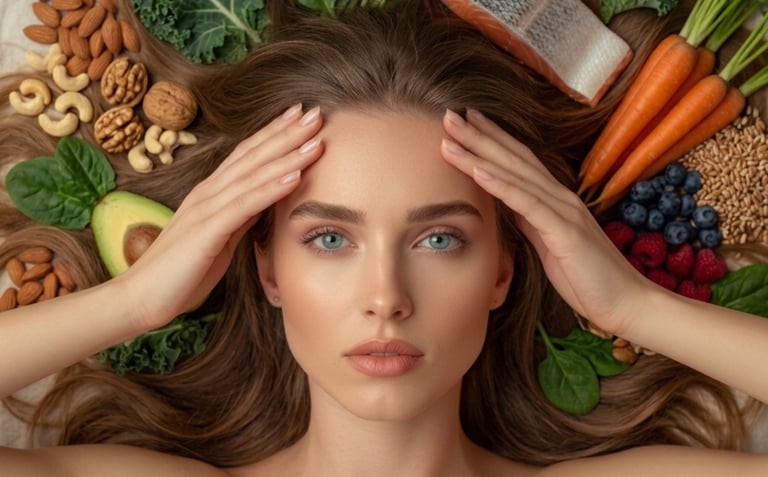

The Best Foods for Strong Hair, Glowing Skin, and Healthy Nails: What to Eat for Real Results
By BiteBrightly 19 April 2026: This post might contain affiliate links.
Have you ever noticed that your hair seems dull and brittle during stressful times, your skin breaks out or looks tired and dull, or your nails break easily no matter how carefully you take care of them? That is not a coincidence. Your hair, skin, and nails are all made from materials that come directly from what you eat — and when your diet is missing certain key nutrients, your body stops sending them to these tissues first.
Here is something important to understand: your body has a priority system. When nutrients come in, your body sends them first to the organs it needs to survive — your heart, brain, lungs, and immune system. Hair, skin, and nails are considered "non-essential" by your body's survival logic, which means they are the last to receive nutrients and the first to be cut off when supplies run low.
This is actually great news. It means that when your hair is thinning, your skin is dull or breaking out, or your nails keep peeling — your body is giving you visible signals that something is missing. And in most cases, adding the right foods can genuinely change what you see in the mirror.
This guide covers the best foods for hair, skin, and nail health, explained in plain language, with the specific science behind why each one works.
Key Takeaways
Your hair, skin, and nails are all made primarily from proteins — keratin (hair and nails) and collagen (skin) — which means adequate dietary protein is the single most important nutritional factor for all three
Skin is your largest organ, and its appearance is a direct reflection of what is happening nutritionally inside your body — collagen breakdown, inflammation, oxidative damage, and dehydration all show up on your skin before they show up anywhere else
Hair grows approximately 1–1.5 cm per month, and each strand is built from the nutrients you ate weeks before — which means the condition of your hair today reflects what you were eating one to three months ago
Biotin (vitamin B7) is the most famous hair and nail nutrient — but iron, zinc, and protein deficiencies are far more common causes of hair and nail problems
Iron deficiency is the most common nutritional cause of hair loss in women globally — it affects the oxygen supply to hair follicles, which slows growth and causes shedding
Omega-3 fatty acids from fatty fish feed the sebaceous glands that produce scalp oil and skin barrier lipids — without enough omega-3, hair becomes dull and skin becomes dry and inflamed
Vitamin C is not just an immune nutrient — it is the cofactor that your body cannot make collagen without, making it the most important nutrient for skin firmness, wound healing, and the structural support of hair follicles
How Hair, Skin, and Nails Are Actually Built
Hair: What It Is and How It Grows
Each hair on your head grows from a tiny organ in your scalp called a hair follicle. The follicle is like a tiny factory — it takes raw materials from your bloodstream and uses them to build the hair fiber that grows out of it.
The main material is a protein called keratin — a tough, fibrous protein built from amino acids. Your body cannot make keratin without a continuous supply of amino acids from your diet. This is why low-protein diets almost always result in weaker, slower-growing hair.
Here is the timing that surprises most people: the hair strand you can see above your scalp is already finished — it is a completed product. The living part is the follicle, deep in your scalp. Changes in your diet affect the follicle first, and you will not see the results in your visible hair for two to four months.
Skin: Your Living, Constantly Renewing Outer Layer
Your skin is not just a passive covering — it is a living, active organ that is constantly renewing itself. The outermost layer (epidermis) replaces itself completely approximately every 28 days. The deeper layer (dermis) contains a dense network of collagen and elastin fibers that give skin its firmness, elasticity, and plumpness.
Collagen is the most abundant protein in your skin — it makes up approximately 75% of the dry weight of the dermis. As collagen production slows with age (starting as early as the mid-20s), skin becomes thinner, less elastic, and more prone to wrinkles and sagging. Dietary choices that support collagen production — vitamin C, protein, zinc, antioxidants — directly slow this process.
Your skin also has a barrier function. The outermost skin cells are embedded in a lipid (fat) matrix that prevents water loss and blocks environmental damage. Omega-3 fatty acids, vitamin E, and adequate hydration all maintain this barrier. When the barrier breaks down from inadequate nutrition — you see dryness, sensitivity, redness, and dull texture.
Nails: What They Are and How They Grow
Your fingernails grow from the nail matrix — a small patch of tissue hidden under the base of your nail underneath the cuticle. Like hair follicles, the nail matrix takes raw materials from your bloodstream and builds the nail plate that slides out over weeks and months.
Nails are also made of keratin. Fingernails grow approximately 3mm per month, which means the nail you see today represents three to six months of nutritional history. Brittle, peeling, or soft nails are much more commonly caused by what you eat than by any nail product issue.
The 10 Best Foods for Hair, Skin, and Nails
1. Eggs
If there is one food that covers the most nutritional bases for hair, skin, and nail health at once, it is eggs. Eggs contain high-quality protein for keratin and collagen building, biotin for the enzymes that synthesize keratin, zinc for skin cell renewal and follicle function, and sulfur-containing amino acids that are the specific building blocks keratin uses most.
What it does for hair: Keratin is particularly rich in cysteine and methionine — sulfur-containing amino acids that form the tough disulfide bonds giving keratin its strength. Eggs provide both in significant amounts, making them specifically well-suited for keratin production.
What it does for skin: Egg yolks contain vitamin A, vitamin D, and choline — all important for skin cell turnover and barrier function. Vitamin A regulates the turnover of skin cells in the epidermis, helping prevent the buildup of dead cells that causes dull, rough texture. The lutein and zeaxanthin in egg yolks provide antioxidant protection to skin cells against UV-induced oxidative damage.
What it does for nails: Biotin from egg yolks supports the carboxylase enzymes involved in keratin synthesis — the nail matrix's primary protein-building process. Always eat the whole egg — the yolk contains virtually all the biotin, vitamin A, zinc, and fatty acids. Egg whites alone provide protein but miss most of the skin, hair, and nail-specific nutrients.
How to eat them: Two whole eggs daily — scrambled with spinach and olive oil, poached on whole grain toast, or hard-boiled as a portable snack.
2. Wild Salmon and Fatty Fish
Your scalp and skin both have sebaceous glands — tiny oil-producing glands that produce the natural oil keeping your hair moisturized and your skin barrier intact. These glands depend on omega-3 fatty acids to function properly. Without adequate omega-3 in your diet, both your scalp and your skin become dry from the inside out — no topical product can fully compensate.
What it does for hair: Research published in the Journal of Cosmetic Dermatology found that omega-3 and omega-6 supplementation significantly reduced hair loss and improved hair density in women with thinning hair, establishing dietary fatty acids as a direct nutritional factor in hair follicle health and growth cycle regulation.
What it does for skin: EPA and DHA from fatty fish reduce the production of pro-inflammatory compounds (specifically prostaglandin E2) that drive the redness, swelling, and sensitivity of inflammatory skin conditions including acne, eczema, and rosacea. The omega-3 fatty acids are incorporated into the cell membranes of skin cells throughout the epidermis and dermis, where they maintain the membrane fluidity required for normal cell signaling and barrier function. Skin conditions associated with omega-3 deficiency — dryness, scaling, and increased sensitivity — are among the most visually apparent nutritional deficiencies.
What it does for nails: Omega-3 fatty acids maintain the flexibility of the nail plate, preventing the brittleness and cracking that comes from dry, inflexible nail structure. They also reduce the nail bed inflammation that can accompany nail disorders.
How to eat it: Two to three servings of wild-caught fatty fish weekly — baked salmon with vegetables, sardines on rye crackers with avocado, mackerel in a grain bowl.
3. Leafy Greens (Spinach, Kale, Swiss Chard)
Iron deficiency is the most common nutritional cause of hair loss in women worldwide. But dark leafy greens do more than deliver iron — they provide folate, vitamins A and C, and antioxidants that work across hair, skin, and nail health simultaneously.
What it does for hair: Research has consistently found that iron deficiency — even before it reaches the level of anemia — is associated with significant hair loss, particularly in premenopausal women. Hair follicles are among the most rapidly dividing cells in the body, and this rapid cell division requires iron. When iron is low, follicle cell division slows and more hairs shift into the shedding phase.
What it does for skin: Leafy greens are one of the richest sources of vitamin K — required for the carboxylation of matrix Gla protein in skin, which regulates calcium deposition and helps maintain skin elasticity. The beta-carotene in dark greens like kale and spinach converts to vitamin A in the body, which is required for the normal turnover of skin cells. Without adequate vitamin A, skin becomes rough, dry, and prone to clogged pores because dead skin cells are not shed normally. The dietary nitrates in leafy greens convert to nitric oxide, which improves blood flow — including to the skin's capillary network, giving skin that "healthy glow" associated with good circulation.
What it does for nails: Folate from leafy greens supports the rapid cell division of nail matrix cells. Iron supports the oxygen delivery to nail matrix cells that drives their growth rate.
A tip: Always eat plant-based iron sources with a vitamin C source at the same meal — lemon juice on spinach or an orange alongside your salad significantly increases iron absorption from plant foods.
How to eat it: Sautéed spinach with garlic and lemon. Smoothies with spinach. Large salads with protein and a citrus dressing.
4. Sweet Potato
Sweet potato is one of the richest sources of beta-carotene — which your body converts to vitamin A. And vitamin A is probably the most important single nutrient for your skin's day-to-day renewal process.
What it does for skin: Every 28 days, your entire outer skin layer renews itself. This process — called keratinocyte differentiation — is directly regulated by vitamin A. When vitamin A is adequate, new skin cells form properly, dead cells shed at the right rate, and skin texture stays smooth, even, and clear. When vitamin A is low, the opposite happens: skin becomes rough and dull, pores clog from accumulated dead cells, and the skin barrier weakens. One medium sweet potato provides more than the full daily vitamin A requirement from beta-carotene. The beta-carotene form is particularly safe because your body only converts as much as it needs — preventing the toxicity risk that can come from very high-dose vitamin A supplements.
What it does for hair: Vitamin A regulates sebum production in scalp sebaceous glands. Both too little and too much vitamin A affect scalp oil balance and hair health — food sources are safer than high-dose supplements because conversion is self-regulating.
What it does for nails: Vitamin A supports the nail bed epithelium — the tissue underneath the nail plate that supplies moisture and nutrients to the growing nail. Vitamin A deficiency is associated with dry, brittle nails that crack easily.
How to eat it: Roasted sweet potato wedges with olive oil (fat improves beta-carotene absorption significantly). Mashed sweet potato with coconut milk. Sweet potato soup. Added to smoothies.
5. Pumpkin Seeds and Sunflower Seeds
Seeds — particularly pumpkin and sunflower — are some of the most mineral-dense foods available and among the best sources of zinc and selenium, two minerals that are essential for skin, hair, and nail health in different but complementary ways.
What it does for hair: Zinc is a direct structural component of the enzymes that synthesize keratin proteins. Zinc deficiency produces one of the most recognizable nutritional hair loss patterns — diffuse thinning across the scalp, often accompanied by scalp dryness.
What it does for skin: Zinc is one of the most important skin nutrients available. It regulates sebaceous gland activity — making it directly relevant to acne, since acne is partly a sebaceous gland disorder. Zinc acts as a natural 5-alpha-reductase inhibitor, reducing the conversion of testosterone to DHT, which overstimulates sebaceous glands in acne-prone skin. Zinc also supports wound healing, reduces inflammation in skin, and is required for the synthesis of collagen and elastin. Research has found zinc supplementation significantly reduces acne severity — making dietary zinc one of the most evidence-supported nutritional approaches to acne management.
What it does for nails: Zinc is required for the nail matrix cells that produce keratin — and zinc deficiency is associated with longitudinal ridges, brittle nails, and layered peeling of nail tips.
Selenium from sunflower seeds (and Brazil nuts) protects hair follicles, skin cells, and nail matrix cells from oxidative damage through the glutathione peroxidase enzyme system.
How to eat them: Two tablespoons of pumpkin seeds daily in oatmeal, salads, or as a snack. Sunflower seed butter on toast. A mixed seed blend on yogurt or soup.
6. Lentils, Chickpeas, and Beans
Legumes are among the best plant-based sources of protein, iron, zinc, and biotin — covering the three most commonly deficient nutrients for hair and nail health and providing the building material for skin collagen.
What it does for hair and nails: One cup of cooked lentils provides 18g of protein, 6.6mg of iron, zinc, and meaningful biotin — an almost complete hair and nail nutrition package from a single plant food. The protein provides the amino acid building blocks for keratin. The lysine in legumes (an essential amino acid often lower in grains) is specifically important for both keratin and collagen structure.
What it does for skin: Legumes are one of the best dietary sources of lysine — the amino acid that is one of the two most important for collagen synthesis. Collagen is built from a repeating chain of amino acids dominated by glycine, proline, and hydroxyproline — but lysine is needed for the cross-linking of collagen fibers that gives them their tensile strength. Without adequate lysine, collagen fibers are less stable and skin loses firmness more rapidly. The isoflavones in chickpeas and soybeans also have mild estrogenic properties that support skin thickness and moisture retention — relevant particularly for women in their 40s and beyond when skin thinning accelerates.
The prebiotic fiber in legumes feeds the gut microbiome, which has a direct connection to skin health through the gut-skin axis — dysbiosis (an unhealthy gut microbiome) is associated with increased skin inflammation, acne, and eczema through the systemic inflammatory pathways that dietary fiber helps regulate.
How to eat them: Lentil soup with leafy greens and lemon. Hummus as a daily protein and zinc source. Chickpea curry. Black bean salad with red peppers.
7. Greek Yogurt
Greek yogurt delivers high-quality complete protein and vitamin B5 (pantothenic acid) — important for hair follicle strength — alongside probiotics that are increasingly recognized as one of the most important dietary factors for skin health through the gut-skin axis.
What it does for hair: Pantothenic acid (vitamin B5) supports the adrenal gland function that regulates cortisol — and high cortisol is one of the most significant causes of hair loss (telogen effluvium). Vitamin B5 is also used in hair products as "panthenol" — a provitamin form. Dietary B5 works from the inside, supporting the follicle cells that produce the hair structure itself.
What it does for skin: The probiotics in plain Greek yogurt directly support the gut microbiome composition that influences systemic inflammation — and systemic inflammation is the underlying driver of acne, rosacea, eczema, and the accelerated skin aging caused by inflammaging. The gut-skin axis is now well-established: people with healthier gut microbiomes (more Lactobacillus and Bifidobacterium diversity) consistently have lower rates of inflammatory skin conditions. Probiotics from yogurt directly seed this beneficial microbiome. Additionally, Greek yogurt's complete protein provides the amino acids needed for both collagen and keratin synthesis.
What it does for nails: Complete protein from Greek yogurt provides all the amino acids needed for nail matrix keratin production, including the often-limited sulfur amino acids.
How to eat it: Plain full-fat Greek yogurt with berries and seeds for breakfast. As a sauce base replacing cream. Post-workout protein snack.
8. Nuts (Walnuts, Almonds, Brazil Nuts)
Nuts provide a unique combination of vitamin E, selenium, omega-3 ALA, and biotin that addresses skin oxidative damage, scalp health, hair follicle protection, and nail matrix support simultaneously.
What it does for skin: Vitamin E from almonds is the primary fat-soluble antioxidant in the skin's sebum and cell membranes. It protects skin lipids from the oxidative damage caused by UV light, pollution, and metabolic processes — the same damage that produces photoaging, dark spots, and loss of elasticity. Vitamin E is found naturally in skin sebum, and adequate dietary vitamin E helps maintain the skin's natural antioxidant surface barrier. Research has found that vitamin E works synergistically with vitamin C — vitamin C regenerates oxidized vitamin E in cell membranes, making the two nutrients together more protective than either alone. This is why eating vitamin C-rich berries or citrus alongside vitamin E-rich nuts produces greater skin antioxidant benefit than eating them separately.
What it does for hair: Vitamin E from almonds has demonstrated direct benefit for hair — a randomized controlled trial found that vitamin E supplementation significantly increased hair growth in people with hair loss, through oxidative stress reduction in the scalp. Walnuts contain biotin, zinc, omega-3 ALA, and polyphenols making them the most comprehensive single nut for hair health. Two Brazil nuts daily provides the full recommended daily selenium — protecting hair follicles and regulating thyroid hormone metabolism that governs hair growth cycles.
What it does for nails: Vitamin E protects nail bed cells from oxidative damage, and the healthy fats in nuts maintain the nail plate's flexibility and moisture balance.
How to eat them: A small daily handful of mixed walnuts, almonds, and one to two Brazil nuts. Walnut oil on salads. Almond butter on toast alongside eggs.
9. Berries (Strawberries, Blueberries, Kiwi)
Berries and kiwi are the richest vitamin C sources in the fruit world — and vitamin C is perhaps the most important dietary nutrient for skin health because your body cannot make collagen without it.
What it does for skin: Collagen — the protein making up 75% of your skin's dry weight — cannot be synthesized without vitamin C. The enzyme prolyl hydroxylase, which stabilizes collagen chains by adding hydroxyl groups to proline and lysine, requires vitamin C as a direct cofactor. Without adequate vitamin C, collagen chains are unstable, skin loses firmness, fine lines appear earlier, and wound healing slows dramatically. Research has confirmed that higher dietary vitamin C intake is independently associated with better skin appearance, less skin wrinkling, and better skin hydration across large population studies.
Blueberry anthocyanins provide additional skin protection by inhibiting the MMP (matrix metalloproteinase) enzymes that break down collagen — reducing collagen degradation from sun exposure and inflammation while simultaneously supporting its production.
What it does for hair: Vitamin C deficiency is associated with hair loss, follicle damage, and reduced collagen in the dermal layer surrounding follicles. The collagen network surrounding each follicle provides structural support and contains the blood vessels delivering nutrients to it. Vitamin C also significantly enhances iron absorption from plant foods — making it essential for the iron status that determines whether your follicles have the oxygen supply they need for rapid cell division and growth.
What it does for nails: Vitamin C is required for the collagen matrix of the nail bed — the tissue that supports, nourishes, and determines the shape of the nail plate. Soft, weak nails are often a sign of inadequate nail bed collagen, and vitamin C is the key cofactor.
How to eat them: Fresh berries with yogurt and nuts as a complete skin, hair, and nail breakfast. Kiwi sliced alongside eggs. Mixed berries in smoothies. Strawberries as a snack.
10. Oysters and Lean Meat (Beef, Chicken, Turkey)
Oysters are the most zinc-dense food on the planet, and lean meat provides the most bioavailable forms of iron and zinc alongside the complete protein that is the foundation of collagen, keratin, and every skin cell your body makes.
What it does for skin: Collagen is made primarily from glycine, proline, and hydroxyproline — amino acids that come from protein foods. When you eat meat, particularly collagen-containing cuts and bone broth, you provide these amino acids directly. Heme iron from meat supports healthy blood flow to the skin's capillary network — adequate iron means better oxygenation of skin cells, which shows as improved skin color and vitality. Zinc from meat and oysters reduces skin inflammation, regulates sebaceous gland activity (directly addressing acne), and supports the wound healing and cell renewal that keeps skin looking fresh and clear.
What it does for hair: Heme iron from meat is absorbed at 15–35% efficiency — compared to 2–20% from plant foods. For women experiencing hair loss related to iron deficiency, lean red meat two to three times weekly can make a meaningful difference in ferritin levels. Zinc from oysters (74mg per 6 oysters) corrects zinc deficiency-related hair loss faster than any other dietary source.
What it does for nails: The complete protein from meat and fish provides all essential amino acids for nail keratin production, and heme zinc from meat and oysters maintains the nail matrix's ability to produce strong, smooth nail plate at 40–50% absorption efficiency — significantly better than the 15–20% from plant sources.
How to eat them: Lean beef stir-fry with vegetables and leafy greens. Chicken with sweet potato. Oysters when available — fresh, smoked, or canned. Turkey in grain bowls.
The Hair, Skin, and Nail Nutrition Strategy
The Three Timelines
Understanding how long changes take to show is one of the most important things you can know — because it prevents giving up too early:
Skin: Your outer skin layer renews completely every 28 days. This means dietary improvements can show in skin texture and glow within four to eight weeks — faster than hair or nails. However, the deeper collagen layer rebuilds slowly — meaningful improvements in skin firmness and elasticity from dietary changes take three to six months of consistency.
Hair: New growth incorporating improved nutrition will not emerge from your scalp for weeks, and you will not see meaningful changes in visible hair length and quality for two to four months. The hair you currently see was built months ago.
Nails: Changes in nail quality from dietary improvements will gradually emerge from under your cuticle over four to six months as better-nourished nail plate replaces older nail plate. Look for the new growth near the cuticle first.
The Most Important Nutritional Priorities
Adequate total protein — without enough protein, your body cannot build keratin or collagen.
Vitamin C daily — required for every collagen molecule your body makes. No vitamin C = no new collagen.
Iron status — particularly for women. Ask your doctor to test ferritin if hair is shedding.
Zinc — for follicle enzymes, skin cell renewal, sebaceous gland regulation, and nail matrix function.
Omega-3 — for scalp and skin sebaceous gland function, skin barrier integrity, and anti-inflammatory protection.
Frequently Asked Questions
Why is my hair falling out even though I take biotin supplements?
Biotin supplements are the most commonly purchased hair growth product — and in most people with hair loss, they are not addressing the actual cause. True biotin deficiency is rare in people eating any varied diet. The most common nutritional causes of hair loss are iron deficiency (specifically low ferritin), zinc deficiency, inadequate total protein, and vitamin D deficiency — none of which biotin supplementation addresses. If you are experiencing significant hair shedding, ask your doctor to test ferritin (stored iron), zinc, vitamin D, and thyroid function specifically before spending money on biotin.
What foods are best specifically for acne-prone skin?
The most evidence-supported dietary changes for acne: reduce high-glycemic foods (white bread, sugary drinks, processed snacks) — the blood sugar spikes drive insulin elevation that stimulates sebaceous glands; increase omega-3 from fatty fish — directly reduces the prostaglandin-driven sebaceous inflammation of acne; increase zinc from pumpkin seeds, oysters, and legumes — zinc inhibits the enzyme that converts testosterone to DHT, reducing sebaceous gland overstimulation; support gut microbiome diversity with fermented foods and fiber — the gut-skin axis means gut dysbiosis directly drives inflammatory acne; and reduce dairy if it seems to be a trigger (some people find conventional high-hormone dairy worsens acne, though this is individual).
How long before I see improvements in skin from dietary changes?
Skin responds faster than hair or nails — the 28-day epidermal renewal cycle means you can notice improvements in skin glow, texture, and hydration within four to six weeks of consistent dietary improvement. Collagen-related changes (improved firmness, reduced fine lines) take longer — three to six months. The most noticeable early improvements are typically: reduced skin dullness (from better circulation and antioxidant intake), improved skin hydration (from omega-3 and adequate protein), and reduced inflammatory redness (from reduced sugar, increased omega-3, and better gut microbiome support from fiber and fermented foods).
Can stress really affect skin, hair, and nails?
Yes — significantly and through multiple pathways. Cortisol (the main stress hormone) directly suppresses the immune function that maintains skin barrier integrity, contributing to inflammatory skin flares. It pushes hair follicles into the resting phase (causing the delayed shedding called telogen effluvium), and it redirects nutrients away from "non-essential" tissues including skin, hair, and nails. The B vitamins (particularly B5 from Greek yogurt and B complex from whole grains) support adrenal function and help moderate the cortisol response. Omega-3 from fatty fish directly reduces cortisol-driven inflammation. Adequate sleep — which is nutritionally supported by magnesium from leafy greens and seeds — allows the overnight repair and collagen synthesis that maintains skin, hair, and nail quality.
References and Further Reading
Rushton DH — Clinical and Experimental Dermatology (2002) — Nutritional factors and hair loss Comprehensive clinical review establishing iron deficiency, zinc deficiency, and protein insufficiency as the three most common nutritional causes of hair loss — with ferritin below 30 ng/mL identified as the iron threshold at which hair shedding significantly increases, and the connection between the same nutritional deficiencies and skin and nail changes.
Almohanna HM et al. — Dermatology and Therapy (2019) — The Role of Vitamins and Minerals in Hair Loss: A Review Systematic review of the clinical evidence for specific vitamins and minerals in hair loss, skin health, and nail integrity — establishing the overlapping evidence base for vitamin D, iron, zinc, biotin, selenium, and vitamin C across all three tissues.
Le Floc'h C et al. — Journal of Cosmetic Dermatology (2015) — Effect of a nutritional supplement on hair loss in women Randomized controlled trial demonstrating that omega-3, omega-6, and antioxidant supplementation significantly reduced hair loss and improved hair density in women — with the same fatty acid mechanisms directly relevant to skin barrier function and inflammatory skin conditions.
Pullar JM et al. — Nutrients (2017) — The Roles of Vitamin C in Skin Health Comprehensive review of vitamin C's roles in skin health — establishing its requirement for collagen synthesis (prolyl hydroxylase cofactor), its antioxidant protection of skin cells, its role in wound healing, its effects on melanin regulation, and the clinical evidence for dietary vitamin C intake and skin appearance outcomes.
About the Author
Judith Tsanga is an Applied Biosciences & Biotechnology graduate with an Advanced Level qualification in Food Science, and the founder of BiteBrightly. Her passion for food as medicine began with her own experience: after making targeted dietary changes, she noticed a meaningful improvement in her eyesight — a personal transformation that inspired her mission to share evidence-based nutrition insights that help others eat well and heal boldly. Content on BiteBrightly is for educational purposes and isn't a substitute for advice from your doctor or dietitian.
Follow on Pinterest for daily health tips, recipes, and wellness inspiration.
Important Notice: The information in this article is for educational purposes only and is not intended as medical advice. I am not a medical doctor, registered dietitian, or dermatologist. Hair loss, skin conditions, and nail changes can be caused by medical conditions including thyroid disorders, autoimmune conditions, hormonal imbalances, and medications that require professional diagnosis. If you are experiencing significant hair shedding, persistent skin conditions, or unusual nail changes, please consult a doctor or dermatologist. Ask your healthcare provider to test ferritin, zinc, thyroid function, and vitamin D levels if hair loss is a concern. These statements have not been evaluated by the FDA.
Related posts
Connect
Join our newsletter for fresh health tips
© 2026. All rights reserved.