Iron-Rich Foods for Energy: Combat Fatigue and Anemia Naturally
Combat fatigue and anemia naturally with iron-rich foods. Beef liver, clams, lentils & more. Learn absorption hacks (vitamin C!).
by BiteBrightly
2/14/202619 min read
Iron-Rich Foods for Energy: Combat Fatigue and Anemia Naturally
By BiteBrightly 14 February 2026: This post might contain affiliate links.
You've slept 8 hours but wake up exhausted. By 2 PM, you're desperate for a nap. Simple tasks feel overwhelming—climbing stairs leaves you breathless, and brain fog makes concentration impossible. Your skin looks pale, your nails are brittle, and you're always cold even when others are comfortable. You mention it to your doctor, who orders bloodwork. The results come back: hemoglobin 10.5 g/dL (normal is 12-16 for women), ferritin 8 ng/mL (optimal is 30-100). "You're anemic," your doctor says. "Iron deficiency. We'll start you on iron supplements." You take the pills faithfully, but they cause terrible constipation and nausea. You stop taking them, and the fatigue returns worse than ever. You feel trapped—exhausted without the supplements, miserable with them. What if there's a third option? What if you could raise your iron levels, eliminate the crushing fatigue, and reverse anemia through strategic dietary changes that don't come with pharmaceutical side effects? If you're searching for iron-rich foods that actually boost energy and combat anemia naturally, backed by science and proven effective, you're about to discover that chronic fatigue and iron deficiency aren't life sentences—they're nutritional problems with food-based solutions.
Iron deficiency is the most common nutritional deficiency globally, affecting approximately 2 billion people. According to research published in The Lancet, iron deficiency anemia affects about 1.2 billion people worldwide, with the highest prevalence among menstruating women, pregnant women, and children. Iron is absolutely critical for energy production—it's required for hemoglobin synthesis (oxygen transport), cellular energy production, and numerous enzymatic reactions throughout the body.
The connection between iron deficiency and fatigue is direct and profound. Iron is the central component of hemoglobin, the protein in red blood cells that carries oxygen from your lungs to every cell in your body. When iron is low, your body can't produce enough hemoglobin or healthy red blood cells. This means less oxygen reaches your muscles, organs, and brain—resulting in the crushing fatigue, weakness, shortness of breath, difficulty concentrating, and exercise intolerance that characterize iron deficiency anemia. Your cells are literally starving for oxygen, no matter how deeply you breathe or how much you sleep.
Here's what most people don't understand about iron deficiency: the fatigue isn't laziness, depression, or "just stress." It's cellular oxygen starvation with a clear biochemical cause and a clear nutritional solution. You can sleep 10 hours and still wake exhausted because sleep doesn't fix oxygen delivery—adequate iron does. You can drink coffee all day and still feel foggy because caffeine doesn't oxygenate your brain—hemoglobin does. The relentless, bone-deep exhaustion that defines iron deficiency won't resolve until iron stores are replenished.
According to research in the American Journal of Clinical Nutrition, dietary iron intake and bioavailability are critical factors in preventing and treating iron deficiency. While iron supplements can rapidly correct severe deficiency, food sources provide iron alongside other nutrients (vitamin C, protein, B vitamins) that support energy production and overall health. Moreover, food-based iron doesn't typically cause the constipation, nausea, and GI upset common with supplements.
The mechanisms are well-established. Iron serves multiple essential functions: as a component of hemoglobin (oxygen transport in blood), myoglobin (oxygen storage in muscles), cytochromes (cellular energy production in mitochondria), and numerous enzymes involved in DNA synthesis, neurotransmitter production, and immune function. When iron is adequate, oxygen is efficiently delivered to tissues, ATP (cellular energy) is produced normally, and energy levels are robust. When iron is deficient, every single cell in your body functions suboptimally—hence the profound, whole-body fatigue.
This comprehensive guide reveals the richest iron food sources (both heme and non-heme), how much iron each provides, critical absorption enhancers that dramatically increase iron bioavailability (vitamin C, meat factor, fermentation), factors that block iron absorption (phytates, calcium, tea/coffee), realistic daily iron targets for preventing and reversing deficiency, sample high-iron days that can eliminate fatigue within weeks to months, and when supplements may be necessary for severe anemia.
Key Takeaways
Iron deficiency affects 2 billion people globally; iron deficiency anemia affects 1.2 billion—most common cause of anemia
Iron is essential for hemoglobin (oxygen transport), cellular energy production, and hundreds of enzymatic reactions
RDA for iron: 18 mg for menstruating women, 8 mg for men, 27 mg for pregnant women
Two types: heme iron (meat, absorption 15-35%) and non-heme iron (plants, absorption 5-12%)
Richest heme sources: beef liver, red meat, poultry, fish (well-absorbed)
Richest non-heme sources: lentils, spinach, fortified cereals, pumpkin seeds, quinoa
Vitamin C increases non-heme iron absorption by 300-400%—consume with every iron-rich meal
Tea/coffee with meals block 60-90% of iron absorption—drink between meals
Calcium inhibits iron absorption—separate high-calcium foods from iron-rich meals by 2-3 hours
Most people notice energy improvement within 2-4 weeks; full correction of anemia takes 2-6 months
Understanding Iron Deficiency, Anemia, and Fatigue
Before diving into specific foods, understanding iron's role in energy production explains why deficiency causes such profound fatigue.
What Iron Does for Energy
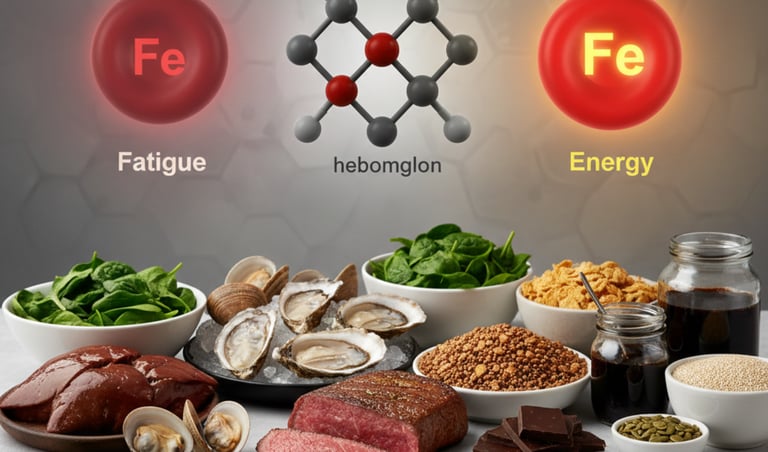
Hemoglobin and oxygen transport: Iron is the central atom in hemoglobin molecules. Each hemoglobin molecule contains 4 iron atoms that bind oxygen in the lungs and release it to tissues throughout the body. Without adequate iron, hemoglobin production drops, resulting in anemia (too few red blood cells or insufficient hemoglobin). Less hemoglobin means less oxygen delivered to muscles, organs, and brain—causing fatigue, weakness, and shortness of breath.
Myoglobin and muscle oxygen: Iron is also central to myoglobin, a protein that stores oxygen in muscle cells. This oxygen reserve is critical during physical activity. Low iron means muscles have less stored oxygen and fatigue more quickly—explaining exercise intolerance in iron deficiency.
Cellular energy production (ATP): Iron is required for cytochromes in the electron transport chain (mitochondria). This is where ATP (adenosine triphosphate)—cellular energy currency—is produced. Without adequate iron, ATP production is impaired at the cellular level. You feel exhausted because your cells literally can't produce enough energy.
Neurotransmitter synthesis: Iron is required for enzymes that synthesize dopamine, norepinephrine, and serotonin—neurotransmitters critical for mood, motivation, focus, and energy. Iron deficiency impairs neurotransmitter production, contributing to brain fog, difficulty concentrating, and mood disturbances.
Immune function: Iron is needed for proper immune cell function. Deficiency increases susceptibility to infections, which further drain energy.
Iron Deficiency Stages
Iron deficiency progresses through stages:
Stage 1 - Depleted iron stores (low ferritin):
Ferritin <30 ng/mL (some experts say <50 ng/mL for women, <70 ng/mL for men)
Hemoglobin still normal
Mild fatigue may be present but often subtle
This is the best time to intervene—before anemia develops
Stage 2 - Iron deficiency without anemia (iron-deficient erythropoiesis):
Ferritin <15 ng/mL
Hemoglobin slightly low (12-12.5 g/dL for women) but not yet anemic
Moderate fatigue, reduced exercise capacity
Cold intolerance
Beginning of cognitive symptoms (difficulty concentrating)
Stage 3 - Iron deficiency anemia:
Ferritin <10 ng/mL (severely depleted stores)
Hemoglobin <12 g/dL (women), <13 g/dL (men)
Severe fatigue and weakness
Shortness of breath with minimal exertion
Pale skin, pale nail beds, pale inner eyelids
Rapid heartbeat or palpitations (heart working harder to deliver oxygen)
Brittle nails, hair loss
Restless leg syndrome
Pica (craving ice, dirt, or starch)
Severe difficulty concentrating, brain fog
Dizziness, lightheadedness
Iron Requirements
Recommended Dietary Allowances (RDAs):
Men (19+): 8 mg
Women (19-50, menstruating): 18 mg
Women (51+, post-menopausal): 8 mg
Pregnant women: 27 mg
Lactating women: 9 mg
Vegetarians: 1.8X higher (32 mg for menstruating women, 14 mg for men)
Upper tolerable limit: 45 mg daily (from all sources—food + supplements)
Who's at Highest Risk
Menstruating women (blood loss depletes iron monthly)
Pregnant women (increased blood volume and fetal needs)
Infants and young children (rapid growth)
Adolescents (growth spurts, menstruation onset)
Vegetarians/vegans (relying on non-heme iron with lower absorption)
Endurance athletes (increased losses through sweat, foot-strike hemolysis, GI bleeding)
People with GI bleeding (ulcers, heavy NSAID use, colon cancer)
Blood donors (each donation removes ~200-250 mg iron)
People with malabsorption (celiac, Crohn's, gastric bypass)
People on proton pump inhibitors or antacids long-term (reduce iron absorption)
Iron-Rich Foods: Heme Sources (Animal-Based)
Heme iron (from animal sources) has superior absorption (15-35%) and is less affected by dietary factors.
Category 1: Organ Meats (Extremely Iron-Dense)
1. Beef Liver
The single most iron-rich common food.
Why it's supreme: 3 oz cooked beef liver provides 5.2 mg iron (29% RDA for men, 29% RDA for menstruating women, 19% for pregnant women). Exceptionally well-absorbed heme iron. Also provides massive amounts of vitamin A (16,899 IU—338% DV!), B12 (1,178% DV), folate, riboflavin, and copper.
How to use: 3-4 oz serving 1-2 times weekly. Sauté with onions, make pâté, or add to ground meat dishes.
Caution: Very high in vitamin A. Pregnant women should limit intake (excessive vitamin A can cause birth defects). Others can enjoy regularly without concern.
2. Chicken Liver
Similar to beef liver but milder flavor.
Why it works: 3 oz cooked chicken liver provides 7.2 mg iron (40% RDA for men, 40% RDA for menstruating women)—even higher than beef liver! Also provides vitamin A, B12, folate, and riboflavin.
How to use: 3-4 oz serving 1-2 times weekly. Make pâté, sauté with onions and mushrooms, or add to pasta.
Category 2: Red Meat (Excellent Heme Iron)
3. Beef (Red Meat)
Classic iron source with excellent bioavailability.
Why it works: 3 oz cooked beef (lean cuts like sirloin or round) provides 2.1-2.6 mg iron (12-14% RDA for men, 12-14% for menstruating women). Heme iron with 15-35% absorption. Also provides high-quality protein, B12, zinc, and selenium.
How to use: 3-4 oz serving 3-4 times weekly. Choose lean cuts to minimize saturated fat. Grass-fed beef may have slightly higher iron content.
"Meat factor": Beef (and other meats) contain a "meat factor" that enhances absorption of non-heme iron from plant foods eaten in the same meal. Eating beef with beans or spinach increases iron absorption from those plant foods.
4. Lamb
Flavorful red meat with good iron.
Why it works: 3 oz cooked lamb provides 1.5-2.0 mg iron (8-11% RDA). Heme iron, well-absorbed. Also provides protein, B12, and zinc.
How to use: 3-4 oz serving 2-3 times weekly.
Category 3: Poultry (Moderate Heme Iron)
5. Turkey (Dark Meat)
Dark poultry meat has more iron than white meat.
Why it works: 3 oz cooked turkey (dark meat) provides 1.4 mg iron (8% RDA for men, 8% for menstruating women). Heme iron. White meat provides only 0.9 mg—choose dark meat for iron.
How to use: 3-4 oz serving 3-4 times weekly. Choose dark meat (thighs, legs) over breast for iron.
6. Chicken (Dark Meat)
Similar to turkey—dark meat preferred.
Why it works: 3 oz cooked chicken (dark meat) provides 1.1 mg iron (6% RDA). White meat provides only 0.7 mg.
How to use: 3-4 oz serving 3-4 times weekly. Thighs and drumsticks over breast.
Category 4: Seafood (Heme Iron + Omega-3s)
7. Oysters
Shellfish with exceptional iron content.
Why they're powerful: 3 oz cooked oysters provide 5.7 mg iron (32% RDA for men, 32% for menstruating women). Heme iron, well-absorbed. Also provide zinc (493% DV!), B12, selenium, and omega-3s.
How to use: 3 oz serving 1-2 times weekly. Raw, steamed, grilled, or baked.
8. Clams
Another iron-rich shellfish.
Why they work: 3 oz cooked clams provide 23.8 mg iron (132% RDA for men, 132% for menstruating women)—the highest iron content of any common food! Also provide B12 (1,401% DV), selenium, and omega-3s.
How to use: 3 oz serving 1-2 times weekly. Steamed, in pasta, chowder, or paella.
Note: Clams are extraordinary for iron—a single 3 oz serving provides more than an entire day's needs!
9. Sardines
Small fish, substantial iron.
Why they work: 3 oz canned sardines provide 1.8 mg iron (10% RDA). Heme iron. Also provide omega-3s, calcium (from bones), vitamin D, and B12.
How to use: 3 oz (one small can) 2-3 times weekly. Eat on crackers, in salads, or on toast.
Iron-Rich Foods: Non-Heme Sources (Plant-Based)
Non-heme iron (from plants) has lower absorption (5-12%) but can be significantly enhanced with vitamin C and proper preparation.
Category 5: Legumes (Protein + Iron)
10. Lentils
Among the richest plant iron sources.
Why they're excellent: 1 cup cooked lentils provides 6.6 mg iron (37% RDA for men, 37% for menstruating women, 24% for pregnant women). Also provide 18g protein, 16g fiber, and folate.
How to maximize absorption:
Soak overnight (reduces phytates 30-50%)
Pair with vitamin C (tomatoes, lemon juice, bell peppers)
Cook in cast iron (adds iron)
How to use: 1 cup 5-7 times weekly. Lentil soup, dal, salads, tacos.
11. Chickpeas
Versatile legume with good iron.
Why they work: 1 cup cooked chickpeas provides 4.7 mg iron (26% RDA for men, 26% for menstruating women). Also provide protein, fiber, and folate.
How to use: 1-1.5 cups 5-7 times weekly. Hummus (with lemon juice—vitamin C!), salads, roasted snacks, curries.
12. Black Beans
Hearty bean with solid iron.
Why they work: 1 cup cooked black beans provides 3.6 mg iron (20% RDA). Also provide protein, fiber, and antioxidants.
How to use: 1 cup 4-5 times weekly. Burritos, black bean soup, salads.
Category 6: Dark Leafy Greens (Iron + Vitamins)
13. Spinach (Cooked)
Classic iron source—but with caveats.
Why it's powerful: 1 cup cooked spinach provides 6.4 mg iron (36% RDA for men, 36% for menstruating women). However, spinach contains oxalates which bind some iron and reduce absorption. Despite this, the sheer iron content means plenty remains bioavailable, especially when paired with vitamin C.
How to use: 1-2 cups cooked 4-5 times weekly. Always pair with vitamin C (lemon juice, tomatoes) to maximize absorption.
14. Swiss Chard
Nutrient-dense green with good iron.
Why it works: 1 cup cooked Swiss chard provides 4 mg iron (22% RDA). Lower in oxalates than spinach, so potentially better iron bioavailability.
How to use: 1-2 cups cooked 3-4 times weekly. Sauté with garlic, add to soups.
Category 7: Fortified Foods (Significant Contributors)
15. Fortified Breakfast Cereals
Can provide 100% daily iron in one serving.
Why they're powerful: Many cereals are fortified with iron. A serving (typically 3/4 to 1 cup) can provide 4-18 mg iron (22-100% RDA) depending on brand. The iron is often highly bioavailable elemental iron.
How to maximize absorption:
Choose cereals with 40-100% DV iron
Pair with vitamin C (orange juice, strawberries)
Avoid coffee/tea with breakfast
How to use: 1 serving daily. Choose whole grain cereals with minimal sugar.
Category 8: Whole Grains (Fiber + Iron)
16. Quinoa
Complete protein pseudo-grain with iron.
Why it works: 1 cup cooked quinoa provides 2.8 mg iron (16% RDA). Also provides complete protein, magnesium, and fiber.
How to use: 1 cup 4-5 times weekly. Rice substitute, salads, bowls.
17. Oats
Breakfast staple with iron.
Why they work: 1 cup cooked oats (from 1/2 cup dry) provides 2.1 mg iron (12% RDA). Also provide beta-glucan fiber and B vitamins.
How to use: 1/2 to 1 cup dry oats daily for breakfast.
Category 9: Seeds (Concentrated Iron)
18. Pumpkin Seeds
Iron-dense seeds.
Why they work: 1 oz (2 tablespoons) pumpkin seeds provides 2.5 mg iron (14% RDA). Also provide magnesium, zinc, and healthy fats.
How to use: 1-2 oz daily. Add to salads, oatmeal, yogurt, or eat as snack.
19. Hemp Seeds
Nutritious seeds with iron.
Why they work: 3 tablespoons hemp seeds provide 2.4 mg iron (13% RDA). Also provide complete protein and omega-3s.
How to use: 2-3 tablespoons daily.
Category 10: Other Plant Sources
20. Blackstrap Molasses
Byproduct of sugar refining, concentrated in minerals.
Why it's potent: 1 tablespoon blackstrap molasses provides 3.5 mg iron (19% RDA). Also provides calcium, magnesium, and potassium.
How to use: 1 tablespoon daily in oatmeal, smoothies, or baked goods.
21. Dark Chocolate
Delicious iron source.
Why it works: 1 oz dark chocolate (70-85% cocoa) provides 3.4 mg iron (19% RDA). Also provides magnesium and antioxidants.
How to use: 1-2 oz daily as dessert.
Critical Iron Absorption Enhancers
Vitamin C (Most Powerful for Non-Heme Iron)
Vitamin C can increase non-heme iron absorption by 300-400%!
How it works: Ascorbic acid reduces ferric iron (Fe3+) to ferrous iron (Fe2+) and forms a soluble iron-ascorbate complex, dramatically increasing absorption.
Best vitamin C sources:
Bell peppers (152 mg per red pepper)
Broccoli (101 mg per cup cooked)
Strawberries (89 mg per cup)
Orange (70 mg)
Kiwi (64 mg)
Tomatoes (27 mg per cup)
Lemon juice (15 mg per 2 tablespoons)
Application: Include vitamin C with EVERY non-heme iron meal:
Lentil soup + tomatoes
Spinach salad + lemon dressing
Quinoa bowl + bell peppers
Oatmeal + strawberries
Black beans + salsa
Meat Factor
Consuming meat with plant iron sources enhances absorption of the plant iron.
How it works: Meat (beef, chicken, fish) contains compounds (possibly amino acids like cysteine) that enhance non-heme iron absorption from foods eaten in the same meal.
Application: Eat meat + plant iron together:
Beef + lentils
Chicken + spinach
Fish + quinoa
Organic Acids
Citric, malic, tartaric, and lactic acids enhance iron absorption.
Sources:
Citric acid: Citrus, tomatoes, strawberries
Malic acid: Apples, pears
Lactic acid: Fermented foods (sauerkraut, kimchi, yogurt)
Fermentation
Fermented foods have reduced phytates and provide lactic acid.
Examples: Sourdough bread, tempeh, miso, fermented vegetables.
Cast Iron Cookware
Cooking acidic foods in cast iron increases iron content by 15-30%.
Critical Iron Absorption Inhibitors
Phytic Acid (Phytates)
The primary inhibitor of non-heme iron absorption.
Where found: Whole grains, legumes, nuts, seeds.
Solutions:
Soak 8-24 hours (reduces phytates 30-50%)
Sprout 2-5 days (reduces phytates 50-70%)
Ferment (reduces phytates 60-90%)
Calcium
High calcium intake with iron reduces absorption.
How much: 300-600 mg calcium with a meal can reduce iron absorption by 30-50%.
Solution: Separate iron-rich meals from high-calcium foods by 2-3 hours.
Tea and Coffee
Tannins powerfully inhibit iron absorption.
How much: Tea/coffee with a meal can reduce iron absorption by 60-90%.
Solution: Drink tea/coffee between meals, not with meals. Wait 1-2 hours after eating.
Excessive Fiber
Very high fiber (>50g daily) may impair mineral absorption. Balance is key.
Sample High-Iron Days for Energy
Sample Day 1: Omnivore (18 mg iron target for women)
Fortified cereal (1 cup): 10 mg iron
Strawberries (1 cup): vitamin C
Orange juice (8 oz): vitamin C
Beef (4 oz): 3.5 mg iron
Spinach salad (2 cups cooked): 12.8 mg
Lemon dressing: vitamin C
Cast iron pan used
Dark chocolate (1 oz): 3.4 mg
Chicken liver (3 oz): 7.2 mg
Quinoa (1 cup): 2.8 mg
Roasted bell peppers: vitamin C
Daily total: 39.7 mg iron (exceeds 18 mg target!)
Enhancement strategies: Vitamin C with every meal, heme + non-heme combination, cast iron cooking, avoided tea/coffee with meals.
Sample Day 2: Vegetarian (32 mg iron target)
Breakfast:
Oatmeal (1 cup cooked): 2.1 mg
Blackstrap molasses (1 tbsp): 3.5 mg
Strawberries: vitamin C
Pumpkin seeds (2 oz): 5 mg
Lunch:
Lentil soup (1.5 cups): 10 mg
Tomatoes: vitamin C
Whole grain sourdough: 1.5 mg
Snack:
Dark chocolate (1 oz): 3.4 mg
Dinner:
Chickpea curry (1.5 cups): 7 mg
Spinach (1 cup cooked): 6.4 mg
Quinoa (1 cup): 2.8 mg
Bell peppers + tomatoes: vitamin C
Daily total: 41.7 mg iron
Timeline: When Will You Feel Better?
Week 1-2: If severely anemic, may not notice much improvement yet (building stores).
Week 2-4: Many people begin noticing increased energy, less breathlessness, improved exercise tolerance.
Month 2-3: Significant improvement in energy levels. Hemoglobin rising steadily.
Month 3-6: Full correction of iron deficiency anemia typically takes 3-6 months of consistent high iron intake. Hemoglobin normalizes, ferritin stores replenish, energy fully restored.
Note: Severe anemia (hemoglobin <10 g/dL) often requires iron supplements in addition to dietary optimization for faster correction. Food alone may be too slow.
Iron Supplements When Needed
When to Consider Supplements
Diagnosed iron deficiency anemia (hemoglobin <12 g/dL women, <13 g/dL men)
Very low ferritin (<15 ng/mL) that doesn't improve with diet
Pregnancy (often required to meet 27 mg daily needs)
Heavy menstrual bleeding
Malabsorption conditions
After blood donation (to replenish quickly)
Best Supplement Forms
Ferrous sulfate: Cheapest, well-absorbed, but often causes constipation/nausea.
Ferrous fumarate: Similar to sulfate.
Ferrous bisglycinate (chelated): Better absorbed, fewer GI side effects, more expensive. Best choice if you can afford it.
Carbonyl iron: Elemental iron, safer in overdose, gentle on stomach.
How to Take
Dose: Typically 100-200 mg elemental iron daily (divided doses)
Timing: On empty stomach for best absorption (if tolerated); with food if GI upset occurs
With vitamin C: Take with orange juice or vitamin C supplement
NOT with: Calcium, antacids, tea, coffee, high-fiber meals
Start low: Begin with 30-50 mg daily, increase gradually to minimize constipation
Cautions
Don't supplement iron without testing. Excess iron is toxic and can damage organs. Only supplement if blood tests confirm deficiency.
Keep away from children. Iron supplements are a leading cause of poisoning deaths in children.
Special Considerations
Menstruating Women
Blood loss depletes iron monthly. Heavy periods significantly increase risk.
Strategies:
Emphasize iron-rich foods daily (18-32 mg target)
Vitamin C with every iron meal
Consider supplements if ferritin <30 ng/mL
Track menstrual blood loss (very heavy periods require medical evaluation)
Pregnant Women
Iron needs increase dramatically (27 mg daily).
Strategies:
Emphasize iron-rich foods (liver 1x weekly if tolerated, fortified cereals, lentils, beef)
Prenatal vitamins with iron (usually 27-30 mg)
Vitamin C optimization
Check hemoglobin/ferritin each trimester
Athletes
Increased losses through sweat, foot-strike hemolysis, GI bleeding.
Strategies:
Target upper end of iron recommendations
Monitor ferritin (athletes perform better with ferritin >30 ng/mL, ideally 50-100)
Emphasize heme iron sources
Consider iron supplements during heavy training
Vegetarians/Vegans
Relying solely on non-heme iron with lower absorption.
Strategies:
Target 1.8X higher intake (32 mg for menstruating women)
Vitamin C with EVERY iron meal (critical!)
Soak/sprout grains and legumes
Fortified cereals daily
Cast iron cookware
Monitor ferritin annually
Conclusion
Chronic fatigue, breathlessness, brain fog, pale skin, and exercise intolerance aren't character flaws, laziness, or "just stress." When caused by iron deficiency anemia, they're the predictable result of cellular oxygen starvation—every cell in your body struggling to function without adequate oxygen delivery. Iron is the linchpin of hemoglobin, which carries oxygen from lungs to tissues. Without adequate iron, your organs, muscles, and brain are oxygen-starved no matter how much you sleep or how deeply you breathe.
The conventional approach (iron supplements) can work but often causes intolerable side effects. The natural approach (iron-rich foods + absorption optimization) provides iron alongside other energy-supporting nutrients without pharmaceutical side effects. For mild to moderate iron deficiency, strategic dietary changes can fully correct the problem within 3-6 months. For severe anemia, combining supplements (short-term) with dietary optimization provides both rapid correction and long-term sustainability.
Emphasize the richest sources based on your diet: For omnivores: beef liver, red meat, clams, oysters, chicken liver, sardines. For vegetarians: fortified cereals (10-18 mg per serving!), lentils (6.6 mg/cup), spinach (6.4 mg/cup cooked), chickpeas, quinoa, blackstrap molasses. Include vitamin C with every non-heme iron meal (lemon juice, tomatoes, bell peppers, strawberries, oranges)—this single strategy triples absorption. Avoid tea/coffee with meals (drink 1-2 hours before or after). Separate calcium from iron meals by 2-3 hours. Soak grains and legumes overnight. Cook in cast iron.
Get tested. Check hemoglobin and ferritin. If deficient, implement dietary changes consistently. Retest in 2-3 months. Track your energy levels—improvement in fatigue is the most meaningful indicator that iron repletion is working. If hemoglobin doesn't improve after 3 months of optimized diet, consider supplements under medical supervision. If severe anemia (<10 g/dL), start supplements immediately while simultaneously optimizing diet.
Monitor your progress. As hemoglobin rises from 10 to 11 to 12 to 13 g/dL, you'll notice: less fatigue week by week, improved exercise tolerance (stairs no longer leave you breathless), better concentration and mental clarity, warmer hands and feet, healthier-looking skin and nails, motivation and energy returning. The crushing, bone-deep exhaustion that defined iron deficiency gradually lifts, replaced by the vibrant energy that comes from adequate oxygen delivery to every cell.
The fatigue isn't permanent. The anemia isn't a life sentence. They're nutritional problems with clear, actionable solutions. Address the iron deficiency through strategic food choices and absorption optimization, and in most cases, energy is restored.
To vibrant energy, oxygen-rich blood, and life without crushing fatigue!
References and Further Reading
National Institutes of Health Office of Dietary Supplements - Iron Fact Sheet
American Society of Hematology - Iron-Deficiency Anemia
World Health Organization - Iron Deficiency Anemia
Frequently Asked Questions
Can iron-rich foods really reverse anemia or do I need supplements?
For mild to moderate iron deficiency anemia (hemoglobin 10-12 g/dL, ferritin 10-30 ng/mL), strategic dietary changes can fully reverse anemia within 3-6 months. Emphasize richest sources (beef liver, clams, fortified cereals, lentils), optimize absorption (vitamin C with every meal, avoid tea/coffee with meals), and monitor progress. However, severe anemia (hemoglobin <10 g/dL) typically requires iron supplements for faster correction—diet alone is too slow when hemoglobin is dangerously low. Combine supplements with dietary optimization for both rapid correction and long-term sustainability. Always work with a doctor and get blood tests to monitor progress.
How much iron do I need daily and how can I get it from food?
RDA varies: men need 8 mg, menstruating women need 18 mg, pregnant women need 27 mg. Vegetarians need 1.8X more (32 mg for menstruating women). One serving of clams (23.8 mg), beef liver (5.2 mg), or fortified cereal (10-18 mg) can provide substantial amounts. Combining multiple moderate sources works too: lentils (6.6 mg) + spinach (6.4 mg) + quinoa (2.8 mg) + fortified cereal (10 mg) = 25.8 mg in one day. Omnivores have an easier time meeting needs through heme iron (better absorbed). Vegetarians must emphasize fortified foods, optimize absorption with vitamin C, and consume more total iron.
Does vitamin C really make a significant difference in iron absorption?
YES—vitamin C is the most powerful non-heme iron absorption enhancer, increasing absorption by 300-400%! This is especially critical for vegetarians relying on plant iron. Just 25-100 mg vitamin C with a meal (one orange, 1 cup strawberries, 2 tablespoons lemon juice) significantly enhances absorption. Example: 10 mg iron from lentils with no vitamin C might yield 0.5-1.2 mg absorbed (5-12%). The same lentils eaten with tomatoes and lemon juice (vitamin C) might yield 2-4 mg absorbed (20-40%)—that's 2-4X more! For vegetarians and anyone with iron deficiency, including vitamin C with every iron-rich meal is non-negotiable.
Why do tea and coffee block iron absorption and should I stop drinking them?
Tea and coffee contain tannins and polyphenols that bind iron and prevent absorption. Consumed with a meal, they can reduce iron absorption by 60-90%! However, you don't need to eliminate them—just time them correctly. Drink tea/coffee BETWEEN meals, not WITH meals. Wait 1-2 hours after eating before having tea/coffee. Example: eat iron-rich lunch at 12 PM, wait until 1:30-2 PM for coffee. Or drink coffee at 10 AM, eat lunch at 12 PM. This way you get your caffeine without sabotaging iron absorption from carefully planned meals.
How long before I notice increased energy from eating more iron?
Timeline varies based on severity of deficiency and consistency of dietary changes. Mildly deficient: may notice improvement within 2-4 weeks. Moderately deficient (hemoglobin 10-12 g/dL): typically 4-8 weeks before significant energy improvement. Severely anemic (hemoglobin <10 g/dL): may take 2-3 months even with supplements. Full correction of anemia takes 3-6 months of consistent high iron intake. Energy improves gradually as hemoglobin rises—you won't wake up one day suddenly energized, but week by week you'll notice: less fatigue, better exercise tolerance, improved concentration, less breathlessness. Track your symptoms and retest blood work to confirm improvement.
Can I get too much iron from food?
Excess iron from food alone is rare in healthy people. The body regulates iron absorption based on stores—when stores are adequate, absorption decreases. However, people with hemochromatosis (genetic condition causing iron overload) should avoid iron-rich foods and supplements. Iron toxicity is mainly a concern with supplements—never take iron supplements without blood test confirmation of deficiency. Acute iron poisoning (usually in children who ingest adult supplements) is a medical emergency. For healthy adults eating iron-rich foods without supplementation, toxicity is extremely unlikely.
What's the best iron supplement form if I need one?
Ferrous bisglycinate (chelated iron) is the best-absorbed form with fewest GI side effects—ideal if you can afford it. Ferrous sulfate is cheapest and well-absorbed but often causes constipation and nausea. Carbonyl iron is gentler on the stomach. Avoid ferric iron (poorly absorbed). Take with vitamin C (orange juice), on empty stomach if tolerated (with food if causes upset), NOT with calcium, antacids, tea, or coffee. Divide doses (e.g., 100 mg twice daily instead of 200 mg once) to minimize side effects. Start with low dose (30-50 mg) and increase gradually. Always take supplements under medical supervision with blood test monitoring.
Should I take iron and calcium together or separately?
SEPARATELY! Calcium significantly inhibits iron absorption. If taking both supplements (or eating high-calcium foods with iron-rich foods), separate by 2-3 hours. Example: Take iron supplement with breakfast, take calcium supplement with dinner. Or: Iron-rich lunch with lentils and spinach at 12 PM, calcium-rich foods (yogurt, cheese, fortified plant milk) at 3 PM snack. This ensures optimal absorption of both minerals. Many multivitamins contain both iron and calcium—not ideal for iron absorption, but if that's your only option, take with vitamin C to partially counteract calcium's inhibitory effect.
Can iron deficiency cause symptoms other than fatigue?
Yes! Iron deficiency affects every system because every cell needs oxygen. Symptoms include: extreme fatigue, weakness, shortness of breath (especially with exertion), pale skin/nails/inner eyelids, cold hands and feet, brittle nails and hair loss, restless leg syndrome, pica (craving ice, dirt, starch), rapid heartbeat/palpitations, difficulty concentrating and brain fog, headaches, dizziness, sore or swollen tongue, frequent infections (impaired immunity), and anxiety or depression. Many people experience cognitive symptoms before recognizing physical fatigue. If you have multiple symptoms, get tested—hemoglobin and ferritin blood tests are simple and definitive.
Do I need to worry about iron if I donate blood regularly?
Yes! Each whole blood donation removes approximately 200-250 mg iron (compared to daily intake of 8-18 mg). Frequent donation can deplete iron stores, especially in menstruating women. If you donate regularly, emphasize iron-rich foods, consider supplements, and check ferritin annually. Some blood donation centers check hemoglobin before each donation, but this doesn't show iron stores (ferritin). You can have normal hemoglobin with depleted ferritin. If you feel fatigued after donating, it may be low iron—increase iron-rich foods for 2-3 months after each donation to replenish stores.
About Author
Judith Tsanga is an Applied Biosciences & Biotechnology graduate with an Advanced Level qualification in Food Science, and the founder of BiteBrightly. Her passion for food as medicine began with her own experience: after making targeted dietary changes, she noticed a meaningful improvement in her eyesight — a personal transformation that inspired her mission to share evidence-based nutrition insights that help others eat well and heal boldly. Content on BiteBrightly is for educational purposes and isn't a substitute for advice from your doctor or dietitian.
Follow on Pinterest for daily health tips, recipes, and wellness inspiration.
Important Notice: The information in this article is for educational purposes only and is not intended as medical advice or to replace professional medical treatment. Always consult your healthcare provider before making dietary changes, starting supplements, or implementing health recommendations, especially if you have medical conditions, take medications, are pregnant, or nursing. Iron supplementation should only be undertaken with medical supervision after appropriate blood testing. Excess iron is toxic. Never take iron supplements without confirmed deficiency. Severe anemia requires medical treatment. Get hemoglobin and ferritin levels tested before assuming fatigue is iron-related.
Related Posts
Connect
Join our newsletter for fresh health tips
© 2026. All rights reserved.