Iron-Rich Foods for Vegetarians: Complete Plant-Based Guide
Discover 21 iron-rich vegetarian foods. Lentils, tofu, fortified cereals & more. Learn absorption hacks (vitamin C!) to prevent deficiency.
by BiteBrightly
2/10/202622 min read
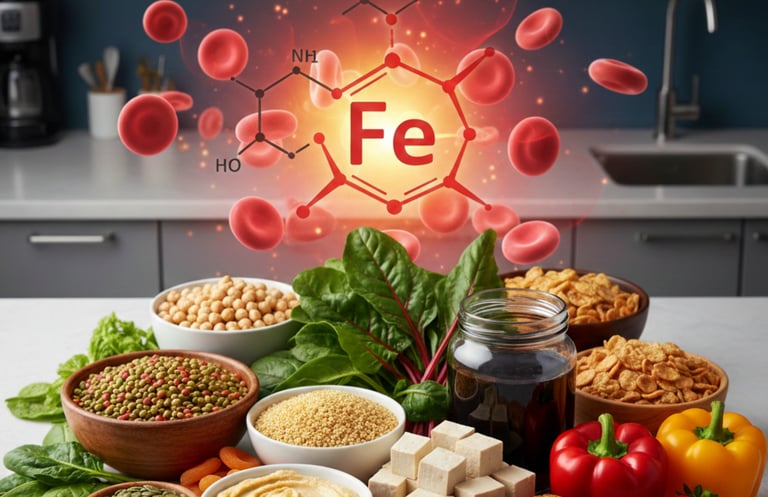

Iron-Rich Foods for Vegetarians: Complete Plant-Based Guide
By BiteBrightly 10 February 2026: This post might contain affiliate links.
You've been vegetarian for three years, feeling great about your ethical choice and environmental impact. Then your annual bloodwork comes back: hemoglobin 10.2 g/dL (normal is 12-16 for women), ferritin 8 ng/mL (optimal is 30-100). "You're anemic," your doctor says. "Iron deficiency. You're not getting enough iron from your vegetarian diet. Maybe you should reconsider eating meat?" You leave the office feeling defeated, wondering if you must choose between your values and your health. Your well-meaning family says "I told you vegetarians get anemic," reinforcing the narrative that plant-based diets inevitably lead to deficiency. But what if the problem isn't vegetarianism itself, but rather not knowing HOW to get adequate, bioavailable iron from plants? What if there are strategic approaches—specific foods, preparation techniques, absorption enhancers—that allow vegetarians to maintain excellent iron status without ever touching meat? If you're searching for iron-rich foods for vegetarians that actually work, backed by science and practical application, you're about to discover that thriving on a plant-based diet isn't just possible—it's entirely achievable with the right knowledge.
Iron deficiency is the most common nutritional deficiency globally, affecting approximately 2 billion people. According to research published in The Lancet, vegetarians and vegans are at higher risk for iron deficiency than omnivores—not because plant foods lack iron (many plants are iron-rich), but because plant-based iron (non-heme iron) is less bioavailable than animal-based iron (heme iron). The absorption rate for non-heme iron from plants is approximately 5-12%, compared to 15-35% for heme iron from meat.
This creates a real challenge, but not an insurmountable one. The key insight: vegetarians need to consume MORE total iron than omnivores (the recommended dietary allowance for vegetarians is 1.8X higher—32 mg daily for menstruating women versus 18 mg for omnivores), and more importantly, they need to strategically ENHANCE absorption of the iron they consume. This isn't complicated, but it does require knowledge that most doctors don't provide beyond "eat more meat."
Here's what most people don't understand about iron: bioavailability matters more than total content. You can eat foods containing massive amounts of iron, but if your body doesn't absorb it, you remain deficient. Conversely, moderate amounts of well-absorbed iron maintain excellent status. Plant-based iron absorption is highly modifiable—certain factors increase it dramatically (vitamin C, organic acids, fermented foods), while others decrease it substantially (phytates, calcium, tannins in tea/coffee).
According to research in the American Journal of Clinical Nutrition, vegetarians who strategically combine iron-rich plant foods with vitamin C sources and use preparation techniques that reduce phytates (soaking, sprouting, fermenting) can achieve iron absorption rates approaching those from heme iron. This isn't theoretical—it's practiced successfully by millions of vegetarians worldwide who maintain normal hemoglobin and ferritin levels without supplements.
The mechanisms are well-established. Non-heme iron exists in the ferric (Fe3+) state in food and must be reduced to ferrous (Fe2+) for absorption in the small intestine. Vitamin C (ascorbic acid) is a powerful reducing agent that converts ferric to ferrous iron, dramatically increasing absorption. Organic acids in foods (citric acid, malic acid, lactic acid from fermentation) similarly enhance absorption. Conversely, phytic acid (in whole grains, legumes, nuts, seeds) binds iron and prevents absorption—but soaking, sprouting, and fermenting reduce phytic acid by 30-90%, liberating bound iron. Calcium and tannins (in tea/coffee) also inhibit non-heme iron absorption when consumed simultaneously.
This comprehensive guide reveals the richest plant-based iron sources, how much iron each food provides, critical absorption enhancers to use with every iron-rich meal, preparation techniques that maximize bioavailability (soaking, sprouting, fermenting), foods and timing strategies that block absorption (and how to avoid them), realistic daily iron targets for vegetarians (higher than omnivores), and sample high-iron days that meet vegetarian needs without supplements.
Key Takeaways
Vegetarians need 1.8X more iron than omnivores due to lower bioavailability of plant-based (non-heme) iron
Iron RDA for vegetarians: 32 mg daily for menstruating women, 14 mg for men (vs. 18 mg and 8 mg for omnivores)
Plant iron absorption rate: 5-12% (vs. 15-35% for heme iron from meat)
Vitamin C dramatically increases non-heme iron absorption—consume vitamin C-rich foods with every iron-containing meal
Phytates in whole grains, legumes, nuts, and seeds inhibit iron absorption; soaking, sprouting, and fermenting reduce phytates 30-90%
Tea and coffee consumed with meals reduce iron absorption by 60-90%; drink between meals instead
Richest vegetarian iron sources: lentils, chickpeas, tofu, quinoa, fortified cereals, pumpkin seeds, spinach
Cast iron cookware increases iron content of acidic foods by 15-30%
Iron deficiency in vegetarians is preventable through strategic food choices and preparation techniques
Most vegetarians can maintain adequate iron status without supplements through proper dietary planning
Understanding Iron and Why Vegetarians Need More
Before diving into specific foods, understanding iron biochemistry explains why vegetarians face unique challenges—and solutions.
Two Types of Dietary Iron
Heme iron (from animal sources):
Found in meat, poultry, fish (in hemoglobin and myoglobin)
Already in the ferrous (Fe2+) state, ready for absorption
Absorption rate: 15-35%
Not significantly affected by other dietary factors
Not consumed by vegetarians
Non-heme iron (from plant sources):
Found in vegetables, grains, legumes, nuts, seeds, fortified foods
In the ferric (Fe3+) state, must be reduced to ferrous (Fe2+) for absorption
Absorption rate: 5-12% (highly variable based on dietary factors)
Significantly enhanced or inhibited by other foods consumed simultaneously
The ONLY iron source for vegetarians
The challenge: Non-heme iron's lower base absorption rate means vegetarians must consume more total iron AND optimize absorption.
How Iron Absorption Works
Non-heme iron absorption occurs primarily in the duodenum (first part of small intestine). The process:
Reduction: Ferric iron (Fe3+) must be reduced to ferrous iron (Fe2+). Vitamin C, organic acids, and stomach acid facilitate this.
Transport: Ferrous iron is transported across intestinal cells by DMT1 (divalent metal transporter 1).
Storage or release: Iron is either stored in intestinal cells as ferritin or released into bloodstream bound to transferrin.
Regulation: Hepcidin (hormone produced by liver) regulates iron absorption based on body stores. When stores are low, hepcidin decreases, allowing more absorption. When stores are adequate, hepcidin increases, blocking absorption.
Key insight: Your body can upregulate non-heme iron absorption when stores are low—which is why vegetarians often absorb a higher percentage of plant iron than omnivores consuming the same foods.
Iron Needs for Vegetarians
The Institute of Medicine recommends vegetarians consume 1.8X the standard RDA to account for lower bioavailability:
Standard RDA (omnivores):
Men (19+): 8 mg
Women (19-50): 18 mg
Women (51+): 8 mg
Pregnant women: 27 mg
Lactating women: 9 mg
Recommended for vegetarians:
Men (19+): 14 mg
Women (19-50): 32 mg
Women (51+): 14 mg
Pregnant vegetarian women: 48 mg
Lactating vegetarian women: 16 mg
These targets account for the ~50-60% lower absorption efficiency of non-heme iron.
Signs of Iron Deficiency
Iron deficiency progresses through stages:
Stage 1 - Depleted iron stores (low ferritin):
Often asymptomatic
Ferritin <30 ng/mL (some experts say <50 ng/mL)
Hemoglobin still normal
Stage 2 - Iron deficiency without anemia:
Mild fatigue
Reduced exercise capacity
Cold intolerance
Ferritin <15 ng/mL
Hemoglobin slightly low but >12 g/dL
Stage 3 - Iron deficiency anemia:
Significant fatigue and weakness
Pale skin, pale nail beds
Shortness of breath with exertion
Dizziness, lightheadedness
Brittle nails, hair loss
Restless leg syndrome
Pica (craving ice, dirt, starch)
Difficulty concentrating
Hemoglobin <12 g/dL (women), <13 g/dL (men)
Who's at highest risk:
Menstruating women (blood loss depletes iron)
Pregnant women (increased needs)
Adolescents (rapid growth)
Athletes (increased losses through sweat, foot-strike hemolysis)
People with heavy menstrual periods
Those with GI bleeding or malabsorption
New vegetarians who haven't learned absorption strategies
Iron-Rich Plant Foods
Category 1: Legumes (Protein + Iron Powerhouses)
Legumes are the iron foundation of vegetarian diets.
1. Lentils
Among the richest iron sources in the plant kingdom.
Why they're supreme: 1 cup cooked lentils provides 6.6 mg iron (37% of omnivore RDA, 21% of vegetarian RDA). Also provide protein (18g per cup), fiber (16g), folate, and resistant starch. Red, green, and brown lentils have similar iron content.
How to maximize absorption:
Soak dried lentils 8-12 hours before cooking (reduces phytates 30-50%)
Or sprout lentils 2-3 days (reduces phytates up to 70%)
Pair with vitamin C-rich foods: add tomatoes, lemon juice, bell peppers to lentil dishes
Cook in cast iron cookware (increases iron content)
How to use: 1 cup cooked lentils 5-7 times weekly. Add to soups, salads, make lentil dal, lentil tacos, or lentil bolognese.
Pro tip: Red lentils cook fastest (15-20 min) and break down into creamy consistency—perfect for dal or soup. Green/brown lentils hold shape better—ideal for salads.
2. Chickpeas (Garbanzo Beans)
Versatile iron source with excellent protein.
Why they work: 1 cup cooked chickpeas provides 4.7 mg iron (26% omnivore RDA, 15% vegetarian RDA). Also provide protein (15g), fiber (12g), and folate.
How to maximize absorption:
Soak overnight (12-24 hours) before cooking
Or buy canned and rinse (removes some phytates)
Or make hummus with lemon juice (vitamin C) and tahini
Roast with bell peppers or tomatoes
How to use: 1-1.5 cups 5-7 times weekly. Make hummus, add to salads, roast for snacks, use in curries.
3. Black Beans
Hearty legume with solid iron content.
Why they work: 1 cup cooked black beans provides 3.6 mg iron (20% omnivore RDA, 11% vegetarian RDA). Also provide protein (15g), fiber (15g), and antioxidants.
How to maximize absorption:
Soak overnight
Cook with tomatoes (vitamin C)
Pair with bell peppers, citrus
How to use: 1 cup 4-5 times weekly. Use in burritos, black bean soup, salads, or as side dish.
4. Kidney Beans
Popular legume with good iron.
Why they work: 1 cup cooked kidney beans provides 3.9 mg iron (22% omnivore RDA, 12% vegetarian RDA). Also provide protein and fiber.
How to use: 1 cup 3-4 times weekly. Add to chili, soups, salads.
Important: Kidney beans MUST be soaked and cooked thoroughly (never eat raw or undercooked—contains toxic lectin that's destroyed by proper cooking).
Category 2: Soy Foods (Complete Protein + Iron)
Soy provides both iron and complete protein.
5. Tofu
Versatile iron and protein source.
Why it works: 1/2 cup (4 oz) firm tofu provides 3.4 mg iron (19% omnivore RDA, 11% vegetarian RDA). Also provides complete protein (10g per half cup), calcium (if prepared with calcium sulfate), and all essential amino acids.
How to maximize absorption:
Pair with vitamin C vegetables: stir-fry tofu with bell peppers, broccoli, snow peas
Add tomato-based sauces
Marinate with lemon or lime juice
How to use: 4-6 oz serving 4-5 times weekly. Press to remove excess water, then stir-fry, bake, scramble, or add to soups.
6. Tempeh
Fermented soy with enhanced nutrition.
Why it works: 1 cup (6 oz) tempeh provides 4.5 mg iron (25% omnivore RDA, 14% vegetarian RDA). Fermentation reduces phytates, improving iron bioavailability compared to tofu. Also provides complete protein (31g per cup), probiotics, and B vitamins (including some B12 from fermentation).
How to use: 4-6 oz serving 3-4 times weekly. Steam or boil 10 minutes to reduce bitterness, then marinate and bake, stir-fry, or crumble into dishes.
7. Edamame
Young soybeans with good iron and protein.
Why they work: 1 cup shelled edamame provides 3.5 mg iron (19% omnivore RDA, 11% vegetarian RDA). Also provides complete protein (17g) and fiber.
How to use: 1 cup 2-3 times weekly. Steam and eat as snack, add to salads, or blend into dips.
Category 3: Whole Grains (Fiber + Iron)
Whole grains provide iron along with B vitamins and fiber.
8. Quinoa
Pseudo-grain with complete protein and iron.
Why it works: 1 cup cooked quinoa provides 2.8 mg iron (16% omnivore RDA, 9% vegetarian RDA). Also provides complete protein (8g), all essential amino acids, magnesium, and fiber.
How to maximize absorption:
Rinse thoroughly before cooking (removes saponins and some phytates)
Or soak 2-4 hours, rinse, then cook
Serve with vitamin C-rich foods: add tomatoes, lemon juice, or serve with citrus salad
How to use: 1 cup cooked quinoa 4-5 times weekly. Use as rice substitute, add to salads, make quinoa bowls.
9. Oats
Breakfast staple with iron and fiber.
Why they work: 1 cup cooked oats (from 1/2 cup dry) provides 2.1 mg iron (12% omnivore RDA, 7% vegetarian RDA). Also provides beta-glucan fiber, protein, and B vitamins.
How to maximize absorption:
Soak oats overnight (reduces phytates significantly)
Add vitamin C: top with strawberries, oranges, or kiwi
Use lemon juice in overnight oats
How to use: 1/2 to 1 cup dry oats daily for breakfast. Steel-cut or rolled oats preferred over instant.
10. Amaranth
Ancient grain with excellent iron content.
Why it works: 1 cup cooked amaranth provides 5.2 mg iron (29% omnivore RDA, 16% vegetarian RDA)—one of the highest among grains! Also provides complete protein (9g) and calcium.
How to use: 1/2 to 1 cup cooked amaranth 2-3 times weekly. Use as porridge, add to soups, or pop like popcorn for snacks.
Category 4: Nuts and Seeds (Healthy Fats + Iron)
Nuts and seeds provide iron, healthy fats, and minerals.
11. Pumpkin Seeds (Pepitas)
Among the most iron-dense seeds.
Why they work: 1 oz (about 2 tablespoons) pumpkin seeds provides 2.5 mg iron (14% omnivore RDA, 8% vegetarian RDA). Also provide zinc, magnesium, healthy fats, and protein.
How to maximize absorption:
Soak overnight, then dehydrate or dry roast
Pair with vitamin C: add to salads with tomatoes, citrus
Add to dishes with lemon dressing
How to use: 1-2 oz daily. Add to salads, oatmeal, yogurt, smoothies, or eat as snack.
12. Hemp Seeds
Nutritious seeds with iron and omega-3s.
Why they work: 3 tablespoons hemp seeds provide 2.4 mg iron (13% omnivore RDA, 8% vegetarian RDA). Also provide complete protein, omega-3 and omega-6 fatty acids in ideal ratio, and magnesium.
How to use: 2-3 tablespoons daily. Add to smoothies, oatmeal, salads. No soaking needed (hulled seeds have lower phytates).
13. Cashews
Popular nut with decent iron.
Why they work: 1 oz cashews provides 1.9 mg iron (11% omnivore RDA, 6% vegetarian RDA). Also provide healthy fats, magnesium, copper, and protein.
How to maximize absorption:
Soak 2-4 hours before eating
Pair with vitamin C-rich fruits
How to use: 1 oz daily. Eat as snack, make cashew butter, or use in stir-fries.
Category 5: Dark Leafy Greens (Vitamins + Minerals)
Leafy greens provide iron, though absorption can be limited by oxalates in some greens.
14. Spinach (cooked)
Classic iron source—but with caveats.
Why it's complex: 1 cup cooked spinach provides 6.4 mg iron (36% omnivore RDA, 20% vegetarian RDA)—impressive! However, spinach also contains oxalates which bind iron and reduce absorption. Despite this, cooked spinach still contributes meaningfully to iron intake.
How to maximize absorption:
Always cook spinach (reduces oxalates slightly)
Pair with vitamin C: add lemon juice, tomatoes
Don't rely solely on spinach—diversity matters
How to use: 1-2 cups cooked spinach 3-4 times weekly. Sauté with garlic and olive oil, add to pasta, smoothies, or omelets.
Note: Raw spinach has similar iron content but even higher oxalates. Cooked is preferred for iron absorption.
15. Swiss Chard
Nutrient-dense green with good iron, lower oxalates than spinach.
Why it works: 1 cup cooked Swiss chard provides 4 mg iron (22% omnivore RDA, 13% vegetarian RDA). Lower in oxalates than spinach, so potentially better iron bioavailability.
How to use: 1-2 cups cooked 3-4 times weekly. Sauté with garlic, add to soups, or use in wraps.
Category 6: Dried Fruits (Portable Iron Sources)
Dried fruits provide concentrated iron and natural sugars for quick energy.
16. Dried Apricots
Sweet iron source with vitamin C.
Why they work: 1/2 cup (about 8 halves) dried apricots provides 1.7 mg iron (9% omnivore RDA, 5% vegetarian RDA). Also provide vitamin A, potassium, and some vitamin C (which enhances iron absorption).
How to use: 1/4 to 1/2 cup daily as snack or add to oatmeal, salads, or trail mix.
17. Prunes (Dried Plums)
Digestive aid with iron.
Why they work: 1/2 cup prunes provides 1.6 mg iron (9% omnivore RDA, 5% vegetarian RDA). Also provide fiber and support digestive health.
How to use: 4-6 prunes daily as snack or add to oatmeal.
18. Raisins
Convenient iron source.
Why they work: 1/2 cup raisins provides 1.4 mg iron (8% omnivore RDA, 4% vegetarian RDA). Easy to carry and add to various dishes.
How to use: 1/4 to 1/2 cup daily. Add to oatmeal, salads, trail mix, or baked goods.
Category 7: Fortified Foods (Significant Contributors)
Many foods are fortified with iron, providing highly bioavailable supplemental iron.
19. Fortified Breakfast Cereals
Can provide 100% daily iron in one serving.
Why they're powerful: Many breakfast cereals are fortified with iron. A serving (typically 3/4 to 1 cup) can provide 4-18 mg iron (22-100% omnivore RDA) depending on brand. The iron in fortified cereals is often highly bioavailable elemental iron.
How to maximize absorption:
Choose cereals with 40-100% daily value iron
Pair with vitamin C: orange juice, strawberries, or kiwi
Avoid drinking coffee or tea with breakfast (blocks absorption)
How to use: 1 serving daily. Choose whole grain cereals with minimal added sugar.
20. Fortified Plant Milks
Many plant milks are iron-fortified.
Why they help: Some brands of soy, almond, or oat milk are fortified with iron, providing 1-2 mg per cup.
How to use: 1-2 cups daily. Check labels—not all brands fortify. Use in smoothies, cereal, cooking.
Category 8: Blackstrap Molasses (Concentrated Iron)
A traditional iron supplement food.
21. Blackstrap Molasses
Byproduct of sugar refining, concentrated in minerals.
Why it's potent: 1 tablespoon blackstrap molasses provides 3.5 mg iron (19% omnivore RDA, 11% vegetarian RDA). Also provides calcium, magnesium, and potassium.
How to use: 1 tablespoon daily. Add to oatmeal, smoothies, baked goods, or mix into warm water/plant milk as a beverage. Strong, distinctive taste—not for everyone, but very iron-dense.
Critical Absorption Enhancers
These strategies dramatically increase iron absorption from plant foods.
Vitamin C (Most Powerful Enhancer)
Vitamin C can increase non-heme iron absorption by 300-400%!
How it works: Ascorbic acid reduces ferric iron to ferrous iron and forms a soluble iron-ascorbate complex that remains bioavailable even in the alkaline environment of the small intestine.
How much: Just 25-100 mg vitamin C with a meal significantly enhances iron absorption. More is even better.
Best vitamin C sources:
Bell peppers (1 medium red pepper: 152 mg)
Broccoli (1 cup cooked: 101 mg)
Strawberries (1 cup: 89 mg)
Orange (1 medium: 70 mg)
Kiwi (1 medium: 64 mg)
Brussels sprouts (1 cup cooked: 97 mg)
Tomatoes (1 cup: 27 mg)
Lemon juice (2 tablespoons: 15 mg)
Practical application: Include a vitamin C-rich food with EVERY iron-containing meal:
Lentil soup + tomatoes
Tofu stir-fry + bell peppers and broccoli
Quinoa salad + lemon juice dressing
Oatmeal + strawberries
Chickpea salad + tomatoes and lemon juice
Black beans + salsa (tomatoes)
Organic Acids
Citric, malic, tartaric, and lactic acids enhance iron absorption.
Sources:
Citric acid: Citrus fruits, tomatoes, strawberries
Malic acid: Apples, pears
Tartaric acid: Grapes
Lactic acid: Fermented foods (sauerkraut, kimchi, tempeh, yogurt)
How to use: Add lemon or lime juice to meals, include fermented vegetables, cook with tomatoes.
Alliums (Onions and Garlic)
Sulfur compounds in alliums may enhance iron absorption.
How to use: Include onions and/or garlic in most savory dishes containing iron-rich foods.
Fermentation
Fermented foods have reduced phytates and provide lactic acid.
Examples:
Fermented soy: Tempeh, miso, natto
Fermented vegetables: Sauerkraut, kimchi
Sourdough bread (versus regular bread)
Fermented lentils or beans (in some cuisines)
Cast Iron Cookware
Cooking acidic foods in cast iron increases iron content.
How it works: Iron leaches from the cookware into food, especially acidic foods (tomato sauce, chili, beans with tomatoes).
Research shows: Cooking in cast iron can increase iron content of food by 15-30%, particularly in acidic, liquid dishes cooked for longer periods.
Best foods to cook in cast iron: Tomato-based sauces, chili, beans, lentil soup, curries with tomatoes.
Critical Absorption Inhibitors (Avoid These)
These factors significantly reduce iron absorption and should be avoided around iron-rich meals.
Phytic Acid (Phytates)
The primary iron absorption inhibitor in vegetarian diets.
Where it's found: Whole grains, legumes, nuts, seeds—many of the same foods that provide iron!
How it inhibits: Phytates bind minerals (iron, zinc, calcium) and prevent absorption.
Solutions:
Soaking: Soak grains, legumes, nuts, seeds for 8-24 hours (reduces phytates 30-50%)
Sprouting: Sprout for 2-5 days (reduces phytates 50-70%)
Fermenting: Ferment (sourdough, tempeh, miso) (reduces phytates 60-90%)
Cooking: Proper cooking reduces some phytates
Phytase activation: Adding lemon juice or acidic medium to soaking water activates phytase enzyme that breaks down phytates
Practical application: Don't skip soaking! This simple step dramatically improves iron (and other mineral) bioavailability.
Calcium
High calcium intake simultaneously with iron reduces non-heme iron absorption.
How much: 300-600 mg calcium consumed with a meal can reduce iron absorption by 30-50%.
Sources: Dairy products (if lacto-vegetarian), fortified plant milks, calcium supplements, calcium-set tofu.
Solution: Separate iron-rich meals from high-calcium foods by 2-3 hours.
Example:
Breakfast (high-iron): Fortified cereal with strawberries, orange juice (no milk)
Snack: Calcium-fortified plant milk
Lunch (high-iron): Lentil soup with tomatoes, side salad with lemon dressing
Snack: Yogurt or cheese (if lacto-vegetarian)
Dinner (high-iron): Tofu stir-fry with bell peppers and broccoli over quinoa
Tea and Coffee
Tannins and polyphenols in tea and coffee powerfully inhibit iron absorption.
How much: Tea or coffee consumed with a meal can reduce iron absorption by 60-90%!
Solution: Don't drink tea or coffee with meals or within 1-2 hours after iron-rich meals. Drink between meals instead.
Practical timing:
Meal at 12:00 PM
Wait until 1:30-2:00 PM for coffee/tea
Or drink coffee/tea at 10:00 AM, have iron-rich lunch at 12:00 PM
Note: Herbal teas (except those high in tannins like black tea) generally don't inhibit iron absorption as much.
Excessive Fiber
Very high fiber intake can reduce mineral absorption.
Balance: Fiber is healthy and important, but extreme amounts (>50g daily) may impair mineral absorption. Most people don't need to worry about this—focus on phytate reduction instead.
Preparation Techniques That Maximize Iron Bioavailability
Soaking
What to soak: Grains, legumes, nuts, seeds
How long: 8-24 hours in water with a splash of lemon juice or vinegar
Why: Activates phytase enzyme that breaks down phytates, reducing them by 30-50%
Process:
Place grains/legumes/nuts/seeds in bowl
Cover with water (2-3X volume)
Add 1 tablespoon lemon juice or vinegar per cup of grains/legumes
Soak 8-24 hours at room temperature
Drain, rinse well
Cook as normal (cooking time may be slightly reduced)
Sprouting
What to sprout: Lentils, chickpeas, mung beans, quinoa, wheat berries, seeds
Why: Reduces phytates by 50-70%, increases vitamin C (which enhances iron absorption!)
Process:
Soak seeds/legumes/grains overnight
Drain and rinse
Place in sprouting jar or tray
Rinse 2-3 times daily
Sprout 2-5 days until small tails appear
Rinse well and use (raw or lightly cooked)
Best for iron: Sprouted lentils, sprouted chickpeas, sprouted quinoa
Fermenting
What to ferment: Legumes, grains, soy
Why: Reduces phytates by 60-90%, adds probiotics and B vitamins
Examples:
Tempeh (fermented soybeans)
Miso (fermented soy paste)
Sourdough bread (fermented wheat)
Idli/dosa (fermented lentil/rice batter in Indian cuisine)
Fermented beans (various traditional preparations)
Practical: Buy tempeh and sourdough bread. Making your own fermented foods is advanced but maximally effective.
Cooking
Cooking methods that preserve iron:
All cooking methods preserve iron (it's a mineral, doesn't degrade)
Longer cooking times slightly reduce phytates
Cooking in cast iron ADDS iron (especially acidic foods)
Avoid: Excessive boiling and discarding liquid (some iron may leach into cooking water). Use cooking liquid in soups or sauces when possible.
Sample High-Iron Days for Vegetarians
Sample Day 1: Lacto-Vegetarian (32 mg iron target)
Fortified cereal (1 cup): 10 mg iron
Strawberries (1 cup): vitamin C enhancer
Orange juice (8 oz): vitamin C
No milk (calcium blocks iron)
Mid-Morning Snack:
Dried apricots (8 halves): 1.7 mg
Almonds (1 oz): 1 mg
Lunch:
Lentil soup (1.5 cups cooked lentils): 10 mg iron
Side salad with lemon dressing: vitamin C
Tomatoes on salad: vitamin C
Whole grain sourdough bread (2 slices): 1.5 mg
Afternoon Snack:
Pumpkin seeds (2 oz): 5 mg iron
Apple
Tofu stir-fry (6 oz tofu): 5 mg iron
Bell peppers, broccoli, onions: vitamin C + enhancers
Quinoa (1 cup): 2.8 mg iron
Cast iron pan used for cooking
Evening:
Herbal tea (not black tea)
Daily total: ~37 mg iron (exceeds 32 mg target) Enhancement strategy: Vitamin C with every iron-rich meal, soaked lentils/quinoa, avoided tea/coffee with meals, cast iron cooking
Sample Day 2: Vegan (32 mg iron target)
Breakfast:
Steel-cut oats (1 cup cooked, soaked overnight): 2.1 mg iron
Ground flaxseed (2 tbsp): 1 mg
Hemp seeds (3 tbsp): 2.4 mg
Strawberries + kiwi: vitamin C
Blackstrap molasses (1 tbsp in oats): 3.5 mg
Mid-Morning Snack:
Orange: vitamin C
Cashews (1 oz, soaked): 1.9 mg
Lunch:
Chickpea salad (1.5 cups chickpeas, soaked): 7 mg iron
Tomatoes, bell peppers, lemon juice: vitamin C
Pumpkin seeds (1 oz): 2.5 mg
Whole grain pita
Afternoon Snack:
Hummus (chickpeas + lemon): iron + vitamin C
Carrot sticks
Dinner:
Tempeh (6 oz): 4.5 mg iron
Stir-fried with bell peppers, broccoli, onions: vitamin C + enhancers
Brown rice (1 cup, soaked): 1.5 mg iron
Side of sautéed Swiss chard (1 cup): 4 mg
Evening:
Prunes (6): 1.6 mg
Daily total: ~32 mg iron (meets target) Enhancement strategy: Soaking (oats, chickpeas, rice), vitamin C with every meal, fermented tempeh, avoided tea/coffee with meals
Special Considerations
Pregnancy
Iron needs increase dramatically during pregnancy (48 mg daily for vegetarians).
Strategies:
Emphasize fortified cereals (can provide 10-18 mg in one serving)
Increase legume portions (2 cups lentils or chickpeas daily)
Add blackstrap molasses
Cook in cast iron frequently
Triple-check vitamin C with every meal
Prenatal supplement usually necessary (vegetarian formulas available)
Athletes
Athletes have higher iron needs due to:
Increased red blood cell production
Iron losses in sweat
Foot-strike hemolysis (destruction of red blood cells, particularly in runners)
Strategies:
Target upper end of iron recommendations
Monitor ferritin levels (athletes perform better with ferritin >30 ng/mL, ideally 50-100)
Emphasize highly bioavailable sources (fortified cereals, sprouted legumes)
Consider supplementation during heavy training (with doctor approval)
Menstruating Women
Heavy periods significantly increase iron loss and deficiency risk.
Strategies:
Track menstrual blood loss (very heavy periods may require medical evaluation)
Increase iron intake during and after menstruation
Consider supplements if ferritin <30 ng/mL (with doctor approval)
Focus on absorption optimization (vitamin C critical!)
Iron Supplements
While this guide focuses on food sources, some vegetarians need supplements:
When to consider:
Diagnosed iron deficiency anemia
Very low ferritin (<15 ng/mL) that doesn't improve with dietary changes
Pregnancy (often required)
Very heavy menstrual periods
Malabsorption conditions
Types:
Ferrous sulfate: Cheapest, well-absorbed, but often causes GI side effects
Ferrous fumarate: Similar to sulfate
Ferrous bisglycinate (chelated): Better absorbed, fewer side effects, more expensive
Carbonyl iron: Elemental iron, safer in overdose, gentle on stomach
How to take:
On empty stomach for best absorption (if tolerated)
With vitamin C (orange juice)
NOT with calcium, tea, coffee, or high-fiber meals
Start low dose and increase gradually to minimize constipation
Important: Never self-prescribe high-dose iron supplements. Excess iron is toxic. Work with your doctor, get tested, supplement appropriately, and retest after 2-3 months.
Conclusion
Iron deficiency is the most common nutritional deficiency globally, and vegetarians face higher risk due to relying solely on non-heme iron with its lower bioavailability. This is a real challenge—but it's entirely solvable through strategic food choices and preparation techniques.
The key isn't abandoning vegetarianism. It's understanding how non-heme iron absorption works and optimizing every factor. Consume 1.8X more iron than omnivores (32 mg daily for menstruating women instead of 18 mg). Emphasize the richest plant sources: lentils, chickpeas, tofu, tempeh, quinoa, fortified cereals, pumpkin seeds, blackstrap molasses. Soak grains and legumes overnight to reduce phytates by 30-50%. Sprout when possible (50-70% phytate reduction). Include vitamin C-rich foods with EVERY iron-containing meal—this single strategy can triple absorption. Avoid tea and coffee with meals (drink 1-2 hours before or after). Separate high-calcium foods from iron-rich meals by 2-3 hours. Cook acidic foods in cast iron cookware.
These aren't complicated interventions. They're simple habits: squeezing lemon on your lentil soup, adding bell peppers to your tofu stir-fry, eating strawberries with your fortified cereal, soaking your oats overnight, drinking your coffee mid-morning instead of with lunch. Small adjustments with massive cumulative impact.
Millions of vegetarians worldwide maintain excellent iron status—normal hemoglobin (12-16 g/dL), optimal ferritin (30-100 ng/mL)—without ever touching meat. They're not genetically special. They've just learned the strategies in this guide and implemented them consistently.
Monitor your status. Get bloodwork annually checking hemoglobin and ferritin. If deficient, increase iron-rich foods, optimize absorption enhancers, eliminate inhibitors, and consider supplementation under medical supervision until stores are replete. Once adequate, maintain through strategic dietary patterns.
Your doctor was wrong that vegetarians inevitably become anemic. But they were right that many vegetarians DO become deficient—not because plant-based diets lack iron, but because most vegetarians don't know how to optimize absorption. You now have the knowledge to be the exception.
To robust iron status, vibrant energy, and thriving on plants!
References and Further Reading
For more information on iron and vegetarian nutrition, consult these authoritative sources:
National Institutes of Health Office of Dietary Supplements - Iron Fact Sheet
Comprehensive information on iron, deficiency, sources, and supplementation.Academy of Nutrition and Dietetics - Vegetarian Diets Position Paper
Evidence-based guidance on vegetarian nutrition including iron.The Vegetarian Resource Group - Iron in the Vegan Diet
Practical information on plant-based iron sources and absorption.
Frequently Asked Questions
Can I get enough iron from a vegetarian diet without supplements?
Yes, most vegetarians can maintain adequate iron status through strategic dietary choices without supplements. The key is consuming 1.8X more iron than omnivores (32 mg daily for menstruating women vs. 18 mg), emphasizing iron-rich plant foods (lentils, chickpeas, tofu, fortified cereals, pumpkin seeds), and critically, optimizing absorption by pairing every iron-rich meal with vitamin C, reducing phytates through soaking/sprouting, and avoiding tea/coffee with meals. However, some groups (pregnant women, those with very heavy periods, diagnosed deficiency) often need supplements. Get tested annually—don't guess.
Why do I need more iron as a vegetarian than an omnivore?
Non-heme iron from plants is less bioavailable than heme iron from meat. Plant iron (non-heme) has an absorption rate of 5-12% compared to 15-35% for heme iron from meat. To compensate for this lower absorption efficiency, vegetarians need to consume about 1.8X more total iron. This doesn't mean vegetarian diets are inferior—it just means you need more raw intake to achieve the same absorbed amount. Strategic absorption enhancement (vitamin C, soaking, sprouting) can significantly improve non-heme iron absorption, narrowing the gap.
Does vitamin C really make a significant difference in iron absorption?
YES—vitamin C is the most powerful non-heme iron absorption enhancer. Research shows vitamin C can increase plant iron absorption by 300-400% (tripling or quadrupling it!). Just 25-100 mg vitamin C consumed with an iron-rich meal significantly enhances absorption. This is why vegetarians should include a vitamin C source (citrus, tomatoes, bell peppers, broccoli, strawberries, lemon juice) with EVERY meal containing iron-rich foods. This single strategy is arguably the most important absorption optimizer for vegetarians.
Should I stop drinking tea and coffee if I'm vegetarian?
You don't need to eliminate tea and coffee, but timing matters critically. Tea and coffee consumed with meals can reduce iron absorption by 60-90% due to tannins and polyphenols. The solution: drink tea/coffee BETWEEN meals rather than WITH meals. Wait 1-2 hours after eating before having tea/coffee, or drink it 1-2 hours before your next meal. This way you get your caffeine without sabotaging iron absorption from your carefully planned iron-rich meals.
What about spinach—isn't it high in iron?
Spinach does contain significant iron (6.4 mg per cup cooked), but it also contains oxalates which bind iron and reduce absorption. Despite this, cooked spinach still contributes meaningfully to iron intake—just don't rely on it as your only iron source. Diversity is key. Include spinach along with legumes (lentils, chickpeas), soy foods (tofu, tempeh), whole grains (quinoa, fortified cereals), and seeds (pumpkin, hemp). And always pair spinach with vitamin C to maximize whatever iron is bioavailable.
Do I need to soak all grains and legumes before cooking?
For optimal iron (and other mineral) absorption, yes—soaking is highly beneficial. Grains and legumes contain phytic acid which binds iron and prevents absorption. Soaking for 8-24 hours reduces phytates by 30-50%, significantly improving iron bioavailability. Adding lemon juice or vinegar to soaking water activates phytase enzyme, further reducing phytates. This seems like extra work, but it becomes routine: start soaking at night, cook the next day. Sprouting (2-5 days) is even more effective (50-70% phytate reduction) but requires more effort.
Can cast iron cookware really increase the iron content of food?
Yes! Research confirms that cooking in cast iron—especially acidic foods (tomato sauce, chili, beans with tomatoes) and liquid dishes cooked for longer periods—can increase iron content by 15-30%. The iron leaches from the cookware into the food. This is bioavailable elemental iron that contributes to your intake. Cast iron cooking is particularly beneficial for vegetarians. It won't single-handedly prevent deficiency, but it's a valuable contributor when combined with other strategies.
What if I'm pregnant—is dietary iron enough?
Pregnancy dramatically increases iron needs (48 mg daily for vegetarians—2.7X the non-pregnant requirement). This is very difficult to achieve through diet alone, even with perfect absorption optimization. Most pregnant vegetarians need iron supplements (typically 27-30 mg daily in prenatal vitamins, sometimes more if starting pregnancy with low stores). However, dietary optimization remains important—supplement absorption is also enhanced by vitamin C and inhibited by calcium/tea/coffee, so the same principles apply. Work with your healthcare provider to monitor hemoglobin and ferritin throughout pregnancy.
How do I know if I'm iron deficient?
The only reliable way is blood testing. Request both hemoglobin and ferritin. Hemoglobin shows if you're anemic (iron deficiency anemia), while ferritin shows your iron stores even before anemia develops. Symptoms of deficiency include fatigue, weakness, pale skin, shortness of breath, cold hands/feet, brittle nails, hair loss, difficulty concentrating, and restless leg syndrome. However, many people have low ferritin with few symptoms. Get tested annually if vegetarian, especially if you're a menstruating woman, pregnant, or athlete.
Are iron supplements safe for vegetarians to take?
Iron supplements are safe when taken appropriately under medical supervision. However, excess iron is toxic—never self-prescribe high doses. If blood tests show deficiency, work with your doctor on appropriate supplementation (typically 25-60 mg elemental iron daily until stores are replete, then retest). Ferrous bisglycinate (chelated iron) tends to have fewer GI side effects than ferrous sulfate. Take with vitamin C on an empty stomach if tolerated. Avoid taking with calcium, tea, or coffee. Once stores are adequate, maintain through diet. Most vegetarians don't need long-term supplementation if diet is optimized.
About Author
Judith Tsanga is an Applied Biosciences & Biotechnology graduate with an Advanced Level qualification in Food Science, and the founder of BiteBrightly. Her passion for food as medicine began with her own experience: after making targeted dietary changes, she noticed a meaningful improvement in her eyesight — a personal transformation that inspired her mission to share evidence-based nutrition insights that help others eat well and heal boldly. Content on BiteBrightly is for educational purposes and isn't a substitute for advice from your doctor or dietitian.
Follow on Pinterest for daily health tips, recipes, and wellness inspiration.
Important Notice: The information in this article is for educational purposes only and is not intended as medical advice or to replace professional medical treatment. Always consult your healthcare provider before making any dietary changes, starting supplements, or implementing health recommendations, especially if you have medical conditions, take medications, are pregnant, or nursing. Iron supplementation should only be undertaken with medical supervision after appropriate blood testing. Excess iron is toxic. Individual iron needs vary based on age, sex, menstruation, pregnancy status, and health conditions. Get your hemoglobin and ferritin levels tested before assuming you need more iron.
Related posts
Connect
Join our newsletter for fresh health tips
© 2026. All rights reserved.