Vitamin D Foods: Natural Sources Beyond Supplements
Discover 13 vitamin D foods beyond supplements. Wild salmon, eggs, mushrooms & more. Combat deficiency naturally. Realistic guide includes sun exposure tips.
by BiteBrightly
2/8/202620 min read
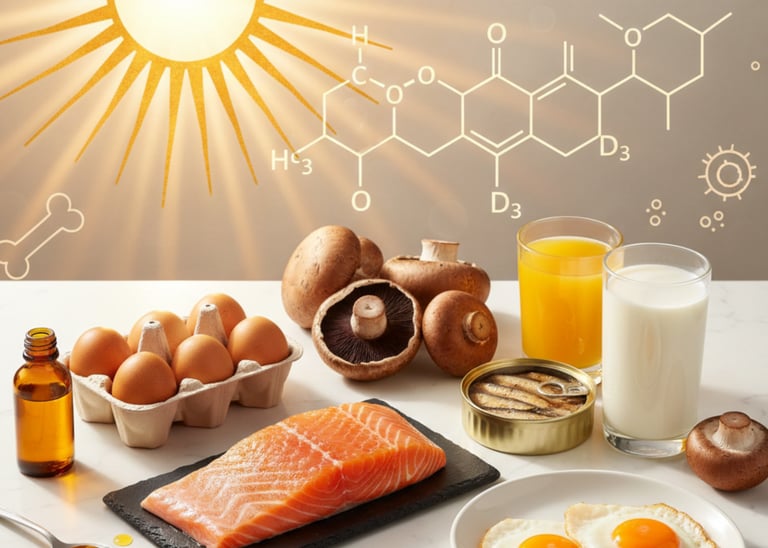
Vitamin D Foods: Natural Sources Beyond Supplements
By BiteBrightly 8 February 2026: This post might contain affiliate links.
Your doctor just told you your vitamin D level is 18 ng/mL—severely deficient. The prescription? A high-dose supplement you'll take for months, possibly years. "There aren't many food sources of vitamin D," your doctor says dismissively. "You'll need the supplement." You leave the office with a prescription and a vague sense that you've failed somehow—failed to get enough sun, failed to eat the right foods, failed to maintain this critical nutrient your body needs for bone health, immune function, and so much more. But what if your doctor is wrong about food sources? What if there ARE natural dietary sources of vitamin D that can meaningfully contribute to your levels—not replacing supplements entirely for severe deficiency, but providing a foundation that reduces your dependence on pills and supports optimal vitamin D status long-term? If you're searching for vitamin D foods beyond the standard "just take a supplement" advice, you're about to discover that while food alone rarely corrects severe deficiency, strategic dietary choices combined with sensible sun exposure can maintain healthy levels and reduce supplement needs significantly.
Vitamin D deficiency is a global epidemic affecting an estimated 1 billion people worldwide. According to research in Nutrients, approximately 40% of Americans are vitamin D deficient (below 20 ng/mL), with even higher rates among certain populations: people with darker skin (melanin reduces vitamin D synthesis), elderly individuals (skin synthesis efficiency declines with age), people living in northern latitudes (insufficient UVB radiation in winter), those who spend most time indoors, people with obesity (vitamin D is fat-soluble and gets sequestered in adipose tissue), and individuals with malabsorption conditions.
The symptoms of deficiency are often vague and dismissed: fatigue, muscle weakness, bone pain, frequent infections, depression, poor wound healing. Most people have no idea they're deficient until a doctor happens to check vitamin D levels—often only after years of suboptimal status have already affected bone density, immune function, and overall health.
Here's the frustrating truth your doctor probably didn't explain: vitamin D is unique among nutrients. Unlike most vitamins obtained primarily from food, humans evolved to produce vitamin D from sun exposure. Our ancestors spent significant time outdoors, their skin synthesizing adequate vitamin D from UVB radiation. Food sources were supplementary, not primary. The modern lifestyle—indoor work, sunscreen use, living at northern latitudes, covering skin for cultural or climate reasons—has created widespread deficiency that food alone struggles to correct.
But here's what your doctor also didn't tell you: while food sources of vitamin D are limited compared to other nutrients, the ones that exist are remarkably potent. A single serving of certain fish provides 100-300% of the recommended daily intake. Egg yolks, though modest per egg, add up quickly. Fortified foods, while not "natural" sources, provide significant amounts in the modern food supply. And unlike supplements (which you can forget to take, which may not be well-absorbed, which add to pill burden), food sources come with additional nutrients—omega-3 fatty acids, protein, B vitamins—that support overall health.
According to research published in The American Journal of Clinical Nutrition, combining modest sun exposure (just 10-30 minutes several times weekly for most people) with strategic vitamin D food sources can maintain adequate vitamin D status in many individuals without supplementation. For those with established deficiency, food sources help maintain levels after initial supplementation corrects the deficit.
The mechanisms are straightforward. Vitamin D exists in two forms: D2 (ergocalciferol, from plant sources—primarily mushrooms) and D3 (cholecalciferol, from animal sources and sun exposure). D3 is more potent and longer-lasting in the body. When you consume vitamin D-rich foods, the vitamin D is absorbed in the small intestine (along with dietary fats, since it's fat-soluble), travels to the liver for conversion to 25-hydroxyvitamin D [25(OH)D—the form measured in blood tests], and then to the kidneys for conversion to active 1,25-dihydroxyvitamin D, which regulates calcium absorption, bone health, immune function, cell growth, and inflammation.
This comprehensive guide reveals the most vitamin D-rich foods (both natural and fortified), how much vitamin D each provides, how to maximize absorption from dietary sources, the role of sun exposure in vitamin D production, realistic expectations for food sources versus supplements, and how to create a vitamin D optimization strategy combining diet, sun, and supplementation appropriately.
Key Takeaways
Approximately 40% of Americans are vitamin D deficient; 1 billion people worldwide have insufficient levels
Vitamin D is unique—humans evolved to produce it from sun exposure, with food as supplementary source
Fatty fish (salmon, mackerel, sardines) are the richest natural food sources, providing 100-300% RDA per serving
Egg yolks provide modest vitamin D (about 6% RDA per egg) but add up with regular consumption
Mushrooms exposed to UV light can provide significant vitamin D2 (plant form)
Fortified foods (milk, orange juice, cereals) provide substantial amounts in modern diets
Recommended intake: 600-800 IU daily (adults); many experts recommend 1,000-2,000 IU for optimal health
Food sources alone rarely correct severe deficiency but can maintain adequate levels once achieved
Vitamin D absorption requires dietary fat—consume vitamin D foods with healthy fats
Sun exposure (10-30 minutes several times weekly) remains the most efficient vitamin D source for most people
Understanding Vitamin D and Why Deficiency Is So Common
Before diving into food sources, understanding vitamin D's unique nature explains why deficiency is epidemic.
What Vitamin D Does
Vitamin D is technically a hormone (not truly a vitamin, since we can produce it) with multiple critical functions:
Bone health: Vitamin D's most recognized role is regulating calcium absorption. Without adequate vitamin D, you can only absorb 10-15% of dietary calcium (versus 30-40% with adequate D). This leads to weak, brittle bones—rickets in children, osteomalacia in adults, and accelerated osteoporosis.
Immune function: Vitamin D modulates both innate and adaptive immunity. It enhances function of immune cells (T cells, macrophages) and has antimicrobial effects. Deficiency is associated with increased susceptibility to infections, autoimmune diseases, and poor vaccine response.
Muscle function: Vitamin D receptors exist in muscle tissue. Deficiency causes muscle weakness, increasing fall risk (especially in elderly).
Cell growth regulation: Vitamin D influences cell proliferation, differentiation, and apoptosis. Some research suggests adequate vitamin D may reduce certain cancer risks.
Cardiovascular health: Vitamin D receptors are present in vascular smooth muscle, endothelium, and heart muscle. Deficiency is associated with increased cardiovascular disease risk.
Mental health: Vitamin D receptors exist in brain regions involved in mood regulation. Deficiency is linked to depression and seasonal affective disorder (SAD).
Inflammation: Vitamin D has anti-inflammatory effects, potentially reducing chronic disease risk.
Vitamin D Levels: What Numbers Mean
Vitamin D status is measured as serum 25-hydroxyvitamin D [25(OH)D]:
Deficient: <20 ng/mL (<50 nmol/L)
Insufficient: 20-30 ng/mL (50-75 nmol/L)
Sufficient: 30-50 ng/mL (75-125 nmol/L)
Optimal (debated): Many experts recommend 40-60 ng/mL (100-150 nmol/L)
High: >100 ng/mL (>250 nmol/L)
Toxic: >150 ng/mL (>375 nmol/L)
The recommended dietary allowances (RDAs) are:
Infants (0-12 months): 400 IU
Children (1-18 years): 600 IU
Adults (19-70 years): 600 IU
Adults (>70 years): 800 IU
Pregnant/lactating women: 600 IU
However, many experts argue these are insufficient for optimal health and recommend 1,000-2,000 IU daily for most adults.
Why Deficiency Is Epidemic
Limited food sources: Very few foods naturally contain vitamin D. Pre-modern humans didn't rely on food for vitamin D—they made it from sun.
Indoor lifestyles: Office workers, students, and indoor occupations mean minimal sun exposure during peak UVB hours.
Geographic latitude: Above approximately 37°N latitude (San Francisco, Washington DC), UVB radiation is insufficient for vitamin D synthesis during winter months (November-February). Below 37°S latitude, same issue June-August.
Sunscreen use: SPF 30 reduces vitamin D synthesis by 95-98%. While sunscreen prevents skin cancer, it also prevents vitamin D production.
Skin pigmentation: Melanin acts as natural sunscreen. People with darker skin require 3-6X more sun exposure than fair-skinned individuals to produce equivalent vitamin D.
Aging: Skin's ability to synthesize vitamin D declines 50% or more from age 20 to 70.
Obesity: Vitamin D is fat-soluble. In obesity, it gets sequestered in adipose tissue, reducing bioavailability.
Malabsorption: Celiac disease, Crohn's disease, gastric bypass surgery, and other GI conditions impair vitamin D absorption.
Medications: Some medications (steroids, weight-loss drugs, seizure medications) interfere with vitamin D metabolism.
The result: widespread deficiency despite vitamin D's critical importance.
Natural Vitamin D Food Sources
Very few foods naturally contain vitamin D—but those that do can be quite potent.
Category 1: Fatty Fish (Richest Natural Sources)
Fatty fish are by far the best natural food sources of vitamin D3.
1. Wild-Caught Salmon
The vitamin D champion among commonly available fish.
Why it's supreme: Wild-caught salmon provides 450-600 IU per 3 oz serving (75-100% of the RDA, 150-200% if you eat a typical 6 oz serving). The vitamin D content varies by species and season—sockeye salmon is particularly high. Wild salmon has 3-4X more vitamin D than farmed salmon (farmed salmon: 100-250 IU per 3 oz due to different diet and less sun exposure).
How to use: 2-3 servings weekly (4-6 oz each). Choose wild-caught for maximum vitamin D (and superior omega-3 profile). Grilled, baked, or broiled all retain vitamin D (it's heat-stable).
Additional benefits: Omega-3 fatty acids (EPA/DHA), high-quality protein, selenium, B vitamins, potassium. Wild salmon is one of the most nutrient-dense foods available.
2. Mackerel
Often overlooked but exceptionally high in vitamin D.
Why it works: Mackerel provides approximately 400-500 IU per 3 oz serving. Atlantic mackerel is particularly high. Also provides omega-3s, selenium, and B12.
How to use: 1-2 servings weekly (3-4 oz). Can be grilled, baked, or canned (choose low-sodium versions). Smoked mackerel is delicious but watch sodium content.
3. Sardines
Small fish, big vitamin D contribution.
Why they work: Sardines provide 150-200 IU per 3 oz serving (or one small can). Also provide calcium (from edible bones), omega-3s, selenium, and B12. Sustainable, affordable, and convenient.
How to use: 2-3 cans weekly. Choose sardines packed in olive oil or water (not soybean oil). Eat bones for calcium bonus. Add to salads, pasta, or eat on crackers.
4. Rainbow Trout
Freshwater fish with solid vitamin D content.
Why it works: Rainbow trout provides approximately 650 IU per 3 oz serving—one of the highest among fish! Also provides omega-3s, protein, and B vitamins.
How to use: 1-2 servings weekly (4-6 oz). Baked, grilled, or pan-seared.
5. Herring
Traditional European fish with excellent vitamin D.
Why it works: Herring provides 200-300 IU per 3 oz serving. Often pickled or smoked (watch sodium). Also high in omega-3s and selenium.
How to use: 1-2 servings weekly. Fresh, pickled, or smoked (in moderation due to sodium).
Category 2: Fish Liver Oils (Extremely Concentrated)
Not technically "food" but natural sources worth mentioning.
6. Cod Liver Oil
Historically used to prevent rickets in children.
Why it's potent: One tablespoon provides 1,360 IU vitamin D (over 200% RDA). Also provides vitamin A and omega-3s. This is why cod liver oil was given to children in previous generations—highly effective at preventing vitamin D deficiency.
How to use: 1 teaspoon to 1 tablespoon daily (depending on vitamin D needs and tolerance). Available in liquid or capsule form. Take with food for better absorption.
Caution: Also high in vitamin A (preformed retinol). Excessive vitamin A can be toxic, especially in pregnancy. Don't exceed recommended doses. If taking other vitamin A supplements, monitor total intake.
Category 3: Egg Yolks (Modest but Additive)
Eggs provide modest vitamin D but add up with regular consumption.
7. Egg Yolks
The vitamin D is entirely in the yolk (not the white).
Why they contribute: One large egg yolk provides approximately 40 IU vitamin D (about 6-7% RDA). While modest per egg, people often eat 2-3 eggs at a meal, and daily egg consumption provides meaningful vitamin D over time. Pasture-raised hens (with sun exposure) produce eggs with 3-6X more vitamin D than conventionally raised hens.
How to use: 2-3 whole eggs daily (not just whites—you need the yolk!). Pasture-raised eggs strongly preferred for higher vitamin D, omega-3s, and other nutrients.
Additional benefits: Complete protein, choline (brain health), lutein and zeaxanthin (eye health), B vitamins.
Category 4: Mushrooms (Plant-Based Source)
Mushrooms are the only plant-based natural source of vitamin D.
8. UV-Exposed Mushrooms
Mushrooms produce vitamin D2 (ergocalciferol) when exposed to UV light, similar to how human skin produces vitamin D3.
Why they work: Regular mushrooms contain minimal vitamin D (<10 IU per serving). However, mushrooms exposed to UV light (either from sunlight or commercial UV lamps) can contain 400-800+ IU per 3 oz serving—comparable to fish! Some brands (Dole, Monterey Mushrooms) sell UV-treated mushrooms labeled "high in vitamin D" or "UV-exposed."
How to use: 1 cup (3 oz) UV-exposed mushrooms several times weekly. Sauté, roast, or add to various dishes. If you can't find UV-exposed mushrooms commercially, you can expose regular mushrooms to sunlight for 15-30 minutes (gill-side up) to increase vitamin D2 content significantly.
Note: Vitamin D2 (from mushrooms) is less potent and shorter-lasting than vitamin D3 (from animal sources and sun). However, it still contributes meaningfully to vitamin D status.
Category 5: Fortified Foods (Not "Natural" But Significant Sources)
While not naturally occurring, fortified foods provide substantial vitamin D in modern diets.
9. Fortified Milk
Most cow's milk in the US is fortified with vitamin D.
Why it's significant: 1 cup fortified milk provides 100 IU vitamin D (about 15-17% RDA). While modest per serving, people often consume multiple servings daily (cereal, cooking, drinking). Whole milk, 2%, 1%, and skim are all typically fortified equally.
How to use: 2-3 cups daily if tolerated. Choose vitamin D-fortified versions (check label—not all brands fortify).
Additional benefits: Calcium, protein, B vitamins. Vitamin D and calcium work synergistically for bone health.
10. Fortified Plant Milks
Almond, soy, oat, and other plant milks are often fortified.
Why they're useful: Most fortified plant milks provide 100-150 IU per cup, similar to or slightly more than cow's milk. Essential for vegans and those avoiding dairy.
How to use: 2-3 cups daily. Choose unsweetened versions when possible. Shake well before pouring (vitamin D settles).
11. Fortified Orange Juice
Many orange juice brands are fortified with vitamin D and calcium.
Why it contributes: 1 cup fortified OJ provides 100-150 IU vitamin D plus calcium. Convenient for those who don't consume dairy.
How to use: 1 cup daily (8 oz). Limit to one serving due to natural sugar content. Choose 100% juice, preferably with pulp (fiber). Fortified versions clearly state "vitamin D added" on label.
Caution: Orange juice is high in natural sugars. Don't overdo. One serving daily is reasonable for most people.
12. Fortified Cereals
Many breakfast cereals are fortified with vitamin D (and other nutrients).
Why they help: Depending on brand, 1 serving (typically 3/4 to 1 cup) provides 40-100 IU vitamin D. Combined with fortified milk, breakfast can provide 140-200 IU.
How to use: Choose whole grain cereals with minimal added sugar. Check labels for vitamin D content (varies widely by brand).
13. Fortified Yogurt
Some yogurt brands are fortified with vitamin D.
Why it's useful: Fortified yogurt provides 80-100 IU per 6 oz serving. Also provides protein, calcium, and probiotics.
How to use: 1-2 servings daily. Choose plain Greek yogurt (higher protein, lower sugar) and add fresh fruit. Check labels—not all yogurt is fortified.
Maximizing Vitamin D Absorption from Food
Vitamin D is fat-soluble, so absorption requires dietary fat.
Consume Vitamin D Foods With Fat
Why it matters: Vitamin D absorption requires fat for emulsification and incorporation into micelles (which transport it across intestinal wall). Low-fat or fat-free meals significantly reduce vitamin D absorption.
How to optimize:
Eat fatty fish (salmon, mackerel) which already contains fat
Add healthy fats to vitamin D-containing meals: olive oil, avocado, nuts, full-fat dairy
If eating fortified skim milk or fat-free yogurt, include other fat sources in the meal
Cook mushrooms in olive oil or butter
Add avocado or nuts to meals containing vitamin D foods
Example: Scrambled eggs (vitamin D in yolk) cooked in butter or olive oil is better absorbed than plain boiled eggs with no fat.
Timing Doesn't Matter Much
Unlike some nutrients (iron, calcium), vitamin D absorption isn't significantly affected by time of day or whether consumed with other nutrients. Spread vitamin D-rich foods throughout the day or concentrate at one meal—both work.
Consider Magnesium Status
Magnesium is required for vitamin D metabolism (converting vitamin D to active forms). Magnesium deficiency can impair vitamin D function even if vitamin D levels are adequate.
Magnesium-rich foods: Leafy greens, nuts, seeds, whole grains, legumes, dark chocolate, avocados.
Maintain Healthy Gut Function
Vitamin D absorption occurs in the small intestine. Conditions impairing fat absorption (celiac disease, Crohn's disease, pancreatic insufficiency, gastric bypass) significantly reduce vitamin D absorption from food.
If you have malabsorption issues, you'll likely need higher doses of vitamin D (often as supplements) and should work with your doctor to monitor levels.
The Role of Sun Exposure
While this guide focuses on food sources, sun exposure remains the most efficient vitamin D source and deserves brief discussion.
How Sun Exposure Produces Vitamin D
When UVB radiation (wavelength 290-315 nm) hits skin, it converts 7-dehydrocholesterol to previtamin D3, which isomerizes to vitamin D3. This then undergoes the same liver and kidney conversions as dietary vitamin D.
Advantages of sun-produced vitamin D:
Highly efficient (15-30 minutes of sun can produce 10,000-20,000 IU)
Self-regulating (skin stops producing after reaching threshold, preventing toxicity)
Provides other benefits (circadian rhythm regulation, mood enhancement)
No pill burden
Sensible Sun Exposure Guidelines
For most people: 10-30 minutes of midday sun (when UVB is strongest) several times weekly, exposing arms, legs, back, or abdomen (larger skin area = more production).
Factors affecting production:
Skin tone: Fair skin produces vitamin D quickly; darker skin requires longer exposure
Latitude: Higher latitudes (>37°N or >37°S) have insufficient UVB in winter
Season: Summer produces much more than winter
Time of day: 10 AM - 3 PM is most effective
Cloud cover/pollution: Reduces UVB penetration
Age: Elderly produce 50% less than young adults
Sunscreen: SPF 30+ blocks 95-98% of vitamin D synthesis
Balance skin cancer risk: Brief, regular exposure (15-30 minutes) provides vitamin D without excessive cancer risk. Avoid sunburn. Use sunscreen after initial 15-30 minutes if staying out longer.
For those who can't get sun: Indoor workers, those at high latitudes, people with photosensitivity, or those avoiding sun for skin cancer risk need to rely more heavily on food sources and/or supplementation.
Realistic Expectations: Food Versus Supplements
Let's be honest about what food sources can and cannot achieve.
What Food Sources CAN Do
✅ Maintain adequate vitamin D status in people with baseline sufficiency combined with modest sun exposure
✅ Provide foundation that reduces supplement needs (e.g., instead of needing 2,000 IU supplement daily, 500-1,000 IU suffices when eating vitamin D-rich foods regularly)
✅ Deliver vitamin D with additional nutrients (omega-3s from fish, protein from eggs, probiotics from yogurt)
✅ Support long-term sustainability (easier to maintain than remembering daily supplements)
What Food Sources CANNOT Do (Usually)
❌ Correct severe deficiency quickly - If your vitamin D is 10-15 ng/mL, food alone won't raise it to 40-50 ng/mL in reasonable timeframe
❌ Provide adequate vitamin D for people with limited sun exposure living in northern climates during winter without supplementation
❌ Overcome malabsorption issues - People with GI disorders affecting fat absorption need higher doses than food provides
❌ Meet needs of high-risk groups without supplementation - Elderly, dark-skinned individuals, obese individuals often need supplements
The Realistic Approach
For severe deficiency (< 20 ng/mL):
Supplement with high-dose vitamin D3 (often 5,000-10,000 IU daily for weeks to months) under medical supervision
Simultaneously increase vitamin D-rich foods
Retest after 2-3 months
Once levels reach 40-50 ng/mL, transition to maintenance dose (often 1,000-2,000 IU daily) combined with vitamin D-rich foods and sensible sun exposure
Monitor annually
For insufficiency (20-30 ng/mL):
Supplement with moderate dose (1,000-2,000 IU daily)
Emphasize vitamin D-rich foods daily
Get sensible sun exposure when possible
Retest in 3 months
Adjust based on results
For maintenance (>30 ng/mL, ideally 40-50):
Eat vitamin D-rich foods regularly (fatty fish 2-3x weekly, eggs daily, fortified foods as desired)
Get 15-30 minutes sun exposure several times weekly when UVB is available
Consider low-dose supplement (400-1,000 IU daily) during winter or if sun exposure is limited
Check levels annually
Sample High-Vitamin D Day
2-3 whole eggs (pasture-raised): 80-120 IU
Fortified yogurt (6 oz): 80-100 IU
Fortified orange juice (8 oz): 100-150 IU Breakfast total: 260-370 IU
Grilled wild salmon (6 oz): 900-1,200 IU
Sautéed UV-exposed mushrooms (1 cup): 400-800 IU Lunch total: 1,300-2,000 IU
Fortified plant milk (8 oz): 100-150 IU
Scrambled eggs (2): 80 IU
Sardines on whole grain crackers (1 small can): 150-200 IU Dinner total: 230-280 IU
Daily food total: 1,890-2,800 IU
Add 15-30 minutes midday sun exposure: +1,000-10,000 IU (depending on skin tone, season, latitude)
This provides well above the RDA (600-800 IU) and approaches or exceeds the 1,000-2,000 IU many experts recommend for optimal health—achieved through food and sensible sun exposure without supplements.
Note: This is an unusually high-vitamin D day showcasing what's possible. Most days won't include this many vitamin D-rich foods. The point is demonstrating that meaningful dietary vitamin D is achievable with strategic choices.
Special Considerations
Vegans and Vegetarians
Challenges: No fish (richest sources). Eggs (if ovo-vegetarian) provide some vitamin D but modest amounts.
Solutions:
UV-exposed mushrooms (seek out specifically labeled)
Fortified plant milks (almond, soy, oat)
Fortified orange juice
Fortified cereals
Fortified tofu (some brands)
Vegan vitamin D3 supplements (from lichen) recommended, especially in winter or at northern latitudes
Sensible sun exposure becomes more critical
Realistic assessment: Vegans almost always need vitamin D supplements unless living at equatorial latitudes with year-round sun exposure.
People with Darker Skin
Challenge: Melanin reduces vitamin D synthesis. May require 3-6X more sun exposure than fair-skinned individuals for equivalent vitamin D production.
Solutions:
Emphasize vitamin D-rich foods even more
Consider year-round vitamin D supplementation (1,000-2,000 IU daily)
Get vitamin D levels tested annually
Elderly Individuals
Challenges: Reduced skin synthesis capacity (50% less than young adults), often limited sun exposure, potential malabsorption issues, medications that interfere with vitamin D metabolism.
Solutions:
Prioritize vitamin D-rich foods daily
Vitamin D3 supplementation usually necessary (1,000-2,000 IU daily)
Consider cod liver oil (provides vitamin D, omega-3s, vitamin A)
Regular level monitoring
Pregnant and Lactating Women
Needs: Adequate vitamin D is critical for fetal bone development and immune system. Breast milk is naturally low in vitamin D unless mother has high levels.
Recommendations:
Consume vitamin D-rich foods daily (especially fatty fish—safe in pregnancy at 2-3 servings weekly of low-mercury fish)
Prenatal vitamins typically include 400-800 IU vitamin D
Many experts recommend 1,000-2,000 IU daily during pregnancy/lactation
Breastfed infants should receive 400 IU vitamin D drops daily (breast milk alone is insufficient)
Conclusion
Your doctor was partially right: food sources of vitamin D are limited compared to most nutrients. Vitamin D is unique—we evolved to produce it from sun exposure, not obtain it primarily from diet. The modern indoor lifestyle combined with sunscreen use, northern latitude living, and skin pigmentation creates widespread deficiency that food alone struggles to correct, especially in severe cases.
But your doctor was also wrong to dismiss food sources entirely. While limited in number, vitamin D-rich foods are remarkably potent. A serving of wild salmon provides more than a day's worth of vitamin D. Daily eggs add up over time. UV-exposed mushrooms rival fish in vitamin D content. Fortified foods, while not "natural," meaningfully contribute to modern vitamin D intake.
The realistic approach isn't food versus supplements—it's food AND sun exposure AND supplements when needed, tailored to individual circumstances. Someone living in Florida who eats salmon twice weekly, eggs daily, and gets regular sun exposure may maintain excellent vitamin D levels without supplementation. Someone in Minnesota during winter who's vegetarian and works indoors will almost certainly need supplements.
For severe deficiency (which is remarkably common), initial supplementation under medical supervision is necessary—food and sun alone won't correct levels from 15 ng/mL to 40 ng/mL quickly enough. But once levels are corrected, strategic dietary choices combined with sensible sun exposure can often maintain adequacy with lower supplement doses or, in some cases, no supplementation at all.
The key is testing, not guessing. Get your vitamin D level checked (simple blood test for 25-hydroxyvitamin D). If deficient, supplement appropriately while increasing vitamin D-rich foods. Retest in 2-3 months. Once levels are adequate, maintain with food, sun, and low-dose supplementation as needed. Monitor annually.
Include fatty fish (salmon, mackerel, sardines) 2-3 times weekly. Eat whole eggs (especially pasture-raised) daily. Seek out UV-exposed mushrooms. Use fortified foods strategically (milk, plant milks, OJ, cereals, yogurt). Get 15-30 minutes of sensible sun exposure several times weekly when UVB is available. Consider cod liver oil in winter months.
These aren't exotic interventions requiring specialized knowledge or significant expense. They're simple dietary patterns practiced for generations before vitamin D deficiency became epidemic. Our ancestors ate fish, eggs, and mushrooms, and spent time outdoors. Modern technology has created the deficiency crisis; strategic return to some traditional practices helps solve it.
Vitamin D is too important to ignore—bone health, immune function, muscle strength, cardiovascular health, mood, inflammation. Deficiency has real consequences. But optimization doesn't require solely relying on pills for life. Food provides a foundation. Sun provides efficiency. Supplements fill gaps. Together, they create a sustainable approach to lifelong vitamin D adequacy.
To strong bones, robust immunity, and optimal vitamin D status!
References and Further Reading
For more information on vitamin D and food sources, consult these authoritative sources:
National Institutes of Health Office of Dietary Supplements - Vitamin D Fact Sheet
Comprehensive, evidence-based information on vitamin D, deficiency, sources, and supplementation.The Vitamin D Council -Understanding Vitamin D
Educational resource on vitamin D's role in health, testing, and optimization strategies.Harvard T.H. Chan School of Public Health - Vitamin D and Health
Evidence-based guidance on vitamin D from Harvard nutrition experts.
Frequently Asked Questions
Can I get enough vitamin D from food alone without supplements?
For most people in modern society, probably not consistently year-round—especially those living above 37° latitude (where UVB is insufficient in winter), people with darker skin, indoor workers, and those avoiding sun exposure. However, combining vitamin D-rich foods (fatty fish 2-3x weekly, eggs daily, fortified foods) with sensible sun exposure (15-30 minutes several times weekly) can maintain adequate levels in many individuals without supplementation during warmer months. Winter months often require supplementation in northern climates. The best approach: get tested, then tailor strategy to your levels, lifestyle, and location.
How much vitamin D do I actually need daily?
The official RDA is 600 IU for adults (800 IU for those over 70), but many experts consider this insufficient for optimal health. The Endocrine Society recommends 1,500-2,000 IU daily for adults to maintain blood levels of 30 ng/mL or higher. Some researchers advocate for levels of 40-60 ng/mL, requiring 2,000-4,000 IU daily for many people. The upper tolerable limit is 4,000 IU daily (though toxicity rarely occurs below 10,000 IU daily for extended periods). Individual needs vary based on body weight, skin tone, sun exposure, and baseline levels. Testing is the only way to know your needs.
Is vitamin D2 (from mushrooms) as good as vitamin D3 (from animal sources)?
Vitamin D3 (cholecalciferol) is more potent and longer-lasting than vitamin D2 (ergocalciferol). Research shows D3 raises and maintains blood levels of 25(OH)D more effectively than equivalent amounts of D2. However, D2 still contributes meaningfully to vitamin D status and is better than no vitamin D at all. For vegans, UV-exposed mushrooms and D2-fortified foods are valuable sources, though vegan D3 supplements (from lichen) are ideal for optimization.
Why do pasture-raised eggs have more vitamin D than conventional eggs?
Hens raised on pasture with sun exposure synthesize vitamin D in their skin (like humans) and deposit it in egg yolks. Studies show pasture-raised eggs can contain 3-6X more vitamin D than eggs from hens raised indoors under artificial lighting. The difference is substantial: conventional eggs provide ~40 IU per yolk, while pasture-raised can provide 120-200 IU. This makes pasture-raised eggs a much more significant vitamin D source worth the premium price for those relying on eggs for vitamin D.
Can I make regular mushrooms high in vitamin D by exposing them to sunlight?
Yes! Mushrooms contain ergosterol, which converts to vitamin D2 when exposed to UV light (just like our skin converts cholesterol compounds to vitamin D3 in sunlight). Place mushrooms gill-side up in direct sunlight for 15-60 minutes. Studies show this can increase vitamin D content from less than 10 IU to 400-800+ IU per 100g. The vitamin D persists even after cooking. This is a simple, free way to boost vitamin D content of regular mushrooms if you can't find commercially UV-treated varieties.
How long does it take to correct vitamin D deficiency with food and supplements?
This depends on severity and dose. With high-dose supplementation (5,000-10,000 IU daily), severely deficient individuals (10-15 ng/mL) typically reach adequate levels (30+ ng/mL) in 2-3 months. Food sources alone (even optimal intake) would take 6-12+ months to correct severe deficiency—too slow for practical purposes. Once deficiency is corrected through initial supplementation, maintaining adequate levels with food, sun, and lower-dose supplements (1,000-2,000 IU) is realistic for many people. Always retest after 2-3 months of intervention to assess response.
Should I take vitamin D supplements with food or on an empty stomach?
Vitamin D should be taken WITH food, preferably a meal containing fat. Vitamin D is fat-soluble and requires dietary fat for optimal absorption. Studies show vitamin D absorption is significantly higher when taken with a meal containing 10-15g+ fat compared to empty stomach or fat-free meals. Take your supplement with breakfast (if it includes eggs, avocado, nuts, or other fats), lunch, or dinner. Timing of day doesn't matter—just take it with a fat-containing meal.
Can you have too much vitamin D from food sources?
Toxicity from food sources is essentially impossible. Even eating fatty fish daily and multiple eggs won't cause vitamin D toxicity. Toxicity typically requires sustained intake of 10,000-40,000+ IU daily for months, which can only realistically occur from over-supplementation. The exception is cod liver oil—while one tablespoon provides only 1,360 IU vitamin D (safe), excessive cod liver oil consumption could provide too much vitamin A (which IS toxic at high doses). Stick to recommended doses of cod liver oil (1 teaspoon to 1 tablespoon daily).
Do I need to worry about vitamin D if I'm taking a multivitamin?
Most multivitamins provide 400-800 IU vitamin D—enough to prevent severe deficiency but often insufficient for optimal levels, especially if you have limited sun exposure. Many people need 1,000-2,000+ IU daily for optimal blood levels. If your multivitamin provides 400 IU and you're eating vitamin D-rich foods and getting regular sun, you may be fine. But if you're at risk for deficiency (indoor worker, northern latitude, darker skin, elderly), you likely need additional vitamin D beyond what a standard multivitamin provides. Testing determines adequacy.
Is it better to get vitamin D from sun exposure or supplements?
Sun exposure is more "natural" and efficient—15-30 minutes can produce 10,000-20,000 IU, far more than typical supplement doses. Sun-produced vitamin D also self-regulates (skin stops producing once threshold reached, preventing toxicity). However, sun exposure comes with skin cancer risk, particularly for fair-skinned individuals or those with family history. The balanced approach: modest sun exposure (15-30 minutes several times weekly, before applying sunscreen) combined with vitamin D-rich foods provides a foundation, with supplements filling gaps as needed based on testing. This minimizes both vitamin D deficiency risk and skin cancer risk.
About Author
Judith Tsanga is an Applied Biosciences & Biotechnology graduate with an Advanced Level qualification in Food Science, and the founder of BiteBrightly. Her passion for food as medicine began with her own experience: after making targeted dietary changes, she noticed a meaningful improvement in her eyesight — a personal transformation that inspired her mission to share evidence-based nutrition insights that help others eat well and heal boldly. Content on BiteBrightly is for educational purposes and isn't a substitute for advice from your doctor or dietitian.
Follow on Pinterest for daily health tips, recipes, and wellness inspiration.
Important Notice: The information in this article is for educational purposes only and is not intended as medical advice or to replace professional medical treatment. Always consult your healthcare provider before making any dietary changes, starting supplements, or implementing health recommendations, especially if you have medical conditions, take medications, are pregnant, or nursing. Vitamin D supplementation should be undertaken with medical supervision, particularly at high doses. Get your vitamin D levels tested before supplementing. Individual vitamin D needs vary widely based on skin tone, sun exposure, geographic location, age, weight, and other factors. This information is not intended to replace prescribed vitamin D supplementation or medical treatment plans.
Related posts
Connect
Join our newsletter for fresh health tips
© 2026. All rights reserved.