The Best Salads for Weight Loss: Recipes That Actually Keep You Full
A starter salad reduces your meal calories by 7–12% (research confirmed). 10 weight loss salads that actually keep you full — recipes, meal prep, and the science.
by BiteBrightly
4/23/202617 min read
The Best Salads for Weight Loss: Recipes That Actually Keep You Full
By BiteBrightly 23 April 2026: This post might contain affiliate links.
Let us settle something right away: a sad bowl of iceberg lettuce and a few cherry tomatoes is not going to help you lose weight. Not because salads do not work for weight loss — they absolutely can — but because that kind of salad leaves you hungry again in 45 minutes, and hungry people make very different food choices than satisfied ones.
The best weight loss salads are not what most people picture. They are big, colorful, genuinely satisfying meals that are built strategically around the foods that keep you full the longest, stabilize your blood sugar so cravings do not hit, and deliver so much nutrition that your body is not constantly searching for more.
Here is the truth about salads and weight loss: a well-built salad is one of the most powerful tools available for managing hunger and reducing calories without feeling deprived — because it combines high volume (lots of food that fills your stomach) with high nutrition and moderate calories. The stretch receptors in your stomach respond to volume, not calories. A large, well-built salad activates those stretch receptors just as effectively as a much more calorie-dense meal — while delivering far fewer calories.
But the word "well-built" is doing a lot of work in that sentence. There is a right way and a wrong way to build a weight loss salad — and in this guide, we are going to cover both, along with 10 specific salad recipes that dietitians and nutritional researchers consistently recommend for weight management.
Key Takeaways
The most important rule for a weight loss salad is to always include protein — protein activates the satiety hormones GLP-1 and PYY that tell your brain "stop eating," and it is the macronutrient most responsible for keeping you full between meals
Healthy fat in a salad is not optional for weight loss — fat slows gastric emptying (keeping food in your stomach longer), activates its own satiety signal through a compound called OEA from olive oil and avocado, and dramatically increases the absorption of fat-soluble nutrients from the vegetables
Fiber from legumes, seeds, and diverse vegetables is the second most important component — it feeds gut bacteria that produce the short-chain fatty acids that activate PYY satiety for hours after the meal
The dressing makes or breaks a salad for weight loss — a homemade olive oil and lemon dressing supports satiety and nutrient absorption; a commercial low-fat dressing loaded with sugar and thickeners can add hidden calories and spike blood sugar
Research consistently shows that eating a large salad before a main meal reduces total caloric intake at that meal by 7–12% — but only when the salad is low in caloric density (vegetables and lean protein, not croutons and creamy dressing)
Leafy greens contain thylakoids — tiny plant membrane fragments that slow fat digestion and extend the release of satiety hormones for hours after the meal
The Anatomy of a Weight Loss Salad
Before we get into the recipes, here is the framework. Every salad in this guide is built around these five components:
1. The Base: Dark Leafy Greens (Not Iceberg)
Iceberg lettuce is mostly water with minimal nutrition. Swap it for:
Spinach — iron, folate, magnesium, and thylakoids for extended satiety
Kale or mixed kale — higher in protein than most greens, plus sulforaphane
Arugula — peppery flavor, high in nitrates for improved blood flow
Romaine — crunchier than spinach with decent folate and vitamin K
Mixed baby greens — a diverse combination that provides more varied nutrients
The more colorful and varied your base, the better. Aim for at least two cups of greens per salad.
2. The Protein: 20–35 Grams Per Salad
This is the most important component for keeping you full. Without adequate protein, even a large salad will leave you hungry within an hour. Options:
Grilled chicken or turkey breast (26g per 3oz)
Wild salmon or tuna (22g per 3oz)
Hard-boiled eggs (6g per egg — use two or three)
Chickpeas or lentils (15–18g per cup)
Edamame (17g per cup)
Tempeh (15g per half cup)
Greek yogurt-based dressing (protein in the dressing itself)
3. The Healthy Fat: Avocado, Olive Oil, Nuts, or Seeds
Fat is the satiety extender. It slows how fast the meal leaves your stomach, activates OEA satiety signals, and multiplies the absorption of fat-soluble vitamins from the vegetables by up to 15 times.
Half an avocado (adds creaminess, OEA satiety signaling)
Two tablespoons of olive oil in the dressing
A small handful of walnuts, almonds, or pumpkin seeds
Two tablespoons of tahini in the dressing
4. The Fiber Boost: Legumes, Seeds, or Root Vegetables
Fiber is the satiety extender that works hours after the meal — it is fermented by gut bacteria to produce propionate, which activates PYY satiety hormones long after you finish eating.
Half a cup of chickpeas, lentils, or black beans
Two tablespoons of pumpkin seeds, hemp seeds, or flaxseed
Roasted sweet potato, beetroot, or butternut squash in small amounts
5. The Flavor Boosters: Anti-Inflammatory, Low-Calorie Add-Ins
These are the components that make a salad genuinely enjoyable to eat — which matters more than most people realize, because a salad you actually want to eat is one you will eat consistently.
Cherry tomatoes, cucumber, red onion, celery
Roasted red peppers, sun-dried tomatoes (in small amounts)
Fresh herbs (basil, parsley, coriander, mint)
A squeeze of lemon or lime
Chili flakes, garlic, and mustard in the dressing
The Dressing Rule
Make it yourself. Most commercial dressings — even ones marketed as "light" or "healthy" — contain added sugar, stabilizers, and thickeners that add hidden calories. The base formula for any weight loss salad dressing is:
1 part acid + 2 parts oil + flavor
For example: 1 tablespoon lemon juice + 2 tablespoons extra-virgin olive oil + 1 teaspoon Dijon mustard + garlic + salt and pepper.
The 10 Best Salads for Weight Loss
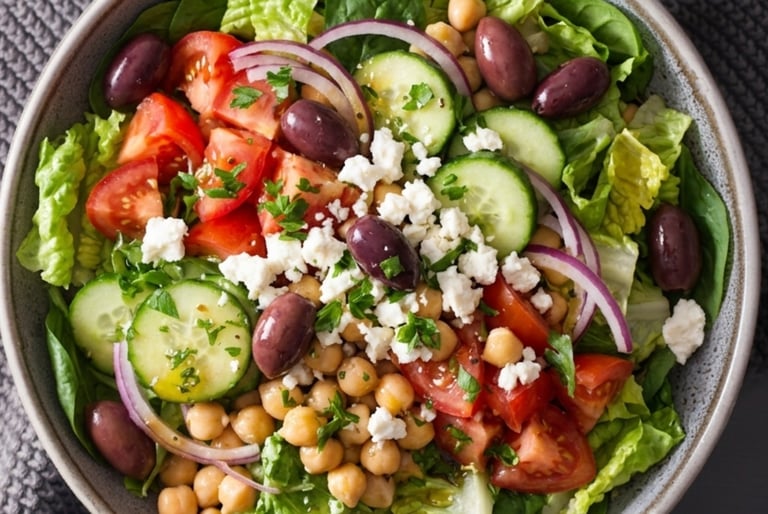
1. The Big Greek Salad With Chickpeas
This is the classic Mediterranean weight loss salad — built on the dietary pattern that has more research behind it for weight management than almost any other.
Why it works for weight loss: Chickpeas provide 15g of protein and 12.5g of fiber per cup, with a glycemic index of approximately 28 — meaning they cause almost no blood sugar spike. The fiber in chickpeas (galactooligosaccharides) specifically feeds Akkermansia muciniphila, the gut bacterium most consistently associated with healthy weight and better insulin sensitivity in research. The olive oil in the dressing activates OEA satiety signaling through the vagus nerve, extending fullness for hours beyond the meal itself.
Ingredients (serves 1):
2 cups romaine lettuce, roughly chopped
1 cup spinach
½ cup chickpeas (canned, drained and rinsed)
1 medium tomato, chopped
½ cucumber, sliced
¼ red onion, thinly sliced
8 Kalamata olives
30g (1oz) feta cheese, crumbled
Fresh parsley
Dressing: 1.5 tbsp extra-virgin olive oil + 1 tbsp red wine vinegar + ½ tsp dried oregano + 1 small garlic clove, minced + salt and pepper
Nutrition per serving: Approximately 420 calories | 18g protein | 14g fiber | 22g healthy fat
How to make it: Combine all salad ingredients in a large bowl. Whisk dressing ingredients together and drizzle over. Toss well and serve immediately or pack the dressing separately for meal prep.
2. The Salmon and Avocado Power Salad
This salad was designed to hit every satiety mechanism at once — protein from salmon activating GLP-1 and PYY, fat from avocado activating OEA, fiber from mixed vegetables extending gut-level satiety, and the omega-3 from salmon supporting the insulin sensitivity that makes fat burning easier.
Why it works for weight loss: Wild salmon provides EPA and DHA omega-3 fatty acids that activate PPARα — a switch inside your cells that upregulates fat-burning enzymes. People with higher omega-3 status consistently burn more fat at rest than those with lower omega-3 levels. A clinical trial found that adding half an avocado to a meal produced 28% greater satisfaction three hours later compared to the same meal without avocado — through the OEA vagal satiety mechanism.
Ingredients (serves 1):
2 cups mixed baby greens or arugula
1 cup spinach
120g (4oz) grilled or baked wild salmon, flaked
½ ripe avocado, sliced
1 cup cherry tomatoes, halved
¼ cucumber, sliced
2 tbsp pumpkin seeds
Fresh dill or parsley
Dressing: 1 tbsp extra-virgin olive oil + 1 tbsp lemon juice + ½ tsp Dijon mustard + salt and pepper
Nutrition per serving: Approximately 520 calories | 38g protein | 9g fiber | 35g healthy fat
How to make it: Arrange greens in a wide bowl. Top with salmon, avocado, tomatoes, cucumber, and seeds. Whisk dressing and drizzle over. Add fresh herbs. The salmon can be cooked fresh or used from last night's dinner — this salad works beautifully with leftover salmon.
3. The Egg and Lentil Satiety Salad
This is one of the most filling salads per calorie available — combining the most satiety hormone-activating protein (eggs) with the most fiber-dense legume (lentils) in a single bowl that genuinely keeps you full for four to five hours.
Why it works for weight loss: Eggs have the most evidence of any single food for producing greater satiety and less subsequent caloric intake. A breakfast of two eggs produces significantly less hunger at the next meal than an equivalent-calorie carbohydrate breakfast — and the same principle applies when eggs are in a lunch salad. The lentils add 15.6g of fiber per cup alongside their protein, producing propionate through colonic fermentation that extends satiety through PYY activation for hours after eating.
Ingredients (serves 1):
2 cups spinach
1 cup mixed greens
½ cup cooked Puy or green lentils
2 hard-boiled eggs, sliced
6 cherry tomatoes, halved
¼ red onion, finely sliced
½ cup roasted beetroot, cubed (optional — adds natural sweetness)
Small handful of walnuts
Dressing: 1 tbsp extra-virgin olive oil + 1 tbsp balsamic vinegar + 1 tsp Dijon mustard + ½ tsp honey + salt and pepper
Nutrition per serving: Approximately 480 calories | 28g protein | 16g fiber | 24g healthy fat
How to make it: Cook lentils in advance and store in the fridge — they are ready to use all week. Boil eggs the night before for a quick assembly. Layer all components and dress just before eating.
4. The Tuna and White Bean Mediterranean Salad
Tinned tuna is one of the most affordable, most convenient, and most underrated weight loss foods — providing complete protein with almost no preparation. Combined with white beans, this salad delivers one of the highest combined protein-plus-fiber totals of any salad in this guide.
Why it works for weight loss: Tinned tuna in spring water (or olive oil) provides 25g of protein per 100g — one of the highest protein-per-calorie ratios of any food. This activates robust GLP-1 and PYY satiety hormone secretion that suppresses appetite for three to four hours. The white beans (cannellini or butter beans) add 8g of fiber and 8g of protein per half cup, alongside resistant starch that ferments to produce propionate for extended satiety.
Research published in the American Journal of Clinical Nutrition found that replacing one daily serving of red meat with legumes was associated with significantly lower body weight over time — making the tuna-bean combination an evidence-supported weight management protein strategy.
Ingredients (serves 1):
2 cups romaine lettuce, chopped
1 cup baby spinach
1 can (120g) tuna in spring water or olive oil, drained
½ cup white beans (cannellini), drained and rinsed
1 cup cherry tomatoes, halved
½ cucumber, diced
2 tbsp capers
¼ red onion, thinly sliced
Fresh parsley or basil
Dressing: 1.5 tbsp extra-virgin olive oil + 1.5 tbsp lemon juice + 1 tsp Dijon mustard + 1 garlic clove, minced + salt and pepper
Nutrition per serving: Approximately 440 calories | 40g protein | 12g fiber | 16g healthy fat
How to make it: Drain the tuna well and flake into a bowl with the beans. Add greens, tomatoes, cucumber, capers, and onion. Dress and toss. This is a perfect meal-prep salad — you can make everything except the dressing in advance.
5. The Mexican Chicken and Black Bean Salad
This is the most satisfying salad in the guide — big, bold flavors with an exceptionally high protein and fiber count that makes it feel more like a proper meal than a salad. It is also one of the easiest to prepare if you use rotisserie chicken or pre-cooked chicken breast.
Why it works for weight loss: Grilled chicken breast provides 26g of protein per 3oz with almost zero fat — the leanest high-protein salad component available. Black beans add 15g of fiber per cup (more than half the daily recommendation in a single ingredient) alongside 15g of protein and the anthocyanins that directly inhibit fat cell formation through PPARγ2 inhibition. Avocado completes the OEA satiety trifecta alongside the protein and fiber.
Ingredients (serves 1):
2 cups romaine lettuce, roughly chopped
1 cup red cabbage, shredded (adds crunch and anthocyanins)
120g (4oz) grilled chicken breast, sliced
½ cup black beans, drained and rinsed
½ avocado, diced
½ cup corn kernels (fresh or frozen)
1 cup cherry tomatoes, halved
¼ red onion, diced
Fresh coriander/cilantro
1 lime wedge
Dressing: 1.5 tbsp olive oil + juice of 1 lime + ½ tsp cumin + ½ tsp chili powder + 1 garlic clove, minced + salt
Nutrition per serving: Approximately 530 calories | 45g protein | 18g fiber | 22g healthy fat
How to make it: Combine all vegetables and greens. Add sliced chicken and beans. Toss with dressing and top with coriander and a squeeze of lime. This salad works brilliantly with meal-prepped chicken cooked in batches.
6. The Asian-Inspired Edamame and Sesame Salad
This is the best plant-based weight loss salad in the guide — built around edamame, which is one of the few complete plant proteins available (containing all nine essential amino acids your body cannot make itself).
Why it works for weight loss: Edamame provides 17g of complete protein per cup — activating the same GLP-1 and PYY satiety hormones as animal protein, which is why plant-based diets based on soy are equally effective for weight loss when protein intake is adequate. The red cabbage in this salad provides the highest anthocyanin content of any common vegetable — directly inhibiting adipogenesis (the formation of new fat cells) through PPARγ2 pathway blockage.
Ingredients (serves 1):
2 cups shredded red and green cabbage
1 cup edamame (frozen, defrosted)
1 medium carrot, grated or julienned
½ red bell pepper, thinly sliced
4 spring onions, sliced
2 tbsp sesame seeds (toasted)
Small handful of fresh coriander/cilantro or mint
Dressing: 1 tbsp sesame oil + 1 tbsp soy sauce (or tamari) + 1 tbsp rice vinegar + 1 tsp fresh ginger, grated + 1 tsp honey + ½ tsp chili flakes
Nutrition per serving: Approximately 390 calories | 22g protein | 12g fiber | 18g healthy fat
How to make it: Combine all vegetables and edamame in a large bowl. Toast sesame seeds in a dry pan for two minutes until golden. Whisk dressing and pour over. Top with sesame seeds and fresh herbs. This salad is even better made 30 minutes ahead — the vegetables soften slightly and absorb the dressing.
7. The Roasted Sweet Potato and Kale Salad
This is the most nutritionally complete salad in the guide — combining the beta-carotene and complex carbohydrates of sweet potato with the mineral density of kale and the OEA satiety of tahini dressing, in a warm-and-cold combination that most people find deeply satisfying.
Why it works for weight loss: Roasted sweet potato has a surprisingly low glycemic index for a root vegetable (GI approximately 44 when baked, lower when cooled) — providing the complex carbohydrate that stabilizes blood sugar and prevents the cortisol-driven cravings that derail most weight management efforts. Kale is the most nutritionally dense salad green available — providing more protein per calorie than most vegetables, alongside iron, calcium, vitamin C, and sulforaphane. The tahini dressing provides a creamy satisfaction that makes this salad feel indulgent while keeping the caloric density moderate.
Ingredients (serves 1):
2 cups kale, stems removed and massaged with a pinch of salt
1 cup baby spinach
1 small sweet potato (approximately 150g), cubed and roasted with olive oil
½ cup chickpeas, roasted until crispy
¼ red onion, thinly sliced
2 tbsp pumpkin seeds
Small handful of dried cranberries (unsweetened if possible — use sparingly)
Dressing: 2 tbsp tahini + 1 tbsp lemon juice + 1 tbsp warm water (to thin) + 1 small garlic clove, minced + salt and pepper
Nutrition per serving: Approximately 490 calories | 18g protein | 14g fiber | 22g healthy fat
How to make it: Roast sweet potato cubes and chickpeas together at 200°C (400°F) for 20–25 minutes with a drizzle of olive oil. Massage kale with a pinch of salt and a drop of olive oil until softened. Layer kale, spinach, roasted sweet potato, chickpeas, and seeds. Drizzle with tahini dressing.
8. The Turkey and Quinoa Harvest Salad
This is the most filling grain-based salad — combining the complete protein of both turkey and quinoa (quinoa is the only grain with all nine essential amino acids) for an exceptional total protein count that sustains fullness through a busy afternoon.
Why it works for weight loss: Quinoa has a glycemic index of approximately 53 — significantly lower than rice or pasta — providing the blood sugar stability that prevents cravings. It also provides 8g of complete protein per cup of cooked quinoa, adding to the protein from turkey for a total that decisively activates the satiety hormone response needed to bridge the gap between lunch and dinner without snacking. The apple in this salad provides pectin — a soluble fiber that forms a gel in the gut similar to oat beta-glucan, slowing gastric emptying and extending fullness.
Ingredients (serves 1):
2 cups mixed greens
½ cup cooked quinoa, cooled
120g (4oz) cooked turkey breast, sliced or shredded
½ apple, thinly sliced
¼ cup dried cranberries (unsweetened) or pomegranate seeds
Small handful of pecans or walnuts
2 tbsp crumbled goat cheese (optional)
Fresh flat-leaf parsley
Dressing: 1.5 tbsp extra-virgin olive oil + 1 tbsp apple cider vinegar + 1 tsp Dijon mustard + ½ tsp honey + salt and pepper
Nutrition per serving: Approximately 510 calories | 38g protein | 8g fiber | 20g healthy fat
How to make it: Cook quinoa in advance and cool — cooled quinoa has slightly more resistant starch than hot. Combine greens, quinoa, turkey, and apple. Dress and toss. Top with nuts, cranberries, and cheese.
9. The Detox Green Salad With Hemp Seeds
This is the most anti-inflammatory salad in the guide — loaded with cruciferous vegetables, dark leafy greens, and hemp seeds (one of the only complete plant proteins in seed form) alongside a turmeric-ginger dressing that reduces the chronic inflammation linked to weight loss resistance.
Why it works for weight loss: Chronic inflammation — from poor diet, stress, and gut dysbiosis — is one of the most significant but least discussed drivers of weight loss resistance. It causes insulin resistance in fat cells (preventing them from releasing stored fat for energy) and activates the inflammatory cytokines that disrupt leptin signaling (the hormone that tells your brain you have had enough to eat). This salad specifically targets this mechanism.
Ingredients (serves 1):
1.5 cups kale, massaged
1 cup broccoli florets, finely chopped (raw or very lightly blanched)
½ cup cucumber, diced
½ cup green apple, diced
3 tbsp hemp seeds (10g complete protein, all 9 amino acids)
2 tbsp pumpkin seeds
¼ avocado, diced
Fresh mint or parsley
Dressing: 1.5 tbsp extra-virgin olive oil + 1 tbsp lemon juice + ½ tsp turmeric + ½ tsp fresh grated ginger + 1 small garlic clove + salt and pepper
Nutrition per serving: Approximately 420 calories | 20g protein | 10g fiber | 30g healthy fat
How to make it: Massage kale with a tiny drop of olive oil and salt until softened (about 30 seconds). Combine all vegetables, seeds, and avocado. Whisk the turmeric dressing — it will turn a beautiful golden color. Pour over and toss thoroughly. The turmeric stains so use a bowl you do not mind getting colored.
10. The Classic Niçoise-Style Salad
The Niçoise is one of the most nutritionally balanced salads in the culinary tradition — combining the protein of tuna and eggs, the healthy fat of olives and olive oil, and the complex carbohydrate of small potatoes for a salad that genuinely functions as a complete, satisfying meal.
Why it works for weight loss: Research has found that eating a low-calorie-density salad before a meal reduces total calorie intake at that meal by 7–12% — but a Niçoise works as the meal itself, not a starter. The combination of two eggs (12g protein), tuna (25g protein per can), and the healthy fats from olives and olive oil produces the multi-pathway satiety that protein-plus-fat combinations are uniquely effective at — GLP-1 from protein, OEA from olive oil, CCK from the combination of both.
Ingredients (serves 1):
2 cups mixed greens or butter lettuce
1 small can (120g) tuna in olive oil or spring water
2 hard-boiled eggs, halved
80g green beans, blanched
3 small new potatoes, boiled and halved
8 Kalamata olives
6 cherry tomatoes, halved
4 anchovy fillets (optional but traditional)
Fresh basil
Dressing: 1.5 tbsp extra-virgin olive oil + 1 tbsp red wine vinegar + 1 tsp Dijon mustard + 1 garlic clove, minced + salt and pepper
Nutrition per serving: Approximately 490 calories | 42g protein | 8g fiber | 24g healthy fat
How to make it: Boil new potatoes until just tender (about 12 minutes). Blanch green beans for 2–3 minutes until bright green and still crisp. Drain tuna and halve eggs. Arrange all components on the greens — do not toss a Niçoise, simply arrange the components and drizzle the dressing over.
Salad Meal Prep: How to Have Weight Loss Salads Ready All Week
The biggest reason people do not eat salads consistently for weight loss is not willpower — it is time. Here is a simple system that makes it effortless:
Sunday batch prep (45 minutes):
Wash and spin dry all greens, store in a clean container lined with paper towel — keeps fresh for 5 days
Cook a batch of lentils, chickpeas, or quinoa — store in the fridge in a sealed container for the week
Hard boil 6–8 eggs — store in the shell in the fridge
Grill or bake 4 chicken breasts or a side of salmon — portion and refrigerate
Chop sturdy vegetables (carrots, bell peppers, cucumber, celery) — store in water in sealed containers
Make a double batch of your preferred dressing — store in a small jar in the fridge for up to a week
Daily assembly (5 minutes): Layer greens → add protein → add pre-chopped vegetables → add fiber component (beans/seeds) → dress just before eating.
The key rule: Always keep the dressing separate until the moment you eat — dressed salads wilt quickly.
The Biggest Salad Mistakes That Sabotage Weight Loss
Too Little Protein
A salad of greens, tomatoes, cucumber, and a low-fat dressing might have 150 calories — but it will leave you starving within an hour. Without protein, no satiety hormone response is activated. Add at least 20–25g of protein to every weight loss salad.
Low-Fat Dressing Trap
"Fat-free" salad dressings are typically loaded with sugar, corn syrup, or artificial thickeners to compensate for the flavor of the removed fat. They spike blood sugar, do not activate fat-based satiety signals, and dramatically reduce the absorption of fat-soluble vitamins and carotenoids from the vegetables. Always use a real oil-based dressing.
The Hidden Calorie Ingredients
Croutons (add carbohydrates with minimal nutritional value), candied nuts (sugar-coated), large amounts of dried fruit (concentrated sugar), tortilla strips, and creamy commercial dressings can collectively add 300–500 calories to a salad while providing minimal satiety benefit. Keep these additions minimal or replace with better options.
Eating Too Fast
Satiety hormones take approximately 20 minutes to fully signal to the brain that you are full. Eating a salad quickly means you finish before the fullness registers. Take your time with a salad — chew the greens thoroughly and eat without distraction to allow satiety signals to develop before you consider a second helping.
Frequently Asked Questions
How many calories should a weight loss salad have?
For a lunch salad that works as a complete meal — meaning it keeps you genuinely satisfied until dinner — aim for 400–550 calories. This range provides enough protein (20–40g), fat (15–35g), and fiber (8–18g) to activate satiety hormone responses that last three to five hours. A 200-calorie salad might look "healthy" on a calorie tracker but will almost certainly lead to snacking that more than makes up the calorie difference.
Should I count calories in my salad dressing?
The dressing calories matter but less than most people think — because the fat in a good dressing is doing important work for you: activating OEA satiety signaling, extending your fullness, and multiplying the absorption of fat-soluble vitamins and carotenoids from your vegetables by up to 15 times. Two tablespoons of extra-virgin olive oil adds approximately 240 calories — but it also transforms how much nutrition you absorb from the salad and how long the salad keeps you full. The worst approach is to cut out dressing entirely and use a fat-free version instead.
Can I eat salad every day for weight loss?
Yes — and it is one of the more sustainable dietary approaches available because the variety of salad recipes is essentially unlimited. The key is rotating the protein, varying the vegetables, and keeping meals interesting enough that you genuinely look forward to eating them. The salads in this guide are all designed to be satisfying meals rather than reluctant diet food — which is the difference between a dietary approach that lasts weeks and one that lasts years.
What is the best time to eat a salad for weight loss?
Lunchtime is typically the most effective time for a large weight loss salad — it provides the caloric gap between breakfast and dinner, keeps afternoon snacking to a minimum through the satiety response, and avoids the blood sugar instability in the afternoon that drives the most damaging snacking patterns. Eating a small starter salad before dinner is also effective — research found that eating a low-calorie-density salad before a meal reduced total calorie intake at that meal by 7–12%.
References and Further Reading
Flood JE & Rolls BJ — Appetite (2007) — Soup preloads in a variety of forms reduce meal energy intake Research establishing that eating a low-calorie-density first course before a meal reduces total caloric intake at that meal — applicable to starter salads and the volume satiety mechanism underlying weight loss salads.
Hollis JH & Mattes RD — British Journal of Nutrition (2007) — Effect of chronic consumption of almonds on body weight in healthy humans Research on satiety-promoting effects of nuts and healthy fats — relevant to the role of nuts and seeds in salads for extending fullness through fat-based satiety mechanisms.
Unlu NZ et al. — Journal of Nutrition (2005) — Carotenoid absorption from salad and salsa by humans is enhanced by the addition of avocado or avocado oil Research confirming that adding avocado to a salad increases the absorption of carotenoids (lycopene, beta-carotene, lutein) by 4–15 times compared to the same salad without avocado — establishing the evidence base for including healthy fat in weight loss salads.
Rolls BJ et al. — Journal of the American Dietetic Association (2004) — Salad and satiety: energy density and portion size of a first-course salad affect energy intake at lunch Classic research by Barbara Rolls establishing that the caloric density and portion size of a starter salad directly determine its effect on subsequent meal intake — with a large, low-calorie-density salad reducing main course intake by up to 12%.
About the Author
I'm Judith, a wellness enthusiast and Applied Bio Sciences and Biotechnology graduate behind BiteBrightly. With a deep-rooted belief in the healing power of food, my nutrition journey began with a personal transformation—I improved my eyesight through targeted dietary changes. This life-changing experience sparked my mission to empower others by sharing evidence-based insights into food as medicine.
Drawing on my scientific background, personal experience, and ongoing research into nutrition and health, I focus on breaking down complex health topics into clear, practical, and actionable guidance. My approach combines scientific credibility with real-world application, making evidence-based nutrition accessible to everyone.
Follow me on Pinterest for daily health tips, recipes, and wellness inspiration.
Important Notice: The information in this article is for educational purposes only and is not intended as medical advice. I am not a medical doctor or registered dietitian. Individual caloric and nutritional needs vary based on body size, activity level, age, and health status. People with diabetes, eating disorder histories, or other health conditions affecting dietary management should work with a qualified healthcare provider or registered dietitian before making significant dietary changes. These statements have not been evaluated by the FDA.
Connect
Join our newsletter for fresh health tips
© 2026. All rights reserved.