The 5 Best Salads for Diabetes: Recipes That Keep Blood Sugar Stable
Eating vegetables before carbs reduces postprandial glucose (Diabetes Care study). 5 full salad recipes for diabetes with nutrition info and blood sugar tips included.
by BiteBrightly
4/27/202616 min read
The 5 Best Salads for Diabetes: Recipes That Keep Blood Sugar Stable
By BiteBrightly 27 April 2026: This post might contain affiliate links.
Managing diabetes through food can feel overwhelming. There are long lists of things you cannot eat, warnings about carbohydrates, and conflicting advice everywhere you look. But here is something that rarely gets said clearly enough: there are also many delicious, satisfying foods you absolutely can eat — and salads, built the right way, are among the most powerful tools available for keeping blood sugar stable.
This guide is specifically for people with type 2 diabetes or prediabetes, or anyone managing blood sugar levels through diet. Every salad recipe here has been built around three principles: keeping the glycemic load low, maximising fiber to slow glucose absorption, and including protein and healthy fat to prevent blood sugar spikes. All of them are genuinely delicious — because a diabetes-friendly eating plan only works if you actually want to eat the food.
Before we get into the recipes, a quick note: if you have been diagnosed with diabetes, please work with your doctor, diabetes nurse, or registered dietitian to develop an eating plan suited to your specific situation. This guide provides general evidence-based dietary information, not personalised medical advice.
Key Takeaways
The glycemic index (GI) tells you how fast a food raises blood sugar on a scale of 0–100. Low GI foods (below 55) raise blood sugar slowly. High GI foods (above 70) raise it fast. All five salads in this guide are built around low-GI ingredients
Fiber is your most powerful ally for blood sugar management — it slows the digestion and absorption of carbohydrates, preventing the sharp glucose spikes that are particularly harmful in diabetes
Protein and healthy fat at every meal reduce the glycemic response to whatever carbohydrates you eat — they slow gastric emptying (how fast food leaves your stomach) and reduce the speed of glucose absorption
Vinegar and lemon juice in dressings have a clinically confirmed effect on blood sugar — the acetic acid inhibits the enzymes that digest starch, reducing postprandial glucose spikes by up to 34%
Research published in Diabetes Care found that eating a salad or non-starchy vegetables before a carbohydrate meal significantly reduced postprandial glucose and insulin responses — meaning even the order you eat food in matters for blood sugar management
The three foods most consistently associated with reduced type 2 diabetes risk in large population studies are leafy green vegetables, legumes, and fatty fish — all featured in these recipes
Why These Salads Work for Diabetes
Blood Sugar 101 — The Plain Version
When you eat carbohydrates, your body breaks them down into glucose (sugar), which enters your bloodstream. Your pancreas then releases insulin — a hormone that moves glucose from your blood into your cells for energy.
In type 2 diabetes, cells become resistant to insulin (they stop responding to it properly), so glucose builds up in the bloodstream instead of being used for energy. Over time, high blood glucose damages blood vessels and nerves throughout the body.
The goal of a diabetes-friendly diet is not to eliminate all carbohydrates — your body needs glucose for energy. The goal is to choose carbohydrates that release glucose slowly and steadily (preventing the sharp spikes that overload the system), and to eat them alongside foods that slow their absorption even further.
What Makes a Salad Diabetes-Friendly
High fiber — fiber slows the digestion of carbohydrates, flattening the glucose curve after eating. Legumes, seeds, and diverse non-starchy vegetables are the best fiber sources.
Low glycemic load — glycemic load accounts for both how fast a food raises blood sugar AND how much carbohydrate is in a typical serving. A diabetes-friendly salad keeps the glycemic load of the whole meal low.
Adequate protein — protein slows gastric emptying and triggers insulin-independent glucose uptake in muscles, helping cells use glucose without requiring as much insulin.
Healthy fat — fat slows gastric emptying further, reducing the rate at which glucose enters the bloodstream from the meal.
Acidic dressing — vinegar and lemon juice contain acetic acid, which inhibits the enzymes alpha-amylase and sucrase that digest starch and sugar in the intestine. This directly slows glucose absorption from the meal.
The 5 Best Salads for Diabetes
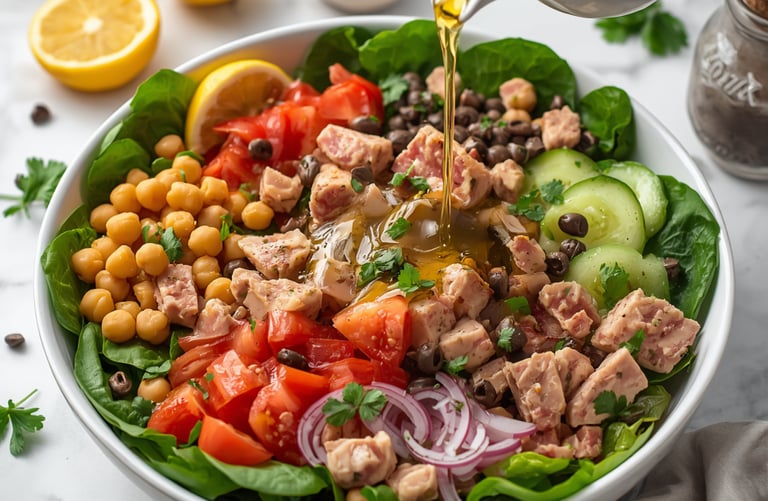
Recipe 1: The Mediterranean Chickpea and Tuna Salad
This is the most blood-sugar-friendly salad in the guide — combining the lowest glycemic index legume (chickpeas, GI approximately 28) with lean protein from tuna and the blood sugar-reducing effect of an olive oil and lemon dressing.
Why it works for diabetes:
Chickpeas have a glycemic index of approximately 28 — one of the lowest of any carbohydrate food. Their extraordinary fiber content (12.5g per cup) includes galactooligosaccharides (GOS) and resistant starch, which are fermented by gut bacteria rather than absorbed as glucose. This means a significant portion of chickpea carbohydrates never enters the bloodstream as sugar at all. Research published in the American Journal of Clinical Nutrition has confirmed that regular legume consumption significantly reduces HbA1c (the three-month average blood glucose measure) and fasting blood glucose in people with type 2 diabetes — making chickpeas one of the most evidence-supported foods for diabetes management.
The tuna provides 25g of protein per serving with no carbohydrate, directly reducing the overall glycemic load of the meal. The olive oil in the dressing contributes oleic acid which improves insulin sensitivity, and the lemon juice provides acetic acid to inhibit starch-digesting enzymes.
Ingredients (serves 1):
2 cups romaine lettuce, roughly chopped
1 cup baby spinach
½ cup (80g) chickpeas, drained and rinsed
1 small can (120g) tuna in spring water or olive oil, drained
1 medium tomato, diced
½ cucumber, sliced
¼ red onion, thinly sliced
2 tablespoons Kalamata olives, pitted
1 tablespoon capers
Small handful of fresh parsley
Dressing:
1.5 tablespoons extra-virgin olive oil
1.5 tablespoons fresh lemon juice
1 teaspoon Dijon mustard
1 small garlic clove, minced
½ teaspoon dried oregano
Salt and black pepper to taste
How to make it:
Wash and dry the romaine and spinach, then add to a large bowl
Drain the tuna well and break into chunks — add to the bowl
Add chickpeas, tomato, cucumber, red onion, olives, and capers
Whisk all dressing ingredients together in a small bowl or shake in a jar
Pour dressing over the salad and toss gently to combine
Top with fresh parsley and serve immediately
Nutrition per serving: Approximately 420 calories | 38g protein | 28g carbohydrate | 12g fiber | 18g healthy fat | Glycemic load: LOW
Blood sugar tip: Eat this salad before any additional carbohydrates at the meal. The fiber and protein eaten first create a buffer that reduces the glycemic impact of anything eaten after.
Meal prep note: Keep dressing separate and assemble just before eating. The chickpeas, tuna, and chopped vegetables can all be prepped in advance and stored separately in the fridge for up to three days.
Recipe 2: The Leafy Green and Salmon Power Salad
Wild salmon is one of the best foods for diabetes management — it provides omega-3 fatty acids that improve insulin sensitivity, and it is a zero-carbohydrate protein that reduces the overall glycemic load of any meal it anchors.
Why it works for diabetes:
Omega-3 fatty acids from fatty fish directly improve insulin sensitivity by reducing the chronic inflammation in fat tissue that drives insulin resistance. EPA and DHA from salmon activate PPARγ (peroxisome proliferator-activated receptor gamma) — a receptor in fat cells that improves their insulin response and glucose uptake. Multiple prospective studies have found that higher fish consumption is associated with significantly lower type 2 diabetes incidence. The American Diabetes Association recommends fatty fish as one of the best protein choices for diabetes management.
Spinach and dark leafy greens are specifically valuable in diabetes because they are among the lowest glycemic foods available (GI effectively zero), extremely high in magnesium (spinach provides 157mg per cup cooked), and magnesium is a required cofactor for all insulin-regulated glucose transport. Research has found that higher dietary magnesium intake is associated with significantly lower type 2 diabetes risk — partly because magnesium deficiency impairs insulin signalling at the cellular level.
The avocado in this salad provides monounsaturated fat and OEA satiety signalling alongside a meaningful dose of fiber (10g per avocado), contributing to both blood sugar stability and sustained fullness between meals.
Ingredients (serves 1):
2 cups baby spinach
1 cup mixed salad leaves (rocket, watercress, or mixed baby greens)
120g (4oz) grilled or baked wild salmon, flaked
½ ripe avocado, sliced
1 cup cherry tomatoes, halved
½ cucumber, sliced
¼ red onion, thinly sliced
2 tablespoons pumpkin seeds
Small handful of fresh dill or parsley
Dressing:
1 tablespoon extra-virgin olive oil
1 tablespoon fresh lemon juice
½ teaspoon Dijon mustard
½ teaspoon capers, roughly chopped (optional)
Salt and black pepper to taste
How to make it:
Arrange spinach and mixed leaves in a wide, shallow bowl — a wide bowl works better than a deep one for salmon salads so the fish does not get crushed
Flake the salmon over the greens — if cooking fresh, season with lemon, salt, and a little olive oil and bake at 200°C (400°F) for 12–15 minutes; alternatively, use last night's leftover salmon
Fan the avocado slices across one side of the bowl
Add cherry tomatoes, cucumber, and red onion
Whisk the dressing ingredients together and drizzle over
Finish with pumpkin seeds and fresh herbs
Nutrition per serving: Approximately 510 calories | 36g protein | 14g carbohydrate | 9g fiber | 34g healthy fat | Glycemic load: VERY LOW
Blood sugar tip: The pumpkin seeds provide an additional 2.2mg of zinc per two tablespoons — zinc is directly required for insulin production in the pancreatic beta cells that make insulin. Including zinc-rich foods consistently supports the insulin production pathway.
Meal prep note: Salmon can be batch-cooked and refrigerated for up to two days. Keep avocado separate (with lemon juice to prevent browning) and add just before eating.
Recipe 3: The Mexican Black Bean and Grilled Chicken Salad
This is the most filling and satisfying diabetes-friendly salad in the guide — combining the extraordinary fiber of black beans with lean chicken breast for a high-protein, very low glycemic load meal that bridges the gap between lunch and dinner without any blood sugar instability.
Why it works for diabetes:
Black beans have a glycemic index of approximately 30 and provide 15g of fiber per cup — one of the highest fiber contents of any commonly eaten food. The combination of soluble and insoluble fiber in black beans creates a dual blood sugar benefit: soluble fiber forms a gel that slows glucose absorption from the meal, while insoluble fiber feeds gut bacteria that produce short-chain fatty acids improving insulin sensitivity over time.
Red cabbage — an underrated ingredient in this salad — provides anthocyanins that directly inhibit alpha-glucosidase, the intestinal enzyme that breaks starch into absorbable glucose. This is the same enzyme targeted by the diabetes medication acarbose. Dietary anthocyanins from red and purple foods provide a meaningful contribution to this mechanism.
Grilled chicken breast is the leanest high-protein food available — 26g of protein per 3oz with essentially zero carbohydrate and fat. This makes it the ideal diabetes protein source: maximum protein-driven satiety and insulin-sensitivity support with minimum contribution to the total glycemic load of the meal.
Ingredients (serves 1):
2 cups romaine lettuce, roughly chopped
1 cup red cabbage, finely shredded
120g (4oz) grilled chicken breast, sliced
½ cup (80g) black beans, drained and rinsed
½ ripe avocado, diced
½ cup (80g) corn kernels (fresh or frozen, defrosted) — use sparingly if managing strict carbohydrate intake
1 cup cherry tomatoes, halved
¼ red onion, diced
Small handful of fresh coriander (cilantro)
1 lime wedge for serving
Dressing:
1.5 tablespoons extra-virgin olive oil
Juice of 1 lime (approximately 2 tablespoons)
½ teaspoon ground cumin
½ teaspoon chili powder (adjust to taste)
1 small garlic clove, minced
Salt to taste
How to make it:
Combine romaine and red cabbage in a large bowl — the red cabbage gives a satisfying crunch that makes this salad feel more substantial
Season the chicken breast with a little olive oil, salt, cumin, and chili powder, then grill or pan-fry over medium-high heat for 6–7 minutes per side until cooked through. Rest for 5 minutes before slicing
Add the black beans, avocado, corn (if using), cherry tomatoes, and red onion to the bowl
Arrange the sliced chicken on top
Whisk the dressing, pour over, and toss gently
Top with coriander and a squeeze of lime
Nutrition per serving: Approximately 530 calories | 43g protein | 38g carbohydrate | 17g fiber | 22g healthy fat | Glycemic load: LOW (despite the carbohydrate count, the fiber content significantly reduces glycemic impact)
Blood sugar tip: If you are following a strict low-carbohydrate approach to diabetes management, reduce or omit the corn and reduce the black beans to ¼ cup — this brings the carbohydrate total below 25g while keeping the fiber and protein benefits.
Meal prep note: Batch cook chicken breasts at the start of the week. Black beans from a can are ready immediately. Red cabbage keeps crisp for five days when stored separately in the fridge.
Recipe 4: The Greek Egg and Spinach Salad With Tahini Dressing
Eggs are one of the most diabetes-friendly protein foods available — they provide complete protein with no carbohydrate, contain choline for insulin receptor signalling, and have been shown in multiple clinical trials to not raise cardiovascular risk in people with diabetes when consumed as part of an overall healthy diet pattern.
Why it works for diabetes:
Hard-boiled eggs contribute zero glycemic load to the meal — they have no carbohydrate content whatsoever. Their protein (6g per egg) and fat content slow gastric emptying, reducing the rate at which glucose from any other components of the meal enters the bloodstream.
Spinach is specifically important for diabetes beyond its general nutritional value because of its alpha-lipoic acid content — an antioxidant compound that has been studied in multiple clinical trials for improving insulin sensitivity and reducing oxidative stress in people with diabetes. Spinach is also the richest dietary source of folate, which supports the methylation pathways that regulate insulin gene expression.
The tahini dressing in this recipe provides monounsaturated and polyunsaturated fats from sesame alongside calcium, iron, and zinc — a mineral profile that supports multiple aspects of insulin function. The sesame lignans (sesamin and sesamolin) in tahini have demonstrated anti-diabetic effects in research through PPAR activation and reduced postprandial glycemia.
Ingredients (serves 1):
2 cups spinach
1 cup chopped romaine or cos lettuce
3 hard-boiled eggs, peeled and halved
6 cherry tomatoes, halved
½ cucumber, sliced into half-moons
¼ red onion, very thinly sliced
8 Kalamata olives
30g (1oz) feta cheese, crumbled
2 tablespoons pumpkin seeds
Fresh mint or flat-leaf parsley
Tahini Dressing:
2 tablespoons tahini (sesame paste)
1 tablespoon fresh lemon juice
1–2 tablespoons warm water (to thin to desired consistency)
1 small garlic clove, minced
Pinch of ground cumin
Salt and pepper to taste
How to make it:
To boil the eggs perfectly: place eggs in cold water, bring to a boil, then reduce to a simmer for exactly 10 minutes for fully set yolks. Transfer immediately to cold water to stop cooking. Peel when cool
Build the salad base: spinach and romaine in a bowl, then add tomatoes, cucumber, and red onion
Arrange the halved eggs over the top — three eggs provides 18g of complete protein with zero carbohydrate contribution
Add olives, feta, and pumpkin seeds
Make the tahini dressing: whisk tahini, lemon juice, warm water, garlic, and cumin together until smooth. Add more water if too thick — it should pour easily but coat the salad
Drizzle generously over the salad and finish with fresh herbs
Nutrition per serving: Approximately 460 calories | 28g protein | 16g carbohydrate | 6g fiber | 32g healthy fat | Glycemic load: VERY LOW
Blood sugar tip: The tahini-lemon dressing is particularly valuable for blood sugar management — both the tahini fat and the lemon acetic acid independently reduce postprandial glucose. This is the most "dressing-forward" salad in the guide — do not be shy with it.
Meal prep note: Hard-boil eggs in batches of six and store in the shell for up to a week in the fridge. Make a double batch of tahini dressing — it keeps for a week refrigerated and works on any salad.
Recipe 5: The Asian-Inspired Edamame and Tofu Salad
This is the best plant-based diabetes salad in the guide — built around edamame (one of the only complete plant proteins) and tofu for a vegetarian meal with exceptional protein content, very low glycemic load, and specific anti-diabetic compounds from fermented soy.
Why it works for diabetes:
Edamame (young green soybeans) has a glycemic index of approximately 18 — one of the lowest of any food — because the soy protein and fat significantly slow glucose absorption from the small amount of carbohydrate present. Edamame provides 17g of complete protein per cup (all nine essential amino acids), which activates the muscle glucose uptake pathway that operates independently of insulin — meaning muscles can absorb glucose from the bloodstream with less insulin signalling than normal, directly reducing the insulin demand placed on the pancreatic beta cells.
Soy isoflavones — present in both edamame and tofu — have demonstrated anti-diabetic effects in research through multiple pathways including PPAR-gamma activation (improving insulin sensitivity in fat cells), alpha-glucosidase inhibition (slowing starch digestion in the intestine), and reduction of pancreatic beta cell apoptosis (the death of insulin-producing cells that drives diabetes progression).
The sesame oil and rice vinegar in the dressing contribute both the fat-mediated gastric emptying delay and the acetic acid glucose absorption inhibition that are particularly valuable in a diabetes-specific salad.
Ingredients (serves 1):
1.5 cups shredded red and green cabbage (mixed)
1 cup edamame (frozen, defrosted)
100g (3.5oz) firm tofu, pressed and cubed
1 medium carrot, grated or julienned
½ red bell pepper, thinly sliced
3 spring onions (scallions), sliced
2 tablespoons sesame seeds (toasted in a dry pan for 2 minutes)
Small handful of fresh coriander or mint
Optional: a small handful of unsalted cashews (adds healthy fat and crunch)
Dressing:
1 tablespoon sesame oil
1 tablespoon soy sauce or tamari (use low-sodium if needed)
1 tablespoon rice vinegar
1 teaspoon fresh ginger, grated
1 teaspoon honey (or a few drops of stevia for strict carbohydrate control)
½ teaspoon chili flakes (optional)
How to make it:
Press the tofu: wrap the tofu block in a clean cloth or paper towels and place something heavy on top for 15–20 minutes. This removes excess water and gives the tofu a firmer texture that holds together in the salad. Cut into small cubes
Optional: pan-fry the tofu cubes in a tiny amount of sesame oil for 5–7 minutes, turning every couple of minutes, until golden on all sides. This dramatically improves the texture and flavour. Season with a splash of soy sauce in the last minute of cooking
Combine cabbage, carrot, and red pepper in a large bowl
Add defrosted edamame and the prepared tofu
Whisk all dressing ingredients together
Pour dressing over the salad and toss thoroughly — this salad benefits from a good toss to ensure everything is coated
Top with spring onions, sesame seeds, and fresh herbs. Add cashews if using
This salad is excellent made 30 minutes ahead — the vegetables soften slightly and absorb the dressing beautifully
Nutrition per serving (without cashews): Approximately 390 calories | 24g protein | 24g carbohydrate | 10g fiber | 20g healthy fat | Glycemic load: VERY LOW
Blood sugar tip: The rice vinegar in this dressing is doing specific blood sugar work — acetic acid has been shown in multiple clinical trials to reduce postprandial blood glucose by inhibiting alpha-amylase and sucrase. Always include the full dressing amount in this salad.
Meal prep note: This salad is genuinely better the next day — the cabbage softens and the flavours develop. Make a large batch for two days of lunches, keeping the sesame seeds and fresh herbs separate to add just before eating.
Building Any Diabetes-Friendly Salad — The Framework
Once you understand the principles behind these five recipes, you can build your own diabetes-friendly salad from whatever ingredients you have available. Here is the simple formula:
Step 1 — Choose your non-starchy vegetable base (fill half the bowl): Spinach, kale, arugula, romaine, cucumber, cherry tomatoes, celery, red and green cabbage, bell peppers, broccoli, cauliflower, courgette/zucchini, mushrooms — all have very low or zero glycemic impact. The more variety, the better.
Step 2 — Add your protein (20–35g per salad): Choose one: grilled chicken breast, wild salmon or canned tuna, hard-boiled eggs, chickpeas, lentils, black beans, edamame, or tofu. Protein is non-negotiable — it is the primary mechanism that reduces the glycemic impact of the whole meal.
Step 3 — Add a small portion of healthy fat: Half an avocado, two tablespoons of olive oil in the dressing, a small handful of nuts (walnuts or almonds), or two tablespoons of seeds (pumpkin, hemp, or sunflower). Fat slows gastric emptying and activates satiety signals that prevent overeating.
Step 4 — Include an acidic dressing: Always use a dressing that includes lemon juice, lime juice, or vinegar (apple cider vinegar or red wine vinegar work well). The acetic acid content reduces the speed of carbohydrate absorption from the meal.
Step 5 — Keep starchy additions small: If you add any higher-glycemic components — corn, sweet potato, whole grain bread alongside the salad — keep portions small and always surround them with the high-fiber, high-protein components that blunt their effect.
Foods to Limit or Avoid in Diabetes Salads
Croutons: Refined white bread with minimal nutritional value — adds carbohydrate with no fiber, protein, or meaningful nutrients to offset the glycemic impact.
Candied or glazed nuts: The sugar coating on candied pecans and walnuts adds concentrated fructose that goes directly to the liver and can raise triglycerides alongside blood glucose. Use plain, unsalted nuts instead.
Commercial creamy dressings: Many contain sugar, corn syrup, or modified starch that add hidden carbohydrates and lack the acetic acid that makes vinegar-based dressings beneficial for blood sugar. Ranch, Caesar, and thousand island dressings in commercial versions are particularly problematic.
Large amounts of dried fruit: Dried cranberries, raisins, and dried mango are concentrated sugar sources — two tablespoons of dried cranberries can contain 18–20g of sugar with minimal fiber. Use fresh berries in small amounts instead.
Very high portions of corn, sweet potato, or carrots: These are not off-limits but need to be kept to modest portions (quarter cup of corn, small amount of roasted sweet potato) in a diabetes salad to keep the glycemic load appropriate.
Frequently Asked Questions
Can people with diabetes eat salads every day?
Yes — salads built on the framework in this guide are an excellent daily meal choice for people with diabetes. The combination of high fiber, adequate protein, healthy fat, and an acidic dressing produces a consistently low glycemic load meal that helps maintain stable blood glucose throughout the day. Rotating the protein and vegetable components keeps meals varied and ensures a broad range of nutrients across the week.
Should I count carbohydrates in these salads?
If your diabetes management plan includes carbohydrate counting — which many people's do, particularly those on insulin — it is worth tracking the higher-carbohydrate components (chickpeas, black beans, corn, edamame). The nutrition information provided with each recipe gives a starting point. However, the net carbohydrates (total carbohydrates minus fiber) are significantly lower than total carbohydrates for all five recipes because of the high fiber content. Discuss carbohydrate targets with your diabetes care team to know what is appropriate for your specific situation.
Which of these five salads is lowest in carbohydrates?
The Leafy Green and Salmon Power Salad (Recipe 2) has the lowest carbohydrate total at approximately 14g per serving, with 9g of fiber — giving a net carbohydrate of approximately 5g. The Greek Egg and Spinach Salad With Tahini Dressing (Recipe 4) is the second lowest at approximately 16g total carbohydrate with 6g fiber. Both are excellent choices for people following a lower-carbohydrate approach to diabetes management.
Is fruit safe to add to these salads?
Some fruit is excellent in diabetes salads. Berries (strawberries, blueberries, raspberries) have among the lowest glycemic indexes of any fruit (GI 40–53) and add anthocyanins that directly reduce postprandial blood glucose. A small portion of fresh apple or pear provides pectin fiber that slows glucose absorption. Avoid adding tropical fruits in large amounts (mango, pineapple) — they have higher sugar content and glycemic impact.
References and Further Reading
Willett W et al. — American Journal of Clinical Nutrition (2002) — Dietary fiber and reduced risk of coronary heart disease and type 2 diabetes Research establishing the relationship between dietary fiber intake — particularly from legumes and vegetables — and significantly reduced type 2 diabetes risk and improved glycemic control.
Jenkins DJA et al. — Archives of Internal Medicine (2012) — Effect of Legumes as Part of a Low Glycemic Index Diet on Glycemic Control and Cardiovascular Risk Factors in Type 2 Diabetes Landmark randomized controlled trial demonstrating that a low-glycemic-index diet including legumes (chickpeas, lentils, beans) significantly improved HbA1c and cardiovascular risk factors in people with type 2 diabetes compared to a high-wheat-fiber diet.
Johnston CS et al. — Journal of the American Dietetic Association (2004) — Vinegar Improves Insulin Sensitivity to a High-Carbohydrate Meal in Subjects With Insulin Resistance or Type 2 Diabetes Clinical trial confirming that vinegar consumption with a high-carbohydrate meal significantly improved insulin sensitivity and reduced postprandial glucose in both insulin-resistant and type 2 diabetic subjects — establishing the scientific basis for including vinegar and lemon juice in diabetes-friendly salad dressings.
Imai S et al. — Diabetes Care (2023) — Food order has a significant impact on postprandial blood glucose and insulin levels Research confirming that eating vegetables and protein before carbohydrates significantly reduces postprandial blood glucose and insulin responses — establishing the food order principle as a practical blood sugar management strategy for people with diabetes.
About the Author
I'm Judith, a wellness enthusiast and Applied Bio Sciences and Biotechnology graduate behind BiteBrightly. With a deep-rooted belief in the healing power of food, my nutrition journey began with a personal transformation—I improved my eyesight through targeted dietary changes. This life-changing experience sparked my mission to empower others by sharing evidence-based insights into food as medicine.
Drawing on my scientific background, personal experience, and ongoing research into nutrition and health, I focus on breaking down complex health topics into clear, practical, and actionable guidance. My approach combines scientific credibility with real-world application, making evidence-based nutrition accessible to everyone.
Follow me on Pinterest for daily health tips, recipes, and wellness inspiration.
Important Notice: The information in this article is for educational purposes only and is not intended as medical advice. I am not a medical doctor, registered dietitian, or certified diabetes educator. Diabetes is a serious medical condition requiring professional diagnosis and management. Dietary changes for people with diabetes should always be discussed with a qualified healthcare provider — particularly regarding carbohydrate targets, medication interactions, and individual health circumstances. People on insulin or diabetes medications that can cause hypoglycemia should work with their diabetes care team before making significant dietary changes. Blood glucose responses to food are highly individual and may vary from the general information provided here. These statements have not been evaluated by the FDA.
Connect
Join our newsletter for fresh health tips
© 2026. All rights reserved.