Cooking Oils to Avoid: A Guide to Healthy Cooking and Better Alternatives
Discover which cooking oils are destroying your health. Learn why vegetable, canola, and seed oils are toxic—plus the best healthy alternatives for cooking
by BiteBrightly
1/17/20269 min read
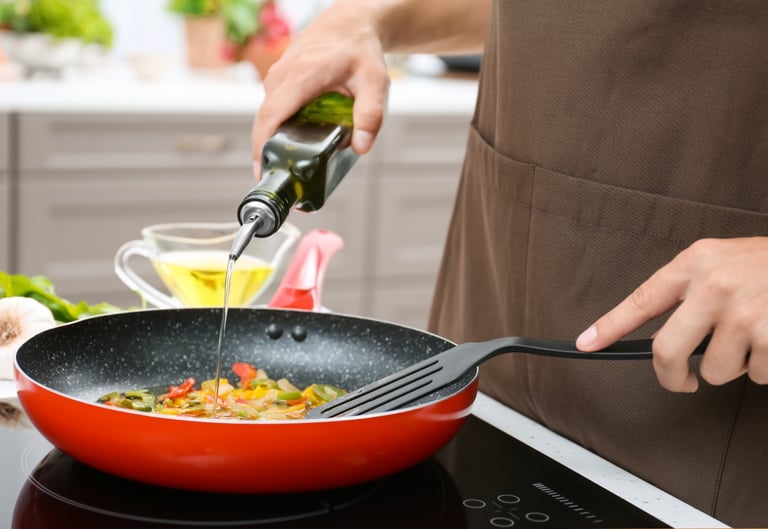

Cooking Oils to Avoid: A Guide to Healthy Cooking and Better Alternatives
By BiteBrightly 17 January 2026 : This post might contain affiliate links.
Do you reach for vegetable oil without a second thought when cooking? Use canola oil because you've heard it's "heart-healthy"? Cook with corn oil because it's cheap and readily available? You might be unknowingly sabotaging your health with every meal you prepare.
The cooking oils lining supermarket shelves aren't all created equal. While marketing messages promote many oils as "heart-healthy," "cholesterol-free," or "light," the reality is that several commonly used cooking oils are highly processed, chemically extracted, unstable at cooking temperatures, and loaded with inflammatory omega-6 fatty acids that contribute to chronic disease.
Every time you cook, you make a choice that profoundly impacts your health. The oils you use for sautéing vegetables, frying foods, or making salad dressings either support your wellbeing or quietly undermine it. According to research published in the Journal of the American College of Cardiology, the type and quality of dietary fats significantly influence cardiovascular health, inflammation, and metabolic function.
Over time, regularly consuming the wrong oils contributes to inflammation, oxidative stress, cardiovascular disease, metabolic dysfunction, and accelerated aging.
Most people don't realize that "vegetable oil" isn't extracted from vegetables at all—it comes from seeds and grains processed with industrial solvents and high heat. The same oils promoted as healthy alternatives to saturated fats are often the most inflammatory, oxidized, and nutritionally void options in your kitchen.
This comprehensive guide reveals which cooking oils to avoid and why, the health consequences of using the wrong oils, and—most importantly—the best alternatives for every cooking method.
Key Takeaways
Most commercial vegetable and seed oils are highly processed with chemical solvents and extreme heat
Excessive omega-6 fatty acids in common oils drive chronic inflammation and disease
Oils with low smoke points create toxic compounds when heated beyond their threshold
Industrial seed oils (soybean, corn, canola, cottonseed) are in nearly all processed foods
Better alternatives exist for every cooking method—you don't need inflammatory oils
Switching to healthier oils significantly reduces inflammation and disease risk
Reading labels and cooking at home are essential for avoiding problematic oils
Understanding Cooking Oils: What Makes an Oil Healthy or Harmful?
Before identifying which specific oils to avoid, you need to understand what makes a cooking oil beneficial or detrimental to health.
The Fatty Acid Profile
All fats and oils consist of three types of fatty acids: saturated, monounsaturated, and polyunsaturated. This composition determines an oil's stability and health effects.
Saturated fatty acids: These fats have no double bonds, making them very stable and resistant to oxidation. Contrary to decades of dietary advice, saturated fats from quality sources (coconut oil, grass-fed butter, ghee) are excellent for high-heat cooking.
Monounsaturated fatty acids (MUFAs): These fats have one double bond, making them moderately stable. Olive oil and avocado oil are high in MUFAs and generally considered healthy for moderate-heat cooking.
Polyunsaturated fatty acids (PUFAs): These fats have multiple double bonds, making them highly unstable and prone to oxidation, especially when heated. While some PUFAs are essential, excessive omega-6 intake from seed oils drives inflammation.
The Omega-6 to Omega-3 Ratio
Both omega-6 and omega-3 fatty acids are essential, but the ratio matters enormously. According to research in Biomedicine & Pharmacotherapy, omega-6 fatty acids are precursors to inflammatory compounds, while omega-3s produce anti-inflammatory compounds.
Our ancestors consumed omega-6 and omega-3 in roughly 1:1 to 4:1 ratios. Modern diets often reach 20:1 or even 30:1. This imbalance promotes chronic inflammation underlying most modern diseases.
Smoke Point and Heat Stability
Every oil has a smoke point—the temperature at which it begins to smoke and break down. Heating oil beyond its smoke point creates toxic compounds including free radicals and acrolein.
Highly saturated fats have high smoke points
Monounsaturated fats have moderate smoke points
Polyunsaturated fats have low smoke points
Processing Methods
The extraction method dramatically impacts oil quality.
Cold-pressed/Expeller-pressed: Mechanical extraction without chemical solvents or excessive heat. Preserves nutrients and beneficial compounds.
Refined oils: Most commercial vegetable oils undergo extensive processing:
Chemical extraction using hexane (petroleum-derived solvent)
Degumming (removing natural plant compounds)
Bleaching (removing color and nutrients)
Deodorizing (heating to extreme temperatures)
According to research in the Journal of Food Science and Technology, this processing strips nutrients, creates trans fats, and oxidizes the oil.
Oxidation and Rancidity
Oils oxidize when exposed to oxygen, light, and heat. Oxidized oils contain free radicals and toxic compounds. Polyunsaturated oils are most susceptible—they begin oxidizing during processing and continue degrading during storage.
The Health Consequences of Using Wrong Oils
Chronic Inflammation
Excessive omega-6 fatty acids from seed oils are converted into inflammatory compounds. Research in Nutrients shows that reducing omega-6 while increasing omega-3s significantly reduces inflammatory markers.
Cardiovascular Disease
Despite "heart-healthy" marketing, research increasingly questions vegetable oils' cardiovascular benefits. According to studies in the BMJ, oxidized omega-6 fatty acids contribute to atherosclerosis and promote inflammatory processes in blood vessel walls.
Metabolic Dysfunction
High intake of refined seed oils is associated with insulin resistance, metabolic syndrome, and type 2 diabetes. These oils may interfere with insulin signaling and promote liver fat accumulation.
Oxidative Stress
Consuming oxidized oils introduces free radicals that damage cellular membranes, DNA, and proteins, contributing to accelerated aging and chronic disease.
Cooking Oils to Avoid and Why
1. Soybean Oil
Why it's everywhere: The most consumed oil in America. Cheap, shelf-stable, neutral flavor. "Vegetable oil" usually means soybean oil.
Why to avoid:
Extremely high omega-6: Contains 51% linoleic acid
Highly processed: Hexane extraction, refined, bleached, deodorized
Often GMO: Over 90% of US soybeans are genetically modified
Oxidizes easily: Unstable during storage and cooking
Linked to obesity: Research in PLOS ONE shows metabolic dysfunction
Where it hides: Salad dressings, mayonnaise, margarine, baked goods, fried foods.
2. Corn Oil
Why to avoid:
Very high omega-6: 54% linoleic acid
Heavily refined: Chemical solvents and high heat required
Mostly GMO: From genetically modified corn
Unstable when heated: Oxidizes easily
No nutritional value: Stripped during refining
Where it hides: Margarine, baked goods, snack foods, fried foods.
3. Canola Oil
Why it's controversial: Marketed as healthy but significantly processed.
Why to avoid:
Extremely processed: Hexane extraction, high-heat deodorization (450°F)
Contains trans fats: Many versions partially hydrogenated
Processing creates trans fats: Even non-hydrogenated develops trans fats
Mostly GMO: Genetically modified
Pre-oxidized: Already oxidizing before purchase
Where it hides: Nearly everywhere—processed foods and restaurants.
4. Cottonseed Oil
Why to avoid:
Heavy pesticide contamination: Cotton heavily sprayed with pesticides
High omega-6: 50% linoleic acid
Gossypol concerns: Toxic compound affecting fertility
Extensively processed: Aggressive chemical extraction
No benefits: Pure inflammatory fat with pesticides
Where it hides: Fried foods, cookies, crackers, chips, shortening.
5. Safflower and Sunflower Oil (High-Linoleic)
Why to avoid traditional versions:
Extremely high omega-6: Safflower 75%, sunflower 65%
Highly refined: Chemical extraction
Oxidize rapidly: Very unstable
Note: High-oleic versions are less problematic.
Where they hide: Salad dressings, mayonnaise, baked goods.
6. Grapeseed Oil
Why to avoid:
Extremely high omega-6: 70% linoleic acid
Chemical extraction: Requires hexane solvent
Misleading smoke point: Still oxidizes even below smoke point
Expensive for no benefit: Premium price for inflammatory oil
Where it hides: Restaurants, salad dressings, specialty foods.
7. Margarine and Vegetable Shortening
Why to avoid:
Made from worst oils: Soybean, cottonseed, or canola
Trans fats: Even "0g" products contain small amounts
Extensively processed: Unnatural fat structures
Artificial additives: Emulsifiers, preservatives, colors
Better alternative: Real butter from grass-fed cows.
Healthy Cooking Oil Alternatives
For High-Heat Cooking (Above 400°F)
Avocado Oil
Smoke point: 520°F
High in monounsaturated fats
Neutral flavor
Rich in vitamin E
Refined Coconut Oil
Smoke point: 450°F
Very stable (high saturated fat)
Neutral flavor
Contains beneficial MCTs
Ghee
Smoke point: 485°F
Rich flavor
Very stable
Contains vitamins A, D, E, K
For Medium-Heat Cooking (350-400°F)
Extra Virgin Olive Oil
Smoke point: 350-410°F
High in monounsaturated fats
Rich in polyphenols
According to research in Nutrients, extensively documented heart benefits
Grass-Fed Butter
Smoke point: 350°F
Rich flavor
Contains vitamins A, D, E, K2
Minimally processed
Unrefined Coconut Oil
Smoke point: 350°F
Coconut flavor
Very stable
Beneficial MCTs
For Cold Uses
Extra Virgin Olive Oil
Perfect for dressings and drizzling
Maximum polyphenols when raw
First cold-pressed
Flaxseed Oil
Never heat
High in omega-3 (ALA)
Must refrigerate
Balances omega-6 intake
Walnut Oil
Nutty flavor
For dressings only
Contains omega-3s
Refrigerate after opening
How to Transition to Healthier Oils
Week 1: Clear Out the Bad
Remove:
Vegetable, soybean, corn, canola oil
Cottonseed, safflower, sunflower oil (unless high-oleic)
Grapeseed oil
Margarine and shortening
Week 1-2: Stock Healthy Alternatives
Start with this essential trio:
Avocado oil (high-heat)
Extra virgin olive oil (medium-heat and cold)
Butter or ghee (medium-heat, flavor)
This handles 95% of cooking needs.
Week 2-4: Learn New Methods
Use avocado oil for high-heat stir-frying
Use olive oil or butter for sautéing
Make dressings with quality olive oil
Replace vegetable oil in baking with butter or coconut oil
Ongoing: Address Processed Foods
Read every label
Choose products with olive, avocado, or coconut oil
Make homemade versions
Reduce processed food consumption
Ongoing: Navigate Restaurants
Ask what oil they use
Request olive oil or butter
Choose simpler preparations
Avoid fried foods unless you know the oil
Choose quality-focused restaurants
Storage and Handling
Proper Storage:
Store in dark glass bottles or dark pantries
Keep at cool room temperature (under 70°F)
Tightly cap bottles
Buy appropriate sizes
Shelf Life:
Unopened:
Refined oils: 1-2 years
Unrefined oils: 6-12 months
After opening:
Stable oils (avocado, olive, coconut): 6-12 months
Refrigerated oils (flax, walnut): 1-3 months
Signs of rancidity:
Off-smells (fishy, metallic, paint-like)
Bitter taste
Color changes
Conclusion
Changing cooking oils might seem small, but the health implications are profound. Every meal cooked in inflammatory seed oils contributes to chronic inflammation and disease risk. Every meal cooked in quality fats supports your health.
Benefits of switching include:
Reduced inflammation
Better cardiovascular health
Improved brain function
More stable blood sugar
Enhanced nutrient absorption
Better skin, hair, and nails
Reduced chronic disease risk
Yes, quality oils cost more. Yes, you'll need to read labels and ask questions. Yes, it requires effort to change habits.
But your health is worth it. The oils you cook with are among the few things you can completely control. Start today—clear out one problematic oil and replace it with a healthy alternative.
Small consistent changes compound into major health improvements over time.
References and Further Reading
For more information on cooking oils and dietary fats, consult these authoritative sources:
American Heart Association - Dietary Fats
Evidence-based guidance on different types of dietary fats and their health effects.Harvard T.H. Chan School of Public Health - Types of Fat
Comprehensive information on fats with cooking recommendations.Academy of Nutrition and Dietetics - Choosing Healthy Fats
Professional guidance on selecting healthy cooking oils.
FAQ
Is olive oil really safe for cooking or should I only use it raw?
Quality extra virgin olive oil is safe for cooking at medium temperatures (up to 375°F). While heating reduces some polyphenols, olive oil's monounsaturated content and natural antioxidants make it stable. Research shows it remains safe and healthy when cooked. Save expensive, highest-quality olive oil for raw uses where you get maximum flavor and polyphenols.
What about coconut oil? I've heard conflicting information.
Coconut oil is one of the healthiest cooking oils despite high saturated fat. It's extremely stable at high temperatures. Unrefined has coconut flavor and 350°F smoke point. Refined has neutral flavor and 450°F smoke point. The saturated fat is primarily MCTs, which have different metabolic effects than long-chain saturated fats.
Can I use vegetable oil "just occasionally"?
While occasional exposure won't cause immediate harm, cumulative effect matters. If you're eating restaurant foods and processed foods (which contain seed oils), plus using them "occasionally" at home, you're getting them multiple times daily. This prevents achieving healthy omega-6 to omega-3 ratios. Complete elimination from home cooking is ideal.
What oil for high-heat wok cooking?
Avocado oil is excellent—520°F smoke point and neutral flavor. Refined coconut oil (450°F) also works well. Ghee (485°F) adds delicious flavor. Traditional Chinese cooking used lard or peanut oil.
Are expensive boutique oils worth it?
Quality matters more than exotic sources. Good California or Spanish olive oil outperforms cheaper refined oil. For cooking, mid-range quality works fine. Save premium prices for finishing oils used raw. Don't buy cheap oils—they're cheap because they're low quality.
How do I know if olive oil is real?
Unfortunately, fraud is common. Buy from reputable sources, look for harvest dates (use within 18 months), choose dark glass bottles, check for certification seals, and taste it—quality olive oil tastes fruity, sometimes peppery or bitter, never greasy or bland.
What about grapeseed oil for salad dressings?
Despite light flavor, grapeseed oil is one of worst choices—70% omega-6, chemically extracted, oxidizes easily. For lighter dressings, use mild olive oil, avocado oil, or MCT oil. Season with herbs, spices, citrus, and vinegars.
Can I reuse cooking oil?
Reusing oil increases oxidation with each heating. Restaurants change oil based on safety requirements, not health. At home, better not to reuse frying oil. If you must, strain well, store sealed, smell before use, never reuse more than 2-3 times.
What if I can't afford expensive oils?
Eliminate worst oils completely, then use affordable better options. Olive oil and butter are budget-friendly and handle most needs. Buy avocado oil in larger bottles online for better prices. Use for high-heat only, olive oil for medium-heat, butter for flavor.
Should I worry about omega-6 in nuts and seeds?
Whole nuts and seeds come with fiber, protein, minerals, vitamins, and antioxidants that offset omega-6 concerns. The issue comes from extracting oils and exposing them to light, heat, and oxygen. Eating almonds is completely different from consuming almond oil for cooking. Focus on limiting extracted seed oils while enjoying whole nuts and seeds—a serving or two daily is plenty.
About Author
Judith Tsanga is an Applied Biosciences & Biotechnology graduate with an Advanced Level qualification in Food Science, and the founder of BiteBrightly. Her passion for food as medicine began with her own experience: after making targeted dietary changes, she noticed a meaningful improvement in her eyesight — a personal transformation that inspired her mission to share evidence-based nutrition insights that help others eat well and heal boldly. Content on BiteBrightly is for educational purposes and isn't a substitute for advice from your doctor or dietitian.
Follow on Pinterest for daily health tips, recipes, and wellness inspiration.
Important Notice: The information in this article is for educational purposes only and is not intended as medical advice or to replace professional medical treatment. Always consult your healthcare provider before making any dietary changes, starting supplements, or implementing health recommendations, especially if you have medical conditions, take medications, are pregnant, or nursing. This information is not intended to replace your prescribed medications or treatment plans. Individual results vary based on genetics, health status, and lifestyle factors.
Related posts
Connect
Join our newsletter for fresh health tips
© 2026. All rights reserved.