Greek Salad with Grilled Chicken Recipe | Fresh Mediterranean Lunch
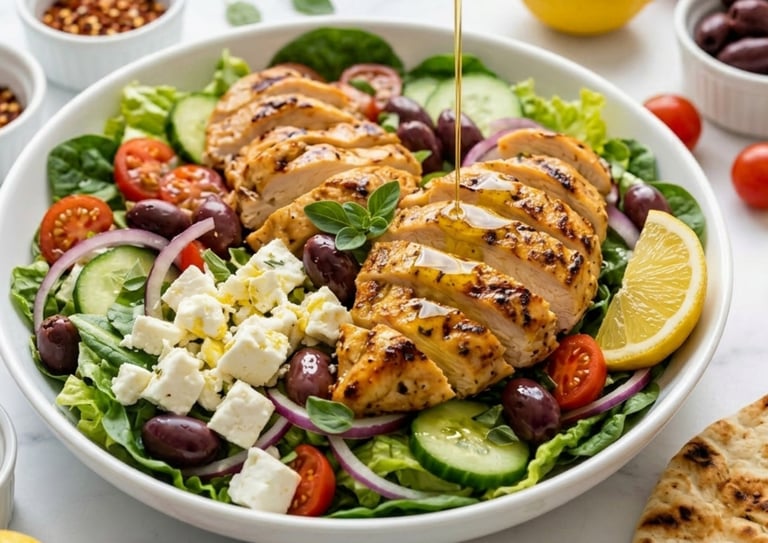
Greek salad with grilled chicken is the perfect combination of fresh, vibrant Mediterranean flavors and satisfying protein that creates a complete, healthy meal. This colorful salad features crisp cucumbers, juicy tomatoes, tangy feta cheese, briny Kalamata olives, and tender grilled chicken, all tossed in a simple yet incredibly flavorful homemade Greek dressing. It's a dish that transports you straight to the sunny Greek islands with every bite.
What makes Greek salad so beloved worldwide? It's the brilliant simplicity of fresh, quality ingredients that shine without heavy sauces or complicated preparations. The combination of crunchy vegetables, creamy feta, and that perfect balance of lemon, olive oil, and oregano creates an irresistible flavor profile that's both light and satisfying. Add perfectly seasoned grilled chicken and you have a restaurant-quality meal that's actually incredibly easy to make at home.
Greek salad is also wonderfully practical for healthy eating. It's naturally low-carb, gluten-free, packed with vegetables, and high in protein. It's perfect for meal prep - the components stay fresh for days and you can assemble individual portions throughout the week. Whether you're following a Mediterranean diet, looking for lighter lunch options, or simply craving something fresh and delicious, this salad delivers every time.
This authentic recipe includes everything you need: perfectly marinated and grilled chicken that's juicy every time, the classic Greek salad with all the traditional ingredients, and a homemade Greek dressing that's infinitely better than store-bought. Let's make the best Greek chicken salad you've ever tasted!
Prep Time: 20 minutes (plus 15 minutes marinating)
Cook Time: 12 minutes
Total Time: 35-45 minutes
Serves: 4
Difficulty: Easy
Cuisine: Greek, Mediterranean
Diet: Gluten-free, Low-carb, Keto-friendly
Meal Prep Friendly: Yes - perfect for lunch prep!
High-Protein: Yes (35g per serving)
Ingredients
For the Greek Dressing (makes about 3/4 cup):
1/2 cup extra virgin olive oil (use quality Greek or Italian olive oil)
1/4 cup red wine vinegar
2 tablespoons fresh lemon juice (about 1 lemon)
2 garlic cloves, minced
1 tablespoon dried oregano (or 2 tablespoons fresh)
1 teaspoon Dijon mustard
1/2 teaspoon salt
1/4 teaspoon black pepper
1/4 teaspoon dried basil (optional)
For the Grilled Chicken:
1 1/2 pounds boneless, skinless chicken breasts (about 3 large breasts)
3 tablespoons olive oil
2 tablespoons fresh lemon juice
2 garlic cloves, minced
1 tablespoon dried oregano
1 teaspoon dried basil
1/2 teaspoon salt
1/4 teaspoon black pepper
For the Greek Salad:
1 large English cucumber (or 2 regular cucumbers), chopped into chunks
4 medium tomatoes, cut into wedges (or 2 cups cherry tomatoes, halved)
1 large red onion, thinly sliced (about 1 cup)
1 green bell pepper, cut into strips or chunks
1 cup Kalamata olives, pitted
1 cup crumbled feta cheese (about 6 ounces)
2 tablespoons fresh parsley, chopped (optional)
Optional Additions:
1/4 cup pepperoncini peppers
1/4 cup capers
Fresh dill for garnish
Lemon wedges for serving
How to Make Greek Salad with Grilled Chicken
Instructions:
Step 1: Make the Greek Dressing
Combine all dressing ingredients: In a medium bowl or mason jar with a tight-fitting lid, combine the olive oil, red wine vinegar, fresh lemon juice, minced garlic, dried oregano, Dijon mustard, salt, and black pepper. If using fresh oregano, you'll need about 2 tablespoons of chopped fresh leaves.
Whisk or shake vigorously: If using a bowl, whisk vigorously for about 30 seconds until the dressing is emulsified and slightly thickened. If using a jar, secure the lid and shake for 30 seconds until well combined. The mustard helps emulsify the oil and vinegar so they don't separate as quickly.
Taste and adjust: This is crucial for perfect dressing! Taste it (use a small piece of lettuce or cucumber to dip). The dressing should be bright, tangy, and well-balanced. Need more tang? Add more lemon juice or vinegar. More herbaceous? Add more oregano. Too acidic? Add a touch more olive oil. The dressing should be bold because it's flavoring all those fresh vegetables.
Let it sit: Set the dressing aside to let the flavors meld while you prepare the chicken and vegetables. If making ahead, this dressing actually improves over time and keeps for up to one week in the refrigerator. Just shake or whisk before using.
Step 2: Marinate and Grill the Chicken
Pound the chicken evenly: This is essential for even cooking! Place chicken breasts between two pieces of plastic wrap or parchment paper. Using a meat mallet or heavy skillet, pound them to an even 3/4-inch to 1-inch thickness throughout. This prevents the thin ends from overcooking while the thick part is still raw.
Make the chicken marinade: In a small bowl, whisk together 3 tablespoons olive oil, 2 tablespoons lemon juice, minced garlic, oregano, basil, salt, and pepper.
Marinate the chicken: Place the pounded chicken breasts in a shallow dish or large zip-top bag. Pour the marinade over the chicken, turning to coat all sides evenly. Cover or seal and refrigerate for at least 15 minutes, or up to 4 hours for maximum flavor. Pro tip: If you're short on time, even 15 minutes makes a difference! If marinating longer than 2 hours, reduce the lemon juice slightly as the acid can start to "cook" the chicken.
Preheat your grill: Heat a grill pan, outdoor grill, or large skillet to medium-high heat (about 400°F). Let it preheat for at least 5 minutes so it's nice and hot. This creates those beautiful grill marks and helps prevent sticking.
Grill the chicken: Remove chicken from marinade, letting excess drip off (discard remaining marinade). Place chicken on the hot grill and cook for 5-7 minutes on the first side without moving it - resist the urge to peek! This develops a nice crust and beautiful grill marks.
Flip and finish cooking: Flip the chicken and cook for another 5-6 minutes on the second side until the internal temperature reaches 165°F on an instant-read thermometer. The juices should run clear when pierced. Important: Don't overcook or the chicken will be dry!
Rest the chicken: Transfer the grilled chicken to a cutting board and let it rest for 5 minutes. This is crucial - resting allows the juices to redistribute throughout the meat instead of running out when you cut it. After resting, slice the chicken against the grain into 1/2-inch thick strips or bite-sized pieces.
Step 3: Prepare the Salad Vegetables
Chop the cucumber: If using English cucumber (which has fewer seeds and thinner skin), you can leave the skin on. For regular cucumbers, you may want to peel them or peel in strips for a decorative look. Cut the cucumber lengthwise into quarters, then chop into thick chunks (about 3/4-inch pieces). Greek salad is known for chunky, rustic cuts - not dainty dice!
Prepare the tomatoes: Cut tomatoes into wedges - about 6-8 wedges per medium tomato. If using cherry or grape tomatoes, simply halve them. The tomatoes should be at room temperature for the best flavor. Pro tip: Remove some of the seeds and juice if your tomatoes are very watery to prevent a soggy salad.
Slice the onion: Peel and halve the red onion, then slice it into thin half-moons. Optional but recommended: For milder, less sharp onion flavor, soak the sliced onions in cold water for 10 minutes, then drain and pat dry. This removes the harsh bite while keeping the flavor.
Cut the bell pepper: Core and seed the green bell pepper, then cut into strips or chunks similar in size to the cucumber. Traditional Greek salad uses green peppers, but you can use any color you prefer.
Prepare remaining ingredients: Make sure your Kalamata olives are pitted (check for any remaining pits!). If using whole feta, crumble it into bite-sized chunks. Chop fresh parsley if using.
Step 4: Assemble the Greek Salad
Combine the vegetables: In a very large mixing bowl or salad bowl, combine the chopped cucumber, tomato wedges, sliced red onion, bell pepper strips, and Kalamata olives. Toss gently to mix.
Add some dressing: Drizzle about half of the Greek dressing over the vegetables. Using clean hands or salad tongs, toss gently but thoroughly to coat all the vegetables. You want everything lightly dressed but not swimming in dressing. Important: Add dressing gradually - you can always add more, but you can't take it away!
Add the feta: Sprinkle the crumbled feta cheese over the salad. Toss very gently - just once or twice - to distribute the feta without completely breaking it up. Some people prefer to add feta on top at the end without mixing so it stays in pretty chunks.
Taste and adjust: Grab a forkful and taste! Does it need more dressing? More salt? A squeeze of fresh lemon? Adjust to your preference.
Step 5: Plate and Serve
Portion the salad: Divide the dressed salad among four large dinner plates or shallow bowls. Build it up high for an attractive presentation.
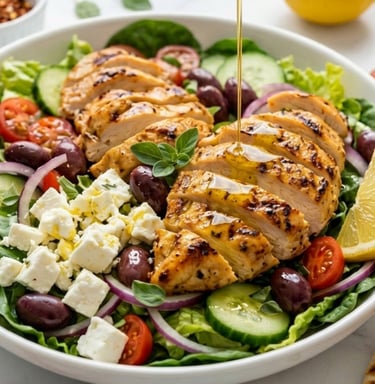
Top with grilled chicken: Arrange the sliced grilled chicken on top of each salad, fanning it out attractively. The warm chicken on the cool, crisp salad is a wonderful contrast!
Final touches: Drizzle each salad with a little extra Greek dressing if desired. Sprinkle with fresh chopped parsley or dill. Add a few extra olives or a wedge of lemon to each plate.
Serve immediately: Greek salad is best enjoyed fresh! Serve with warm pita bread on the side if desired.
Variation 2: Greek Salad Bowl with Quinoa
Ingredient Modifications:
Add: 2 cups cooked quinoa (cooled)
Add: 1 can (15 oz) chickpeas, drained and rinsed
Optional: Add hummus on the side
Instructions:
Cook quinoa according to package directions and let cool completely.
Prepare Greek dressing and grilled chicken as directed.
Prepare all salad vegetables as directed.
In each bowl, start with a base of quinoa (about 1/2 cup per serving).
Top with the Greek salad vegetables, chickpeas, and feta.
Add sliced grilled chicken on top.
Drizzle generously with Greek dressing.
This heartier version is more filling and adds plant-based protein and fiber!
Serve with a dollop of hummus on the side for extra Mediterranean flavor.
Variation 3: Greek Salad with Lemon Herb Chicken
Ingredient Modifications:
Chicken marinade: Add zest of 2 lemons
Add: 2 tablespoons fresh dill to marinade
Add: 2 tablespoons fresh mint to salad
Dressing: Add 1 teaspoon honey for subtle sweetness
Instructions:
Marinate chicken with extra lemon zest and fresh dill for incredibly bright flavor.
Grill chicken as directed.
Prepare salad vegetables as directed.
Add fresh chopped mint to the salad along with parsley - mint is very Greek!
Add a teaspoon of honey to the dressing for a subtle sweet-tart balance.
The extra lemon and fresh herbs make this version incredibly fresh and aromatic.
Garnish with extra fresh dill and mint before serving.
Variation 4: Greek Salad with Shrimp (Seafood Option)
Ingredient Modifications:
Replace: Chicken with 1 1/2 pounds large shrimp (peeled and deveined)
Marinade: Same Greek marinade works perfectly
Optional: Add 1/4 teaspoon red pepper flakes for heat
Instructions:
Marinate shrimp in the Greek marinade for 15-30 minutes (no longer - the acid will start to "cook" the shrimp).
Thread shrimp onto skewers if using outdoor grill, or cook in a hot skillet.
Cook shrimp for 2-3 minutes per side until pink and opaque - don't overcook!
Prepare salad as directed.
Top salad with grilled shrimp instead of chicken.
This lighter seafood version is perfect for summer!
Shrimp cook in just 5-6 minutes total - super quick!
Variation 5: Greek Salad with Orzo Pasta
Ingredient Modifications:
Add: 1 1/2 cups cooked orzo pasta (cooled)
Add: 1 cup halved cherry tomatoes
Add: 1/2 cup sun-dried tomatoes, chopped
Cheese: Add extra feta (1 1/2 cups total)
Instructions:
Cook orzo according to package directions, drain, and toss with 1 tablespoon olive oil. Let cool.
Prepare chicken and Greek dressing as directed.
In a large bowl, combine cooled orzo, cucumber, cherry tomatoes, sun-dried tomatoes, bell pepper, red onion, and olives.
Toss with Greek dressing generously - pasta salads need more dressing.
Add crumbled feta and toss gently.
Top with sliced grilled chicken.
This version can be served warm or cold and holds up great for meal prep!
The orzo makes it more filling and kid-friendly.
Chef's Tips & Pro Secrets:
Use quality ingredients: Greek salad is all about simple, fresh ingredients, so quality matters! Use ripe tomatoes, good feta cheese (authentic Greek feta in brine is best), real Kalamata olives, and excellent extra virgin olive oil.
Authentic Greek feta is key: Look for feta cheese packed in brine - it's creamier, tangier, and more flavorful than the pre-crumbled kind. Block feta from Greece (often labeled "Greek feta" or "Bulgarian feta") is superior.
Room temperature vegetables: Take vegetables out of the fridge 30 minutes before assembling. Room temperature tomatoes especially have much better flavor than cold ones.
Don't overdress: Start with less dressing than you think you need. Greek salad should be lightly dressed, not drowning. The vegetables should glisten, not swim.
Cut vegetables in large chunks: Traditional Greek salad (Horiatiki) uses chunky, rustic cuts - not fine dice. This gives you a satisfying bite and keeps the salad from getting watery.
Salt tomatoes separately: For extra flavor, sprinkle the tomato wedges with a pinch of salt and let them sit for 5 minutes before adding to the salad. This draws out flavor and sweetness.
Marinate chicken properly: Even 15 minutes makes a difference, but 2-4 hours is ideal. Don't go longer than 4 hours or the acid starts to change the texture.
Don't skip resting the chicken: Those 5 minutes of resting keep the chicken juicy. Cut it too soon and all the juices run onto the cutting board instead of staying in the meat.
Meal prep like a pro: Store all components separately - grilled chicken in one container, chopped vegetables in another, dressing in a jar, feta separate. Assemble individual salads daily for 4-5 days of fresh lunches.
Serve with warm pita: While not traditional for the salad, warm pita bread on the side is perfect for scooping up extra dressing and feta!
Make it a platter: For parties, arrange all the components on a large platter instead of tossing - vegetables in the center, chicken slices around the edges, feta and olives scattered on top, dressing on the side.
Double the dressing: The dressing keeps for a week and is fantastic on other salads, roasted vegetables, or as a marinade for chicken or fish.
Nutrition Information (Per Serving - 1/4 of recipe):
Calories: 485
Protein: 35g
Carbohydrates: 16g
Fiber: 4g
Sugar: 9g
Fat: 32g
Saturated Fat: 8g
Cholesterol: 95mg
Sodium: 920mg
Potassium: 780mg
Calcium: 20% DV
Iron: 12% DV
Vitamin A: 35% DV
Vitamin C: 90% DV
Health Benefits - Why Greek Salad is Good for You:
Greek salad is one of the healthiest meals you can eat! It's a cornerstone of the Mediterranean diet, which is consistently ranked as one of the world's healthiest eating patterns. The abundance of fresh vegetables provides vitamins A, C, K, and folate, plus powerful antioxidants that fight inflammation and support overall health.
The extra virgin olive oil provides heart-healthy monounsaturated fats that help lower bad cholesterol and reduce heart disease risk. Studies show that people who consume olive oil regularly have better cardiovascular health. The combination of olive oil with the antioxidants in vegetables creates a synergistic effect for maximum health benefits.
Feta cheese, while flavorful, is actually lower in fat and calories than many other cheeses. It provides calcium for bone health and protein for satiety. The olives contribute additional healthy fats and antioxidants. Grilled chicken adds lean protein (35g per serving!) which supports muscle maintenance, keeps you full for hours, and provides B vitamins.
This salad is naturally low-carb (only 16g per serving), making it perfect for those managing blood sugar or following keto diets. The high fiber content from all the vegetables supports digestive health and helps stabilize blood sugar.
The bright, fresh vegetables - especially tomatoes, cucumbers, and peppers - are hydrating and provide essential vitamins and minerals. Tomatoes are rich in lycopene, a powerful antioxidant linked to reduced cancer risk.
Frequently Asked Questions (FAQ):
Q: Can Greek salad be made ahead of time?
A: Yes and no! For best results, prep all components separately and assemble just before serving. The vegetables can be chopped up to 1 day ahead, dressing keeps for a week, and chicken lasts 4 days cooked. Tossing the salad too far in advance makes it watery and wilted.
Q: What's the difference between Greek salad and Mediterranean salad?
A: Greek salad (Horiatiki) is a specific recipe from Greece featuring tomatoes, cucumbers, onions, peppers, olives, and feta with an olive oil dressing - no lettuce! Mediterranean salad is a broader term that can include various vegetables and greens common in Mediterranean cuisines.
Q: Why is there no lettuce in authentic Greek salad?
A: Traditional Greek salad (Horiatiki) doesn't include lettuce - it's made with chunky vegetables, feta, and olives. The lettuce version is an American adaptation. For authentic Greek salad, skip the greens and focus on the vegetables!
Q: Can you use a different cheese instead of feta?
A: Feta is traditional and its tangy, salty flavor is essential to authentic Greek salad. However, if you must substitute, try halloumi (grill it!), goat cheese, or ricotta salata. The flavor will be different but still delicious.
Q: How do you keep Greek salad from getting watery?
A: Remove seeds from very watery tomatoes, don't overdress, salt tomatoes and let them sit to draw out excess moisture before adding to salad, and assemble just before serving. Store components separately for meal prep.
Q: What kind of olives are best for Greek salad?
A: Kalamata olives are traditional and authentic - they're purple-black, almond-shaped, and have a rich, fruity flavor. Make sure they're pitted! You can substitute other Greek olives, but avoid canned black olives - they're too mild.
Q: Can Greek salad be frozen?
A: No! The fresh vegetables and feta don't freeze well - they become watery and mushy when thawed. However, you can freeze the grilled chicken separately for up to 3 months.
Q: Is Greek salad keto-friendly?
A: Yes! Greek salad with grilled chicken is naturally low-carb (16g) and high-fat from the olive oil and feta, making it perfect for keto diets. Just skip any pita bread on the side.
Q: How long does Greek salad last in the refrigerator?
A: Undressed vegetables last 2-3 days. Once dressed, eat within a few hours as it gets watery. For meal prep, store components separately and dress individual portions as needed.
Q: Can you make Greek salad vegetarian?
A: Absolutely! Simply omit the chicken. The salad is still filling thanks to the feta cheese, olives, and olive oil. Add chickpeas or grilled halloumi cheese for extra protein.
Storage & Meal Prep Instructions:
Greek Dressing:
Store in mason jar or airtight container in refrigerator for up to 7 days
Shake or whisk before using (oil and vinegar will separate)
Can be made up to a week ahead
Grilled Chicken:
Cool completely, slice or leave whole
Store in airtight container in refrigerator for 4 days
Can be served cold, room temperature, or gently reheated
Freeze for up to 3 months (thaw overnight in fridge)
Chopped Vegetables:
Store in airtight container lined with paper towels
Refrigerate for up to 2 days
Keep tomatoes at room temperature if possible for best flavor
Store onions separately if soaked in water
Feta Cheese:
Keep in original brine if possible, or store in container with a bit of salt water
Lasts 1-2 weeks in refrigerator
Don't freeze feta - texture changes
Assembled Salad:
Not recommended for storage
Dress only what you'll eat immediately
Salad gets watery after 2-3 hours
Perfect Meal Prep Strategy (5 Days of Lunches):
Sunday Prep:
Make full batch of Greek dressing (stores 7 days)
Grill all chicken, let cool, slice, portion into 5 containers (4 days in fridge, 1 in freezer)
Chop all vegetables, store together in large container with paper towels
Crumble feta, store separately
Portion olives into small containers
Daily Assembly (takes 3 minutes):
Grab portion of vegetables
Add to bowl or container
Top with chicken (cold or reheated)
Add feta and olives
Drizzle with dressing
Fresh, delicious lunch ready!
Portable Lunch Packing:
Use compartmented containers: vegetables in main section, chicken in one compartment, feta/olives in another, dressing in small container
Add dressing right before eating
Include pita bread or crackers on the side
Troubleshooting Common Problems:
Salad is watery at the bottom? Too much dressing, watery tomatoes, or dressed too far in advance. Use less dressing and seed watery tomatoes.
Dressing separated? This is normal! Just shake or whisk before using. The mustard helps it stay emulsified longer.
Chicken is dry? Overcooked (don't go past 165°F), didn't rest before cutting, or chicken breasts weren't pounded evenly. Use a thermometer!
Onions are too sharp/strong? Soak sliced onions in cold water for 10 minutes, drain well, then use. This mellows the bite.
Feta is too salty? Rinse it gently under cold water to remove excess salt. Also reduce the salt in the dressing.
Not enough flavor? Under-seasoned. Greek salad should be boldly flavored - add more salt, lemon juice, oregano, or garlic to the dressing.
What to Serve with Greek Salad:
Warm pita bread or pita chips
Hummus and tzatziki sauce
Dolmades (stuffed grape leaves)
Spanakopita (Greek spinach pie)
Greek lemon rice
Roasted potatoes with lemon and oregano
Grilled vegetables
Lemon soup (Avgolemono)
Greek wine or sparkling water with lemon
Baklava for dessert
Related Recipes You'll Love:
Lunch Recipes:
Connect
Join our newsletter for fresh health tips
© 2026. All rights reserved.