Easy Chicken Fried Rice Recipe | Better Than Takeout
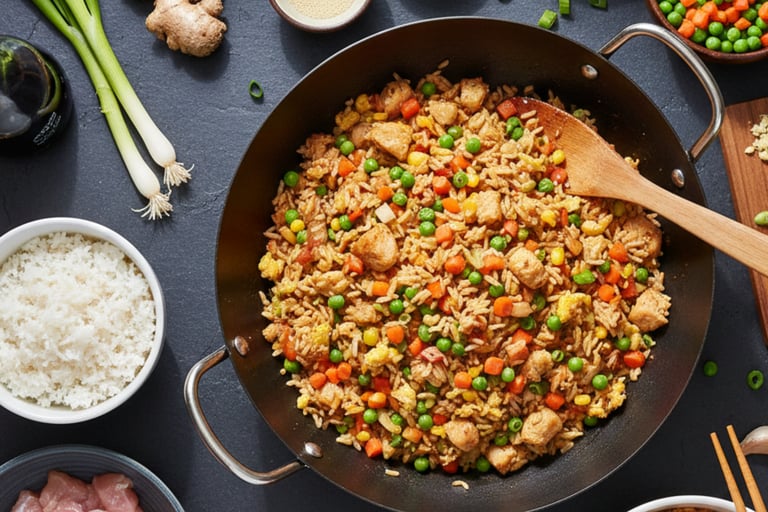
Chicken fried rice is the ultimate quick meal that transforms simple ingredients into something incredibly satisfying and delicious. This beloved Chinese-American dish features fluffy rice stir-fried with tender chicken, colorful vegetables, scrambled eggs, and savory seasonings that create that addictive "takeout" flavor we all crave. The best part? It's faster and cheaper than ordering delivery, and you can make it even better than your favorite restaurant version.
What makes homemade fried rice so appealing? It's the perfect solution for using up leftover rice and turning it into a complete meal in under 30 minutes. It's incredibly versatile - use whatever vegetables you have, swap proteins easily, and adjust the flavors to your preference. Plus, making it at home means you control the ingredients, reduce sodium, skip the MSG if you prefer, and load it up with more vegetables and protein than typical takeout portions.
The secret to amazing fried rice is using day-old rice that's been refrigerated. Fresh, hot rice is too moist and sticky - it clumps together instead of frying into separate, fluffy grains. Cold rice from the fridge has dried out slightly, allowing each grain to fry individually and develop that signature slightly crispy texture. This is why fried rice is brilliant for meal prep - intentionally cook extra rice one day, then transform it into this spectacular dish the next!
This foolproof recipe delivers restaurant-quality fried rice with perfectly separated grains, tender chicken, crisp-tender vegetables, and that savory-sweet flavor profile that makes fried rice so addictive. You'll learn the secrets to achieving the perfect texture, the right cooking temperature, proper seasoning, and the authentic stir-fry technique. Let's make the best chicken fried rice you've ever tasted!
Prep Time: 10 minutes
Cook Time: 10-12 minutes
Total Time: 20-25 minutes
Serves: 4
Difficulty: Easy
Cuisine: Chinese, Asian
Diet: Can be made gluten-free
Budget-Friendly: Yes - uses leftover rice!
Quick Weeknight Dinner: Perfect for busy nights
Meal Prep Friendly: Yes
Ingredients
For the Chicken:
1 pound boneless, skinless chicken breast or thighs, diced into 1/2-inch pieces
1 tablespoon soy sauce
1 teaspoon cornstarch
1/2 teaspoon sesame oil
For the Fried Rice:
4 cups cooked white rice, cold (preferably day-old) - about 1 1/3 cups uncooked rice
3 tablespoons vegetable oil (divided) - or use peanut oil
3 large eggs, beaten
1 cup frozen peas and carrots mix (or 1/2 cup each, fresh diced)
1/2 cup corn kernels (optional but adds sweetness)
3-4 green onions, sliced (whites and greens separated)
3 garlic cloves, minced
1 teaspoon fresh ginger, minced (optional but recommended)
For the Sauce:
3 tablespoons soy sauce (use low-sodium to control salt)
1 tablespoon oyster sauce (adds umami depth)
1 teaspoon sesame oil
1/2 teaspoon sugar
1/4 teaspoon white pepper (or black pepper)
Optional: 1/2 teaspoon dark soy sauce (for color)
For Serving:
Extra sliced green onions
Sesame seeds
Soy sauce on the side
Hot sauce or sriracha (optional)
How to Make Chicken Fried Rice
Instructions:
Step 1: Prepare the Rice (Crucial for Success!)
Use day-old refrigerated rice: This is THE most important rule for perfect fried rice! The rice must be cold and slightly dried out. If using fresh rice: Spread hot cooked rice on a baking sheet in a thin layer and refrigerate uncovered for at least 1 hour, or ideally 4+ hours. The cold temperature and air circulation dry the surface, preventing clumping.
Break up clumps: Take your cold rice out of the refrigerator. Using your hands or a fork, break up any large clumps so the rice grains are mostly separated. Don't worry if there are small clumps - they'll separate during cooking. You should have about 4 cups of cold, separated rice ready to go.
Why this matters: Fresh, hot rice has too much moisture. When you add it to the hot wok, it steams instead of frying, becoming mushy and clumpy. Cold, day-old rice has the perfect texture - slightly firm grains that separate beautifully and develop a light crisp exterior when fried.
Step 2: Marinate the Chicken
Dice the chicken: Cut chicken into uniform 1/2-inch cubes. Consistent sizing ensures even cooking - no dry overcooked pieces or raw undercooked bits.
Marinate for tenderness: In a medium bowl, combine diced chicken with 1 tablespoon soy sauce, 1 teaspoon cornstarch, and 1/2 teaspoon sesame oil. Mix well with your hands or a spoon until all the chicken is coated. The cornstarch creates a protective coating that keeps the chicken tender and juicy, while the soy sauce adds flavor. Let it sit while you prepare the other ingredients (at least 5 minutes).
Step 3: Prepare the Sauce and Vegetables
Make the sauce: In a small bowl, whisk together 3 tablespoons soy sauce, 1 tablespoon oyster sauce, 1 teaspoon sesame oil, 1/2 teaspoon sugar, and 1/4 teaspoon white pepper. If using dark soy sauce for color, add it now. Set aside. Pro tip: Having your sauce pre-mixed is essential because stir-frying happens FAST - you won't have time to measure once cooking starts!
Prep all vegetables: This is called "mise en place" - having everything ready before you start cooking. Slice green onions (separate white parts from green tops), mince garlic, mince ginger if using, and measure out your peas, carrots, and corn. Place everything in small bowls near your stove. Stir-frying moves quickly, so you need everything within arm's reach!
Step 4: Cook the Eggs (First Component)
Heat the wok or pan: Heat a large wok or large non-stick skillet over medium-high heat. Add 1 tablespoon of vegetable oil and swirl to coat the bottom and partially up the sides. The pan should be very hot - you want to hear a sizzle when ingredients hit it.
Scramble the eggs: Pour the beaten eggs into the hot wok. Let them sit for just 5-10 seconds until they start to set on the bottom, then use a spatula to scramble them, breaking into small curds. Cook for about 1 minute total until just set but still slightly soft (they'll cook more later). Important: Don't overcook the eggs or they'll become rubbery! Transfer scrambled eggs to a clean plate and set aside.
Step 5: Cook the Chicken (Second Component)
Add more oil and increase heat: Wipe the wok clean if there are egg bits stuck. Add another 1 tablespoon of vegetable oil to the wok over high heat. Let it get very hot - almost smoking. High heat is essential for proper stir-frying!
Cook the chicken: Add the marinated chicken in a single layer, spreading it out. Let it cook undisturbed for 1-2 minutes to develop a golden sear on the bottom. Then stir-fry, tossing frequently, for another 2-3 minutes until the chicken is cooked through (no pink remaining) and lightly golden on the edges. The total cooking time is about 3-4 minutes. Transfer cooked chicken to the plate with the eggs.
Step 6: Stir-Fry the Vegetables (Third Component)
Add final tablespoon of oil: Add the remaining 1 tablespoon of oil to the hot wok. Add the white parts of the green onions (save the green tops for later), minced garlic, and minced ginger. Stir-fry for 30 seconds until fragrant and aromatic. Don't let the garlic burn - keep it moving!
Add vegetables: Add the frozen peas and carrots (no need to thaw!) and corn if using. Stir-fry for 2-3 minutes until the vegetables are heated through and the peas are bright green. If using fresh vegetables, they may need an extra minute.
Step 7: Fry the Rice (The Main Event!)
Add the cold rice: Add all 4 cups of cold rice to the wok with the vegetables. Using a spatula or wooden spoon, break up any remaining clumps and toss everything together. Press the rice against the hot surface of the wok, then toss and repeat. This technique allows some grains to get slightly crispy while ensuring even heating. Stir-fry the rice for 3-4 minutes, tossing frequently.
Create "wok hei" (breath of the wok): Keep the heat on high! The intense heat is what creates that slightly smoky, charred flavor that makes restaurant fried rice special. You might see a little smoke - this is good! Keep tossing and stirring so nothing burns.
Step 8: Combine Everything and Season
Add back chicken and eggs: Return the cooked chicken and scrambled eggs to the wok with the rice. Toss everything together to distribute evenly, breaking up any large egg pieces.
Add the sauce: Pour the prepared sauce mixture over the rice. Using your spatula, toss vigorously for 1-2 minutes until the sauce is evenly distributed and the rice takes on a beautiful light brown color. The rice should look glossy and well-coated. Pro tip: If the rice seems dry, add 1-2 tablespoons of water or chicken broth and toss to create steam.
Final additions: Add the green parts of the sliced green onions (the green tops) and toss for 30 seconds just to wilt slightly and release their flavor.
Taste and adjust: Grab a spoonful and taste! Does it need more soy sauce? More pepper? A touch more sesame oil? Adjust to your preference. Fried rice should be savory, slightly sweet, with a hint of sesame flavor.
Step 9: Serve
Plate immediately: Transfer the hot fried rice to serving bowls or plates. Fried rice is best served hot and fresh from the wok!
Garnish: Sprinkle with extra sliced green onions and sesame seeds for visual appeal and added flavor.
Serve with extras: Offer soy sauce, sriracha, or hot chili oil on the side for those who want extra flavor or heat.
Enjoy! Grab your chopsticks or fork and dig in while it's hot!
Variation 2: Shrimp Fried Rice
Ingredient Modifications:
Replace: Chicken with 1 pound large shrimp (peeled, deveined, tails removed)
Marinade: 1 tablespoon soy sauce, 1 teaspoon cornstarch, 1/2 teaspoon sesame oil, pinch of white pepper
Optional: Add 2 tablespoons Shaoxing wine (Chinese cooking wine)
Instructions:
Marinate shrimp as directed for chicken (10-15 minutes max - shrimp is delicate).
Heat wok with 1 tablespoon oil over high heat.
Cook shrimp for 1-2 minutes per side until pink and just cooked through. Don't overcook or they'll be rubbery!
Remove shrimp and continue with recipe as directed, adding shrimp back at the end.
Shrimp cooks faster than chicken, so watch carefully.
This seafood version is lighter and cooks even faster!
Variation 3: Kimchi Fried Rice (Korean-Inspired)
Ingredient Modifications:
Add: 1 cup kimchi, chopped (drained slightly)
Add: 2 tablespoons kimchi juice (from the jar)
Add: 1 tablespoon gochugaru (Korean red pepper flakes) or sriracha
Replace: Regular soy sauce with Korean soy sauce or tamari
Top: Fried egg per serving
Instructions:
Follow main recipe through cooking chicken.
When stir-frying vegetables, add chopped kimchi and cook for 2 minutes until slightly caramelized.
Add rice and continue as directed.
Add kimchi juice along with the sauce for extra tangy flavor.
Adjust spice level with gochugaru or sriracha.
Serve each portion topped with a fried egg - the runny yolk becomes a sauce!
This spicy, tangy version is incredibly addictive!
Variation 4: Pineapple Chicken Fried Rice (Thai-Inspired)
Ingredient Modifications:
Add: 1 cup fresh pineapple chunks, diced
Add: 1/2 red bell pepper, diced
Add: 1/4 cup cashews or peanuts
Seasoning: Add 1/2 teaspoon curry powder to the sauce
Optional: Add 2 tablespoons fish sauce for authentic Thai flavor
Instructions:
Follow main recipe, adding diced red bell pepper with the other vegetables.
Add pineapple chunks when you add the rice - they'll caramelize slightly from the heat.
Add curry powder to the sauce mixture for that Thai-inspired flavor.
Stir in cashews or peanuts at the very end for crunch.
The sweet pineapple balances the savory sauce beautifully!
Serve garnished with cilantro instead of green onions for Thai flair.
Variation 5: Vegetable Fried Rice (Vegetarian/Vegan)
Ingredient Modifications:
Omit: Chicken and eggs
Add: 1 cup broccoli florets, small
Add: 1 cup mushrooms, sliced
Add: 1 red bell pepper, diced
Add: 1 cup edamame or tofu cubes
Replace: Oyster sauce with vegetarian oyster sauce or hoisin sauce
Instructions:
Heat wok with oil and stir-fry broccoli for 2 minutes until bright green.
Add mushrooms and bell pepper, cook 2-3 minutes until tender.
Add garlic, ginger, peas, carrots, and edamame.
Add rice and proceed as directed, using vegetarian oyster sauce.
This veggie-loaded version is colorful, nutritious, and filling!
For vegan version, omit eggs completely or use scrambled tofu.
Variation 6: Bacon and Egg Fried Rice
Ingredient Modifications:
Replace: Chicken with 6 strips bacon, chopped
Add: 4 eggs instead of 3
Optional: Add 1/4 cup frozen corn
Instructions:
Cook chopped bacon in wok until crispy, about 5-7 minutes.
Remove bacon and most of the grease (leave about 1 tablespoon).
Scramble eggs in bacon fat for extra flavor.
Continue recipe as directed, using bacon instead of chicken.
The smoky bacon adds incredible flavor!
This breakfast-for-dinner version is a family favorite.
Chef's Tips & Pro Secrets:
Day-old rice is NON-NEGOTIABLE: This is the #1 rule! Fresh rice will NEVER work properly - it becomes mushy and clumpy. Always use refrigerated rice that's at least 4 hours old, ideally overnight.
Use high heat: Proper stir-frying requires HIGH heat to create "wok hei" - that smoky, charred flavor. Don't be afraid of the heat! If you smell a slight smokiness, that's perfect.
Cook in batches if needed: If your wok or pan isn't large enough, cook in two batches. Overcrowding lowers the temperature and causes steaming instead of frying.
Keep ingredients moving: Stir-frying means constant motion! Keep tossing and stirring to prevent burning and ensure even cooking.
Have everything ready (mise en place): Once you start cooking, there's no time to chop vegetables or mix sauce. Everything must be prepped and ready before you turn on the heat.
Don't oversauce: Start with less sauce than you think you need. You can always add more, but you can't take it away. Fried rice should be lightly coated, not swimming in sauce.
Break up rice before cooking: Cold rice clumps together in the fridge. Break it up with your hands before adding to the wok so it heats evenly.
Invest in a wok (optional but helpful): A carbon steel wok gets hotter than a regular pan and distributes heat more evenly. However, a large non-stick skillet works fine for home cooking!
Use the right oil: Vegetable, peanut, or canola oil have high smoke points perfect for stir-frying. Don't use olive oil or butter - they burn at high temperatures.
White pepper is traditional: It has a different, more complex flavor than black pepper and is traditional in Chinese cuisine. But black pepper works in a pinch!
Leftover fried rice is great: Reheat in a hot skillet with a splash of water or microwave. It's delicious for days!
Make extra rice on purpose: When cooking rice for another meal, intentionally make extra so you have leftovers for fried rice later in the week!
Nutrition Information (Per Serving - 1/4 of recipe):
Calories: 465
Protein: 32g
Carbohydrates: 52g
Fiber: 3g
Sugar: 4g
Fat: 14g
Saturated Fat: 2g
Cholesterol: 185mg
Sodium: 980mg
Potassium: 420mg
Vitamin A: 45% DV
Vitamin C: 15% DV
Calcium: 6% DV
Iron: 12% DV
Health Benefits - Making Fried Rice Healthier:
Chicken fried rice can actually be quite nutritious when made at home! The chicken provides lean protein (32g per serving) which supports muscle maintenance and keeps you full. The eggs add additional protein and provide choline for brain health, plus vitamins A, D, and B12.
The vegetables - peas, carrots, and corn - contribute vitamins A and C, fiber, and antioxidants. Carrots are especially rich in beta-carotene. The garlic and ginger provide anti-inflammatory compounds and immune support.
Rice provides complex carbohydrates for sustained energy and is naturally gluten-free. Brown rice can be substituted for extra fiber and nutrients, though the texture will be slightly different.
To make fried rice even healthier: use brown rice or cauliflower rice for lower carbs and more fiber, increase the vegetable ratio (add broccoli, bell peppers, mushrooms), use less oil (2 tablespoons total instead of 3), choose white meat chicken breast over dark meat, use low-sodium soy sauce to reduce sodium, add more vegetables and less rice for better nutrition density, or use egg whites only to reduce cholesterol.
The homemade version is far superior to takeout nutritionally - you control the oil, sodium, and can load it with vegetables. Restaurant fried rice often contains 2-3 times more oil and sodium!
Frequently Asked Questions (FAQ):
Q: Can you make fried rice with fresh rice?
A: It's not ideal, but possible in a pinch. Spread hot fresh rice on a baking sheet in a thin layer and refrigerate uncovered for at least 1 hour to dry it out. The longer you can refrigerate it, the better the texture will be.
Q: Why is day-old rice better for fried rice?
A: Cold refrigerated rice has dried out slightly, losing surface moisture. This allows each grain to fry individually and develop a slightly crispy exterior. Fresh rice is too moist and sticky - it clumps together and steams instead of frying.
Q: Can you use brown rice for fried rice?
A: Yes! Brown rice works well and adds fiber and nutrients. Use day-old refrigerated brown rice just like white rice. The texture will be slightly chewier, but it's delicious and healthier.
Q: What can I substitute for oyster sauce?
A: Use hoisin sauce, extra soy sauce with a pinch of sugar, or vegetarian oyster sauce (made from mushrooms). Each has a slightly different flavor, but all work well.
Q: How do you reheat fried rice?
A: Best method: Heat in a skillet over medium-high heat with a splash of water or broth (1-2 tablespoons), stirring frequently until hot. Microwave method: Sprinkle with water, cover, and microwave in 1-minute intervals, stirring between.
Q: Can fried rice be frozen?
A: Yes! Cool completely, portion into freezer containers or bags, and freeze for up to 3 months. Thaw overnight in the fridge, then reheat in a hot skillet. The texture changes slightly but it's still delicious.
Q: Why is my fried rice mushy?
A: Used fresh rice (not day-old), heat wasn't high enough (rice steamed instead of fried), too much sauce, or overcrowded the pan causing steaming. Solution: Always use cold day-old rice and cook over high heat.
Q: Is fried rice gluten-free?
A: Not by default - soy sauce and oyster sauce contain gluten. Use tamari (gluten-free soy sauce) and gluten-free oyster sauce, and it becomes completely gluten-free since rice is naturally GF.
Q: Can you make fried rice without eggs?
A: Absolutely! Eggs are traditional but optional. Simply omit them for an egg-free version. The dish will still be delicious with just chicken, vegetables, and rice.
Q: What's the secret to restaurant-style fried rice?
A: HIGH heat (creates "wok hei"), day-old rice, proper technique (constant motion), not oversaucing, and using sesame oil for that signature flavor. Restaurants also typically use more oil than home cooks.
Storage & Meal Prep Instructions:
Refrigerator Storage:
Cool fried rice completely to room temperature (within 2 hours)
Store in airtight containers for 3-4 days
Portion into individual containers for easy grab-and-go lunches
Reheat thoroughly before eating
Freezer Storage:
Cool fried rice completely
Portion into freezer-safe containers or heavy-duty freezer bags
Press out excess air from bags
Label with date and contents
Freeze flat for space-efficient storage
Freeze for up to 3 months
Thaw overnight in refrigerator
Reheat in skillet or microwave until steaming hot
Meal Prep Strategy:
Sunday Rice Prep:
Cook a large batch of rice (6-8 cups cooked)
Spread on baking sheets in thin layers
Refrigerate uncovered overnight
Use throughout the week for fried rice
Component Prep:
Cook and dice chicken, store 3-4 days
Chop vegetables, store in containers 2-3 days
Mix sauce, store in jar up to 1 week
Cook fried rice fresh in 10 minutes using prepped ingredients!
Packed Lunch:
Pack fried rice in microwave-safe container
Store in refrigerator or insulated lunch bag with ice pack
Microwave 2-3 minutes until hot, stir halfway through
Keeps cold foods cold (under 40°F) or hot foods hot (over 140°F)
Reheating for Best Results:
Stovetop (best texture): Heat in skillet over medium-high heat with 1-2 tablespoons water, stirring frequently for 3-5 minutes
Microwave (quickest): Sprinkle with water, cover with damp paper towel, heat 2-3 minutes, stir halfway
Air fryer (crispy): Spread in air fryer basket, heat at 350°F for 5-7 minutes, stirring once
Troubleshooting Common Problems:
Fried rice is mushy/sticky? Used fresh rice instead of day-old, heat too low, or too much liquid. Always use refrigerated day-old rice and high heat!
Rice is dry/hard? Overcooked or not enough sauce. Add 2-3 tablespoons water or broth and toss over heat to steam slightly.
No "wok flavor"? Heat not high enough. Use highest heat setting and don't be afraid of a little smoke - that's the "wok hei"!
Chicken is tough/rubbery? Overcooked or heat too high when cooking chicken specifically. Cook chicken over high heat but watch carefully - 3-4 minutes total is enough.
Too salty? Too much soy sauce or used regular soy sauce instead of low-sodium. Next time use low-sodium soy sauce and add gradually to taste.
Ingredients aren't evenly mixed? Not enough tossing/stirring. Keep ingredients moving constantly when stir-frying!
Rice is clumping together? Didn't break up clumps before cooking, or didn't use enough oil. Break up cold rice with hands before adding to wok.
What to Serve with Chicken Fried Rice:
Egg rolls or spring rolls
Potstickers or dumplings
Hot and sour soup or egg drop soup
Steamed or sautéed green beans
Grilled or steamed broccoli with garlic
Cucumber salad with rice vinegar
Fortune cookies
Fresh orange slices
Hot tea or iced green tea
Sweet and sour sauce or duck sauce on the side
Related Recipes You'll Love:
Lunch Recipes:
Connect
Join our newsletter for fresh health tips
© 2026. All rights reserved.