Classic Spaghetti Bolognese Recipe | Authentic Italian Meat Sauce
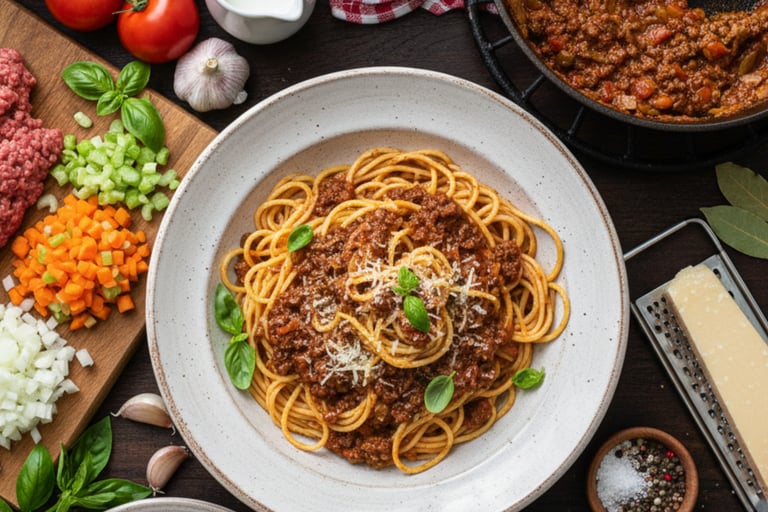
Spaghetti Bolognese is a beloved Italian classic that transforms simple ingredients into a rich, hearty, soul-satisfying meal. This iconic dish features a slow-simmered meat sauce (ragù) with ground beef, aromatic vegetables, tomatoes, and red wine, served over perfectly cooked pasta. It's the ultimate comfort food that brings families together around the dinner table, with a sauce so delicious you'll want to make it again and again.
What makes Bolognese sauce so special? It's all about the slow simmering that allows flavors to meld and deepen into something truly magical. The meat becomes tender and infused with the sweetness of tomatoes, the richness of wine, and the aromatic complexity of herbs. Unlike quick marinara sauces, authentic Bolognese develops layers of flavor through patience and proper technique. The result is a thick, meaty sauce that clings beautifully to pasta - not a thin, watery tomato sauce with some meat floating in it.
Bolognese is also incredibly practical for home cooks. It makes a large batch that feeds a crowd or provides multiple meals throughout the week. It freezes beautifully for future dinners. It's budget-friendly using affordable ground beef. And it's impressive enough for company but easy enough for a weeknight dinner. Kids love it, adults crave it, and leftovers taste even better the next day as the flavors continue to develop.
This authentic recipe delivers a rich, complex Bolognese sauce with properly balanced flavors - not too sweet, not too acidic, with just the right amount of richness from meat and depth from wine. You'll learn the secrets to building flavor, achieving the perfect consistency, proper simmering techniques, and how to cook pasta that's perfectly al dente. Let's make the best spaghetti Bolognese you've ever tasted!
Prep Time: 15 minutes
Cook Time: 1 hour
Total Time: 1 hour 15 minutes
Serves: 6-8
Difficulty: Easy
Cuisine: Italian
Budget-Friendly: Uses affordable ground beef
Freezer-Friendly: Yes - freezes perfectly for 3 months
Make-Ahead: Yes - tastes better the next day!
Kid-Friendly: Family favorite!
Ingredients
For the Bolognese Sauce (Ragù):
2 tablespoons olive oil
1 medium onion, finely diced (about 1 cup)
2 medium carrots, finely diced (about 3/4 cup)
2 celery stalks, finely diced (about 3/4 cup)
4 garlic cloves, minced
1 1/2 pounds ground beef (80/20 blend for best flavor)
1/2 pound ground pork (optional but traditional, or use all beef)
1 teaspoon salt
1/2 teaspoon black pepper
1 cup dry red wine (Chianti, Cabernet, or Merlot)
1 can (28 oz) crushed tomatoes
2 tablespoons tomato paste
1 cup whole milk (traditional ingredient - don't skip!)
2 bay leaves
1 teaspoon dried oregano
1 teaspoon dried basil (or 2 tablespoons fresh, chopped)
1/2 teaspoon dried thyme
1/4 teaspoon nutmeg (secret ingredient!)
1 cup beef broth or water
2 teaspoons sugar (to balance acidity)
For the Pasta:
1 pound spaghetti (or your favorite pasta)
1 tablespoon salt (for pasta water)
1 tablespoon olive oil (optional, to prevent sticking)
For Serving:
Freshly grated Parmesan cheese (Parmigiano-Reggiano)
Fresh basil leaves, torn
Extra virgin olive oil for drizzling
Red pepper flakes (optional)
How to Make Spaghetti Bolognese
Instructions:
Step 1: Prepare the Soffritto (Flavor Base)
Prepare the vegetables (mirepoix): Finely dice the onion, carrots, and celery into small, uniform pieces (about 1/4-inch dice). This vegetable trio is called "soffritto" in Italian cooking and forms the aromatic foundation of the sauce. Pro tip: The finer you dice, the better they'll melt into the sauce. You can even pulse them in a food processor if you want them very fine.
Heat the oil: In a large, heavy-bottomed pot or Dutch oven (at least 5-quart capacity), heat 2 tablespoons olive oil over medium heat. The pot should be large enough to hold all the sauce ingredients with room to simmer without overflowing.
Sauté the vegetables: Add the diced onion, carrots, and celery to the hot oil. Cook, stirring occasionally, for 8-10 minutes until the vegetables are very soft and the onion is translucent. You want them to start caramelizing slightly and releasing their sweetness. This step is crucial - don't rush it! The vegetables should smell sweet and aromatic.
Add the garlic: Add the minced garlic and cook for 1 minute, stirring constantly, until fragrant. Be careful not to burn the garlic - it should smell amazing, not bitter.
Step 2: Brown the Meat
Increase the heat: Turn the heat to medium-high. This higher temperature is necessary to properly brown the meat, not steam it.
Add the ground beef and pork: Add the ground beef and ground pork (if using) to the pot. Break it up with a wooden spoon into small crumbles. Important: Don't just stir it around - you want to break it into small pieces for the best texture. Keep breaking it up as it cooks.
Season the meat: Sprinkle with 1 teaspoon salt and 1/2 teaspoon black pepper. Mix to distribute the seasonings throughout the meat.
Brown properly: Cook the meat for 8-10 minutes, stirring occasionally, until it's completely browned with no pink remaining. You want to see some caramelization and browning - this is where flavor comes from! If the meat releases a lot of liquid, keep cooking until that liquid evaporates and the meat starts to brown. Pro tip: Don't drain the fat if using 80/20 ground beef - that fat carries flavor!
Step 3: Deglaze with Wine
Add the wine: Pour in 1 cup of dry red wine. This is an essential step for authentic Bolognese! The wine adds depth, complexity, and helps tenderize the meat. Use a wine you'd actually drink - nothing labeled "cooking wine."
Scrape the bottom: Use your wooden spoon to scrape up all those beautiful browned bits (fond) stuck to the bottom of the pot. These bits are pure flavor gold! The wine will help release them.
Reduce the wine: Let the wine simmer vigorously for 5-7 minutes, stirring occasionally, until it has mostly evaporated and the sauce looks almost dry. The alcohol needs to cook off, leaving behind the wine's rich flavor. You'll know it's ready when the raw alcohol smell is gone and you can barely see liquid at the bottom of the pot.
Step 4: Add Tomatoes and Milk
Add tomato paste: Stir in 2 tablespoons of tomato paste. Cook for 2 minutes, stirring constantly, to caramelize the tomato paste. This step intensifies the tomato flavor and removes any metallic taste.
Add crushed tomatoes: Pour in the entire can of crushed tomatoes (28 oz). Stir well to combine with the meat and vegetables. Use a wooden spoon to break up any large tomato pieces.
Add the milk: Pour in 1 cup of whole milk. Yes, milk in Bolognese! This is traditional and essential. The milk adds richness and creaminess while mellowing the acidity of the tomatoes. It creates a more complex, rounded flavor. Stir well to incorporate.
Add remaining ingredients: Add the beef broth (or water), bay leaves, dried oregano, dried basil, dried thyme, nutmeg, and sugar. Stir everything together until well combined. The nutmeg is a secret ingredient that adds subtle warmth and depth - you won't taste it directly, but you'll miss it if it's not there!
Step 5: Simmer to Perfection
Bring to a simmer: Increase heat to medium-high and bring the sauce to a gentle boil. You'll see bubbles breaking on the surface.
Reduce heat and simmer: Once boiling, reduce the heat to low so the sauce is barely simmering - just a few gentle bubbles breaking the surface. You want a lazy simmer, not a rolling boil. This is crucial: High heat will make the sauce bitter and the meat tough. Low, slow simmering is the secret to great Bolognese.
Partially cover: Place the lid on the pot slightly ajar (leave about a 1-inch gap). This allows some steam to escape while preventing too much liquid from evaporating. You want the sauce to reduce and thicken slowly.
Simmer for 45-60 minutes: Let the sauce simmer gently for at least 45 minutes, stirring every 10-15 minutes to prevent sticking. Scrape the bottom of the pot when you stir to make sure nothing is burning. The longer, the better: If you have time, simmer for 1-2 hours. The flavors will deepen, the sauce will thicken, and the meat will become incredibly tender. Authentic Bolognese in Italy simmers for 3-4 hours!
Monitor consistency: The sauce should thicken as it simmers. It should be rich and meaty - coating the back of a spoon - not thin and watery. If it gets too thick, add a splash of beef broth or water. If it's too thin after the full cooking time, increase heat slightly and simmer uncovered to evaporate excess liquid.
Taste and adjust: After simmering, remove the bay leaves and discard. Taste the sauce and adjust seasonings. Add more salt, pepper, sugar (if too acidic), or a pinch more nutmeg if desired. The sauce should be savory, slightly sweet, rich, and complex - not one-dimensional.
Step 6: Cook the Pasta
Start pasta water: About 15 minutes before serving, fill a large pot (at least 6-quart) with water. Add 1 tablespoon of salt - the water should taste like the sea! Bring to a rolling boil over high heat.
Cook the spaghetti: Add the spaghetti to the boiling water, stirring immediately to prevent sticking. Cook according to package directions for al dente - usually 8-10 minutes for dried spaghetti. Al dente means the pasta is cooked through but still has a slight bite in the center. It should not be mushy or crunchy.
Test for doneness: Start testing pasta 1-2 minutes before the package says it's done. Pull out a strand, let it cool for a second, and bite into it. You should feel slight resistance in the center - that's al dente!
Reserve pasta water: Before draining, use a mug or measuring cup to scoop out 1 cup of the starchy pasta cooking water. Set aside. This is important! This starchy water helps bind the sauce to the pasta.
Drain the pasta: Drain the pasta in a colander. Do NOT rinse! You want that starchy coating - it helps the sauce stick. Give the colander a few shakes to remove excess water.
Step 7: Combine and Serve
Combine pasta and sauce: Add the drained pasta directly to the pot with the Bolognese sauce. Alternatively, you can portion pasta into individual bowls and top with sauce. For the best flavor integration, toss pasta with sauce!
Toss together: Using tongs or two large spoons, toss the pasta with the sauce for 1-2 minutes over low heat. This allows the pasta to absorb some of the sauce. If the sauce seems too thick or dry, add some of the reserved pasta water, a little at a time, until you reach the perfect consistency. The sauce should generously coat every strand of pasta.
Rest briefly: Turn off the heat and let the pasta and sauce sit together for 2-3 minutes. This final resting time allows the flavors to meld beautifully.
Step 8: Plate and Serve
Portion into bowls: Using tongs, twirl pasta into serving bowls or onto plates. Top each portion with an extra ladle of Bolognese sauce.
Garnish beautifully: Generously grate fresh Parmesan cheese over each serving. Add torn fresh basil leaves for color and fresh flavor. Drizzle with a little extra virgin olive oil for richness. Finish with a crack of black pepper and red pepper flakes if you like heat.
Serve immediately: Bolognese is best enjoyed hot and fresh! Serve with garlic bread, crusty Italian bread, or a simple green salad on the side.
Pass the Parmesan: Have a bowl of extra grated Parmesan at the table - Bolognese demands generous cheese!
Variation 2: Turkey or Chicken Bolognese (Lighter Version)
Ingredient Modifications:
Replace: Beef and pork with 2 pounds ground turkey or ground chicken
Add: 2 tablespoons olive oil (lean poultry needs extra fat)
Add: 1 tablespoon butter for richness
Optional: Add 2 tablespoons heavy cream at the end
Instructions:
Follow main recipe, using ground turkey or chicken instead of beef/pork.
Poultry is leaner and can be drier - add extra olive oil when browning.
Add butter along with the tomatoes for richness.
Simmer as directed for 45-60 minutes.
Stir in heavy cream in the last 5 minutes for extra creaminess.
This lighter version has less fat but still delivers great flavor!
Season generously as poultry can be bland without enough salt.
Variation 3: Vegetarian "Bolognese" with Lentils
Ingredient Modifications:
Replace: Meat with 1 1/2 cups dried green or brown lentils (or 3 cups cooked)
Add: 8 ounces mushrooms, finely chopped (for meaty texture)
Add: 2 tablespoons soy sauce (for umami depth)
Replace: Beef broth with vegetable broth
Optional: Add 1/4 cup walnuts, finely chopped (adds texture)
Instructions:
Sauté soffritto as directed.
Add finely chopped mushrooms and cook until liquid evaporates (5-7 minutes).
Add cooked lentils (or dried lentils that will cook in the sauce).
If using dried lentils, increase broth to 2 cups and simmer for 45 minutes until tender.
Add soy sauce with tomatoes for savory depth.
Follow remaining recipe, simmering for at least 30-45 minutes.
This plant-based version is surprisingly hearty and meaty in texture!
Variation 4: Slow Cooker Bolognese
Ingredient Modifications:
Same ingredients as main recipe
Reduce: Liquid (broth) to 1/2 cup since less evaporation
Instructions:
Brown meat in a skillet with soffritto vegetables and garlic.
Deglaze with wine and reduce by half.
Transfer everything to slow cooker.
Add tomatoes, tomato paste, milk, broth (only 1/2 cup), and all seasonings.
Cook on LOW for 6-8 hours or HIGH for 3-4 hours.
Stir occasionally if possible.
In the last 30 minutes, remove lid to thicken if needed.
Perfect for coming home to dinner ready!
Variation 5: Spicy Bolognese (Arrabbiata Style)
Ingredient Modifications:
Add: 1-2 teaspoons red pepper flakes (to taste)
Add: 1 fresh red chili pepper, minced
Add: 1 teaspoon smoked paprika
Optional: Hot Italian sausage instead of ground pork
Instructions:
Follow main recipe, adding red pepper flakes with the garlic.
Add minced fresh chili with the tomatoes.
Include smoked paprika for depth.
If using hot Italian sausage, remove from casings and crumble like ground meat.
Simmer as directed - the heat will mellow slightly.
This spicy version is perfect for those who love heat!
Serve with extra red pepper flakes on the side.
Variation 6: Bolognese with Pancetta and Porcini (Luxury Version)
Ingredient Modifications:
Add: 4 ounces pancetta or bacon, diced
Add: 1 ounce dried porcini mushrooms, rehydrated and chopped
Replace: Regular wine with better quality Chianti or Barolo
Add: 2 tablespoons heavy cream at the end
Optional: Fresh sage and rosemary
Instructions:
Soak porcini mushrooms in 1 cup hot water for 20 minutes. Reserve soaking liquid!
Cook diced pancetta first until crispy, then add soffritto vegetables.
Follow main recipe, adding chopped rehydrated porcini with the tomatoes.
Add porcini soaking liquid (strain through coffee filter to remove grit) instead of some broth.
Add fresh sage and rosemary sprigs (remove before serving).
Stir in heavy cream in the last 5 minutes of cooking.
This restaurant-quality version is incredibly rich and luxurious!
Chef's Tips & Pro Secrets:
Milk is essential: Don't skip the milk! It's traditional and crucial for authentic Bolognese. It adds richness and mellows the acidity of tomatoes, creating a more complex, rounded flavor.
Low and slow wins: The longer you simmer, the better the flavor. Minimum 45 minutes, but 2-3 hours is even better if you have time. Authentic Italian Bolognese simmers for hours!
Use quality wine: Never use "cooking wine." Use a dry red wine you'd actually drink. The flavor concentrates as it reduces, so bad wine = bad sauce.
Don't skip browning: Properly browning the meat develops deep, caramelized flavors through the Maillard reaction. Don't rush this step!
Fine dice the vegetables: The finer you chop the soffritto vegetables, the better they'll melt into the sauce, creating a smooth, cohesive texture.
80/20 ground beef is best: The fat adds flavor and keeps the sauce rich. Lean meat makes dry, bland Bolognese.
Add sugar to balance acidity: A little sugar (1-2 teaspoons) balances the natural acidity of tomatoes without making the sauce sweet.
Nutmeg is the secret weapon: Just 1/4 teaspoon adds subtle warmth and complexity. It's traditional in authentic Bolognese and makes a huge difference!
Better the next day: Bolognese flavors develop and improve after sitting overnight. Make it a day ahead for even better results!
Reserve pasta water: That starchy water is liquid gold for binding sauce to pasta and adjusting consistency. Always save at least 1 cup!
Don't rinse pasta: You want that starchy coating to help sauce adhere. Rinsing washes away the "glue."
Freeze in portions: Make a double batch and freeze half in portions. You'll have homemade Bolognese ready for easy weeknight dinners!
Nutrition Information (Per Serving - 1/8 of recipe with pasta):
Calories: 485
Protein: 28g
Carbohydrates: 52g
Fiber: 5g
Sugar: 8g
Fat: 16g
Saturated Fat: 6g
Cholesterol: 65mg
Sodium: 680mg
Potassium: 720mg
Vitamin A: 45% DV
Vitamin C: 20% DV
Calcium: 8% DV
Iron: 25% DV
Health Benefits - Why Bolognese Can Be Nutritious:
While Bolognese is certainly a hearty, indulgent meal, it provides substantial nutrition! The ground beef supplies high-quality protein (28g per serving) which supports muscle maintenance and keeps you full for hours. It's also an excellent source of iron (25% of daily needs), vitamin B12, and zinc - essential for energy, immune function, and red blood cell production.
The soffritto vegetables - carrots, celery, and onions - provide vitamins, minerals, and antioxidants. Carrots contribute beta-carotene (vitamin A) for eye health and immune support. Tomatoes are rich in lycopene, a powerful antioxidant that supports heart health and may reduce cancer risk. The longer tomatoes cook, the more bioavailable the lycopene becomes!
Garlic and onions provide anti-inflammatory compounds that support immune health. The herbs - oregano, basil, and thyme - contain antioxidants and have antimicrobial properties.
The pasta provides complex carbohydrates for sustained energy. Whole wheat pasta adds even more fiber and nutrients if you prefer.
To make Bolognese healthier: use lean ground beef (90/10) or ground turkey, double the vegetables in the sauce, use whole wheat pasta for extra fiber, reduce the amount of pasta and increase sauce portions, add extra vegetables like diced zucchini or mushrooms, use less cheese, or serve with zucchini noodles (zoodles) for low-carb option.
Frequently Asked Questions (FAQ):
Q: What's the difference between Bolognese and regular spaghetti sauce?
A: Bolognese is a meat-based sauce where meat is the star, slowly simmered with tomatoes, wine, and milk. Regular spaghetti/marinara sauce is tomato-based with meat added. Bolognese is thicker, meatier, and requires longer cooking time.
Q: Can I use ground turkey instead of beef?
A: Yes! Ground turkey works well but is leaner. Add extra olive oil and a tablespoon of butter for richness. Season generously as turkey is milder than beef. The texture and flavor will be slightly different but still delicious.
Q: Why do you add milk to Bolognese?
A: Milk is traditional in authentic Italian Bolognese. It adds richness and creaminess while mellowing the acidity of tomatoes. It helps create a more complex, rounded flavor. Don't skip it - it's what makes Bolognese special!
Q: Can I make Bolognese without wine?
A: Yes, though wine adds important depth and complexity. Substitute with equal amount of beef broth plus 1 tablespoon balsamic vinegar for acidity. Or use 1/2 cup broth + 1/2 cup tomato juice.
Q: How long does Bolognese sauce last?
A: Refrigerate in airtight container for 4-5 days. Freeze for up to 3 months. The flavor actually improves after a day or two as flavors meld. Reheat gently on stovetop or in microwave.
Q: Can I use fresh tomatoes instead of canned?
A: Canned crushed tomatoes are preferred - they're picked at peak ripeness and already broken down. If using fresh, you'll need about 3 pounds of ripe plum tomatoes. Blanch, peel, seed, and crush them. Canned is easier and more consistent!
Q: What pasta shape is best for Bolognese?
A: Traditionally: tagliatelle, pappardelle, or fettuccine (flat ribbons). Spaghetti is also classic. Rigatoni or penne work too. Avoid angel hair (too delicate) or orzo (too small). The sauce should cling to pasta!
Q: Can I make Bolognese in advance?
A: Absolutely! It's actually better made ahead. The flavors deepen and meld overnight. Make 1-2 days ahead, refrigerate, and reheat gently. Add a splash of broth if it's too thick after refrigerating.
Q: Why is my Bolognese sauce watery?
A: Didn't simmer long enough, heat too low (not evaporating liquid), or used too much liquid. Simmer uncovered on medium-low to evaporate excess liquid. Or add 1-2 tablespoons tomato paste to thicken.
Q: Can Bolognese be frozen?
A: Yes! It freezes perfectly for up to 3 months. Cool completely, portion into containers or freezer bags, label, and freeze. Thaw overnight in fridge and reheat gently. Do NOT freeze with pasta - freeze sauce only, cook pasta fresh.
Storage & Meal Prep Instructions:
Refrigerator Storage:
Cool sauce completely to room temperature
Store in airtight containers for 4-5 days
Store sauce and pasta separately for best results
Reheat gently on stovetop, adding splash of broth if needed
Freezer Storage (Highly Recommended!):
Cool Bolognese sauce completely
Portion into freezer-safe containers or heavy-duty freezer bags
Freeze SAUCE ONLY - cook pasta fresh when ready to serve
Leave 1 inch headspace for expansion
Flatten bags for space-efficient stacking
Label with date and contents
Freeze for up to 3 months
Thaw overnight in refrigerator
Reheat on stovetop over medium-low heat, stirring occasionally
Meal Prep Strategy:
Make-Ahead (Best Option):
Make full batch of sauce 1-2 days ahead
Cool and refrigerate
Flavors improve as they meld!
When ready to serve: reheat sauce, cook fresh pasta, combine
Batch Cooking:
Double or triple the recipe
Use largest pot you have
Simmer as directed (time doesn't increase much)
Portion into meal-sized containers
Freeze most, refrigerate what you'll eat this week
You now have 6-12 future meals ready!
Individual Portions:
Freeze in single-serve containers
Perfect for lunches
Microwave 3-4 minutes until hot
Cook fresh pasta or use the sauce over polenta, rice, or baked potato
Reheating Instructions:
Stovetop (best): Heat over medium-low, stirring frequently. Add splash of broth/water if too thick. 10-15 minutes until hot.
Microwave: Heat 3-4 minutes on high, stirring halfway, until steaming
From frozen: Thaw overnight in fridge OR place frozen sauce in pot with 1/4 cup water, cover, heat on low for 20-30 minutes
Troubleshooting Common Problems:
Sauce is too watery/thin? Simmer longer uncovered to evaporate liquid, or add 1-2 tablespoons tomato paste and simmer 10 more minutes.
Sauce is too thick? Add beef broth or pasta water, 1/4 cup at a time, until desired consistency.
Too acidic/tart? Add 1-2 teaspoons sugar, or stir in 2 tablespoons heavy cream to mellow acidity.
Bland/no flavor? Needs more salt! Also check if you forgot wine, milk, or nutmeg. Season generously before serving.
Meat is tough/rubbery? Didn't simmer long enough. Continue simmering - beef becomes more tender with longer cooking.
Sauce tastes bitter? Burned garlic, or simmered at too high heat. Keep heat low for gentle simmering.
Oil separating from sauce? Normal if sauce sits. Stir well when reheating to re-emulsify.
What to Serve with Spaghetti Bolognese:
Garlic bread or cheesy garlic bread
Caesar salad or simple green salad
Caprese salad (tomato, mozzarella, basil)
Roasted vegetables or grilled vegetables
Sautéed green beans with garlic
Bruschetta for appetizer
Italian red wine (Chianti, Sangiovese, or Montepulciano)
Tiramisu or panna cotta for dessert
Related Recipes You'll Love:
Dinner Recipes:
Connect
Join our newsletter for fresh health tips
© 2026. All rights reserved.