Anti-Inflammatory Breakfast Foods: Start Your Day Right
Your breakfast sets the inflammatory tone for the morning. 15 foods that inhibit NF-kB, supply resolvins, and feed gut bacteria. 4 recipes, foods to avoid, prep-ahead guide.
by BiteBrightly
3/20/202623 min read
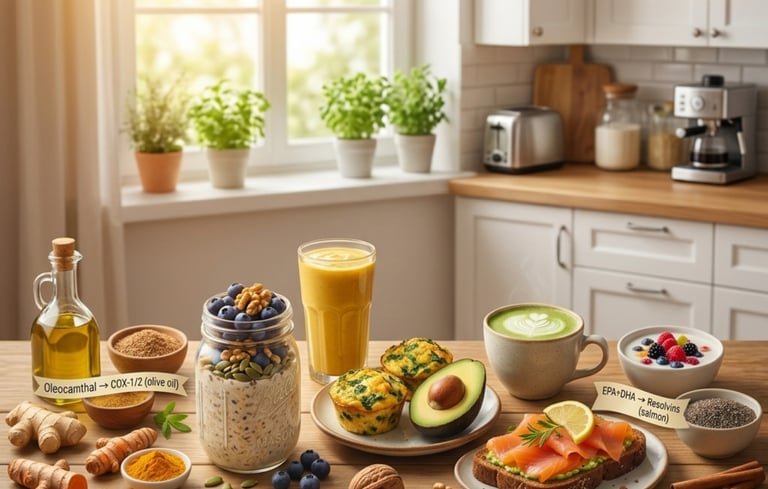
Anti-Inflammatory Breakfast Foods: Start Your Day Right
By BiteBrightly 20 March 2026: This post might contain affiliate links.
The first meal of the day is not nutritionally neutral. What you eat within the first hour or two of waking sets the biochemical tone for the hours that follow — influencing your cortisol trajectory, your postprandial inflammatory response, your blood glucose stability through the morning, and the composition of cytokines circulating in your blood by mid-morning. Breakfast is not simply calories to fuel activity. It is a daily biochemical intervention, repeated 365 times a year, that either loads the deck in favor of systemic inflammation or against it.
The Western breakfast pattern — refined cereal, toast made from white flour, fruit juice stripped of fiber, processed meat, or pastries — delivers a reliable morning inflammatory stimulus: rapid glucose spike triggering glycation end products and reactive oxygen species, saturated and trans fats activating TLR4 toll-like receptors on macrophages, negligible polyphenols and antioxidants, and minimal fiber to feed the gut microbiome bacteria that regulate systemic inflammatory tone throughout the day. By mid-morning, this breakfast pattern has elevated CRP, IL-6, and oxidative stress markers measurably above fasting levels in multiple clinical studies.
The anti-inflammatory breakfast does the opposite. It delivers polyphenols that directly inhibit NF-kB, the master transcription factor of inflammatory gene expression. It provides omega-3 fatty acids that shift the eicosanoid balance toward anti-inflammatory resolvins and protectins. It feeds gut bacteria that produce butyrate — the short-chain fatty acid that suppresses inflammatory signaling systemically and fuels the intestinal barrier that prevents inflammatory endotoxin from entering circulation. It provides antioxidants that quench the reactive oxygen species that would otherwise amplify inflammatory cascades. And it does all of this at the meal timing when cortisol is naturally at its peak — because cortisol elevation in the morning amplifies inflammatory sensitivity in immune cells, making the anti-inflammatory composition of the first meal disproportionately important relative to the same foods eaten later in the day.
This guide covers the fifteen best anti-inflammatory breakfast foods with the specific mechanisms that make each one effective, practical recipes and combinations that stack multiple anti-inflammatory mechanisms in a single meal, foods to avoid at breakfast and why, and prep-ahead strategies that make the anti-inflammatory breakfast achievable on weekday mornings.
Key Takeaways
Breakfast sets the inflammatory tone for the morning — the postprandial inflammatory response to the first meal influences cytokine levels for 3–5 hours, making breakfast composition disproportionately impactful on daily inflammatory burden
Chronic low-grade inflammation is the root mechanism of most major chronic diseases — cardiovascular disease, type 2 diabetes, autoimmune conditions, depression, and accelerated aging all involve dysregulated inflammatory signaling that dietary patterns can meaningfully modulate
The most powerful anti-inflammatory breakfast mechanism is the NF-kB inhibition provided by polyphenols — curcumin (turmeric), EGCG (green tea), quercetin (berries, onions), and resveratrol (berries) all directly suppress the master inflammatory transcription factor
Omega-3 fatty acids from fatty fish, walnuts, chia, and flaxseed shift morning eicosanoid production toward anti-inflammatory prostaglandins and resolvins, opposing the arachidonic acid cascade that drives inflammatory amplification
Refined carbohydrates and sugar at breakfast produce the most acute and measurable morning inflammatory spike — replacing them with whole grains, legumes, and fiber-rich foods is the single highest-impact swap for morning inflammation management
Prep-ahead anti-inflammatory breakfasts (overnight oats, chia pudding, egg muffins, frozen smoothie packs) eliminate the barrier of morning preparation time — the primary reason people default to inflammatory convenience foods
Why Breakfast Matters Specifically for Inflammation
The Morning Cortisol-Inflammation Interaction
Cortisol follows a diurnal rhythm — it peaks in the 30–45 minutes following waking (the cortisol awakening response, or CAR), then declines gradually through the day. This morning cortisol peak is not inherently inflammatory; in healthy individuals with normal HPA axis function, cortisol is broadly anti-inflammatory. But the interaction between morning cortisol and dietary inflammatory triggers is where breakfast matters acutely.
When a high-glycemic, low-fiber breakfast rapidly elevates blood glucose, the resulting insulin spike, oxidative stress from glucose metabolism, and activation of the TLR4 receptor by dietary fatty acids occurs precisely when cortisol is sensitizing immune cells to respond more vigorously to inflammatory stimuli. The morning window is therefore a period of heightened inflammatory sensitivity — meaning that the same inflammatory dietary exposure in the morning produces a larger acute inflammatory response than at dinner. Conversely, anti-inflammatory dietary inputs at breakfast work with the cortisol-mediated immune system modulation of the morning to establish a lower inflammatory setpoint for the hours ahead.
Postprandial Inflammation: The 3–5 Hour Window
Every meal produces some degree of postprandial inflammation — a transient immune activation that is a normal physiological response to nutrient absorption. In healthy individuals eating anti-inflammatory foods, this postprandial inflammatory response is modest and self-resolving. In individuals eating pro-inflammatory foods repeatedly, the postprandial inflammatory response overlaps with the next meal's response before it has fully resolved — producing a state of chronic, cumulative, low-grade inflammation that never fully returns to baseline.
Because breakfast is the meal that begins this postprandial cycle each day, it determines whether the inflammatory burden of the morning is moderate and resolving by mid-morning, or elevated and compounding through to lunch. An anti-inflammatory breakfast produces a lower-amplitude postprandial response that resolves before the next meal — a daily reset that three hundred and sixty-five repetitions a year makes profoundly meaningful at the level of long-term chronic disease risk.
The 15 Best Anti-Inflammatory Breakfast Foods
1. Wild Blueberries (and Mixed Berries)
Berries — particularly wild blueberries, which have roughly double the anthocyanin content of cultivated varieties — are the highest polyphenol food per calorie available from common breakfast additions, making them the single most impactful anti-inflammatory breakfast ingredient for most people.
How it works: Wild blueberries provide approximately 560mg of anthocyanins per 100g — the highest anthocyanin density of any commonly consumed fruit. Anthocyanins directly inhibit NF-kB activation (the master switch of inflammatory gene expression), scavenge reactive oxygen species that amplify inflammatory cascades, and inhibit COX-2 (the cyclooxygenase enzyme targeted by ibuprofen). Research from the University of Reading found that blueberry consumption produced measurable reductions in CRP and IL-6 within 6 weeks of daily consumption.
The polyphenols in berries also selectively feed Akkermansia muciniphila and Lactobacillus — gut bacteria whose proliferation is specifically associated with reduced intestinal permeability and lower systemic LPS-driven inflammation. This gut microbiome mechanism operates over weeks and months of consistent consumption, compounding the acute anti-inflammatory polyphenol effects.
How to use it: One cup of frozen wild blueberries over overnight oats or in a smoothie (freezing does not significantly reduce anthocyanin content). Mixed berries — raspberries (ellagitannins + fiber), blackberries (anthocyanins + lignans), and strawberries (fisetin — an anti-inflammatory flavonoid with senolytic properties) — provide a broader polyphenol spectrum than blueberries alone.
2. Rolled Oats (Whole, Not Instant)
Oats provide avenanthramides — polyphenols entirely unique to oats with direct anti-inflammatory properties — alongside beta-glucan fiber that feeds the gut bacteria whose SCFA production suppresses systemic inflammatory signaling.
How it works: Avenanthramides — present only in oats among common grains — inhibit NF-kB activation in endothelial cells and macrophages and reduce ICAM-1 and VCAM-1 expression (the adhesion molecules that recruit inflammatory immune cells to arterial walls). Beta-glucan (3–4g per cup of dry oats) feeds Lactobacillus and Bifidobacterium, whose fermentation produces butyrate — the SCFA that suppresses NF-kB systemically and maintains intestinal barrier integrity.
The low glycemic response of whole rolled oats (GI approximately 55, and lower still for overnight oats due to extended hydration increasing beta-glucan gel viscosity) prevents the postprandial glucose spike that is itself a potent pro-inflammatory stimulus through glycation end product formation and RAGE receptor activation.
How to use it: Half a cup of whole rolled oats (not instant — processing disrupts beta-glucan polymer integrity and increases glycemic response). Overnight oats are the anti-inflammatory optimization — 8 hours of hydration produces maximum beta-glucan gel viscosity, highest cholesterol-lowering and glucose-attenuation effects, and the most favorable postprandial inflammatory response.
3. Ground Flaxseed
Ground flaxseed delivers ALA omega-3 — the direct dietary precursor for EPA and DHA — alongside lignans (with anti-inflammatory phytoestrogenic activity) and soluble fiber, making it one of the most comprehensive anti-inflammatory breakfast additions in two tablespoons.
How it works: Two tablespoons of ground flaxseed provide 4.3g of ALA omega-3 — the highest ALA content per serving of any common food. ALA is converted (at limited efficiency — approximately 5–10% to EPA and 0.5–5% to DHA) into the long-chain omega-3s that competitively inhibit arachidonic acid conversion to prostaglandin E2 and leukotriene B4, the primary pro-inflammatory eicosanoids.
Flaxseed lignans (secoisolariciresinol diglucoside) are converted by gut bacteria to enterolignans that modulate estrogen receptor activity and have demonstrated anti-inflammatory effects in multiple clinical trials — with CRP reductions observed in RCTs of whole flaxseed supplementation.
Research published in Nutrition Journal found that whole flaxseed consumption for 12 weeks significantly reduced CRP, IL-6, and TNF-alpha in patients with metabolic syndrome — establishing ground flaxseed as a clinically validated anti-inflammatory breakfast addition.
How to use it: Two tablespoons of ground flaxseed (must be ground — whole flaxseeds pass undigested) stirred into oatmeal, overnight oats, or smoothies. Store ground flaxseed in the refrigerator in a sealed container to prevent ALA oxidation. The mild nutty flavor is essentially imperceptible in most preparations.
4. Chia Seeds
Chia seeds provide the highest omega-3 ALA density of any seed, alongside the mucilaginous soluble fiber that forms a gut-protective viscous gel — creating a combined anti-inflammatory + gut barrier preservation effect that makes them uniquely valuable at breakfast.
How it works: Two tablespoons of chia seeds provide 5g of ALA omega-3 and 10g of fiber — the omega-3 opposing arachidonic acid inflammatory cascades and the soluble mucilage fiber feeding butyrate-producing gut bacteria that suppress systemic NF-kB signaling. The mucilaginous gel chia forms in the gut additionally slows gastric emptying — attenuating the postprandial glucose spike that generates reactive oxygen species and triggers inflammatory signaling via RAGE receptors.
Chia seeds also provide significant magnesium (95mg per 2 tbsp) — the mineral that directly modulates NF-kB activity and whose deficiency is independently associated with elevated CRP and IL-6 in population studies. Correcting subclinical magnesium deficiency (affecting approximately 50% of Western adults) produces measurable reductions in inflammatory markers.
How to use it: Two tablespoons daily — in overnight oats, in chia pudding (2 tbsp + 240ml plant milk overnight), in smoothies (adds thickness and fiber), or sprinkled over yogurt. Hydrate before consuming when possible — the gel formation produces more predictable and comfortable gut effects when seeds arrive pre-hydrated.
5. Walnuts
Walnuts are the only tree nut with significant ALA omega-3 content alongside ellagitannins — polyphenols converted by gut bacteria to urolithins that have emerging evidence for direct anti-inflammatory and mitochondrial health effects, making walnuts among the most evidence-supported nuts for systemic inflammation reduction.
How it works: One ounce of walnuts provides 2,570mg of ALA omega-3 — the highest of any tree nut — alongside ellagic acid and punicalagin precursors. Gut bacteria (particularly Gordonibacter urolithinfaciens) convert these ellagitannins to urolithin A — a compound that inhibits NF-kB, activates Nrf2 (the master antioxidant defense transcription factor), and induces mitophagy (clearance of damaged mitochondria that are major sources of reactive oxygen species and inflammatory signals).
A randomized crossover trial published in the Journal of Nutrition found that daily walnut consumption for 6 weeks significantly reduced CRP, IL-6, and ICAM-1 compared to matched control diet — with the ALA omega-3 and ellagitannin-urolithin pathway identified as dual anti-inflammatory mechanisms.
How to use it: One ounce (approximately 14 walnut halves) chopped over oatmeal or yogurt, blended into smoothies, or as part of a nut-and-berry breakfast topping. Do not roast walnuts at high temperature — ALA oxidizes at cooking heat, producing pro-inflammatory lipid peroxides that counter the desired anti-inflammatory benefit. Raw or lightly dried walnuts only.
6. Turmeric (With Black Pepper)
Turmeric is the most potent NF-kB inhibitor available from any commonly consumed food — with curcumin (turmeric's active polyphenol) producing direct, mechanistically validated inhibition of the inflammatory transcription factor that regulates hundreds of pro-inflammatory genes simultaneously.
How it works: Curcumin inhibits IKKβ — the kinase that activates the IkB/NF-kB complex, releasing NF-kB to translocate to the nucleus and activate inflammatory gene transcription. By blocking this upstream kinase, curcumin suppresses the expression of IL-1β, IL-6, TNF-alpha, COX-2, and iNOS simultaneously — the most comprehensive single-compound anti-inflammatory action available from food.
Black pepper's piperine is essential: curcumin has famously poor oral bioavailability (absorption < 1% from turmeric alone), but co-administration with piperine increases curcumin bioavailability by 2,000% through inhibition of intestinal glucuronidation. Fat also enhances curcumin absorption — including turmeric in preparations with olive oil, coconut oil, or nut butter significantly increases absorbed curcumin.
The practical turmeric dose at breakfast: half a teaspoon of ground turmeric (providing approximately 150–200mg of curcumin) alongside a pinch of black pepper in golden milk oatmeal, egg scrambles, or a turmeric-ginger smoothie. This dose is modest relative to curcumin supplement doses used in clinical trials (500–2000mg), but consistent daily consumption from food produces meaningful cumulative effects on inflammatory markers at the population level.
How to use it: Half a teaspoon in overnight oats or morning oatmeal with a pinch of black pepper and cinnamon; in golden milk (warm plant milk + turmeric + ginger + black pepper + honey); in egg scrambles with garlic and spinach; or in a morning smoothie alongside ginger, black pepper, and coconut milk for fat-enhanced bioavailability.
7. Eggs (Whole, Pasture-Raised)
Whole eggs from pasture-raised hens provide the complete anti-inflammatory fat-soluble vitamin package — vitamin D, vitamin K2, vitamin A (retinol), and choline — alongside the sulfur amino acids that are direct precursors for glutathione, the master cellular antioxidant.
How it works: Two pasture-raised eggs provide approximately 80–120 IU of vitamin D (significantly more than conventional eggs due to outdoor sunlight exposure) — and vitamin D deficiency is independently associated with elevated IL-6, TNF-alpha, and CRP in population studies, with vitamin D supplementation producing measurable inflammatory marker reductions in deficient individuals. Vitamin D receptor (VDR) signaling directly suppresses NF-kB in immune cells — making vitamin D-sufficient status a prerequisite for optimal inflammatory regulation.
The choline in egg yolks (approximately 125mg per yolk) is required for phosphatidylcholine synthesis — a structural component of cell membranes whose adequate presence maintains the membrane fluidity required for normal receptor signaling. Choline deficiency is associated with increased VLDL secretion, hepatic steatosis, and systemic inflammation.
The cysteine and methionine in eggs are direct precursors for hepatic glutathione — the primary cellular antioxidant that quenches reactive oxygen species before they can activate inflammatory kinases. Adequate dietary sulfur amino acids maintain the glutathione pool that is the first line of defense against oxidative inflammatory amplification.
How to use it: Two whole eggs (always including the yolks — the white has minimal anti-inflammatory value; the anti-inflammatory nutrients are concentrated in the yolk) cooked in olive oil or butter with garlic, spinach, and turmeric. Egg muffins (baked in a muffin tin) are the optimal prep-ahead anti-inflammatory breakfast protein — preparation in 20 minutes, refrigerator-stable for 5 days.
8. Wild-Caught Salmon or Canned Sardines
Fatty fish at breakfast provides the most concentrated EPA and DHA omega-3 source available from food — producing the most powerful dietary shift in eicosanoid production toward anti-inflammatory resolvins and protectins of any breakfast ingredient.
How it works: A 3-ounce serving of wild salmon provides approximately 1,400–2,000mg of combined EPA and DHA — the long-chain omega-3s that are directly incorporated into cell membrane phospholipids and serve as precursors for the specialized pro-resolving mediators (SPMs): resolvins, protectins, and maresins. These SPMs actively resolve inflammation — they are not merely anti-inflammatory (reducing inflammatory signals) but pro-resolving (actively turning off and repairing established inflammation).
EPA specifically reduces prostaglandin E2 production by competitively displacing arachidonic acid from COX enzyme active sites — reducing the inflammatory eicosanoid that drives most acute inflammatory processes. DHA is metabolized to DHA-derived docosanoids (neuroprotectins) with specific brain anti-inflammatory effects — relevant to the depression and neuroinflammation that is increasingly recognized as a low-grade inflammation-driven condition.
Research consistently shows that higher dietary EPA+DHA is associated with lower CRP, IL-6, and TNF-alpha across diverse populations — with the dose-response relationship and mechanistic specificity establishing omega-3s as the most evidence-supported dietary anti-inflammatory intervention.
How to use it: Smoked salmon on rye crispbread with avocado and lemon (omega-3 + fiber + monounsaturated fat + vitamin C synergy); canned sardines on whole grain toast with lemon and olive oil; salmon egg scrambles with turmeric and spinach; or salmon salad (canned wild salmon mixed with lemon, olive oil, and dill) as a preparation that works at any meal including breakfast.
9. Extra-Virgin Olive Oil
Extra-virgin olive oil (EVOO) is the most important cooking and dressing fat for an anti-inflammatory breakfast — providing oleocanthal (a natural COX inhibitor with ibuprofen-like anti-inflammatory activity), polyphenols, and oleic acid in a combination that makes fat selection the most underappreciated determinant of breakfast inflammatory response.
How it works: Oleocanthal — found only in EVOO, and only in high-quality cold-pressed EVOO (the characteristic "peppery throat sting" is oleocanthal) — is a phenolic compound that directly inhibits COX-1 and COX-2 enzymes through the same mechanism as ibuprofen, with approximately 1/10th the potency per gram. Fifty milliliters (3.5 tablespoons) of high-polyphenol EVOO provides a dose of oleocanthal roughly equivalent to 10% of a standard ibuprofen dose — a meaningful daily anti-inflammatory contribution that compounds over years of consistent use.
EVOO's oleic acid (monounsaturated, approximately 73% of EVOO's fat content) reduces LDL oxidation susceptibility and does not activate TLR4 — unlike saturated fatty acids (particularly lauric acid, myristic acid, and palmitic acid from butter, coconut oil, and processed meats) which directly activate TLR4 on macrophages and trigger inflammatory cytokine production.
How to use it: One to two tablespoons of high-quality EVOO (cold-pressed, stored in a dark bottle, consumed within 6 months of pressing) at breakfast — cooking eggs or vegetables, drizzled over overnight oats (with salt, lemon, and herbs — the savory oat preparation), on whole grain toast, or in salad dressings for a savory breakfast bowl.
10. Avocado
Avocado provides anti-inflammatory monounsaturated oleic acid, glutathione (one of the few foods with measurable dietary glutathione content), polyphenols, and a fat-soluble vitamin profile that enhances the absorption of carotenoids from accompanying breakfast vegetables.
How it works: Half an avocado provides approximately 5mg of glutathione — the tripeptide antioxidant that is the cell's primary defense against the reactive oxygen species that initiate and amplify inflammatory cascades. While most dietary glutathione is degraded in the digestive tract, avocado glutathione has demonstrated greater bioavailability than supplemental glutathione in some studies, and regular avocado consumption is associated with higher plasma glutathione levels in observational research.
The monounsaturated oleic acid in avocado shares the TLR4-non-activating and LDL oxidation-protective properties of olive oil — making avocado a complementary anti-inflammatory fat alongside EVOO rather than a redundant one.
Research published in the Journal of Nutrition found that adding half an avocado to a burger significantly blunted the postprandial inflammatory response compared to the burger alone — with the NF-kB inhibitory polyphenols and oleic acid identified as the primary mediating factors. This postprandial inflammatory attenuation effect makes avocado particularly valuable specifically at breakfast, where the postprandial inflammatory response of the entire morning is being set.
How to use it: Half an avocado daily at breakfast — on whole grain sourdough or rye toast with lemon, sea salt, and seeds; in smoothies (adds creaminess and fiber without flavor dominance); in egg scrambles; or in a savory breakfast bowl with sardines, cherry tomatoes, and olive oil. Mash with lemon and a pinch of turmeric and black pepper for a breakfast avocado spread that stacks avocado's anti-inflammatory monounsaturated fat with curcumin NF-kB inhibition.
11. Kefir and Plain Yogurt (Full-Fat, Unsweetened)
Fermented dairy at breakfast provides live probiotic cultures that directly modulate the gut-immune axis — the bidirectional communication between gut microbiome composition and systemic inflammatory tone that is the most important dietary pathway to long-term inflammatory regulation.
How it works: Kefir provides 30–50 distinct probiotic strains including Lactobacillus kefiranofaciens, L. kefiri, and various Bifidobacterium — a broader microbial diversity than yogurt's typical 2–5 strains. These bacteria colonize the colon (transiently — they do not permanently reside but produce clinically meaningful changes during transit), stimulate intestinal IgA production (local mucosal immune defense), produce bacteriocins (antimicrobial compounds that competitively exclude pathogenic bacteria that trigger inflammatory responses), and directly communicate with the enteric nervous system and gut-associated lymphoid tissue.
The lactobacilli in kefir and yogurt reduce intestinal permeability by upregulating tight junction proteins (claudin-1, occludin) — preventing the translocation of inflammatory LPS endotoxin from the gut lumen into systemic circulation. This LPS-reduction mechanism explains why regular fermented dairy consumption is associated with lower systemic CRP and IL-6 in multiple large prospective studies independent of other dietary factors.
How to use it: Three-quarters to one cup of plain, full-fat kefir or Greek yogurt daily. Full-fat is preferred — the fat enhances absorption of fat-soluble vitamins K2 and A, and low-fat varieties often compensate for reduced fat palatability with added sugars that directly stimulate NF-kB. Sweeten with raw honey (anti-inflammatory polyphenols from honey) and top with berries (anthocyanins + additional gut microbiome-supportive polyphenols) and pumpkin seeds (magnesium + ALA).
12. Ginger (Fresh or Ground)
Ginger provides gingerols and shogaols — phenolic compounds with direct anti-inflammatory mechanisms comparable to COX-2 inhibition, making fresh ginger one of the most potent anti-inflammatory spice additions to breakfast smoothies, teas, or porridges.
How it works: 6-Gingerol (the dominant active compound in fresh ginger, converted to 6-shogaol on drying) inhibits COX-2 and 5-LOX — the two principal enzymes in the inflammatory eicosanoid cascade. Inhibiting both COX-2 and 5-LOX simultaneously addresses both the prostaglandin and leukotriene arms of the arachidonic acid inflammatory pathway — a more comprehensive eicosanoid inhibition than most anti-inflammatory drugs, which typically target only COX-2.
Ginger also inhibits NF-kB activation directly and reduces NLRP3 inflammasome activity — the intracellular danger sensor that drives IL-1β production in metabolic inflammation. The NLRP3 inflammasome is chronically activated in obesity, type 2 diabetes, and metabolic syndrome — making ginger's NLRP3 inhibition specifically relevant to metabolic inflammatory conditions.
How to use it: One teaspoon of fresh grated ginger or half a teaspoon of ground ginger in a morning smoothie alongside turmeric and black pepper (the three compounds are synergistic — ginger enhances curcumin absorption alongside piperine), in warm water with lemon as a morning anti-inflammatory tonic before breakfast, in overnight oats with cinnamon and berries, or in a golden milk preparation.
13. Green Tea or Matcha
Green tea — and matcha especially, which is the entire leaf powdered and provides 10–20 times more EGCG than brewed tea — delivers epigallocatechin gallate, the most potent dietary EGCG source, with direct NF-kB inhibition and Nrf2 activation that make morning green tea consumption a comprehensively anti-inflammatory morning ritual.
How it works: EGCG (epigallocatechin-3-gallate) is the most biologically active catechin in green tea. It directly inhibits NF-kB activation, activates Nrf2 (the master antioxidant defense transcription factor that induces glutathione synthesis, heme oxygenase-1, and Phase 2 detoxification enzymes), and inhibits mTOR (the nutrient sensor that is hyperactivated in inflammatory metabolic conditions). EGCG also inhibits the NLRP3 inflammasome — complementing ginger's NLRP3 inhibition when both are consumed at the same breakfast.
Matcha (powdered whole green tea leaf) provides L-theanine alongside EGCG — the amino acid that crosses the blood-brain barrier and modulates alpha-wave brain activity, producing a calm alertness without the cortisol-elevating anxiety sometimes associated with caffeine alone. This L-theanine + caffeine combination produces a distinct psychostimulant effect that has been shown to improve attention and working memory — particularly relevant at the morning cognitive peak.
How to use it: One cup of brewed green tea (2–3 minute steep at 70–80°C, not boiling water which degrades EGCG) or one teaspoon of ceremonial-grade matcha whisked with hot water as the morning beverage — consumed before or with breakfast rather than replacing it. Matcha in a morning smoothie (1 tsp matcha + banana + plant milk + ginger + ground flaxseed) provides EGCG, ALA omega-3, and ginger COX-2 inhibition in a single breakfast drink.
14. Pumpkin Seeds and Hemp Seeds
Seeds at breakfast provide the magnesium, zinc, and gamma-linolenic acid (GLA) that most anti-inflammatory breakfast combinations underdeliver — with magnesium's NF-kB modulation and zinc's direct inhibition of inflammatory kinases making seeds one of the most important mineral-delivery additions to the morning.
How it works: Two tablespoons of pumpkin seeds provide 95mg of magnesium and 2.2mg of zinc. Magnesium directly inhibits NF-kB by blocking IKK (the kinase that activates NF-kB) and suppresses NLRP3 inflammasome assembly — explaining why magnesium deficiency (affecting approximately 50% of Western adults) is consistently associated with elevated CRP, IL-6, and TNF-alpha in epidemiological studies. Correcting subclinical magnesium deficiency through dietary sources produces measurable CRP reductions in clinical trials.
Zinc inhibits the NF-kB pathway at multiple points, directly suppresses TNF-alpha and IL-1β production from activated macrophages, and is required for the normal function of regulatory T cells that prevent excessive inflammatory responses. Zinc deficiency — common in plant-predominant diets and in older adults — is associated with elevated inflammatory markers and impaired immune regulation.
Hemp seeds provide gamma-linolenic acid (GLA) — an omega-6 fatty acid that, unlike linoleic acid, follows the anti-inflammatory prostaglandin E1 pathway rather than the pro-inflammatory prostaglandin E2 pathway. GLA dietary supplementation has demonstrated anti-inflammatory effects in rheumatoid arthritis trials.
How to use it: Two tablespoons of pumpkin seeds + one tablespoon of hemp seeds daily — over overnight oats or yogurt, in smoothies, in trail mix with walnuts and berries, or as a simple topping that adds crunch, mineral density, and anti-inflammatory omega-3 and GLA to any breakfast preparation.
15. Cinnamon
Cinnamon is the most clinically validated anti-inflammatory spice for blood glucose regulation at breakfast — with cinnamaldehyde and cinnamon polyphenols producing both direct NF-kB inhibition and the insulin-sensitizing effects that prevent the postprandial glucose spike responsible for a substantial portion of breakfast inflammatory response.
How it works: Cinnamaldehyde (the primary bioactive in Ceylon cinnamon) inhibits NF-kB directly and reduces TNF-alpha and IL-6 production from activated macrophages in vitro and in vivo. More practically significant at breakfast is cinnamon's documented insulin-sensitizing effect: cinnamon polyphenols activate insulin receptor substrate proteins and GLUT4 glucose transporters — improving cellular glucose uptake and reducing the postprandial glucose spike that generates advanced glycation end products (AGEs) and activates RAGE receptors, a primary mechanism of diet-induced inflammation.
A meta-analysis of RCTs published in the Journal of Traditional and Complementary Medicine found that cinnamon supplementation (1–3g daily) significantly reduced fasting blood glucose, postprandial glucose, and CRP — with the insulin-sensitizing mechanism confirmed as the primary driver, complemented by direct NF-kB inhibitory effects.
Note on cinnamon type: Ceylon cinnamon (true cinnamon, lighter in color, more delicate in flavor) is preferred over cassia cinnamon (the darker, stronger variety common in supermarkets) for daily use — cassia contains significant coumarin, which at high doses is hepatotoxic. Ceylon cinnamon contains negligible coumarin and is safe at daily culinary amounts.
How to use it: Half a teaspoon of Ceylon cinnamon daily — in overnight oats or porridge (classic combination with berries), in golden milk (with turmeric and ginger — three anti-inflammatory spices in one morning drink), in smoothies, on avocado toast with a drizzle of honey, or in baked breakfast preparations. Combine with a protein and fat source at the same meal for the most effective postprandial glucose attenuation.
Anti-Inflammatory Breakfast Recipes
Recipe 1: The Ultimate Anti-Inflammatory Overnight Oats
Prep time: 5 minutes (night before) | Serves: 1
Ingredients:
½ cup rolled oats (not instant)
1 tbsp chia seeds
1 tbsp ground flaxseed
1 cup unsweetened plant milk or kefir
½ tsp Ceylon cinnamon
½ tsp turmeric
Pinch of black pepper
1 tsp raw honey
Toppings (morning):
1 cup wild blueberries or mixed berries
1 oz walnuts, roughly chopped
1 tbsp pumpkin seeds
Fresh ginger, grated (optional)
Method: Combine oats, chia, flaxseed, milk, cinnamon, turmeric, black pepper, and honey in a jar. Stir well. Refrigerate overnight. Top with berries, walnuts, and pumpkin seeds in the morning. Eat cold or warmed (2 minutes in microwave).
Anti-inflammatory mechanisms stacked: Avenanthramides + beta-glucan (oats) + ALA omega-3 + mucilaginous gel (chia) + ALA + lignans (flaxseed) + probiotics or fat-soluble vitamins (kefir or plant milk) + cinnamaldehyde + glucose attenuation (cinnamon) + curcumin + NF-kB inhibition (turmeric + pepper) + anthocyanins + NF-kB inhibition (berries) + ALA + urolithins (walnuts) + magnesium + zinc (pumpkin seeds).
Recipe 2: Anti-Inflammatory Egg and Vegetable Muffins (Prep-Ahead)
Prep time: 10 minutes | Cook time: 20 minutes | Makes: 12 muffins (6 servings)
Ingredients:
8 pasture-raised eggs
1 cup spinach, roughly chopped
½ cup cherry tomatoes, halved (lycopene — Nrf2 activator)
½ red onion, finely diced (quercetin — NF-kB inhibitor)
2 cloves garlic, minced (allicin — inhibits NF-kB and TNF-alpha)
½ tsp turmeric
Pinch of black pepper
1 tbsp extra-virgin olive oil
Salt to taste
Method: Preheat oven to 180°C (350°F). Sauté onion and garlic in olive oil for 2 minutes. Add spinach, cook until wilted. Whisk eggs with turmeric, black pepper, and salt. Stir in sautéed vegetables and tomatoes. Pour into a greased 12-cup muffin tin. Bake 18–20 minutes until set. Cool completely before refrigerating. Keeps 5 days refrigerated, 3 months frozen.
Anti-inflammatory mechanisms stacked: Vitamin D + choline + glutathione precursors (eggs) + COX-2 inhibition + oleocanthal (olive oil) + curcumin (turmeric) + quercetin + NF-kB inhibition (red onion) + allicin (garlic) + lycopene (tomatoes) + folate + beta-carotene (spinach).
Morning serving: 2 muffins + half an avocado + rye crispbread = comprehensive anti-inflammatory breakfast in under 2 minutes.
Recipe 3: Golden Anti-Inflammatory Smoothie
Prep time: 3 minutes | Serves: 1
Ingredients:
1 cup frozen mango or pineapple (bromelain in pineapple — natural anti-inflammatory protease)
1 cup unsweetened coconut milk or oat milk
1 tsp matcha powder (EGCG + L-theanine)
½ tsp turmeric
¼ tsp ground ginger or 1 tsp fresh grated ginger
Pinch of black pepper
1 tbsp ground flaxseed
1 tbsp almond butter (vitamin E — lipid peroxidation protection)
1 tsp raw honey
Method: Blend all ingredients until smooth. Drink immediately.
Anti-inflammatory mechanisms stacked: EGCG + NF-kB inhibition (matcha) + curcumin (turmeric) + 6-gingerol + COX-2/5-LOX inhibition (ginger) + piperine + curcumin bioavailability enhancement (black pepper) + ALA omega-3 + lignans (flaxseed) + bromelain (pineapple) + vitamin E (almond butter).
Recipe 4: Smoked Salmon Avocado Toast
Prep time: 5 minutes | Serves: 1
Ingredients:
2 slices whole grain rye bread, toasted
½ avocado, mashed
60g (2oz) smoked wild salmon
Squeeze of lemon juice
1 tbsp extra-virgin olive oil, drizzled
Fresh dill
Pinch of red pepper flakes (capsaicin — Nrf2 activator)
Capers (antioxidant polyphenols)
Method: Toast rye bread. Mash avocado with lemon juice, salt. Spread on toast. Top with smoked salmon, olive oil, dill, capers, and red pepper flakes.
Anti-inflammatory mechanisms stacked: EPA+DHA omega-3 + resolvins (salmon) + oleic acid + glutathione + NF-kB inhibitory polyphenols (avocado) + oleocanthal + COX-2 inhibition (olive oil) + arabinoxylan fiber (rye) + vitamin C + flavonoids (lemon) + Nrf2 activation (capsaicin).
Foods to Avoid at Breakfast (And Why)
Refined Cereals and Instant Oatmeal
Packaged breakfast cereals — even those marketed as "whole grain" or "high fiber" — typically provide 20–40g of sugar per serving and a glycemic index comparable to white bread. The rapid glucose spike activates RAGE receptors, generates advanced glycation end products (AGEs), and stimulates the insulin-driven inflammatory cascade that elevates IL-6 and CRP measurably within 2–3 hours of consumption.
Instant oats specifically: the processing that makes oats cook in 60 seconds also disrupts beta-glucan polymer integrity, significantly reducing both viscosity and postprandial glucose attenuation — the two properties that give whole oats their anti-inflammatory advantage. The glycemic index of instant oats (GI approximately 83) approaches that of white bread (GI approximately 71–85).
Processed Meat (Bacon, Sausage, Deli Meat)
Processed meats contain nitrosamines, advanced glycation end products (from high-temperature curing and smoking), saturated fatty acids that activate TLR4, and heme iron (which catalyzes the production of N-nitroso compounds and lipid peroxides in the gut). These compounds drive NF-kB activation in gut-associated immune cells and produce systemic increases in CRP and IL-6 within hours of consumption. The morning meal timing amplifies this inflammatory response through the cortisol-immune sensitization mechanism described above.
Fruit Juice (Even 100% Juice)
Commercial orange juice, apple juice, and "healthy" smoothies made from juiced fruits provide a concentrated dose of fructose without the fiber that slows its absorption in whole fruit. Fructose at high concentrations (from juice) undergoes rapid hepatic metabolism, producing uric acid (which activates the NLRP3 inflammasome and drives gout and metabolic inflammation) and driving hepatic lipogenesis. The fiber removal that turns whole fruit into juice eliminates the pectin and polyphenols associated with the berry skins and apple peel that provide the most anti-inflammatory components of the whole fruit.
Margarine and Seed Oils (High in Omega-6)
Sunflower oil, safflower oil, soybean oil, and corn oil — common in margarine and most commercial baked goods — are extremely high in linoleic acid omega-6 (50–75% of fatty acid composition). At the omega-6:omega-3 ratios typical of Western diets (15–20:1), arachidonic acid production from linoleic acid dominates the eicosanoid pool — driving prostaglandin E2 and leukotriene B4 synthesis that amplifies every inflammatory cascade. Replacing these fats with olive oil and avocado oil at breakfast reduces morning inflammatory eicosanoid production measurably within 4–6 weeks.
Flavored Yogurt
Commercial flavored yogurts — even those marketed with probiotic claims — typically contain 15–25g of added sugar per serving. This sugar load elevates insulin and triggers glycation-related inflammation, directly undermining the gut barrier-protective and anti-inflammatory benefits of the probiotic cultures the yogurt contains. The marketing of flavored probiotic yogurt as a health food is one of the most consequential nutritional misdirections in the breakfast category.
Prep-Ahead Anti-Inflammatory Breakfast Ideas
The primary barrier to a consistent anti-inflammatory breakfast is not knowledge — it is morning time. These prep-ahead strategies eliminate the time barrier entirely:
Sunday batch preparation (1 hour covers the full week):
12 egg and vegetable muffins (5 minutes prep, 20 minutes baking — 6 days of breakfast protein, each serving 2 muffins)
5 overnight oat jars (10 minutes, individual jars for Monday–Friday — grab and go from the refrigerator)
Frozen smoothie packs (portion smoothie ingredients into zip-lock bags — berries, spinach, ground flaxseed, ginger, turmeric — and freeze; blend with plant milk directly from frozen in 2 minutes each morning)
A batch of roasted walnuts and pumpkin seeds with cinnamon (5 minutes — week's supply of anti-inflammatory breakfast topping)
Weekday morning time requirement with prep-ahead:
Overnight oats: 0 minutes (grab from refrigerator)
Egg muffins + avocado: 2 minutes (halve avocado, eat with 2 refrigerated muffins)
Frozen smoothie pack: 2 minutes (blend from frozen)
Smoked salmon on rye toast: 5 minutes
Frequently Asked Questions
Can coffee be part of an anti-inflammatory breakfast?
Black coffee is actually mildly anti-inflammatory — providing chlorogenic acids (NF-kB inhibitory polyphenols) and reducing the risk of type 2 diabetes, liver fibrosis, and neuroinflammatory conditions in large prospective studies. Moderate consumption (2–3 cups daily) is consistent with an anti-inflammatory dietary pattern. The inflammatory concern with coffee at breakfast is what is added to it: commercial creamers (hydrogenated oils, high-fructose corn syrup), large amounts of sugar, or flavored syrups add pro-inflammatory compounds that overwhelm coffee's native anti-inflammatory polyphenols. Black coffee or coffee with a small amount of full-fat milk, plant milk, or coconut oil is anti-inflammatory. Coffee with sugar and commercial creamer is not.
Is a smoothie a good anti-inflammatory breakfast?
A whole-food blended smoothie is an excellent anti-inflammatory breakfast — it retains all fiber (unlike juicing), concentrates polyphenols and anti-inflammatory compounds in an easily consumable format, and can stack multiple anti-inflammatory ingredients efficiently. The critical parameters: use whole frozen fruits (not juice), add leafy greens (spinach or kale — invisible in flavor with fruit), include healthy fat (avocado, almond butter, coconut milk — for fat-soluble nutrient absorption), include a protein source (hemp seeds, Greek yogurt, or a clean protein powder — to attenuate glucose response and provide satiety), and add anti-inflammatory spices (turmeric, ginger, cinnamon, black pepper). A smoothie that is primarily fruit juice and banana without fat, protein, or fiber is high-glycemic and pro-inflammatory despite its apparent healthfulness.
How long before seeing a difference in inflammation from changing breakfast?
Acute effects (measurable reduction in postprandial inflammatory markers CRP, IL-6, and oxidative stress) begin with the first anti-inflammatory breakfast — the postprandial inflammatory response to a berry-oat-flaxseed breakfast is measurably lower than to a refined cereal breakfast within the same 3-hour window. Sustained reductions in fasting CRP and other chronic inflammatory markers typically require 4–8 weeks of consistent anti-inflammatory breakfast patterns — this is the timeframe in which gut microbiome adaptations produce their systemic anti-inflammatory effects through SCFA and intestinal barrier mechanisms. Patients with established inflammatory conditions (rheumatoid arthritis, IBD, atherosclerosis) typically see laboratory marker improvements within 8–12 weeks of consistent dietary pattern change.
References and Further Reading
Basu A et al. — Journal of Nutrition (2010) — Blueberries decrease cardiovascular risk factors in obese men and women Randomized controlled trial demonstrating that daily blueberry consumption for 8 weeks significantly reduced CRP, oxidized LDL, and systolic blood pressure in obese participants — with anthocyanin NF-kB inhibition and Nrf2 activation identified as the primary anti-inflammatory mechanisms and gut microbiome modulation as a secondary pathway.
Mozaffarian D — New England Journal of Medicine (2011) — Omega-3 Fatty Acids and Cardiovascular Disease Comprehensive review establishing EPA and DHA omega-3 fatty acids as the most robustly evidence-based dietary anti-inflammatory intervention — with prostaglandin E2 displacement, resolvin synthesis, and NF-kB suppression confirmed as primary mechanisms, and clinically meaningful reductions in CRP, IL-6, and cardiovascular event rates in RCT evidence.
Hewlings SJ & Kalman DS — Foods (2017) — Curcumin: A Review of Its Effects on Human Health Systematic review of curcumin's anti-inflammatory mechanisms and clinical evidence — IKKβ inhibition, NF-kB suppression, COX-2 inhibition, and NLRP3 inflammasome inhibition confirmed, with piperine bioavailability enhancement established as the critical practical consideration for food-based curcumin delivery.
Calder PC — Biochemical Society Transactions (2020) — Nutrition, immunity and COVID-19 Comprehensive review of dietary anti-inflammatory mechanisms in immune regulation — establishing the role of omega-3 fatty acids, polyphenols, and gut microbiome-targeted dietary fiber in regulating systemic inflammatory tone, with specific mechanisms linking breakfast dietary pattern to morning cortisol-inflammatory interaction.
About the Author
Judith Tsanga is an Applied Biosciences & Biotechnology graduate with an Advanced Level qualification in Food Science, and the founder of BiteBrightly. Her passion for food as medicine began with her own experience: after making targeted dietary changes, she noticed a meaningful improvement in her eyesight — a personal transformation that inspired her mission to share evidence-based nutrition insights that help others eat well and heal boldly. Content on BiteBrightly is for educational purposes and isn't a substitute for advice from your doctor or dietitian.
Follow on Pinterest for daily health tips, recipes, and wellness inspiration.
Important Notice: The information in this article is for educational purposes only and is not intended as medical advice. I am not a medical doctor, registered dietitian, or licensed healthcare practitioner. Individuals with diagnosed inflammatory conditions (rheumatoid arthritis, IBD, Crohn's disease, lupus), food allergies, or those taking anti-inflammatory medications should consult a qualified healthcare provider before significantly changing their diet. Turmeric and ginger may interact with blood-thinning medications (warfarin, aspirin). Ceylon cinnamon is recommended over cassia cinnamon for daily consumption due to coumarin content differences. These statements have not been evaluated by the FDA.
Related posts
Connect
Join our newsletter for fresh health tips
© 2026. All rights reserved.