What Happens to Inflammation When You Change Your Diet — The Real Timeline
Most anti-inflammatory content never tells you the timeline. This guide does — hours, days, weeks, months. What the research actually shows. Full guide.
By BiteBrightly
7/2/202612 min read
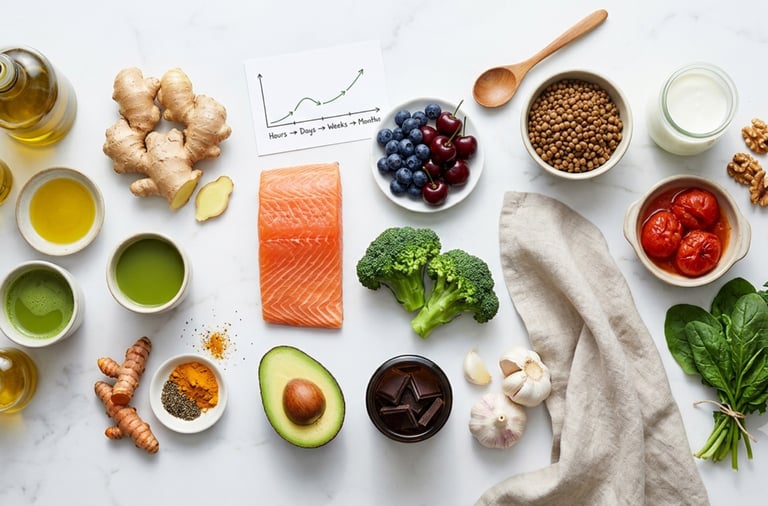
What Happens to Inflammation When You Change Your Diet — The Real Timeline
By BiteBrightly 2 July 2026: This post might contain affiliate links.
Most anti-inflammatory diet content makes an implicit promise: eat these foods, feel better soon. The "soon" is never defined, which is how content like "reduce inflammation in 72 hours" becomes common — it is vague enough to be technically difficult to disprove, and specific enough to feel urgent and actionable.
This guide is going to do something different. It is going to tell you the actual, research-confirmed timeline for what happens to different types of inflammation at different points after dietary change. Some things change faster than most people expect. Others take significantly longer than most content suggests. Understanding the real timeline means you can make informed decisions, set realistic expectations, and build habits that actually work — rather than trying a dietary change for a week, seeing no obvious difference, and concluding it doesn't work when the truth is simply that you stopped too early.
The honest picture is this: some acute inflammatory signals can shift within hours to days of removing specific inflammatory triggers. Measurable changes in chronic systemic inflammatory markers — the CRP and IL-6 levels that clinicians use to track inflammatory disease — typically require weeks to months of consistent dietary change to show meaningful movement. Both of these things are true simultaneously, and understanding which is which changes everything about how to approach this.
Key Takeaways
C-reactive protein (CRP), one of the primary clinical markers of systemic inflammation, has a biological half-life of approximately 62 hours — meaning even if you eliminated every inflammatory dietary trigger today, CRP levels would take several days just to begin declining significantly from the clearance of existing molecules alone
Interleukin-6 (IL-6), another key inflammatory cytokine, has a shorter half-life of approximately 15 hours — making it more responsive to dietary change in the short term, though it is also more volatile and sensitive to multiple factors beyond diet alone
The gut microbiome — which plays a meaningful role in systemic inflammatory regulation — begins shifting in composition within 3–4 days of significant dietary change, but takes weeks to months to establish meaningfully different stable populations
Weight loss, if it occurs through dietary change, produces its own independent anti-inflammatory effects over months — since adipose tissue (particularly visceral fat) is itself a source of inflammatory cytokines
What Inflammation Actually Is — A Brief Clarification
Before the timeline, it helps to distinguish between two meaningfully different types of inflammation that dietary change affects in genuinely different ways.
Acute inflammation is the rapid, localised response to a specific trigger — the redness around a cut, the swelling after an injury, the digestive discomfort after a meal your gut doesn't respond well to. This type can resolve quickly — sometimes within hours — once the trigger is removed.
Chronic systemic inflammation is the persistent, low-grade inflammatory state measured by CRP, IL-6, TNF-alpha, and similar biomarkers that clinicians use to track conditions like rheumatoid arthritis, cardiovascular disease risk, and metabolic syndrome. This is the type most commonly associated with modern dietary patterns, and it is the type that genuinely responds to anti-inflammatory eating — but over a timeline measured in weeks and months, not hours.
This distinction is why "reduce inflammation in 72 hours" is misleading even when there is a small truth behind it: some acute inflammatory signals do respond quickly, but the chronic systemic inflammation most people are actually concerned about operates on an entirely different timescale.
The Real Timeline — What the Research Actually Shows
Hours 0–24: What Changes Immediately
Blood glucose and insulin response — within hours: A meal high in refined carbohydrates produces a blood glucose spike, which drives an insulin response. Sustained high blood glucose is directly pro-inflammatory — it activates NF-kB, the master inflammatory transcription factor, and promotes the production of advanced glycation end-products (AGEs) that damage tissue. A lower-glycaemic meal produces a more moderate blood glucose response, which generates less of this acute inflammatory signalling. This is the fastest dietary-inflammation connection — it operates meal by meal.
Post-meal inflammatory response — within hours: Specific foods produce measurable acute inflammatory responses. A high-saturated-fat, high-refined-carbohydrate meal produces a measurable spike in inflammatory markers in the hours after eating — a response sometimes called "postprandial inflammation." A meal rich in olive oil, omega-3s, and fibre produces a considerably more moderate postprandial response. Switching the composition of meals changes this acute response immediately, though these short-term fluctuations are distinct from changes in underlying chronic inflammation.
Digestive inflammation from specific food triggers — within hours: For people with specific food sensitivities, removing trigger foods produces relatively rapid relief from the acute digestive inflammation they were causing. This is a real and meaningful change — but it is the removal of an acute trigger, not a reduction in systemic chronic inflammation.
Days 3–7: The Gut Microbiome Begins to Shift
Gut microbiome composition — within 3–4 days: The gut microbiome begins responding to significant dietary changes within 3–4 days. Adding fibre (from vegetables, legumes, whole grains) feeds beneficial bacteria populations that produce short-chain fatty acids (including butyrate), which have direct anti-inflammatory effects on the gut lining and systemic inflammatory signalling. Adding fermented foods introduces new bacterial species.
However — and this is important — these early microbiome shifts are not immediately stable. Establishing meaningfully different, stable gut bacterial populations takes weeks to months of consistent dietary change. The direction shifts within days; the magnitude of the effect grows over weeks.
Omega-3 integration into cell membranes — within days: Dietary EPA and DHA from oily fish begin integrating into cell membrane phospholipids within a few days. This is relevant because the fatty acid composition of cell membranes influences how those cells respond to inflammatory signals — omega-3-rich membranes tend toward less inflammatory signalling than omega-6-dominant ones. The integration begins quickly but reaches meaningful levels with weeks of consistent intake.
Weeks 2–4: Measurable Changes Begin to Appear
CRP — significant changes typically require 4–12 weeks: CRP has a biological half-life of approximately 62 hours, and its production is driven by ongoing inflammatory signalling from IL-6 and other cytokines. Reducing this underlying signalling through diet requires sustained change over weeks for CRP levels to shift meaningfully. Studies measuring CRP changes from dietary interventions typically use minimum intervention windows of 4–8 weeks.
IL-6 — somewhat faster than CRP: With its shorter half-life of 15 hours, IL-6 is theoretically more responsive to dietary change over shorter periods. However, it is also more volatile — IL-6 fluctuates with stress, sleep, exercise, and numerous factors beyond diet alone. Meaningful, sustained reductions in IL-6 from dietary change are typically measured over weeks, not days.
Reported symptom improvement — often within 2–4 weeks: People with inflammatory conditions (joint pain, skin inflammation, digestive inflammation) who adopt consistently anti-inflammatory dietary patterns frequently report noticing subjective improvements in symptoms within 2–4 weeks. This is earlier than the measurable biomarker changes suggest it should be — possibly reflecting the cumulative effect of reduced postprandial inflammation, improved gut microbiome function, and other shorter-term changes beginning to accumulate.
Months 2–6: Meaningful Systemic Change
Measurable CRP reductions — typically 8–16 weeks: The studies that have produced the most consistent evidence for dietary interventions reducing CRP — including the legume-based DASH diet research, Mediterranean diet studies, and anti-inflammatory diet trials — use 8–16 week intervention windows as a minimum. A 16-week trial found that substituting one serving of red meat with one serving of legumes per day significantly reduced hs-CRP, TNF-alpha, IL-6, and malondialdehyde.
Weight-related inflammatory reduction — 3–6+ months: If dietary changes result in weight loss — particularly of visceral (abdominal) fat — this produces additional independent anti-inflammatory effects, since adipose tissue is itself a source of inflammatory cytokines including IL-6 and TNF-alpha. These changes develop over months, proportional to the degree of visceral fat reduction.
Gut microbiome stabilisation — weeks to months: Establishing a genuinely different, stable gut microbiome composition takes months of consistent dietary change. Early shifts appear within days, but the full anti-inflammatory benefit of a fibre-rich, fermented-food-inclusive diet on gut microbiome-mediated inflammatory regulation develops over this longer window.
The 15 Most Impactful Foods — and When Their Effects Begin
1. Extra-Virgin Olive Oil
Mechanism: Oleocanthal inhibits COX-1 and COX-2 enzymes (same pathway as NSAIDs); oleic acid reduces pro-inflammatory gene expression. Timeline: Postprandial anti-inflammatory effect begins with each meal; consistent use supports measurable inflammatory marker changes over weeks.
2. Oily Fish (Salmon, Mackerel, Sardines)
Mechanism: EPA and DHA omega-3s directly displace pro-inflammatory omega-6 arachidonic acid in cell membranes and competitively inhibit the production of inflammatory prostaglandins. Timeline: Cell membrane integration begins within days; meaningful anti-inflammatory effect builds over 4–8 weeks of consistent 2–3x weekly intake.
3. Turmeric With Black Pepper
Mechanism: Curcumin directly inhibits NF-kB, the master inflammatory transcription factor. Black pepper's piperine increases curcumin absorption by up to 2,000%. Timeline: Curcumin is present in circulation within hours of consumption; the anti-inflammatory effect is dose-dependent and consistent daily use is more effective than occasional large amounts.
4. Ginger
Mechanism: Gingerols inhibit COX-2 and 5-lipoxygenase (5-LOX), two key inflammatory enzyme pathways. Among the most directly anti-inflammatory commonly available foods. Timeline: Active compounds enter circulation within hours; consistent daily use accumulates effect over weeks.
5. Dark Leafy Greens (Spinach, Kale, Swiss Chard)
Mechanism: Provide magnesium (a cofactor for anti-inflammatory enzyme systems), vitamin K (which regulates inflammatory signalling pathways), and antioxidant compounds that reduce oxidative stress-driven inflammation. Timeline: Contribution to overall anti-inflammatory pattern; effects accumulate with consistent daily intake over weeks.
6. Berries (Blueberries, Strawberries, Cherries)
Mechanism: Anthocyanins directly inhibit NF-kB and reduce the production of inflammatory cytokines including IL-6 and TNF-alpha. Tart cherry anthocyanins have specific documented effects on inflammatory markers. Timeline: Anthocyanins are absorbed and active within hours of eating; consistent daily intake produces cumulative anti-inflammatory effects over weeks.
7. Broccoli and Cruciferous Vegetables
Mechanism: Sulforaphane from glucosinolates induces the Nrf2 pathway, which upregulates the body's own antioxidant and anti-inflammatory defence systems. Timeline: Nrf2 pathway activation begins within hours; consistent intake is required for meaningful sustained effect.
8. Walnuts
Mechanism: Provide ALA omega-3, ellagitannins (converted by gut bacteria to the anti-inflammatory compound urolithin A), and polyphenols with direct antioxidant activity. Timeline: Urolithin A production from gut bacteria takes days to weeks to establish; polyphenol antioxidant effects are more immediate.
9. Green Tea
Mechanism: EGCG inhibits NF-kB and reduces inflammatory cytokine production; also inhibits the matrix metalloproteinases that drive tissue inflammation. Timeline: EGCG enters circulation within 30–60 minutes of drinking; consistent 2–3 cups daily produces accumulating effect over weeks.
10. Tomatoes (Cooked With Olive Oil)
Mechanism: Lycopene accumulates in tissue and inhibits pro-inflammatory cytokine production; cooking with olive oil increases lycopene bioavailability substantially. Timeline: Lycopene accumulation in tissue takes weeks of consistent intake to reach meaningful levels.
11. Legumes (Lentils, Chickpeas, Black Beans)
Mechanism: Fibre feeds anti-inflammatory gut bacteria and increases butyrate production; replacing red meat with legumes specifically reduces the pro-inflammatory haem iron and saturated fat from red meat alongside adding fibre. Timeline: Gut microbiome shifts begin within days; meaningful butyrate-mediated anti-inflammatory effect builds over weeks. CRP reductions from legume-based dietary changes measured at 16-week+ windows.
12. Fermented Foods (Plain Kefir, Sauerkraut, Plain Yogurt)
Mechanism: Introduce and support beneficial gut bacteria populations that produce anti-inflammatory short-chain fatty acids and compete with pro-inflammatory bacterial species. Timeline: Microbiome composition begins shifting within 3–4 days; meaningful anti-inflammatory effect from microbiome change develops over weeks to months.
13. Dark Chocolate (70%+ Cacao)
Mechanism: Cacao flavanols inhibit NF-kB and reduce production of inflammatory cytokines; also support beneficial gut microbiome composition. Timeline: Flavanols are absorbed within hours; consistent daily 1–2 squares produces accumulating effect. Clinical trials on cacao flavanols and inflammatory markers typically use 4–12 week windows.
14. Garlic
Mechanism: Allicin and its derivatives inhibit NF-kB, reduce pro-inflammatory cytokine production, and have documented antimicrobial effects that reduce the bacterial-driven inflammatory burden. Timeline: Active compounds enter circulation within hours; consistent daily use accumulates anti-inflammatory effect.
15. Avocado
Mechanism: Monounsaturated fat supports anti-inflammatory gene expression; replacing saturated fat from red meat with avocado fat has been specifically shown to reduce postprandial inflammatory markers compared to the same meal with saturated fat. Timeline: Postprandial anti-inflammatory effect compared to saturated fat is meal-by-meal; consistent dietary fat source change contributes to overall inflammatory profile over weeks.
What to Reduce — and How Quickly Removing These Helps
Refined sugar and ultra-processed carbohydrates: Each high-sugar, high-refined-carbohydrate meal produces an acute postprandial inflammatory response through blood glucose spiking and NF-kB activation. Reducing these produces a more moderate postprandial response with the very next meal — this is the fastest dietary-inflammation change available.
Trans fats (partially hydrogenated oils): Trans fats directly promote inflammatory signalling and are associated with elevated CRP. Their elimination from a diet produces measurable effects over weeks rather than immediately.
Excess alcohol: Alcohol promotes intestinal permeability ("leaky gut"), allowing bacterial endotoxins to enter circulation and drive systemic inflammation. Reducing alcohol improves gut barrier function over days to weeks.
Red and processed meat: Associated with higher inflammatory markers through haem iron, saturated fat, and in processed meat, nitrates and advanced glycation end-products. Reducing these and replacing with legumes or fish produces measurable changes over weeks to months.
Building the Anti-Inflammatory Diet — A Practical Framework
Rather than a specific meal plan, the most evidence-based anti-inflammatory eating approach is a pattern — the foods you eat most of the time, not every single meal:
Daily: Extra-virgin olive oil as the primary cooking fat. A large portion of vegetables (half your plate). A daily handful of berries. 2–3 cups of green tea. A small daily amount of dark chocolate 70%+.
Most days: Turmeric with black pepper added to at least one meal. Fresh ginger in tea or cooking. A handful of walnuts or other nuts.
Several times weekly: Oily fish (salmon, sardines, mackerel) 2–3 times. A serving of legumes at lunch or dinner. A small serving of fermented food (kefir, sauerkraut, plain yogurt).
Occasionally: Red meat, processed foods, refined carbohydrates, alcohol — not eliminated, but reduced and occasional rather than daily.
The key principle: consistency over perfection. The anti-inflammatory effect of dietary patterns is cumulative. One perfect anti-inflammatory day followed by six days of high-sugar, ultra-processed food produces less benefit than six moderately good anti-inflammatory days and one imperfect one.
How to Track Progress Honestly
What you can track relatively quickly (days to weeks):
Energy levels and afternoon fatigue patterns
Digestive comfort after meals
Joint stiffness in the mornings (if relevant)
Sleep quality
What requires longer and ideally a blood test:
CRP and IL-6 levels (requires a blood test; changes meaningful at 8–16 weeks)
Fasting blood glucose and insulin
Lipid panel (cholesterol, triglycerides)
Subjective symptoms often change before laboratory markers do — this is genuine, not imagined. The mechanisms for this (improved postprandial inflammation, early gut microbiome shifts, reduced digestive inflammation) produce real experience changes before whole-body CRP levels move significantly.
Frequently Asked Questions
If CRP takes weeks to change, does diet really matter in the short term?
Yes — for two genuinely meaningful reasons. First, the postprandial inflammatory response to each meal is real and accumulates. A diet that produces lower postprandial inflammation at every meal is genuinely less inflammatory than one that doesn't, even before CRP levels shift. Second, every day of consistently anti-inflammatory eating is building toward the weeks-long threshold at which measurable biomarker changes appear. The short term matters because it compounds into the medium term.
Should I get a blood test before starting an anti-inflammatory diet?
If you have access to one, a baseline CRP blood test provides an objective reference point that removes the uncertainty of judging progress by symptoms alone. Re-testing at 12–16 weeks gives you a genuinely informative before-and-after comparison. This is particularly useful for people with diagnosed inflammatory conditions where tracking objective markers is part of their medical care.
How long before I should expect to notice a difference?
Most people report noticing subjective changes — energy, digestive comfort, joint stiffness — within 2–4 weeks of consistently following an anti-inflammatory dietary pattern. Measurable changes in CRP and other blood biomarkers typically require 8–16 weeks. If you notice no difference at all after 4 weeks, it is worth reviewing whether the dietary changes have been genuinely consistent — the most common reason for not seeing results is inconsistency rather than the dietary approach itself being ineffective.
References and Further Reading
Nutrition Reviews Umbrella Review (2025) — Dietary Patterns Associated With Anti-inflammatory Effects: An Umbrella Review of Systematic Reviews and Meta-analyses Confirming significant CRP reductions from Mediterranean and vegetarian dietary patterns across meta-analyses, with reductions ranging from -0.27 to -1.04 mg/L.
PMC Systematic Review (2021) — Dietary patterns and associations with biomarkers of inflammation in adults Confirming CRP half-life of 62 hours and IL-6 half-life of 15 hours alongside 82 significant associations between anti-inflammatory dietary patterns and lower inflammatory markers across 133 analyses.
Nutrients (2022) — Time-Restricted Eating Versus Daily Calorie Restriction: Effects on Inflammatory Markers over 12 Months Confirming that dietary interventions without meaningful weight loss may not produce significant changes in CRP, IL-6, or TNF-alpha — highlighting the importance of sustained, consistent dietary change.
About the Author
I'm Judith, a wellness enthusiast and Applied Bio Sciences and Biotechnology graduate behind BiteBrightly. With a deep-rooted belief in the healing power of food, my nutrition journey began with a personal transformation — I improved my eyesight through targeted dietary changes. This life-changing experience sparked my mission to empower others by sharing evidence-based insights into food as medicine.
Follow me on Pinterest for daily health tips, recipes, and wellness inspiration.
Important Notice: The information in this article is for educational purposes only and is not intended as medical advice. I am not a medical doctor or registered dietitian. Chronic inflammation is associated with multiple medical conditions — if you have a diagnosed inflammatory condition, please follow the treatment plan from your healthcare provider and discuss any dietary changes with your doctor or a registered dietitian. Diet is one of multiple factors that influence inflammation, alongside physical activity, sleep, stress, body weight, and genetics. These statements have not been evaluated by the FDA.
Related posts
Connect
Join our newsletter for fresh health tips
© 2026. All rights reserved.