Vegetarian Foods That Help You Lose Weight: The Complete Guide
Vegetarians weigh 5–10kg less than meat eaters eating the same calories. Lentils GI 32. ACV reduces blood sugar 34%. 15 vegetarian weight loss foods explained.
by BiteBrightly
5/11/202618 min read
Vegetarian Foods That Help You Lose Weight: The Complete Guide
By BiteBrightly 11 May 2026: This post might contain affiliate links.
One of the most common worries people have when switching to a vegetarian diet is whether they will lose weight — or whether the absence of meat will leave them constantly hungry and reaching for carbohydrates to fill the gap. This worry is understandable. But it is also, according to a growing body of research, largely unfounded.
Multiple large studies have found that vegetarians have lower average body weight and lower rates of obesity than meat eaters — not because they eat less, but because the foods that make up a well-constructed vegetarian diet are inherently more filling per calorie, more supportive of the gut microbiome that regulates appetite, and more anti-inflammatory than the typical omnivore diet built around processed meat, refined carbohydrates, and industrial seed oils.
The key word is well-constructed. A vegetarian diet built around pasta, white bread, sugary cereal, and cheese will not help you lose weight. A vegetarian diet built around the 15 foods in this guide — legumes, leafy greens, whole grains, fermented foods, nuts, seeds, and strategic use of eggs and dairy — is one of the most powerful dietary frameworks for sustainable, natural weight loss available.
This guide covers the 15 best vegetarian foods for weight loss, with the specific science behind why each one works, and practical guidance on how to use them every day.
Key Takeaways
Vegetarians on average weigh 5–10kg less than meat eaters eating the same number of calories — largely because plant foods have a higher satiety-per-calorie ratio and are richer in the fibre that feeds the gut microbiome bacteria regulating appetite hormones
Research published in the Journal of General Internal Medicine found that vegetarian diets resulted in significantly greater weight loss than non-vegetarian diets over the same period — establishing plant-based eating as one of the most effective dietary frameworks for weight management
Protein is just as important for vegetarian weight loss as for omnivore weight loss — and legumes (lentils, chickpeas, black beans), Greek yogurt, eggs, edamame, cottage cheese, and tofu all provide the protein needed to activate satiety hormones and prevent muscle loss during fat reduction
Fibre is the vegetarian weight loss superpower — plant foods are the only dietary source of fibre, and fibre activates PYY satiety hormones, feeds the gut bacteria that regulate appetite, and has zero caloric contribution despite creating genuine fullness
Blood sugar stability is critical — high-carbohydrate vegetarian diets built around refined grains and sugary foods cause the blood sugar spikes and crashes that drive cravings and hunger. This guide focuses specifically on low-glycemic, high-fibre plant foods that keep blood sugar stable
The gut microbiome connection: research has found that plant-based diets dramatically increase the diversity of beneficial gut bacteria that produce the short-chain fatty acids regulating appetite, metabolism, and fat storage — giving vegetarians a metabolic advantage over time
Why Vegetarian Diets Work for Weight Loss
The Fibre Advantage
Animal foods contain zero dietary fibre. Every gram of fibre in any diet comes from plant foods. And fibre is arguably the most important weight-loss nutrient that most people do not think of as a weight-loss nutrient.
Fibre works for weight loss through three separate mechanisms. First, it physically fills your stomach with volume, activating stretch receptors that signal fullness to your brain. Second, soluble fibre (from oats, legumes, and many fruits) forms a viscous gel in your stomach that slows gastric emptying — meaning food stays in your stomach longer and you feel full for more hours after eating. Third, fibre is fermented by gut bacteria in the large intestine to produce short-chain fatty acids — particularly propionate — which directly activate PYY satiety hormones that suppress appetite for hours after the meal.
A well-constructed vegetarian diet can easily provide 30–50g of fibre daily — compared to the typical Western diet providing approximately 12–15g. This fibre advantage translates directly into better appetite regulation and lower total caloric intake without conscious restriction.
The Gut Microbiome Advantage
Research consistently shows that plant-based diets produce significantly more diverse gut microbiomes than omnivore diets — and gut microbiome diversity is directly associated with healthy weight regulation. People with more diverse gut microbiomes have better insulin sensitivity, lower inflammation in fat tissue, and better hormonal signalling around appetite and satiety.
The Firmicutes to Bacteroidetes ratio — a key gut microbiome marker — is consistently more favourable (associated with lower body weight) in people eating plant-rich diets. The polyphenols in vegetables, legumes, and whole grains selectively feed the beneficial bacteria (Akkermansia muciniphila, Lactobacillus, Bifidobacterium) that produce the anti-inflammatory compounds and appetite-regulating hormones that support weight management.
The Caloric Density Advantage
Most whole plant foods have lower caloric density than meat, cheese, and processed foods — meaning you get more volume, more fullness, and more nutrients per calorie from plant foods than from animal foods. A large bowl of lentil soup with leafy greens and whole grain bread provides 400 calories and genuine fullness. An equivalent-calorie portion of a processed meat meal is much smaller in volume and activates fewer satiety mechanisms.
The 15 Best Vegetarian Foods for Weight Loss
1. Lentils
Lentils are the single best food for vegetarian weight loss. No other commonly eaten food combines the protein, fibre, and low glycemic index of lentils in a form that is this affordable, this versatile, and this consistently effective at keeping hunger away.
Why they work: One cup of cooked lentils provides 18g of protein, 15.6g of fibre, and 40g of complex carbohydrates — all at a glycemic index of approximately 32. The protein activates GLP-1 and PYY satiety hormones. The extraordinary fibre content (more than half the daily recommendation in a single cup) provides both immediate stomach-filling volume and the propionate-driven PYY signalling that extends satiety for hours after eating. The low GI means blood sugar rises gently, insulin stays moderate, and your body is not being continuously told to store fat.
Lentils additionally provide iron (6.6mg per cup — important for female vegetarians for whom iron deficiency is common and can affect energy levels and metabolism), folate (358mcg — 90% of daily requirements), and zinc (2.5mg — supporting the thyroid function that regulates metabolic rate).
How to use them: Lentil soup is the most filling, most affordable, and most practical weight-loss meal available. Lentil dal with a small portion of brown rice. Lentils in salads (Puy lentils hold their shape particularly well cold). Lentil patties as a burger replacement. Lentil bolognese served with courgette noodles or a moderate portion of whole grain pasta.
Weight-loss tip: Research has found that replacing one daily serving of meat with legumes was associated with significantly greater weight loss over 12 weeks — not through caloric restriction, but through the superior satiety and blood sugar stability of legume protein and fibre compared to meat protein without fibre.
2. Chickpeas
Chickpeas share the extraordinary weight-loss profile of lentils but have a milder flavour and more texture — making them more versatile across different cuisines and more accepted by people who find the earthiness of lentils off-putting.
Why they work: One cup of cooked chickpeas provides 15g of protein, 12.5g of fibre, and a glycemic index of approximately 28 — one of the lowest of any carbohydrate food. The galactooligosaccharide and resistant starch fibres in chickpeas specifically feed Akkermansia muciniphila — the gut bacterium most consistently associated with healthy weight, better insulin sensitivity, and lower systemic inflammation.
Chickpea resistant starch increases significantly when cooked chickpeas are cooled — making overnight-refrigerated chickpeas in salads even more effective for satiety and gut microbiome support than freshly cooked warm chickpeas.
How to use them: Hummus as a snack with vegetable sticks — the combination of chickpea protein and fibre with the oleic acid OEA satiety from olive oil is genuinely effective. Roasted spiced chickpeas as a crunchy snack replacing crisps. Chickpea curry (chana masala). Chickpea and spinach stew. Chickpea salads with lemon and olive oil.
3. Black Beans
Black beans are particularly valuable for vegetarian weight loss because of their anthocyanins — the same pigments responsible for the dark black colour that are also found in blueberries and dark berries. These anthocyanins directly inhibit adipogenesis (the formation of new fat cells) through PPARγ2 blockage.
Why they work: Beyond their PPARγ2 inhibitory anthocyanins, black beans provide 15g of protein, 15g of fibre, and a GI of approximately 30 per cup. They are one of the richest dietary sources of resistant starch — the form of starch that passes undigested to the large intestine, where it is fermented by gut bacteria to produce butyrate and propionate, the short-chain fatty acids that directly reduce inflammation, improve gut barrier integrity, and activate satiety signalling.
How to use them: Black bean tacos with avocado and lime. Black bean soup with cumin and coriander. Black beans and brown rice (a complete protein combination with all nine essential amino acids). Black bean quesadillas. Black bean burgers.
4. Edamame
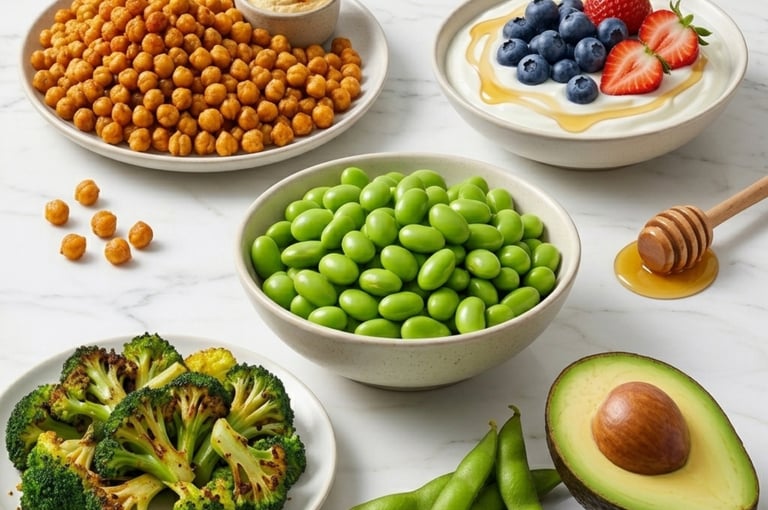
Edamame — young green soybeans — is one of the most protein-dense plant foods available and one of the very few plant foods that provides complete protein (all nine essential amino acids). A cup of shelled edamame provides 17g of complete protein with a GI of approximately 18 — one of the lowest of any food.
Why they work: At GI 18, edamame causes almost no blood sugar impact — keeping insulin low and allowing your body to continue burning stored fat for energy throughout the day. The isoflavones in edamame (genistein and daidzein) have demonstrated metabolic effects including PPARγ activation (improving insulin sensitivity in fat cells) and direct inhibition of fat cell differentiation.
How to use them: Steamed edamame with sea salt as a snack. Edamame in grain bowls. Edamame and sesame salad. Blended into a smooth dip similar to hummus. As a protein addition to any salad or stir-fry.
5. Greek Yogurt
Plain full-fat Greek yogurt is the most protein-dense convenient dairy food available — providing 17–20g of complete protein per cup from a casein and whey blend that releases amino acids over several hours, maintaining satiety hormone signalling for significantly longer than fast-digesting protein sources.
Why it works: The casein fraction of Greek yogurt forms a slow-digesting gel in the stomach, providing a sustained release of amino acids over 4–7 hours and maintaining elevated GLP-1 and PYY satiety hormones for significantly longer than equivalent protein from eggs or chicken (which is absorbed faster). The probiotics in plain yogurt support the gut microbiome diversity that regulates appetite hormones throughout the day.
Calcium from Greek yogurt has a specific fat-loss mechanism: calcium binds to dietary fatty acids in the intestine, forming calcium soaps that are excreted rather than absorbed. This means eating dairy with adequate calcium actually reduces how much fat from the same meal gets absorbed into your body.
How to use it: Plain Greek yogurt with berries and seeds for breakfast. As a sauce base replacing cream or sour cream. As a protein-rich snack. As a salad dressing base with lemon and herbs.
Weight-loss tip: Always choose plain Greek yogurt — not flavoured. Flavoured Greek yogurts typically contain 15–25g of added sugar that completely undermines the blood sugar stability and satiety benefits of the yogurt itself.
6. Eggs
Eggs are one of the most effective weight-loss foods available for vegetarians — providing complete protein with the highest leucine content of any whole food, alongside vitamin D, choline, and zinc that support the hormonal and metabolic functions underlying weight regulation.
Why they work: A breakfast of two eggs versus a breakfast of equal-calorie refined carbohydrates produces significantly more satiety, lower appetite at the next meal, and lower total daily caloric intake. This has been confirmed in multiple clinical trials. The leucine in eggs (approximately 1.8g per two eggs) directly activates mTORC1 — the molecular switch that signals fullness to the brain alongside stimulating muscle protein synthesis. The fat in egg yolks slows gastric emptying, extending fullness beyond what the protein alone would provide.
How to use them: Scrambled eggs with leafy greens and avocado. Poached eggs on whole grain toast. Hard-boiled eggs as a portable snack. Egg-based frittatas loaded with vegetables. Shakshuka (eggs poached in tomato sauce) — one of the most satisfying vegetarian weight-loss meals available.
7. Leafy Greens (Spinach, Kale, Arugula, Swiss Chard)
Leafy greens are the most calorie-efficient food in existence for weight loss. Two large cups of raw spinach provide approximately 15 calories — essentially nothing — while delivering iron, folate, magnesium, vitamin K, calcium, and the thylakoid compounds that directly slow fat digestion and extend satiety hormone release.
Why they work: The thylakoids in dark leafy greens — tiny membrane fragments from inside plant cells — have demonstrated significant satiety effects in research. They slow the digestion of fat in the small intestine, which prolongs the release of the satiety hormones CCK and GLP-1 — keeping you feeling full for longer after a meal containing leafy greens alongside fat.
The nitrates in leafy greens (particularly arugula, spinach, and Swiss chard) convert to nitric oxide in the body, improving blood flow, increasing mitochondrial efficiency, and enhancing the use of oxygen during exercise — giving a metabolic performance advantage.
Magnesium from spinach (157mg per cup cooked) supports the insulin signalling that regulates blood sugar and fat storage. Research has found that higher dietary magnesium is associated with lower fasting insulin and better insulin sensitivity — directly relevant to weight management.
How to use them: Fill half your plate at every meal with leafy greens. Smoothies with spinach (genuinely undetectable in taste when blended with fruit). Large salads as meal foundations. Leafy greens wilted into lentil soup, pasta, or curry.
8. Broccoli and Cruciferous Vegetables
Broccoli, cauliflower, Brussels sprouts, and cabbage are some of the most filling, most nutritious, and most anti-inflammatory vegetables available — providing glucosinolates that activate the Nrf2 anti-inflammatory pathway alongside significant fibre and protein (broccoli has more protein per calorie than beef).
Why they work: A cup of cooked broccoli provides 5.1g of protein, 5.1g of fibre, and only 55 calories — an extraordinarily high satiety-per-calorie ratio. The glucosinolates in broccoli are converted by chewing into sulforaphane and indole-3-carbinol — compounds with direct anti-inflammatory and oestrogen metabolism effects that are relevant for women managing weight around hormonal changes.
Cruciferous vegetables are also rich in DIM (diindolylmethane), which supports healthy oestrogen metabolism — relevant for women whose weight management is influenced by hormonal imbalances, as excess oestrogen is associated with increased fat storage, particularly around the hips and abdomen.
How to use them: Roasted broccoli with olive oil and garlic. Broccoli in stir-fries. Cauliflower rice as a low-calorie rice substitute. Roasted cauliflower steaks as a satisfying meat alternative. Raw broccoli and cauliflower with hummus dipping sauce.
9. Avocado
Avocado is the most calorie-dense food in this guide — and the only one that many people wrongly try to limit when managing their weight. It belongs in a vegetarian weight-loss diet because its oleic acid triggers OEA satiety signalling through the vagus nerve, producing fullness that extends significantly beyond the meal itself.
Why it works: Oleic acid from avocado is converted in the gut to OEA (oleoylethanolamide), which activates PPAR-alpha receptors in intestinal cells and stimulates vagal neurons that transmit satiety to the hypothalamus. A clinical trial found that adding half an avocado to lunch produced 28% greater satisfaction at 3 hours post-meal compared to the same meal without avocado — through the OEA vagal mechanism.
Avocado also contains 10g of fibre per fruit — more than most people get from an entire meal without avocado. The monounsaturated fat improves the absorption of fat-soluble nutrients (vitamins A, D, E, K and carotenoids) from vegetables eaten at the same meal by up to 15 times, dramatically increasing the nutritional value of every vegetable on the same plate.
How to use it: Half an avocado at lunch daily — the most practical implementation of the OEA satiety benefit. On toast with eggs. In salads where the fat increases carotenoid absorption. Mashed as guacamole with vegetable sticks. In smoothies for creaminess and healthy fat.
Weight-loss tip: Avocado's fat content makes it calorie-dense — half an avocado (80g) provides approximately 120 calories. Keep portions to half an avocado per serving rather than a whole one. The satiety from half is typically sufficient.
10. Oats
Oats are the best breakfast food for vegetarian weight loss — providing beta-glucan soluble fibre that produces one of the most reliably documented satiety effects in nutritional science, alongside B vitamins, magnesium, and zinc that support energy metabolism and thyroid function.
Why they work: Beta-glucan forms a thick, viscous gel in your stomach when mixed with water — the same gel you see when cooked oats cool. This gel physically slows gastric emptying, provides a gentler, more sustained blood sugar curve than almost any other breakfast food, and ferments in the large intestine to produce butyrate and propionate — the short-chain fatty acids that directly activate PYY satiety hormones.
Research has found that beta-glucan from oats is the most dose-dependent satiety fibre available — the thicker the gel (which depends on the amount of beta-glucan and the cooking method), the greater the satiety effect. Whole rolled oats have higher beta-glucan gel viscosity than instant oats, making them more effective for weight management.
How to use them: Overnight oats prepared the night before — add berries, seeds, and a small amount of nut butter for a complete, satiating breakfast requiring zero morning effort. Hot porridge with banana and pumpkin seeds. Oat-based energy balls with nut butter and dark chocolate.
11. Tofu and Tempeh
Tofu and tempeh are the two most important protein sources for vegetarians who do not eat eggs or dairy — and tempeh in particular is one of the most nutritionally impressive foods available, providing more protein than meat by weight alongside prebiotic beta-glucans and dramatically better mineral bioavailability than unfermented soy.
Why they work: Tempeh specifically undergoes fermentation that breaks down phytic acid — the antinutrient in soybeans that blocks zinc and iron absorption. Fermented tempeh provides zinc and iron at significantly higher bioavailability than tofu or other soy products. Both tofu and tempeh provide complete protein, but tempeh provides more (15–17g per half cup vs. 10g for tofu) alongside the prebiotic beta-glucan fibre not present in tofu.
For weight loss, firm tofu and tempeh both work as high-protein, low-calorie meal anchors — tempeh at approximately 160 calories per half cup and 17g of protein, tofu at approximately 90 calories per half cup and 10g of protein.
How to use them: Pan-fried tempeh in sesame oil with soy sauce — the most delicious preparation that develops a crispy, golden exterior. Baked tofu in grain bowls. Scrambled tofu as an egg scramble substitute. Tempeh crumbled as a mince substitute in bolognese or tacos.
12. Berries
Berries are the most anti-inflammatory fruit choice — and managing inflammation is one of the least discussed but most important aspects of sustainable weight loss, because chronic inflammation in fat tissue directly impairs insulin signalling and leptin resistance (the hormone that tells your brain you have had enough to eat).
Why they work: Wild blueberries, strawberries, blackberries, and raspberries all have GI values below 55 — much lower than most other fruits — because their fibre content slows sugar absorption significantly. Their anthocyanin content directly inhibits NF-kB inflammatory signalling in fat tissue, improving insulin sensitivity and reducing the inflammatory cytokines that drive leptin resistance. Strawberry fisetin specifically is one of the most potent dietary senolytics — clearing the inflammatory zombie cells whose secretions drive chronic fat tissue inflammation.
How to use them: With Greek yogurt and oats for breakfast. In overnight oats. As a dessert alternative. In smoothies. As a snack with a small amount of dark chocolate.
13. Pumpkin Seeds and Hemp Seeds
Seeds are one of the most underutilised weight-loss foods available to vegetarians — providing concentrated protein, healthy fat, zinc, magnesium, and omega-3 fatty acids in small portions that add up significantly across a week.
Why they work: Two tablespoons of pumpkin seeds provide 5g of protein, 1.5g of fibre, 2.2mg of zinc, and 156mg of magnesium — the mineral that activates GABA receptors (reducing stress-driven eating) and supports the insulin signalling that regulates blood sugar and fat storage. Hemp seeds provide 10g of complete protein per three tablespoons — the highest complete protein density of any plant seed. Both seeds provide significant magnesium and zinc that are commonly deficient in vegetarian diets.
Zinc from seeds and legumes is particularly important for vegetarians because plant-based zinc has lower bioavailability than animal-based zinc — meaning vegetarians need to be deliberate about zinc-rich foods to support the thyroid function and insulin production that are directly relevant to weight management.
How to use them: Scattered on oatmeal, yogurt, salads, and soups. Two tablespoons daily provides meaningful zinc, magnesium, and protein contributions to the vegetarian diet.
14. Sweet Potato
Sweet potato is the best carbohydrate for vegetarian weight loss — providing complex carbohydrates that replenish glycogen at a moderate glycemic rate alongside beta-carotene, vitamin C, potassium, and vitamin B6 that support energy metabolism and hormonal balance.
Why it works: Sweet potato has a glycemic index of approximately 44–63 (depending on cooking method) — moderate, meaning it raises blood sugar at a rate that allows insulin to respond without creating the crash-and-crave cycle of high-GI carbohydrates. Cooled cooked sweet potato has a higher resistant starch content than hot sweet potato — making it an even better prebiotic food for gut microbiome diversity when eaten cold in salads or meal prep bowls.
Vitamin B6 from sweet potato supports serotonin production (reducing emotional eating driven by low mood) and progesterone production (relevant for women whose weight management is hormonally influenced). Potassium (438mg per medium potato) maintains healthy fluid balance and blood pressure.
How to use it: Baked sweet potato as a meal base topped with black beans, Greek yogurt, and salsa. Roasted sweet potato in grain bowls. Sweet potato and lentil soup. Cooled sweet potato in salads.
15. Apple Cider Vinegar and Acidic Dressings
Raw apple cider vinegar — and more broadly the use of acidic dressings (lemon juice, lime, red wine vinegar) — is one of the simplest, most evidence-supported dietary additions for blood sugar management in a vegetarian weight-loss diet.
Why it works: Acetic acid in apple cider vinegar and all vinegars directly inhibits alpha-amylase and sucrase — the digestive enzymes that break starch and sugar into glucose in the intestine. By slowing the activity of these enzymes, acetic acid reduces and delays the glucose that enters your bloodstream from any meal, lowering the glycemic impact of food by 19–34% in clinical trials. This blood sugar stabilisation reduces insulin response, reduces fat storage signals, and prevents the crash-and-crave cycle.
Research confirmed that consuming apple cider vinegar with meals significantly reduced postprandial glucose and insulin levels in both healthy adults and people with insulin resistance — establishing the blood sugar management benefit of dietary acetic acid that makes acidic dressings so valuable for vegetarian weight management.
Using a lemon and olive oil dressing on every salad, adding ACV to water before meals, or using vinegar-based dressings throughout the day consistently provides this blood sugar-stabilising effect.
How to use it: 1–2 tablespoons of ACV (raw, with the mother) in a large glass of water before meals. Lemon juice and olive oil as your standard salad dressing. Red wine vinegar in marinades and dressings.
The Vegetarian Weight-Loss Plate
Building a vegetarian plate for weight loss is straightforward once you know the framework:
Half the plate — non-starchy vegetables: Leafy greens, broccoli, courgette, cucumber, tomatoes, bell peppers, mushrooms. These provide volume and fibre for minimal calories. The more varied and colourful the better.
Quarter of the plate — protein: Lentils, chickpeas, black beans, tofu, tempeh, edamame, Greek yogurt, eggs, or cottage cheese. Aim for 20–30g of protein per main meal.
Quarter of the plate — complex carbohydrate: Brown rice, quinoa, sweet potato, oats, whole grain bread or pasta. Choose whole grain where possible for higher fibre and more stable blood sugar.
A source of healthy fat: Half an avocado, olive oil in the dressing, a small handful of nuts or seeds. Fat activates satiety hormones and multiplies the absorption of fat-soluble vitamins from vegetables.
An acidic element: Lemon juice, lime, or vinegar in the dressing — the most underappreciated weight-loss addition available.
Foods to Limit in a Vegetarian Weight-Loss Diet
Not every vegetarian food supports weight loss. These are the most common vegetarian foods that can work against your weight-loss goals:
White bread and refined pasta — high glycemic, low fibre, rapid blood sugar spike. Replace with whole grain versions.
Sugary cereal, flavoured yogurt, and fruit juice — concentrated sugar without the fibre that slows absorption. Choose plain oats, plain yogurt, and whole fruit instead.
Processed vegetarian meat substitutes — many are high in sodium, additives, and industrial seed oils. Read ingredient lists and prioritise whole food protein sources over processed alternatives.
Cheese in large amounts — genuinely nutritious but calorie-dense. A 30g serving (about a matchbox size) is appropriate; larger portions add significant calories without proportional satiety increase.
Nuts and nut butters eaten mindlessly — healthy but calorie-dense. A small handful (25–30g) of nuts is a good weight-loss snack. A large bowl eaten from a bag is not.
Frequently Asked Questions
Can I lose weight on a vegetarian diet without counting calories?
Yes — and research suggests this is one of the strengths of plant-based diets. Studies comparing vegetarians eating ad libitum (as much as they want) to people on calorie-restricted omnivore diets have found comparable weight loss in the vegetarian groups — because the high fibre, high protein, and low caloric density of well-constructed plant-based meals naturally produces a lower caloric intake without conscious restriction. The key is building meals around the protein and fibre-rich foods in this guide rather than refined carbohydrates.
How do I get enough protein as a vegetarian for weight loss?
The complete protein sources for vegetarians are: eggs, Greek yogurt, cottage cheese, kefir, edamame, quinoa, and hemp seeds (all provide all nine essential amino acids). For complementary protein, combine legumes (lentils, chickpeas, black beans) with grains (rice, oats, whole grain bread) at the same meal — together they provide all essential amino acids. Target 1.2–1.6g of protein per kilogram of body weight daily for weight loss, distributed across three meals with protein at every one.
What about iron and B12 for vegetarian weight loss?
Iron deficiency is the most common nutritional deficiency in vegetarian women and can significantly impair energy, metabolism, and weight loss by reducing oxygen delivery to tissues. The best plant iron sources are: lentils, dark leafy greens, pumpkin seeds, and dark chocolate — always consumed with vitamin C for improved absorption. B12 is found only in animal products — vegetarians who eat eggs and dairy typically get adequate B12, but those avoiding these should use a B12 supplement. If you are experiencing fatigue, low energy, or difficulty losing weight despite good dietary habits, ask your doctor to check ferritin and B12 levels.
Is it possible to lose weight too slowly on a vegetarian diet?
Sustainable weight loss is typically 0.5–1kg per week — and a well-constructed vegetarian diet supports this rate reliably without the muscle loss that faster weight loss typically causes. If weight loss has stalled after several weeks of eating well, the most common causes are: portions of high-calorie healthy foods (nuts, avocado, cheese, olive oil) being larger than intended; insufficient protein reducing metabolic rate and increasing muscle loss; or insufficient total calorie deficit. Track your portions for one week using a food diary to identify where hidden calories may be concentrated.
References and Further Reading
Barnard ND et al. — American Journal of Clinical Nutrition (2005) — The effects of a low-fat, plant-based dietary intervention on body weight, metabolism, and insulin sensitivity Randomised controlled trial demonstrating significant weight loss and improved metabolic markers from a plant-based dietary intervention — establishing the evidence base for vegetarian diets in weight management.
Turner-McGrievy GM et al. — Journal of General Internal Medicine (2015) — Comparative effectiveness of plant-based diets for weight loss: a randomized controlled trial of five different diets Head-to-head comparison of five dietary patterns finding that vegetarian and vegan diets produced significantly greater weight loss than omnivore, semi-vegetarian, and pesco-vegetarian patterns — establishing plant-based eating as the most effective dietary framework for weight loss.
Tonstad S et al. — Diabetes Care (2009) — Type of vegetarian diet, body weight, and prevalence of type 2 diabetes Large Adventist Health Study confirming that vegetarians had significantly lower BMI than meat eaters, with the weight difference attributable to higher fibre intake and lower caloric density of plant-based diets.
Johnston CS et al. — Journal of the American Dietetic Association (2004) — Vinegar improves insulin sensitivity to a high-carbohydrate meal in subjects with insulin resistance Clinical research confirming that acetic acid from vinegar significantly reduces postprandial glucose and insulin responses — establishing the blood sugar management mechanism of acidic dressings in vegetarian weight-loss meals.
About the Author
I'm Judith, a wellness enthusiast and Applied Bio Sciences and Biotechnology graduate behind BiteBrightly. With a deep-rooted belief in the healing power of food, my nutrition journey began with a personal transformation—I improved my eyesight through targeted dietary changes. This life-changing experience sparked my mission to empower others by sharing evidence-based insights into food as medicine.
Drawing on my scientific background, personal experience, and ongoing research into nutrition and health, I focus on breaking down complex health topics into clear, practical, and actionable guidance. My approach combines scientific credibility with real-world application, making evidence-based nutrition accessible to everyone.
Follow me on Pinterest for daily health tips, recipes, and wellness inspiration.
Important Notice: The information in this article is for educational purposes only and is not intended as medical advice. I am not a medical doctor or registered dietitian. Individual weight loss results vary based on many factors including activity level, metabolic rate, health status, and overall dietary patterns. People with specific health conditions including thyroid disorders, polycystic ovary syndrome (PCOS), insulin resistance, or eating disorder histories should work with a qualified healthcare provider before beginning a weight management programme. These statements have not been evaluated by the FDA.
Connect
Join our newsletter for fresh health tips
© 2026. All rights reserved.