The Breast Cancer and Diet
Alcohol is the most clearly established dietary breast cancer risk factor. Mediterranean diet: 13% risk reduction in research. Honest guide to diet and breast cancer.
by BiteBrightly
7/4/202611 min read
The Breast Cancer and Diet Connection — What We Know, What We Don't, and How to Eat Well
By BiteBrightly 4 July 2026: This post might contain affiliate links.
Breast cancer is the most frequently diagnosed cancer worldwide and the leading cause of cancer-related death among women. Its causes are multifactorial — genetics, hormonal history, age, body weight, alcohol consumption, and environmental exposures all play documented roles. Diet is one of the modifiable factors that researchers have studied extensively, and the picture that has emerged is genuinely meaningful — though more nuanced than the "anti-cancer foods" framing popular in wellness content suggests.
This guide presents that picture honestly: what the current research shows about diet and breast cancer risk, what it does not show, the specific dietary patterns and foods with the strongest evidence behind them, and the factors that cannot be addressed by diet at all. This is not a prevention guide in the sense of guaranteeing any outcome. It is an accurate summary of a complex body of science — for women who want to make informed dietary decisions as part of a broader approach to their health.
If you have been diagnosed with breast cancer or are undergoing treatment, this guide is not a substitute for the advice of your oncologist. Please follow your treatment plan and discuss any dietary changes with your medical team.
Key Takeaways
Alcohol is the single most clearly established dietary risk factor for breast cancer — the Breast Cancer Research Foundation explicitly states that alcohol is linked to higher breast cancer risk, and the relationship is dose-dependent; there is no established safe lower limit
No single food has been proven to prevent breast cancer in a randomised controlled trial — the most consistent and meaningful evidence supports overall dietary patterns rather than individual superfoods
Diet interacts with breast cancer risk through body weight — excess body fat, particularly visceral fat in postmenopausal women, produces oestrogen through aromatisation and creates a pro-inflammatory, pro-tumorigenic hormonal environment; a diet that supports healthy weight management therefore has an independent pathway of influence on breast cancer risk
What We Know — The Honest Evidence Picture
The research on diet and breast cancer has produced a body of evidence that is genuinely meaningful while also being more complex and less definitive than most health content suggests. Here is the honest picture.
What the evidence most consistently supports:
The Mediterranean dietary pattern is the single most studied and most consistently associated dietary approach in breast cancer research. The April 2025 meta-analysis of 31 studies found a 13% risk reduction associated with high Mediterranean diet adherence. Importantly, this effect was statistically significant in postmenopausal women and did not reach statistical significance in premenopausal women in this analysis — a nuance most coverage of this topic omits.
Alcohol is the most clearly established dietary risk factor for breast cancer. Multiple large studies and meta-analyses have confirmed a dose-dependent relationship between alcohol consumption and breast cancer risk — the more alcohol consumed, the higher the risk. This relationship holds across types of alcohol and does not appear to have a clearly safe lower limit.
Western dietary patterns — high in processed foods, red and processed meat, refined grains, and saturated fats — are consistently associated with higher breast cancer risk across large epidemiological studies, particularly in postmenopausal women.
What the evidence cannot yet show:
No randomised controlled trial has proven that any specific dietary change prevents breast cancer. Such a trial would require following large numbers of women over decades, with complete dietary control — making it ethically and practically near-impossible. This is why breast cancer nutrition research relies heavily on observational studies, which can show associations but cannot prove causation.
The research base is also stronger for postmenopausal breast cancer than for premenopausal breast cancer — possibly because hormone-related pathways (which diet can influence through oestrogen metabolism and body weight) play a more prominent role after menopause.
The Biological Mechanisms
Understanding how diet might influence breast cancer risk through biological pathways helps make sense of why certain dietary patterns appear in the research consistently.
Hormone regulation: Breast cancer is hormone-sensitive in the majority of cases (approximately 70% of breast cancers are oestrogen receptor-positive). Diet influences circulating oestrogen levels through multiple pathways — dietary fibre supports the gut's role in oestrogen excretion, body fat (influenced by diet) is a source of oestrogen through the aromatase enzyme in adipose tissue, and phytoestrogens in legumes and soy have complex interactions with oestrogen receptors that research continues to investigate.
Inflammation control: Chronic low-grade inflammation creates a tissue environment that can promote tumour development. Anti-inflammatory dietary patterns — rich in olive oil, omega-3 fatty acids, polyphenols, and fibre — reduce the inflammatory signalling associated with increased cancer risk.
Oxidative stress reduction: Reactive oxygen species that damage DNA can contribute to the mutations involved in cancer development. Antioxidant compounds from colourful fruit, vegetables, and polyphenol-rich foods may help moderate this oxidative burden.
Gut microbiome: The gut microbiome plays a role in oestrogen metabolism through its influence on the enterohepatic circulation of oestrogens. A diverse, fibre-rich gut microbiome supports more efficient oestrogen excretion, while a less diverse microbiome may allow more oestrogen reabsorption from the gut.
Insulin and IGF-1: High dietary sugar and refined carbohydrate intake promotes chronically elevated insulin levels, which in turn elevate insulin-like growth factor 1 (IGF-1) — a growth factor associated with cancer cell proliferation. Moderating dietary sugar and refined carbohydrates is associated with lower IGF-1 levels.
Dietary Patterns With the Strongest Evidence
The Mediterranean Diet
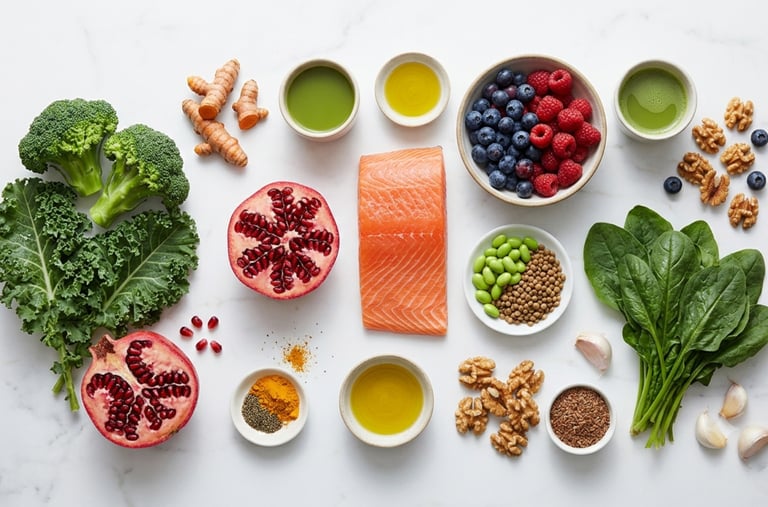
The most consistently evidenced dietary pattern in breast cancer risk research. Its key components — extra-virgin olive oil, vegetables, fruits, legumes, whole grains, nuts, fish — provide anti-inflammatory fatty acids, fibre, polyphenols, and antioxidants through multiple complementary mechanisms rather than a single compound.
The 2025 meta-analysis specifically excluded alcohol as a protective component when studying breast cancer outcomes — a meaningful methodological decision reflecting the clear evidence that alcohol increases breast cancer risk independently of other Mediterranean diet components.
Practical approach: Olive oil as the primary cooking fat, vegetables at the majority of each meal, oily fish 2–3 times weekly, legumes several times weekly, fruits daily, limited red meat and processed foods.
Plant-Rich, Whole Food Dietary Patterns
Vegetarian and plant-based dietary patterns also appear in the research as associated with lower breast cancer risk in several studies, likely through similar mechanisms — higher fibre, higher phytochemical content, lower saturated fat, and generally lower body weight compared to typical Western diets.
The Dietary Pattern to Move Away From
Western dietary patterns — high in processed and ultra-processed foods, red and processed meat, refined grains, added sugar, and saturated fat — are the pattern most consistently associated with higher breast cancer risk in large cohort studies. Reducing the dietary components that define this pattern is as important as adding the components of protective patterns.
15 Foods Worth Including
1. Extra-Virgin Olive Oil
The primary fat of the Mediterranean diet. Provides oleocanthal (anti-inflammatory, COX inhibition), oleic acid (influences gene expression related to cancer cell behaviour), and polyphenols with antioxidant activity. Research specifically on olive oil and breast cancer has shown associations independent of other Mediterranean diet components.
2. Cruciferous Vegetables (Broccoli, Cauliflower, Brussels Sprouts, Kale)
Provide glucosinolates that convert to indole-3-carbinol and sulforaphane — compounds studied for their influence on oestrogen metabolism and DNA repair mechanisms. Include several servings weekly, lightly cooked to preserve the relevant compounds.
3. Dark Leafy Greens (Spinach, Kale, Swiss Chard)
Provide folate — a B vitamin required for DNA synthesis and repair — alongside fibre, carotenoids, and vitamins C and E. Folate deficiency is associated with increased risk of DNA damage.
4. Berries (Blueberries, Strawberries, Raspberries)
Rich in anthocyanins and ellagic acid — polyphenols studied for their anti-proliferative properties in cancer cell research, alongside their broader antioxidant and anti-inflammatory activity.
5. Tomatoes (Cooked With Olive Oil)
Provide lycopene, a carotenoid with documented antioxidant properties studied in multiple cancer contexts. Cooking tomatoes with olive oil significantly increases lycopene bioavailability.
6. Oily Fish (Salmon, Mackerel, Sardines)
Provide EPA and DHA omega-3 fatty acids with anti-inflammatory activity, alongside vitamin D — both relevant to the mechanisms through which diet may influence breast cancer risk.
7. Legumes (Lentils, Chickpeas, Black Beans, Soybeans)
High in fibre (supporting oestrogen excretion and gut microbiome), plant protein, and phytoestrogens in soy specifically. The research on soy and breast cancer has evolved significantly — current evidence does not support the older concern that soy increases breast cancer risk and some studies suggest a modest protective association, particularly for Asian women and whole soy foods rather than supplements.
8. Walnuts and Flaxseeds
Provide ALA omega-3 and, in flaxseeds specifically, lignans — phytoestrogens studied for their potential role in oestrogen metabolism.
9. Whole Grains (Oats, Quinoa, Brown Rice)
Provide dietary fibre with documented roles in supporting oestrogen excretion and a more moderate blood glucose response compared to refined grains, relevant to the insulin/IGF-1 pathway.
10. Garlic and Onions (Allium Vegetables)
Provide organosulfur compounds and quercetin — compounds studied for anti-inflammatory and anti-proliferative properties in laboratory research.
11. Green Tea
Provides EGCG and other catechins with antioxidant and anti-proliferative properties studied in cancer research contexts, alongside general anti-inflammatory activity.
12. Pomegranate
Provides ellagitannins and urolithins with anti-inflammatory and anti-proliferative properties, including some laboratory research specifically relevant to oestrogen-receptor-positive breast cancer cells.
13. Turmeric (With Black Pepper)
Curcumin directly inhibits NF-kB — the master inflammatory transcription factor — and has been studied in laboratory and early clinical research for its anti-proliferative properties. Always paired with black pepper for meaningful absorption.
14. Mushrooms
Several varieties provide beta-glucans and other compounds studied for immune-modulating and anti-proliferative properties. Also among the few dietary sources of vitamin D when exposed to UV light.
15. Fermented Foods (Plain Kefir, Sauerkraut, Plain Yogurt)
Support gut microbiome diversity, which plays a role in oestrogen metabolism through the estrobolome — the collection of gut bacteria responsible for metabolising circulating oestrogens.
What to Limit — The Evidence Is Clearest Here
Alcohol: The most clearly established dietary risk factor for breast cancer. The relationship is dose-dependent — risk increases with each additional drink per day. The Breast Cancer Research Foundation explicitly removes alcohol from its breast cancer dietary guidance even when otherwise recommending Mediterranean diet components. Limiting alcohol is the single most evidence-based dietary change a woman can make for breast cancer risk reduction.
Processed and red meat: Consistently associated with higher breast cancer risk in large cohort studies, particularly processed meat. Limiting these and replacing with legumes, fish, or plant proteins is well-supported by the research.
Ultra-processed foods: Associated with higher breast cancer risk in several large cohort studies, including the NutriNet-Santé prospective cohort research. Their combination of refined carbohydrates, saturated fats, and additives creates multiple pathways of risk through inflammation, insulin signalling, and body weight.
Added sugar and refined carbohydrates: Drive the insulin and IGF-1 pathway associated with cancer cell proliferation, and contribute to excess body weight with its independent breast cancer risk implications.
Body Weight — The Factor Diet Influences That Independently Matters
Excess body fat, particularly visceral fat in postmenopausal women, is a well-established breast cancer risk factor. Adipose tissue produces oestrogen through the aromatase enzyme, creating a higher circulating oestrogen environment that promotes the growth of oestrogen-receptor-positive breast cancer cells. Adipose tissue also produces inflammatory cytokines that contribute to the pro-tumorigenic environment.
A diet that supports healthy body weight management therefore has an independent, additional pathway of influence on breast cancer risk — separate from the direct effects of specific dietary compounds. For postmenopausal women specifically, where both this mechanism and the overall dietary pattern effects appear strongest in the research, maintaining a healthy body weight through diet and exercise is among the most important breast cancer risk reduction strategies available.
What Diet Cannot Do
Diet cannot prevent breast cancer. Genetics, family history, hormonal factors (age at first period, age at menopause, number of pregnancies, breastfeeding history), and other non-dietary factors determine a significant portion of an individual's breast cancer risk in ways that no dietary pattern can fully offset.
Women with BRCA1 or BRCA2 gene mutations carry a substantially elevated lifetime breast cancer risk that cannot be meaningfully addressed through dietary change alone. For these women, medical management — including enhanced screening, risk-reducing medications, and in some cases preventive surgery — is the appropriate primary focus, with dietary optimisation as a supportive context, not a primary strategy.
Diet also cannot replace breast cancer screening. Regular mammograms and clinical breast exams, following the guidance of your doctor and national screening programmes, remain the most important tools for early detection — which is the most powerful factor in breast cancer outcomes.
Frequently Asked Questions
Is soy safe for women concerned about breast cancer?
The older concern that soy's phytoestrogens increase breast cancer risk has not been confirmed in the research. Current evidence — including large prospective studies — does not support avoiding soy and some studies suggest a modest protective association. The most consistent research suggests that whole soy foods (tofu, edamame, tempeh, miso) are safe and may be beneficial, while concentrated soy supplements are less well-studied and more cautious guidance is appropriate. Women with diagnosed breast cancer should discuss soy specifically with their oncologist.
What about dairy?
The evidence on dairy and breast cancer is genuinely mixed and research is ongoing. Some studies suggest potential concerns with high-fat dairy and hormone-sensitive cancers; others show neutral or protective associations, particularly for fermented dairy. Current guidance from major cancer research bodies does not specifically recommend avoiding dairy as part of breast cancer risk reduction, but advises limiting red meat and processed meat more clearly. Plain Greek yogurt and small amounts of cheese are included in the Mediterranean diet guidance studied in this context.
Should I take supplements?
For most women, a varied whole food diet is a more reliable and better-evidenced approach than supplementation. Some supplements have shown mixed or concerning results in cancer research — high-dose beta-carotene supplementation, for example, was associated with increased lung cancer risk in some trials. Vitamin D deficiency is associated with poorer outcomes in several cancers including breast cancer, and blood testing to identify and address deficiency (through food or supplementation) is reasonable to discuss with a doctor. Discuss any supplement plan with your healthcare provider.
How important is the overall pattern versus individual foods?
The research consistently shows that the overall dietary pattern is more meaningful than any individual food. The Mediterranean diet's breast cancer research benefits are attributed to the synergistic combination of its components — not to any single compound. Eating one "anti-cancer" food within an otherwise poor dietary pattern is unlikely to produce meaningful risk reduction. Consistently moving the overall dietary pattern toward whole, plant-rich, minimally processed foods and away from processed meat, ultra-processed food, and alcohol is where the evidence is strongest.
References and Further Reading
Karimi M et al. — Health Science Reports (April 2025) — Adherence to Mediterranean Diet and Breast Cancer Risk: A Meta-Analysis of Prospective Observational Studies Meta-analysis of 31 studies confirming a 13% overall breast cancer risk reduction associated with high Mediterranean diet adherence, with a 12% significant reduction in postmenopausal women.
PMC Systematic Review (February 2025) — Dietary Interventions for Breast Cancer Prevention: Exploring the Role of Nutrition in Primary and Tertiary Prevention Strategies Systematic review confirming multiple biological mechanisms through which diet influences breast cancer risk and the evidence base for Mediterranean and plant-rich dietary patterns.
ScienceDirect — CUP Global (October 2024) — Adulthood dietary and lifestyle patterns and risk of breast cancer Global Cancer Update Programme systematic literature review finding strong-probable evidence that adherence to WCRF/AICR dietary and lifestyle scores may reduce breast cancer risk.
Breast Cancer Research Foundation — Diet and Breast Cancer Risk Guidance from a leading breast cancer research organisation explicitly stating the alcohol-breast cancer risk relationship and recommending Mediterranean dietary patterns, excluding alcohol.
About the Author
I'm Judith, a wellness enthusiast and Applied Bio Sciences and Biotechnology graduate behind BiteBrightly. With a deep-rooted belief in the healing power of food, my nutrition journey began with a personal transformation — I improved my eyesight through targeted dietary changes. This life-changing experience sparked my mission to empower others by sharing evidence-based insights into food as medicine.
Follow me on Pinterest for daily health tips, recipes, and wellness inspiration.
Important Notice: This article is for educational purposes only and is not intended as medical advice. I am not a medical doctor, oncologist, or registered dietitian. Breast cancer is a serious medical condition with multiple causes — diet is one modifiable factor among many, and no dietary pattern has been proven to prevent breast cancer. Women with a family history of breast cancer, diagnosed breast cancer, or BRCA gene mutations should discuss their specific situation with their oncologist and a registered dietitian. Regular breast cancer screening following your doctor's guidance and national screening programme recommendations remains the most important tool for early detection. These statements have not been evaluated by the FDA.
Related posts
Connect
Join our newsletter for fresh health tips
© 2026. All rights reserved.