Summer Snack Recipes: Cooling Bites to Help Prevent Dehydration and Heat Fatigue
Cucumber is 96% water. Coconut water matches sweat electrolytes. Chia hydrogel hydrates better than plain water. 15 cooling summer snack recipes — full guide.
by BiteBrightly
5/17/202621 min read
Summer Snack Recipes: Cooling Bites to Help Prevent Dehydration and Heat Fatigue
By BiteBrightly 17 May 2026: This post might contain affiliate links.
There is a particular kind of tiredness that comes with summer heat — not the pleasant sleepiness of a warm afternoon, but the heavy, foggy, slightly headache-y exhaustion that tells you your body is working hard just to stay cool. Heat fatigue is one of the most common warm-weather complaints, and it is almost entirely preventable with the right approach to eating and hydrating through the day.
What most people do not realise is that what you eat in summer matters as much as how much you drink. Many foods are themselves between 90–96% water — delivering fluids, electrolytes, and cooling compounds directly to your cells in a form your body absorbs more efficiently than plain water alone. And certain compounds in summer foods — menthol in mint, cucurbitacins in cucumber, lycopene in watermelon — actively support your body's thermoregulation mechanisms, helping you stay cooler and more comfortable when the temperature climbs.
This guide gives you 15 cooling summer snack recipes specifically designed to prevent dehydration and heat fatigue — built around the most hydrating, most electrolyte-rich, most thermoregulation-supporting foods available.
Key Takeaways
Dehydration begins affecting cognitive function, physical performance, and mood at just 1–2% body water loss — which can happen within a few hours in summer heat without adequate fluid intake. Thirst is a late indicator — by the time you feel thirsty, you are already mildly dehydrated
Food accounts for approximately 20–30% of total daily fluid intake for most people — eating water-rich foods in summer meaningfully contributes to overall hydration alongside drinking
Electrolytes — particularly sodium, potassium, and magnesium — are as important as water for preventing heat fatigue. Plain water without electrolyte replacement can actually worsen the electrolyte imbalance caused by heavy sweating
Research published in the European Journal of Clinical Nutrition found that foods with high water content (particularly fruits and vegetables) produced greater hydration status improvement than equivalent amounts of plain water — because the water in food is released slowly alongside the food matrix, improving cellular absorption
Cucumber is 96% water by weight — the highest water content of any commonly eaten solid food. Watermelon is 92%. Strawberries are 91%. These are not just delicious summer foods — they are genuinely therapeutic for hydration
Potassium is the primary intracellular electrolyte lost through sweat — foods rich in potassium (avocado, banana, coconut water, cucumber, watermelon) directly replace what sweating depletes and help maintain the fluid balance that prevents muscle cramping and heat fatigue
The Science of Summer Hydration
Why Heat Fatigue Happens
When your body temperature rises — from hot weather, physical activity, or both — your hypothalamus triggers sweating. Sweat evaporating from your skin surface is your body's primary cooling mechanism. The problem is that sweat contains not just water but electrolytes: sodium (the primary electrolyte in sweat, approximately 23–40 mmol/L), potassium, chloride, and small amounts of magnesium and calcium.
When sweat loss is significant and replaced only with plain water, something counterintuitive happens: the electrolyte concentration in your blood actually falls (a condition called hyponatraemia in its severe form), because you are replacing the water component of sweat without replacing the electrolyte component. Your body responds by increasing urine output to bring electrolyte concentrations back toward normal — which means you excrete the very water you just drank without adequately rehydrating.
This is why athletes, outdoor workers, and anyone sweating heavily in summer heat need electrolyte replacement alongside fluid replacement — and why the cooling snacks in this guide are specifically chosen for their electrolyte content alongside their water content.
Why Food Hydrates Better Than Water Alone
The water in food is held within a matrix of fibre, starches, proteins, and cell structures that slow its release as it moves through your digestive system. This gradual release means the water from food is absorbed more efficiently across the intestinal wall than plain water drunk quickly — which moves through the gut fast enough that some passes through without full absorption.
This is why a snack of cucumber slices and watermelon cubes, combined with adequate drinking throughout the day, produces better hydration than drinking an extra glass of water at the same time.
The 15 Best Cooling Summer Snack Recipes
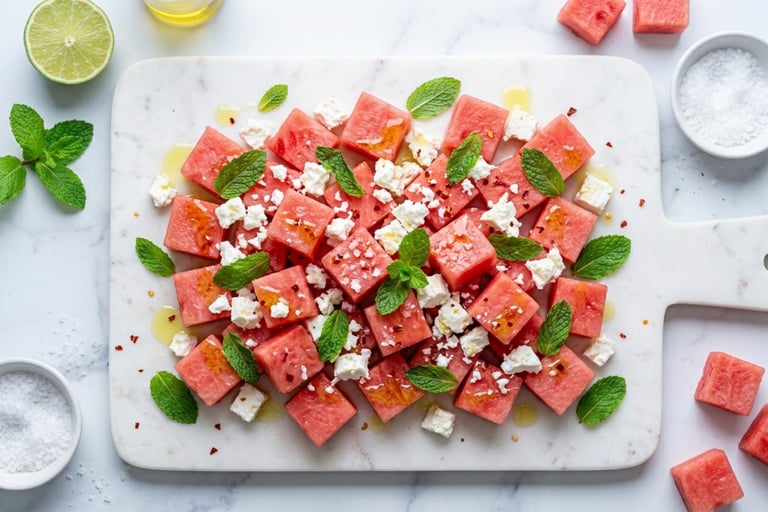
Recipe 1: Watermelon and Feta Bites With Mint
This is the most hydrating solid snack in the guide — combining watermelon's 92% water content with the cooling menthol of fresh mint and the sodium electrolyte of feta cheese, in a format that is visually beautiful, takes five minutes to prepare, and tastes like summer itself.
Why it prevents dehydration and heat fatigue: Watermelon provides 92% water content alongside lycopene (which has anti-inflammatory activity that reduces the cellular stress of heat exposure), citrulline (an amino acid that improves blood flow and circulation), and potassium (112mg per cup — replacing the primary electrolyte lost in sweat). The feta provides sodium — the electrolyte lost in the highest concentration in sweat — which is essential for maintaining fluid balance. Mint menthol activates TRPM8 cold-sensing receptors in the mouth and throat, creating a genuine cooling sensation that helps reduce subjective perception of heat.
Ingredients (serves 2):
3 cups watermelon, cut into 3cm cubes
80g feta cheese, crumbled or cut into small cubes
A generous handful of fresh mint leaves
1 tablespoon extra-virgin olive oil
Juice of ½ lime
Pinch of flaky sea salt
Optional: ¼ teaspoon chilli flakes (capsaicin initially creates heat but triggers thermoreceptors that ultimately lower skin temperature)
How to make it:
Cut watermelon into even cubes — remove seeds if preferred
Arrange on a wide flat plate or board
Scatter feta generously over the watermelon
Tear mint leaves by hand and scatter — tearing releases more volatile menthol oils than chopping
Drizzle with olive oil and squeeze lime juice over
Add flaky salt and chilli flakes if using
Serve immediately — this salad softens and releases juice if left to stand
Nutrition per serving: Approximately 180 calories | 6g protein | 2g fibre | 10g healthy fat | Hydration contribution: excellent
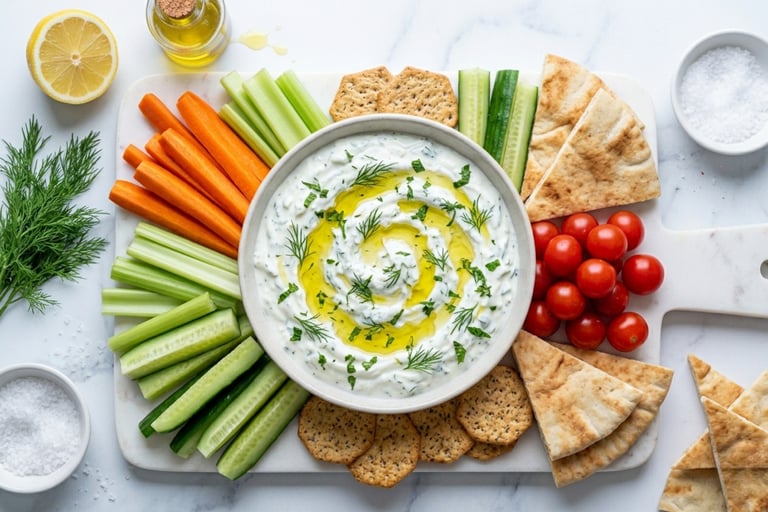
Recipe 2: Cucumber and Greek Yogurt Dip (Tzatziki) With Vegetable Sticks
Tzatziki is one of the most ancient and most effective cooling foods in the world — it originated in the hot Mediterranean and Middle East precisely because cucumber, yogurt, and mint together create one of the most powerful natural cooling combinations available.
Why it prevents dehydration and heat fatigue: Cucumber provides 96% water content alongside silica (which supports skin hydration and elasticity — important when heat accelerates skin water loss) and the cucurbitacins that give cucumber its mild bitter note and have anti-inflammatory activity. Greek yogurt provides protein for sustained energy alongside probiotics that support gut health — the gut microbiome is particularly vulnerable in summer heat, and fermented foods help maintain the gut barrier that can be compromised by heat stress. The salt in tzatziki provides sodium for electrolyte replacement.
Ingredients (serves 4):
1 medium cucumber, grated
2 cups plain full-fat Greek yogurt
2 garlic cloves, minced (or 1 for milder flavour)
2 tablespoons fresh dill, finely chopped
1 tablespoon fresh mint, finely chopped
2 tablespoons extra-virgin olive oil
1 tablespoon lemon juice
½ teaspoon sea salt
For dipping:
2 medium carrots, cut into sticks
2 celery stalks, cut into sticks
1 medium cucumber, cut into sticks
1 cup cherry tomatoes
A few whole grain crackers or pitta triangles
How to make it:
Grate the cucumber using a box grater, then place in a clean tea towel and squeeze firmly over the sink — removing as much water as possible is the most important step; un-drained cucumber makes the tzatziki watery within minutes
In a bowl, combine Greek yogurt, garlic, dill, mint, olive oil, and lemon juice
Stir in the well-drained grated cucumber
Season with sea salt — taste and adjust; tzatziki should be well-seasoned to be properly flavourful
Refrigerate for at least 20 minutes before serving — it improves significantly as the flavours meld
Serve in a wide bowl surrounded by the vegetable sticks and crackers
Make ahead: Tzatziki keeps for 3 days in the fridge and gets better on day two. Make a large batch at the beginning of the week.
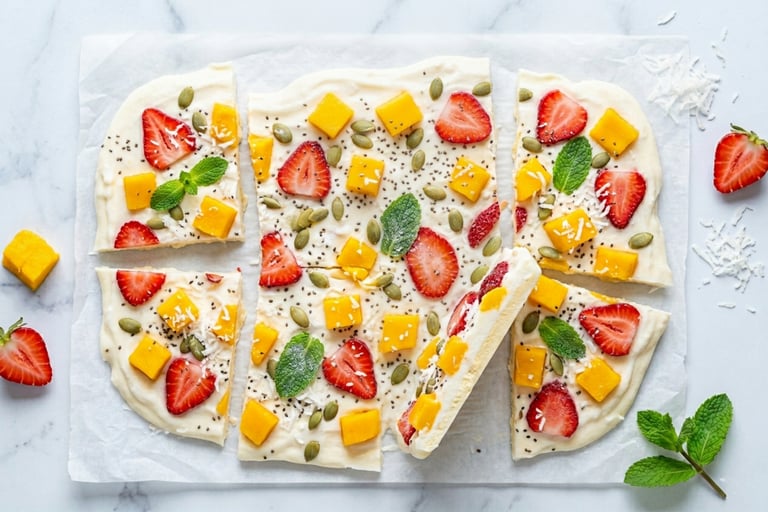
Recipe 3: Frozen Mango and Coconut Yogurt Bark
This frozen bark is one of the most satisfying hot-weather snacks available — cooling on contact, naturally sweet, and genuinely effective at replacing the electrolytes lost through summer sweating.
Why it prevents dehydration and heat fatigue: Coconut yogurt (or plain Greek yogurt) provides probiotics alongside protein for sustained energy. Mango provides mangiferin — an anti-inflammatory xanthone — alongside vitamin C (60mg per cup — important for collagen synthesis in the skin that is stressed by sun exposure), vitamin A, and natural sugars for quick energy replenishment. The coconut in coconut-based toppings provides MCT fats and natural electrolytes (potassium, magnesium, sodium) that directly support fluid balance.
Ingredients (serves 6 portions):
500g plain Greek yogurt or coconut yogurt
2 tablespoons raw honey or maple syrup
1 teaspoon vanilla extract
1 cup fresh or frozen mango, diced
½ cup fresh strawberries, sliced
2 tablespoons shredded coconut (unsweetened)
1 tablespoon chia seeds
1 tablespoon pumpkin seeds
A few fresh mint leaves
How to make it:
Line a large baking tray (approximately 30×40cm) with baking paper, leaving some overhang for easy lifting
Mix Greek yogurt with honey and vanilla until well combined
Spread the yogurt mixture evenly on the lined tray to approximately 1cm thickness — use the back of a spoon or an offset spatula for the smoothest result
Scatter mango pieces and sliced strawberries across the surface
Sprinkle shredded coconut, chia seeds, and pumpkin seeds over everything
Tuck a few mint leaves in at the surface (they freeze beautifully and add a menthol cooling hit when eaten)
Freeze for minimum 3 hours — overnight is better for a cleaner break
Remove from the freezer, lift using the baking paper, and break into irregular pieces
Store in a sealed container in the freezer for up to 2 weeks
Serving tip: Remove from the freezer 2–3 minutes before eating for the most satisfying texture — slightly softened from completely frozen is the ideal eating state.
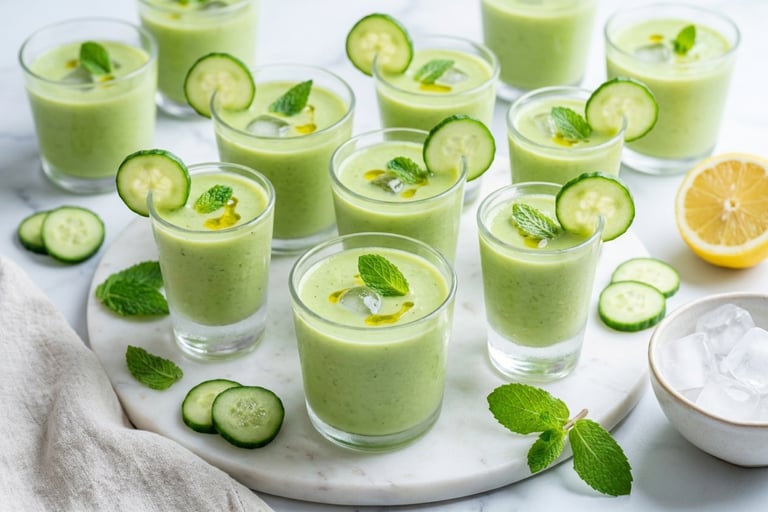
Recipe 4: Cucumber, Avocado, and Mint Gazpacho Cups
These small cold soup cups are served in shot glasses or small glasses — the ideal elegant summer snack for warm gatherings that provides potent hydration and cooling in a beautiful, no-cook format.
Why it prevents dehydration and heat fatigue: This snack combines the three most hydrating vegetables — cucumber (96% water), celery (95% water), and green pepper (94% water) — with avocado's OEA satiety signalling and 975mg of potassium per fruit (replacing sweat-depleted potassium more effectively than almost any other food). The mint provides menthol cooling and the lemon provides vitamin C alongside citric acid that supports the absorption of minerals from the vegetables.
Ingredients (serves 4 — makes approximately 8 small cups):
2 large cucumbers (approximately 500g), roughly chopped (leave skin on for maximum hydration and silica)
1 ripe avocado
1 cup cold water or coconut water
Juice of 1 large lemon
1 tablespoon fresh mint leaves
1 small green pepper, roughly chopped
1 celery stalk
1 small garlic clove
1 tablespoon extra-virgin olive oil
½ teaspoon sea salt
¼ teaspoon black pepper
Ice cubes for serving
How to make it:
Add all ingredients to a blender — cucumber first (with skin), then avocado flesh, water, lemon juice, mint, pepper, celery, garlic, olive oil, salt, and pepper
Blend on high for 60 seconds until completely smooth
Taste — adjust lemon, salt, and mint to your preference
Refrigerate for at least 30 minutes — the cold temperature is part of the cooling effect of this snack
Pour into shot glasses or small cups and add a single ice cube to each
Garnish with a thin cucumber round, a mint leaf, and a tiny drizzle of olive oil
Serve immediately from the fridge
Storage: This gazpacho keeps for up to 24 hours refrigerated. Stir before serving as it may separate slightly.
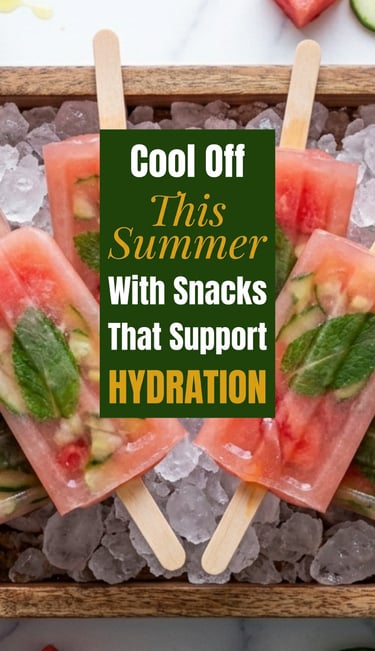
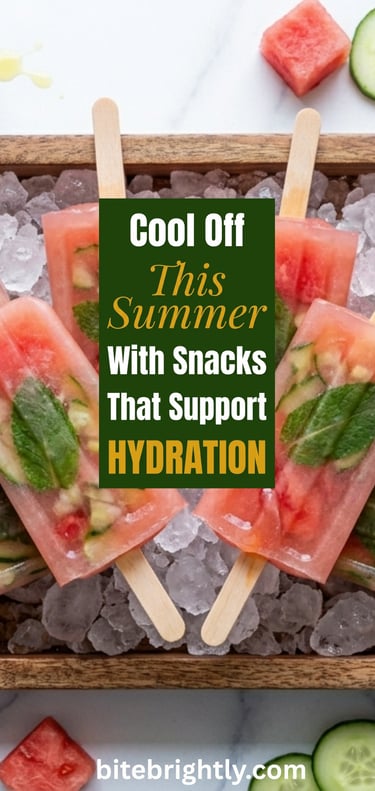
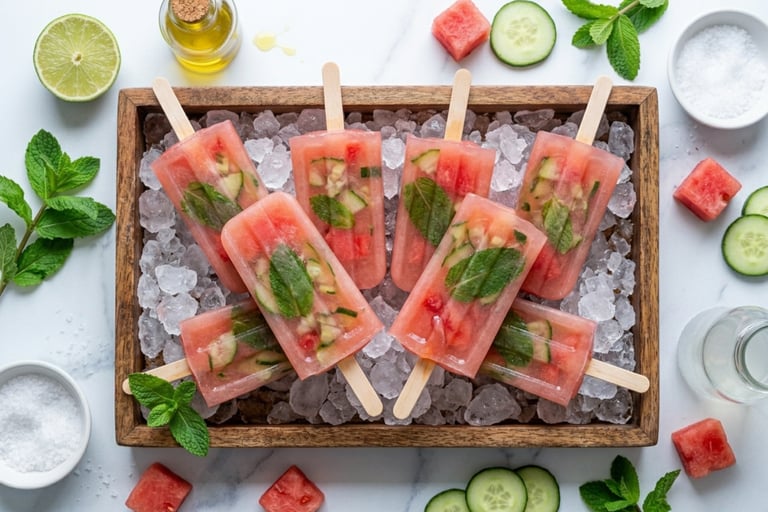
Recipe 5: Watermelon, Cucumber, and Coconut Water Ice Lollies
Ice lollies are the most satisfying and most effective hot-weather hydration format for children and adults alike — frozen water plus electrolytes delivered in a form that melts slowly in the mouth, delivering hydration gradually rather than all at once.
Why it prevents dehydration and heat fatigue: Coconut water provides the most complete natural electrolyte profile of any beverage — approximately 600mg of potassium, 252mg of sodium, 60mg of magnesium, and 58mg of calcium per cup. These closely match the electrolyte composition of human sweat, making coconut water one of the most effective natural oral rehydration solutions available. Watermelon provides additional potassium and lycopene, and the slow melting of the ice lolly format ensures gradual, sustained electrolyte delivery over 10–15 minutes rather than the rapid gulp of a drink.
Ingredients (makes 8 lollies):
2 cups watermelon flesh, seeds removed
1 cup coconut water (100% pure, no added sugar)
½ medium cucumber, roughly chopped
Juice of 1 lime
1 tablespoon honey (optional)
Pinch of sea salt (enhances electrolyte balance)
Fresh mint leaves to place inside moulds
How to make them:
Blend watermelon, coconut water, cucumber, and lime juice until completely smooth — approximately 45 seconds on high
Add honey if using and pinch of salt — blend for 10 seconds more
Taste — it should be bright and lightly sweet; adjust lime and honey as needed
Place 2–3 fresh mint leaves inside each ice lolly mould
Pour the liquid mixture into the moulds, leaving a small gap at the top for expansion during freezing
Insert sticks and freeze for minimum 4 hours, ideally overnight
To release: hold under warm running water for 10–15 seconds
Variation: Add ½ cup of fresh or frozen strawberries for a deeper colour and additional vitamin C. Replace some of the watermelon with mango for a tropical version.
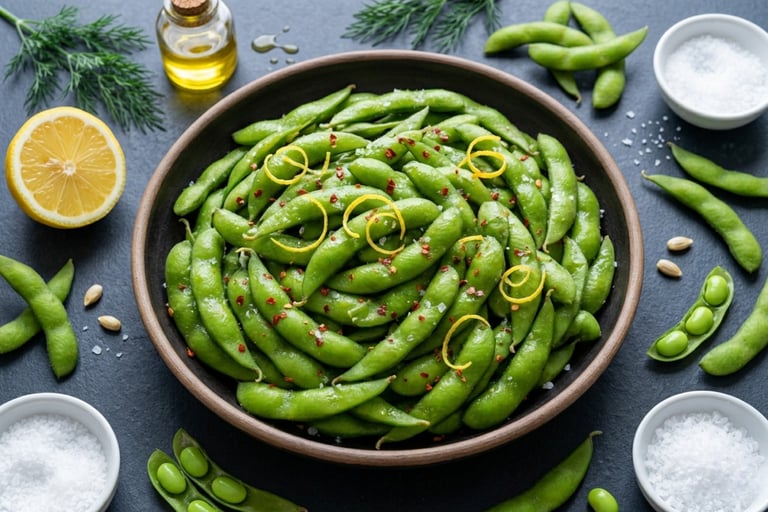
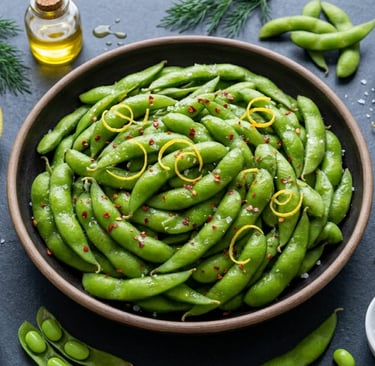
Recipe 6: Chilled Edamame With Lemon and Flaky Salt
Cold edamame is one of the most protein-rich, most hydrating, and most satisfying summer snacks available — providing 17g of complete protein per cup alongside 74% water content, alongside magnesium and potassium for electrolyte replacement.
Why it prevents dehydration and heat fatigue: Edamame provides potassium (676mg per cup) for electrolyte replacement alongside magnesium (99mg per cup) — both critical for preventing the muscle cramping associated with heavy sweating. The protein (17g per cup) provides sustained energy that prevents the blood sugar fluctuations that worsen heat fatigue. The lemon juice provides vitamin C for skin collagen support under sun exposure, and the sea salt directly replaces the sodium lost in sweat.
Ingredients (serves 2):
2 cups frozen edamame in pods
Juice of 1 lemon
1 teaspoon flaky sea salt
½ teaspoon lemon zest
Optional: ¼ teaspoon chilli flakes
Optional: 1 teaspoon sesame oil
How to make it:
Bring a pot of water to the boil and add the frozen edamame
Cook for 3–4 minutes until bright green and heated through
Drain and immediately transfer to a bowl of ice water — this stops the cooking and chills the edamame quickly, giving them the most vibrant colour and crisp texture
After 5 minutes in the ice water, drain thoroughly and pat dry
Toss with lemon juice, flaky salt, lemon zest, and chilli flakes and sesame oil if using
Refrigerate for 20–30 minutes — serve cold
Eat by squeezing the beans out of the pod with your teeth — the pod is not eaten
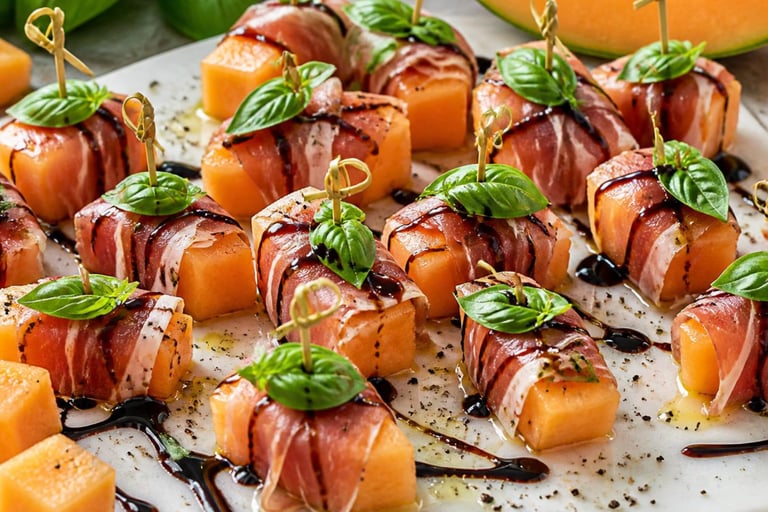
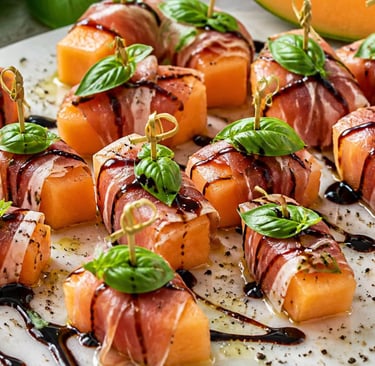
Recipe 7: Cantaloupe and Prosciutto Bites
This classic Italian combination is one of the most elegant, most hydrating summer snacks available — cantaloupe melon's 90% water content and rich potassium alongside the sodium of prosciutto create a natural electrolyte balance in a format that requires no cooking and takes two minutes to prepare.
Why it prevents dehydration and heat fatigue: Cantaloupe is one of the most nutrient-dense melons — providing 90% water content, significant beta-carotene (one of the highest of any fruit), vitamin C, and potassium (427mg per cup). The beta-carotene from cantaloupe specifically supports skin health under sun exposure — it is deposited in skin cells where it acts as an internal photoprotective compound. Prosciutto provides concentrated sodium for electrolyte replacement alongside protein for sustained energy.
Ingredients (serves 2):
½ cantaloupe melon, seeds removed
6 thin slices prosciutto
Fresh basil leaves
1 tablespoon extra-virgin olive oil
Black pepper
Optional: a drizzle of good quality balsamic glaze
How to make it:
Cut the cantaloupe into long wedges or 3cm cubes
Tear or fold each prosciutto slice and wrap around or drape over each piece of melon
Secure with a small toothpick if serving as finger food
Place a fresh basil leaf on each piece
Arrange on a plate or board and drizzle with olive oil
Season with black pepper and balsamic glaze if using
Recipe 8: Strawberry and Basil Coconut Water Slushie
This five-ingredient slushie is the most effective rapid rehydration snack in the guide — delivering coconut water electrolytes in a frozen, slushie format that cools the body from the inside immediately on consumption.
Why it prevents dehydration and heat fatigue: Cold beverages and foods lower core body temperature more quickly than room-temperature drinks, as the body must expend energy warming them — research has confirmed that pre-cooling with cold drinks reduces heat stress markers and extends endurance in heat. Coconut water provides the comprehensive electrolyte profile for rehydration. Strawberries are 91% water alongside vitamin C and anthocyanins that reduce the systemic inflammation triggered by heat stress. Basil provides rosmarinic acid, a cooling aromatic compound similar to mint's menthol in its sensory cooling effect.
Ingredients (serves 2):
1 cup frozen strawberries
250ml coconut water (chilled)
6–8 fresh basil leaves
Juice of ½ lemon
1 teaspoon honey (optional)
1 cup ice
How to make it:
Add all ingredients to a high-powered blender — frozen strawberries first
Blend on high for 30–45 seconds until smooth and slushie-consistency
Taste — add more lemon for brightness or honey for sweetness
Pour immediately into chilled glasses and serve straight away — this slushie melts quickly
Make it thicker: Reduce the coconut water to 150ml and increase the frozen strawberries to 1.5 cups for a thicker slushie that holds its texture longer.
Recipe 9: Overnight Oats With Chia, Berries, and Coconut Milk
Overnight oats served cold are a complete summer breakfast-snack — providing beta-glucan fibre for sustained energy, chia seed omega-3 for anti-inflammatory protection, and coconut milk's electrolytes for hydration.
Why it prevents dehydration and heat fatigue: Beta-glucan from oats forms a gel that slows glucose absorption, preventing the blood sugar spike-and-crash that worsens heat fatigue by leaving you feeling depleted and lethargic on top of the heat stress. Chia seeds form a hydrogel when soaked in liquid — each seed absorbs approximately 10 times its weight in water — and this hydrogel is released slowly in the digestive system, providing extended cellular hydration beyond what drinking the same amount of liquid would achieve. Mixed berries provide anthocyanins that reduce the oxidative stress and inflammation triggered by UV exposure and heat.
Ingredients (serves 1):
½ cup rolled oats
200ml coconut milk (light or full-fat)
1 tablespoon chia seeds
½ teaspoon vanilla extract
1 teaspoon honey or maple syrup
½ cup mixed berries (frozen and defrosted work well)
1 tablespoon shredded coconut
A few fresh mint leaves
How to make it:
Combine oats, coconut milk, chia seeds, vanilla, and honey in a jar or sealed container
Stir well — stir again after 10 minutes to prevent chia seeds from clumping at the bottom
Refrigerate overnight or for minimum 4 hours
In the morning: check consistency — if too thick, add a splash more coconut milk and stir
Top with berries, shredded coconut, and fresh mint
Eat cold, directly from the jar
Batch prep: Make 4–5 jars at once on Sunday — they keep for 4 days refrigerated and are ready to grab immediately, requiring no morning preparation.
Recipe 10: Spiced Mango Lassi
Lassi is one of the oldest and most effective cooling drinks in South Asian culinary tradition — yogurt-based, lightly spiced, and deeply cooling through the combination of dairy fat, cardamom's volatile aromatic cooling compounds, and mango's rich fluid content.
Why it prevents dehydration and heat fatigue: The yogurt base provides probiotics for gut health alongside protein for energy, calcium, and the natural cooling sensation of cold dairy. Mango provides 83% water content alongside vitamin C, mangiferin (anti-inflammatory), and natural sugars for immediate energy replenishment when heat fatigue causes energy depletion. Cardamom contains cineole — an aromatic compound with genuine cooling and anti-inflammatory properties in the gut, traditionally used across Ayurvedic medicine specifically for its cooling effect in hot weather. Rose water (optional but traditional) provides additional aromatic cooling compounds.
Ingredients (serves 2):
1 cup fresh or frozen mango chunks
1 cup plain full-fat yogurt
150ml cold water or ice
1 tablespoon honey (optional — ripe mango may not need it)
¼ teaspoon ground cardamom
Pinch of sea salt
Optional: 1 teaspoon rose water
Crushed ice for serving
How to make it:
Add mango, yogurt, cold water, honey, cardamom, and salt to a blender
Blend on high for 45–60 seconds until smooth and frothy
Add rose water if using and blend for 5 seconds
Taste — adjust sweetness with honey, flavour with cardamom
Pour over crushed ice in tall glasses
Serve immediately — lassi is best when extremely cold
Recipe 11: Avocado and Lime Cucumber Rounds
These elegant cucumber rounds topped with avocado are a quick, no-cook snack that combines the two most potassium-rich common foods — avocado and cucumber — for a genuinely effective electrolyte-replacement bite.
Why it prevents dehydration and heat fatigue: Avocado provides 975mg of potassium per fruit — more than any other commonly eaten food except banana — alongside 10g of fibre and oleic acid that activates OEA satiety and anti-inflammatory signalling. The combination of avocado potassium and cucumber's 96% water content creates a dual electrolyte-and-fluid replacement snack in one of the most minimal calorie packages available.
Ingredients (serves 2):
1 large cucumber, cut into 1cm rounds
1 ripe avocado
Juice of 1 lime
½ teaspoon sea salt
¼ teaspoon chilli flakes or everything bagel seasoning
Fresh coriander leaves
Optional: a few sesame seeds
How to make it:
Cut cucumber into thick, even rounds — thicker than you think (about 1–1.5cm) so they can support the topping without collapsing
Mash avocado with lime juice and salt until smooth but with some texture — do not over-mash; a little texture makes each bite more interesting
Use a small spoon or piping bag to place a neat mound of avocado on each cucumber round
Top with chilli flakes or everything bagel seasoning
Add a fresh coriander leaf and a few sesame seeds if using
Serve immediately
Recipe 12: Homemade Electrolyte Coconut Water Gummies
These homemade gummies are a genuinely effective and genuinely fun electrolyte snack — particularly brilliant for children who resist drinking enough water in summer heat. Each gummy delivers a meaningful dose of coconut water electrolytes in a form that is irresistibly appealing.
Why it prevents dehydration and heat fatigue: Pure coconut water provides the most complete natural electrolyte profile available — potassium (600mg per cup), sodium, magnesium, and calcium. Strawberry and lemon add vitamin C alongside additional hydration and natural fruit sugars. The gelatin used to set these gummies is itself a source of collagen-supporting amino acids (glycine and proline) that support skin hydration and integrity under summer sun exposure.
Ingredients (makes approximately 40 small gummies):
300ml pure coconut water (100% — no sugar added)
150ml strawberry juice or blended fresh strawberries (strained)
Juice of 1 lemon
3 tablespoons unflavoured gelatin powder (or 3 tablespoons agar agar for a vegan version)
1 tablespoon honey
Pinch of sea salt
How to make them:
Pour coconut water into a small saucepan and sprinkle gelatin evenly over the surface — let it sit for 2 minutes to bloom (absorb the liquid and soften)
Heat over very low heat, stirring gently, until gelatin is completely dissolved — do not boil, as high heat can break down gelatin and produce a cloudy result
Remove from heat and stir in strawberry juice, lemon juice, honey, and sea salt
Pour into silicone gummy moulds or into a small flat dish lined with baking paper
Refrigerate for minimum 2 hours until completely set
If using a flat dish, cut into small squares once set
Store refrigerated for up to 5 days
Recipe 13: Chilled Green Gazpacho With Apple and Mint
A chilled green gazpacho made with cucumber, green apple, celery, and mint is one of the most cooling and most hydrating savoury snacks available — providing multiple sources of high-water-content vegetables in a cold, refreshing, genuinely satisfying small serving.
Why it prevents dehydration and heat fatigue: This recipe combines four of the highest-water-content vegetables and fruits — cucumber (96%), celery (95%), green apple (84%), and green pepper (94%) — with coconut water for electrolyte enhancement. The mint provides menthol cooling through TRPM8 activation. Green apple pectin acts as a prebiotic that supports the gut microbiome under the stress of summer heat. The coconut water base replaces electrolytes while the vegetable matrix slows absorption for sustained hydration.
Ingredients (serves 4):
1 large cucumber, roughly chopped (with skin)
2 celery stalks, roughly chopped
1 green apple, cored and roughly chopped (with skin)
½ green pepper, roughly chopped
1 cup coconut water
2 tablespoons fresh mint leaves
1 tablespoon fresh parsley
Juice of 1 lime
1 tablespoon olive oil
1 small garlic clove
½ teaspoon sea salt
Ice to serve
How to make it:
Add all ingredients to a blender — coconut water first as the liquid base
Blend on high for 60–90 seconds until completely smooth
Taste and adjust — more lime for brightness, more mint for cooling, more salt for flavour
Refrigerate for at least 30 minutes until very cold
Serve in small glasses over ice, garnished with a thin cucumber round and a mint leaf
Recipe 14: Frozen Banana and Berry Protein Bites
These small frozen bites combine banana's potassium with berry anthocyanins and Greek yogurt protein in a frozen format that is genuinely cooling, genuinely satisfying, and takes under ten minutes to prepare.
Why it prevents dehydration and heat fatigue: Banana provides 422mg of potassium per medium banana — the most widely accessible high-potassium food — alongside natural sugars for quick energy and B6 for the serotonin production that supports mood stability during heat stress. Mixed berries provide anthocyanins that reduce the oxidative stress triggered by UV and heat exposure. Greek yogurt provides protein and probiotics alongside calcium for electrolyte balance.
Ingredients (makes approximately 20 bites):
2 ripe bananas
1 cup mixed berries (blueberries, raspberries — fresh or frozen)
½ cup plain Greek yogurt
1 tablespoon honey
Optional: 2 tablespoons dark chocolate chips (70%+ cacao) for additional magnesium
How to make them:
Mash bananas until smooth in a large bowl
Stir in Greek yogurt and honey until fully combined
Fold in the mixed berries gently — you want some berries to remain whole for texture and colour
Add dark chocolate chips if using
Use a tablespoon to drop rounded spoonfuls onto a baking tray lined with baking paper
Freeze for minimum 2 hours until completely solid
Transfer to a sealed container and store in the freezer for up to 2 weeks
Remove from the freezer 2–3 minutes before eating for ideal texture
Recipe 15: Mint and Lemon Chia Fresca
Chia fresca — water infused with chia seeds, lemon, and mint — is the simplest, fastest, and most effective hydration-enhancing drink snack in the guide. Within 10 minutes of stirring, the chia seeds form a hydrogel that transforms the water into a lightly thickened, genuinely refreshing drink that hydrates more effectively than plain water.
Why it prevents dehydration and heat fatigue: The chia hydrogel surrounds each seed with a layer of water that is released gradually in the digestive system — providing sustained cellular hydration that studies have shown outlasts the hydrating effect of drinking the same amount of plain water. Lemon provides vitamin C and electrolytes. Mint menthol activates TRPM8 cold receptors for genuine cooling. The small amount of honey provides glucose for quick energy when heat fatigue causes exhaustion. This is genuinely one of the most effective and most underused summer hydration tools available.
Ingredients (serves 1):
350ml cold water or coconut water
1 tablespoon chia seeds
Juice of ½ lemon
4–5 fresh mint leaves, torn
1 teaspoon honey
Pinch of sea salt
Ice cubes
How to make it:
Add chia seeds to your glass or water bottle
Add lemon juice, mint leaves, honey, and sea salt
Pour cold water or coconut water over everything
Stir vigorously for 30 seconds — chia seeds will try to clump; aggressive stirring prevents this
Let stand for 10 minutes, stirring once more after 5 minutes
Add ice cubes and drink immediately or within 30 minutes for the best texture
The drink will thicken slightly as the chia seeds gel — this is correct and provides the hydrogel hydration effect
Practical Summer Hydration Tips
The Signs of Heat Fatigue to Watch For
Heat fatigue typically develops gradually and its early signs are easy to dismiss as simply "feeling hot." Watch for: persistent headache that does not resolve when you move to shade, heavy limb fatigue disproportionate to your activity level, difficulty concentrating or making decisions, irritability beyond what the situation warrants, dark yellow urine (healthy hydration produces pale yellow urine), muscle cramping — particularly in the legs and feet, and feeling hot to the touch even after resting in shade.
Electrolytes Matter as Much as Water
If you are sweating significantly — through outdoor work, exercise, or simply being in prolonged heat — plain water replacement without electrolyte replacement can worsen your hydration status. Ensure your summer hydration includes regular potassium-rich foods (avocado, banana, watermelon, coconut water), adequate sodium from food salt and naturally salty foods, and magnesium from leafy greens, pumpkin seeds, and dark chocolate.
The Cooling Power of Cold Food
Research has confirmed that consuming cold food and drink lowers core body temperature more rapidly than simply resting in shade at room temperature. Making your summer snacks genuinely cold — refrigerated, frozen, or served over ice — adds a meaningful thermoregulatory benefit beyond the nutritional content. Several of the recipes in this guide are specifically designed to be eaten frozen or very cold for this reason.
Frequently Asked Questions
How much water do I actually need in summer heat?
General recommendations of 8 glasses (approximately 2 litres) per day are a starting point, but summer requirements are significantly higher — particularly with physical activity or prolonged outdoor exposure. A practical rule: drink enough that your urine is pale yellow to almost clear throughout the day. Dark yellow urine indicates dehydration; completely clear urine for extended periods indicates you may be overhydrating (which can dilute electrolytes). Eat water-rich foods alongside drinking — the recipes in this guide contribute meaningful fluid intake alongside their solid nutrition.
Are sports drinks better than coconut water for electrolyte replacement?
For moderate summer activity and general heat fatigue prevention, coconut water provides a more complete natural electrolyte profile than most commercial sports drinks — significantly more potassium, with less added sugar and no artificial flavourings or colourings. For very intense, prolonged exercise in extreme heat (marathon running, heavy manual labour for many hours in high heat), commercial sports drinks formulated specifically for high-output electrolyte replacement may be more appropriate. For everyday summer heat management, the natural foods and drinks in this guide are entirely adequate.
Can children use all of these recipes?
All 15 recipes are safe and appropriate for children, with some simple adaptations: omit chilli flakes and raw garlic from any recipe where these are present, and ensure any honey used is raw honey given to children over 12 months of age only (honey should not be given to babies under 12 months due to the risk of infant botulism). The gummies (Recipe 12), the frozen banana bites (Recipe 14), the ice lollies (Recipe 5), and the frozen bark (Recipe 3) are particularly popular with children.
References and Further Reading
Maughan RJ et al. — American Journal of Clinical Nutrition (2016) — A randomized trial to assess the potential of different beverages to affect hydration status: development of a beverage hydration index Landmark research establishing the relative hydration index of different beverages — confirming that milk, oral rehydration solutions, and beverages with electrolytes provide superior hydration status improvement compared to plain water, and supporting the inclusion of electrolyte-rich foods alongside plain fluid intake.
Shirreffs SM — European Journal of Clinical Nutrition (2003) — Markers of hydration status Comprehensive review of hydration assessment methods — confirming that urine colour and osmolality are reliable practical markers of hydration status, and establishing the evidence base for monitoring hydration in summer heat.
Goulet EDB — Journal of Physiology (2012) — Effect of exercise-induced dehydration on time-trial exercise performance: a meta-analysis Meta-analysis confirming that even modest dehydration (1–2% body weight) significantly impairs physical and cognitive performance — establishing the clinical basis for proactive summer hydration strategies.
Standage M and Duda JL — International Journal of Sport and Exercise Psychology (2019) — Hydration and cognitive function: a systematic review Systematic review confirming that mild dehydration impairs cognitive function — attention, working memory, and executive function — at levels achievable in summer heat without significant physical activity.
About the Author
I'm Judith, a wellness enthusiast and Applied Bio Sciences and Biotechnology graduate behind BiteBrightly. With a deep-rooted belief in the healing power of food, my nutrition journey began with a personal transformation — I improved my eyesight through targeted dietary changes. This life-changing experience sparked my mission to empower others by sharing evidence-based insights into food as medicine.
Drawing on my scientific background, personal experience, and ongoing research into nutrition and health, I focus on breaking down complex health topics into clear, practical, and actionable guidance. My approach combines scientific credibility with real-world application, making evidence-based nutrition accessible to everyone.
Follow me on Pinterest for daily health tips, recipes, and wellness inspiration.
Important Notice: The information in this article is for educational purposes only and is not intended as medical advice. Heat-related illness — including heat exhaustion and heatstroke — is a serious medical emergency. If you or someone with you is experiencing high body temperature (above 39°C / 102°F), confusion, loss of consciousness, cessation of sweating despite extreme heat, or any signs of severe heat illness, seek emergency medical attention immediately. The snacks and strategies in this guide are for general summer wellness and mild heat fatigue prevention in healthy adults and children — they are not a treatment for heat-related medical emergencies. People with kidney disease, heart conditions, diabetes, or other conditions that affect fluid and electrolyte balance should consult their healthcare provider about appropriate hydration strategies for warm weather.
Related Posts
Connect
Join our newsletter for fresh health tips
© 2026. All rights reserved.