Summer Recipes: Cooling Foods to Curb Summer Stomach Bugs
Bacteria double every 20 mins in summer heat. Ginger inhibits Salmonella. Kefir beats stomach bugs (clinical trial). 8 cooling recipes for summer gut health
by BiteBrightly
5/3/202620 min read
Summer Recipes: Cooling Foods to Curb Summer Stomach Bugs
By BiteBrightly 3 May 2026: This post might contain affiliate links.
Summer is the season most people associate with outdoor eating, barbecues, and fresh produce at its best. But it is also, unfortunately, the season when stomach bugs peak. Foodborne illness rates rise significantly in the warmer months — not because the bugs themselves become more aggressive, but because heat speeds up the growth of the bacteria that cause food poisoning, and because summer eating habits (outdoor dining, food left out longer, undercooked grilling) create more opportunities for food to reach unsafe temperatures.
The good news is that food is also one of your most powerful tools for both preventing stomach bugs and recovering from them when they do hit. Certain foods actively support your gut's natural defences. Others cool and soothe an irritated digestive system. And the specific nutrients in the cooling, hydrating foods that naturally come into season in summer — cucumber, watermelon, mint, yogurt, ginger — are exactly the ones your gut needs most when the heat is on.
This guide covers the best cooling foods for summer gut health, with simple recipes for each one, the science behind why they work, and practical food safety tips for keeping your summer eating safe and enjoyable.
Key Takeaways
Foodborne illness peaks in summer because bacteria like Salmonella, E. coli, and Campylobacter double approximately every 20 minutes at temperatures above 4°C (40°F) — meaning food left out in the summer heat for 2 hours can contain millions more bacteria than when it was served
The most powerful dietary protection against summer stomach bugs comes from a strong, diverse gut microbiome — which acts as a first line of defence against pathogenic bacteria through competitive exclusion (beneficial bacteria occupy the space and resources that harmful bacteria would need to colonise)
Research published in Nature found that dietary diversity is the single strongest predictor of gut microbiome diversity — eating a wide variety of plant foods, particularly fermented foods and high-fibre vegetables, consistently supports the gut microbiome resilience that helps prevent and recover from GI infections
Ginger contains gingerols and shogaols — compounds with direct antimicrobial activity against the bacteria most commonly responsible for summer food poisoning, alongside anti-nausea effects confirmed in multiple clinical trials
Hydration is the most critical recovery factor in summer stomach bugs — vomiting and diarrhoea cause rapid fluid and electrolyte loss that worsens recovery if not replaced. Coconut water, oral rehydration solutions, and water-rich foods like watermelon and cucumber are essential
The BRAT diet (bananas, rice, applesauce, toast) that many people use during GI illness is outdated and overly restrictive — modern evidence supports a broader range of gentle, easy-to-digest foods for faster recovery
Why Summer Is Peak Season for Stomach Bugs
The Temperature-Bacteria Relationship
Bacteria multiply fastest in what food scientists call the "danger zone" — temperatures between 4°C and 60°C (40°F–140°F). In this range, pathogenic bacteria like Salmonella, E. coli O157:H7, Listeria, and Staphylococcus aureus can double their population every 20 minutes under ideal conditions.
Think about what that means practically: a potato salad taken to a summer picnic at a safe temperature and left out for two hours in 30°C heat has gone through approximately six doubling cycles. If it started with 100 bacteria per gram, it could have 6,400 per gram after two hours. After three hours in the heat: over 400,000 per gram.
This is why the food safety rule "two hours in the danger zone, one hour above 32°C" is so important in summer. It is not a conservative guideline — it reflects the actual exponential mathematics of bacterial growth.
The Summer Gut Microbiome Connection
Your gut microbiome — the community of trillions of bacteria living in your digestive system — is your body's most important natural defence against foodborne pathogens. Beneficial bacteria compete with pathogens for adhesion sites on the intestinal wall, for nutrients, and for physical space. A diverse, well-populated microbiome leaves little room for Salmonella or E. coli to establish themselves.
Research has consistently found that people with more diverse gut microbiomes experience less severe GI infections and recover faster than those with lower diversity. The good news: summer's abundance of fresh vegetables, fermented foods, and hydrating plant foods is exactly what your gut microbiome needs to stay resilient through the season.
Common Summer Stomach Bug Symptoms
The symptoms of most foodborne illness are unfortunately familiar: nausea, vomiting, abdominal cramping, diarrhoea, and sometimes fever. Onset is typically 6–72 hours after consuming contaminated food (though some pathogens can take up to a week). Most healthy adults recover within 1–3 days without medical treatment.
Seek medical attention if symptoms include: bloody diarrhoea, high fever (above 38.5°C), symptoms lasting more than 3 days, or signs of severe dehydration (no urination for 8+ hours, extreme dizziness, confusion).
The Best Cooling Foods for Summer Gut Health
Ginger
Ginger is the most evidence-supported food for both preventing and recovering from nausea and GI distress — and it belongs in every summer kitchen. The gingerols and shogaols in fresh ginger have documented antimicrobial activity against the bacteria most commonly responsible for summer food poisoning, alongside one of the most thoroughly tested natural anti-nausea effects in clinical research.
Why it works: Gingerols directly inhibit the growth of Salmonella typhimurium and E. coli in laboratory studies by disrupting bacterial cell membranes and inhibiting their adhesion to intestinal epithelial cells. Shogaols — formed when ginger is dried or heated — are even more potent antimicrobials than gingerols. For nausea, gingerols and shogaols interact with serotonin receptors in the gut and block the signals that trigger the vomiting reflex. Multiple systematic reviews of randomised controlled trials have confirmed that ginger significantly reduces nausea and vomiting compared to placebo — including chemotherapy-induced nausea, pregnancy-related nausea, and post-surgical nausea.
Cucumber
Cucumber is 96% water by weight — making it the most hydrating food available by proportion. In summer, when heat and sweating increase fluid and electrolyte losses, cucumber provides both hydration and meaningful electrolytes (potassium, magnesium) in a form that is extremely easy on a sensitive digestive system.
Why it works: The silica in cucumber skin supports the integrity of the intestinal mucosal lining — the protective layer of cells and mucus that forms a physical barrier between the contents of your gut and your bloodstream. A healthy mucosal lining is one of the most important defences against foodborne pathogens penetrating the gut wall. The vitamin K in cucumber supports the tight junction proteins that maintain the gut barrier's structural integrity.
Plain Yogurt and Kefir (Fermented Dairy)
The live bacterial cultures in plain yogurt and kefir are the most direct dietary way to reinforce your gut's biological defences against pathogens. Lactobacillus and Bifidobacterium species from fermented dairy compete directly with pathogenic bacteria for adhesion sites and resources — a mechanism called competitive exclusion.
Why it works: Research has found that probiotic Lactobacillus strains significantly reduce the duration and severity of infectious diarrhoea in both children and adults — with Lactobacillus rhamnosus GG showing particularly consistent evidence. Kefir contains 30–50 different probiotic strains compared to 2–5 in most commercial yogurts, making it the most probiotic-diverse fermented food available.
Watermelon
Watermelon is 92% water — the second most hydrating food by water content after cucumber — and provides lycopene, vitamin C, and citrulline alongside its extraordinary hydration potential. A two-cup serving provides approximately 340ml of water alongside meaningful electrolytes and antioxidants.
Why it works: The lycopene in watermelon reduces the gut inflammation triggered by pathogenic bacteria. Citrulline from watermelon is converted in the kidneys to arginine — which supports nitric oxide production and intestinal blood flow, promoting the rapid tissue repair needed during recovery from GI infection. Vitamin C (about 21mg per two cups) supports the immune cell function and mucosal tissue repair needed during and after a GI infection.
Fresh Mint
Mint — particularly peppermint — contains menthol, which activates cold-sensitive receptors (TRPM8) in the gut, creating a cooling sensation and relaxing the smooth muscle of the GI tract. This muscle relaxation directly reduces the cramping and spasms associated with GI infections and irritable gut states.
Why it works: Peppermint oil has clinical trial evidence for reducing IBS symptoms — particularly abdominal pain and cramping — through its direct action on gut smooth muscle calcium channels. The same mechanism explains why peppermint tea and fresh mint are so widely used across cultures for digestive complaints. The antimicrobial compounds in mint (particularly rosmarinic acid and carvacrol) additionally have direct inhibitory activity against E. coli and Salmonella — the two most common summer foodborne pathogens.
Coconut Water
Coconut water is nature's electrolyte drink — providing approximately 600mg of potassium, 252mg of sodium, 60mg of magnesium, and 17mg of calcium per cup, alongside natural sugars. This electrolyte profile makes it particularly valuable during summer stomach bugs when vomiting and diarrhoea cause rapid fluid and electrolyte loss.
Why it works: The electrolytes lost through diarrhoea and vomiting — particularly sodium, potassium, and chloride — must be replaced to maintain normal fluid balance, nerve function, and muscle activity. Coconut water provides the most complete naturally occurring electrolyte profile of any beverage, at concentrations that closely match the body's needs during mild to moderate dehydration.
Bananas
Bananas are the most gut-friendly food for recovery from stomach bugs — providing easily digested carbohydrates for energy, potassium for electrolyte replacement, and pectin fibre that helps firm stool during diarrhoea by absorbing water in the intestine.
Why it works: Pectin in bananas is a soluble fibre that forms a gel in the gut, absorbing excess fluid from loose stools and slowing intestinal transit. This gel also acts as a prebiotic — feeding the beneficial bacteria that are competing against pathogens. The natural sugars in banana (glucose, fructose, sucrose) provide easily absorbed energy for gut cell repair and recovery without requiring significant digestive effort.
Brown Rice and Plain Oats
Plain, lightly seasoned brown rice and oats are the best carbohydrate sources for gut recovery — providing energy for intestinal cell repair alongside resistant starch that specifically feeds the Bifidobacterium and Lactobacillus beneficial bacteria that strengthen gut defences.
Why it works: Resistant starch from slightly cooled cooked rice and oats is fermented by gut bacteria to produce butyrate — the short-chain fatty acid that serves as the primary fuel source for the colonocytes (cells lining the colon). Butyrate production from resistant starch directly supports the rapid cell turnover needed during gut recovery, strengthens the tight junctions of the gut barrier, and reduces the intestinal inflammation driving diarrhoea and cramping.
Lemon and Lime
The citric acid in fresh lemon and lime juice has direct antimicrobial activity — it lowers the pH of foods and the gut environment, creating conditions inhospitable to the acid-sensitive bacteria (including Salmonella and E. coli) that cause most summer stomach bugs.
Why it works: Citric acid and limonene from lemon and lime reduce the pH of food preparation environments and digestive fluids, inhibiting the growth and adhesion of acid-sensitive foodborne pathogens. Vitamin C from citrus supports the mucosal immune cells (secretory IgA-producing cells) that form the gut's antibody-based defence layer. Squeezing fresh lemon over summer dishes — salads, fish, grilled meats — is both a flavour enhancer and a genuine food safety intervention.
8 Summer Recipes for Gut Health and Recovery
Recipe 1: Cooling Cucumber and Mint Gazpacho
This chilled soup is designed for hot summer days when your appetite is low and your gut needs gentle, hydrating nourishment. It combines the hydrating power of cucumber with the gut-soothing menthol of fresh mint and the antimicrobial compounds of garlic and lemon — in a completely cooked-free preparation that takes ten minutes.
Ingredients (serves 2):
2 large cucumbers (approximately 500g), peeled and roughly chopped
1 cup plain Greek yogurt
2 tablespoons fresh mint leaves, plus extra to garnish
1 small garlic clove (optional — omit if your stomach is very sensitive)
Juice of 1 lemon
2 tablespoons extra-virgin olive oil
½ teaspoon sea salt
¼ teaspoon black pepper
100ml cold water (adjust for desired consistency)
Ice cubes to serve
How to make it:
Add the cucumber pieces to a blender with the garlic and lemon juice — blend until completely smooth
Add the Greek yogurt, mint leaves, olive oil, salt, and pepper — blend again until fully combined
Add cold water a little at a time until you reach your desired consistency — some people prefer it thick like a smoothie, others like it thinner and more soup-like
Taste and adjust seasoning — more lemon for brightness, more mint for the cooling effect
Refrigerate for at least 30 minutes before serving — the cold temperature intensifies both the flavour and the cooling sensation
Serve in chilled bowls or glasses over ice, garnished with fresh mint leaves and a drizzle of olive oil
Why it works for summer gut health: The Greek yogurt provides live Lactobacillus cultures for competitive pathogen exclusion. The cucumber delivers silica for mucosal integrity alongside 96% water content hydration. The mint's menthol relaxes GI smooth muscle for cramping relief. The lemon's citric acid and vitamin C support mucosal immunity. This soup is gentle enough for a sensitive stomach and genuinely delicious on a hot day.
Serves 2 | Prep: 10 minutes | No cooking required
Recipe 2: Ginger and Lemon Immunity Tonic
This is the most medicinally potent recipe in the guide — a concentrated shot of the antimicrobial and anti-nausea compounds in ginger, amplified by the antimicrobial citric acid of lemon and the prebiotic oligosaccharides of raw honey. Drink it at the first sign of nausea or stomach discomfort, or use it as a daily summer immunity support.
Ingredients (makes 6 shots or 2 larger drinks):
100g fresh ginger root (approximately a thumb-sized piece)
Juice of 2 large lemons (approximately 80ml)
2 tablespoons raw honey (preferably Manuka or local raw honey for maximum antimicrobial activity)
Pinch of cayenne pepper (optional — capsaicin enhances ginger's antimicrobial properties)
200ml cold water
Pinch of sea salt (provides sodium for electrolyte benefit)
How to make it:
Peel the ginger — the easiest way is to scrape the skin off with the back of a spoon rather than a peeler, which preserves more of the gingerol-rich outer layer
Grate the ginger finely or blend it with a splash of water until it forms a paste
Press or squeeze the ginger paste through a fine mesh sieve or piece of muslin cloth — you want the juice, not the fibrous pulp (though the pulp can be added to cooking later)
Combine ginger juice with lemon juice, honey, salt, and cold water
Stir well until honey dissolves — if it is thick and clumpy, add the water in two stages and stir between each addition
Taste — it should be sharp, warming, and bright. Add more honey if too sharp, more lemon if too sweet
Store in a sealed glass jar in the fridge for up to 5 days. Shake before each use
Dose for gut protection: 30–50ml (one to two tablespoons) before meals during periods of food safety concern. For active nausea: 50ml sipped slowly over 15 minutes.
Why it works: Gingerols in fresh ginger inhibit Salmonella and E. coli adhesion to gut walls. Lemon citric acid creates an antimicrobial pH environment. Raw honey provides hydrogen peroxide and methylglyoxal with documented antimicrobial activity against gut pathogens. Cayenne capsaicin enhances gut motility without irritation at small doses.
Makes 6 shots | Prep: 10 minutes | No cooking required | Keeps 5 days refrigerated
Recipe 3: Watermelon, Feta, and Mint Salad
This is the most hydrating summer salad you can make — combining the 92% water content of watermelon with the probiotic bacteria of feta cheese and the gut-soothing menthol of fresh mint in a preparation that takes five minutes and requires no heat.
Ingredients (serves 4):
800g watermelon, cut into 2–3cm cubes (approximately half a small watermelon)
100g feta cheese, crumbled or cut into small cubes
Large handful of fresh mint leaves, roughly torn
2 tablespoons extra-virgin olive oil
Juice of 1 lime
¼ teaspoon sea salt
Freshly ground black pepper
Optional: a small handful of pumpkin seeds for zinc and crunch
How to make it:
Cut the watermelon into cubes — remove seeds if preferred, though the seeds are edible and nutritious
Arrange the watermelon on a wide, flat plate or platter rather than in a deep bowl — this prevents the pieces at the bottom from being crushed and releasing too much liquid
Scatter the crumbled feta over the watermelon
Tear the mint leaves by hand and scatter over — tearing rather than chopping releases more of the volatile menthol oils
Drizzle with olive oil and lime juice
Season lightly with salt (the feta is already salty, so taste before adding salt) and plenty of black pepper
Serve immediately — this salad does not keep well once dressed
Why it works for summer gut health: Watermelon's 92% water content provides extraordinary hydration. Lycopene from watermelon reduces gut inflammation from pathogenic bacteria. Feta cheese contains live bacterial cultures from its traditional preparation (check label for "contains live cultures"). Mint's menthol soothes GI smooth muscle. Lime citric acid is antimicrobial. Pumpkin seeds provide zinc — required for intestinal barrier repair after infection.
Serves 4 | Prep: 5 minutes | No cooking required
Recipe 4: Probiotic Ginger and Turmeric Kefir Smoothie
This smoothie combines the most probiotic-diverse fermented food available (kefir) with the antimicrobial and anti-inflammatory compounds of ginger and turmeric, the prebiotic pectin of banana, and the hydration of coconut water — in one genuinely delicious glass.
Ingredients (serves 1):
200ml plain kefir (full-fat if available)
1 ripe banana (frozen banana makes a creamier, colder smoothie)
1 teaspoon fresh ginger, grated (or ½ teaspoon ground ginger)
½ teaspoon ground turmeric
1 tablespoon honey
100ml coconut water
Pinch of black pepper (piperine in black pepper increases turmeric curcumin absorption by up to 2,000%)
Optional: small handful of frozen mango for tropical sweetness and additional vitamin C
How to make it:
Add all ingredients to a blender — frozen banana first if using
Blend until completely smooth — approximately 30–45 seconds
Taste — add more honey if needed, more ginger if you want more warmth and antimicrobial potency
Drink immediately for maximum probiotic viability — blending reduces probiotic bacteria numbers slightly through mechanical disruption, so consuming immediately preserves the most live cultures
Why it works for summer gut health: Kefir's 30–50 probiotic strains provide the most comprehensive competitive exclusion of pathogens available from food. Banana pectin firms loose stools and feeds Bifidobacterium. Ginger gingerols inhibit pathogen adhesion and reduce nausea. Turmeric curcumin reduces gut inflammation and has direct antimicrobial activity. Black pepper dramatically increases curcumin absorption. Coconut water replaces electrolytes.
Serves 1 | Prep: 5 minutes | No cooking required
Recipe 5: Recovery Rice Congee With Ginger and Spring Onion
Congee — rice porridge — is the traditional recovery food of East and Southeast Asia, eaten across China, Japan, Korea, Vietnam, Thailand, and beyond for exactly the situation this guide addresses: stomach upset, gut infection, and post-illness recovery. It is gentle, easy to digest, deeply nourishing, and remarkably easy to make.
Ingredients (serves 2):
¾ cup white or brown rice (rinsed well)
6 cups water or mild chicken or vegetable stock (stock provides sodium and minerals — better than water for recovery)
3cm piece of fresh ginger, cut into thin slices
½ teaspoon sea salt
2–3 spring onions, thinly sliced
1 tablespoon soy sauce (optional)
1 teaspoon sesame oil (optional — a small amount is fine even during recovery)
White pepper to taste
Optional garnishes (add based on appetite and recovery stage):
Soft-poached egg (excellent protein source when appetite returns)
A few drops of ginger tonic from Recipe 2
Thinly sliced cucumber alongside
How to make it:
Combine rice, water or stock, sliced ginger, and salt in a medium saucepan
Bring to a boil over medium-high heat, stirring occasionally
Reduce heat to low and simmer, partially covered, for 45–60 minutes — stirring every 10–15 minutes. The rice should completely break down into a thick, porridge-like consistency. If it thickens too much, add more water or stock
The longer you cook it, the silkier and more digestible it becomes — for a very sensitive stomach, aim for 60 minutes minimum
Taste and adjust seasoning. Remove the ginger slices or leave them in
Serve topped with spring onion, a drizzle of sesame oil if using, and white pepper
Why it works for summer gut recovery: White rice provides easily digested carbohydrate with minimal fibre burden on an inflamed gut. The stock provides sodium for electrolyte replacement and amino acids for mucosal repair. Ginger's gingerols calm nausea and have direct antimicrobial activity. The long cooking time breaks the rice down into a form requiring minimal digestive effort — making this one of the most gut-gentle foods available.
Serves 2 | Prep: 5 minutes | Cook: 45–60 minutes
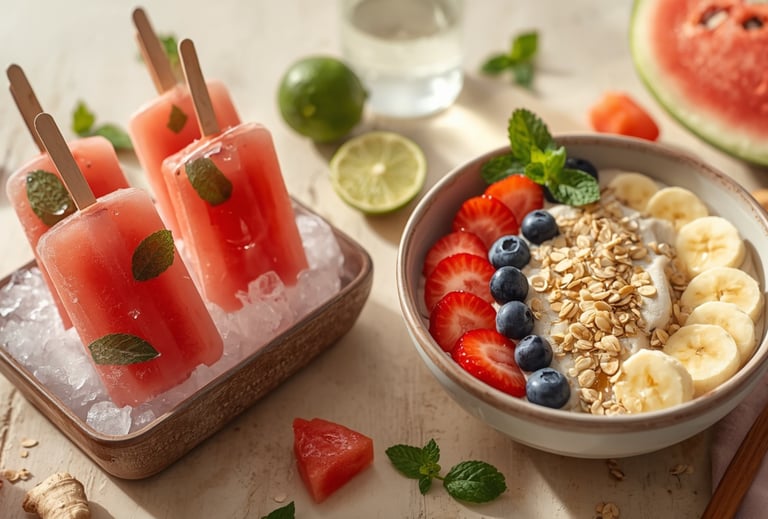
Recipe 6: Coconut Water and Fruit Electrolyte Popsicles
These homemade popsicles solve a specific summer gut recovery problem: when someone (particularly a child) has lost fluids through vomiting or diarrhoea and is struggling to drink large amounts of liquid, small, cold, pleasurable popsicles can deliver hydration and electrolytes gradually and comfortably.
Ingredients (makes 6 popsicles):
300ml coconut water (provides natural electrolytes — potassium, sodium, magnesium)
200ml watermelon juice (blend watermelon flesh and strain) or fresh watermelon pieces
Juice of 1 lime (approximately 30ml)
1 tablespoon honey (optional — adjust based on sweetness preference)
Small handful of fresh mint leaves
Pinch of sea salt (adds sodium for electrolyte completeness)
How to make them:
Blend the watermelon until smooth, then strain through a sieve to remove any fibrous pieces — you want a smooth juice
Combine watermelon juice, coconut water, lime juice, honey, and salt in a jug — stir well until honey dissolves
Place 2–3 mint leaves in each popsicle mould before adding the liquid
Pour the liquid mixture into the popsicle moulds, leaving a small gap at the top as the mixture will expand when frozen
Insert popsicle sticks and freeze for at least 4 hours, ideally overnight
To release: run warm water over the outside of the mould for 15–20 seconds
Why it works: Coconut water's potassium (600mg per cup) and sodium replace the electrolytes lost most rapidly through diarrhoea and vomiting. Watermelon's lycopene reduces gut inflammation. Lime citric acid provides vitamin C for immune support. The cold temperature is genuinely soothing on an inflamed GI tract. The gradual eating pace of a popsicle prevents the nausea that can follow drinking large amounts of liquid quickly after vomiting.
Makes 6 popsicles | Prep: 15 minutes | Freeze: 4+ hours
Recipe 7: Cool Yogurt Raita With Cucumber and Mint
Raita is the traditional cooling accompaniment to spicy Indian food — and it is also one of the most effective gut-protective foods for summer eating. The combination of probiotic yogurt, hydrating cucumber, and gut-soothing mint makes it a genuine functional food for summer digestive health.
Ingredients (serves 4 as a side):
2 cups plain full-fat yogurt (or kefir for more probiotic diversity)
1 medium cucumber, grated or finely diced
2 tablespoons fresh mint leaves, finely chopped
1 tablespoon fresh coriander, finely chopped (optional)
½ teaspoon ground cumin (toasted in a dry pan for 1 minute for more flavour)
¼ teaspoon sea salt
Pinch of cayenne pepper (optional — small amount stimulates digestion)
Juice of ½ lemon
How to make it:
Grate the cucumber using a box grater, then squeeze out excess water by pressing the grated cucumber in your hands over the sink — this prevents the raita from becoming watery
Combine yogurt, drained cucumber, mint, coriander (if using), cumin, salt, and lemon juice in a bowl
Stir well and taste — adjust salt, lemon, and cumin to your preference
Refrigerate for at least 20 minutes before serving — the flavours develop as it chills
Serve cold alongside grilled meats, rice dishes, or any spicy summer food
Why it works for summer gut health: Yogurt's live Lactobacillus and Bifidobacterium cultures reinforce the gut microbiome's competitive defences against pathogens. The cooling effect of yogurt and cucumber is genuinely soothing on a hot day and on an inflamed gut. Cumin stimulates the production of digestive enzymes. Lemon citric acid inhibits pathogen growth. This is one of the most practical gut-protective foods for summer dining — it takes ten minutes to make and improves almost any summer meal.
Serves 4 | Prep: 10 minutes | No cooking required
Recipe 8: Banana and Ginger Recovery Smoothie Bowl
This is designed for the stage of recovery from a stomach bug when your appetite is starting to return but your gut is still sensitive — you want real food but cannot face a full meal. The smoothie bowl format provides more substance and satiety than a drink while remaining gentle on a recovering digestive system.
Ingredients (serves 1):
For the base:
2 frozen bananas, broken into chunks before freezing
150ml plain kefir or Greek yogurt
½ teaspoon fresh ginger, grated
1 tablespoon honey
Splash of coconut water to help blending if needed
For the toppings (add based on how your stomach feels):
½ banana, sliced (potassium for electrolyte replacement)
1–2 tablespoons rolled oats (resistant starch for butyrate production and gut repair)
1 tablespoon pumpkin seeds (zinc for intestinal barrier repair)
A few fresh blueberries or sliced strawberries (antioxidants for mucosal repair)
A drizzle of honey
How to make it:
Add frozen banana chunks, kefir or yogurt, ginger, and honey to a high-powered blender — you want it as thick as soft-serve ice cream, not liquid. If it is too thick to blend, add coconut water one tablespoon at a time — no more than three tablespoons total
Blend on high for 20–30 seconds, stopping to scrape down the sides as needed, until smooth and thick
Scoop into a bowl immediately — it melts quickly if left in the blender
Add toppings in the order listed, placing them gently rather than stirring them in — you want the toppings to rest on the surface so you can eat them at your own pace based on how your stomach feels
Eat slowly — take 15–20 minutes rather than eating quickly
Why it works for summer gut recovery: Frozen banana base provides pectin for stool firming and prebiotic feeding of beneficial bacteria. Kefir adds 30–50 probiotic strains for gut microbiome reinforcement during recovery. Ginger continues the anti-nausea and antimicrobial action. Oat resistant starch produces butyrate for colonocyte repair. Pumpkin seeds provide zinc for intestinal barrier tight junction repair. Blueberries provide anthocyanins that inhibit pathogen adhesion to gut walls.
Serves 1 | Prep: 10 minutes | No cooking required
Summer Food Safety Rules — The Non-Negotiables
These are the food safety practices that prevent summer stomach bugs from occurring in the first place — because prevention is always easier than recovery.
The Two-Hour Rule (One Hour in Extreme Heat)
Do not leave perishable food at room temperature for more than two hours. In temperatures above 32°C (90°F) — typical for a summer picnic or barbecue on a hot day — reduce this to one hour. If food has been out longer than this, it is safer to discard it.
Keep Cold Food Cold, Hot Food Hot
Cold food (salads, dips, dairy, cut fruit) should be kept below 4°C in a cooler with adequate ice throughout outdoor eating. Hot food should be kept above 60°C until serving — use warming trays or foil-wrapped dishes placed in the sun, not left to cool.
The Cross-Contamination Danger
Raw meat juices contaminating salads, fruit, and ready-to-eat foods are responsible for many summer foodborne illness cases. Use separate cutting boards for meat and vegetables. Never use the same plate for raw meat and cooked meat. Wash hands thoroughly between handling raw and cooked foods.
Cook to Temperature, Not Colour
Poultry must reach an internal temperature of 75°C (165°F) — pink juice does not mean safe, and clear juice does not always mean fully cooked. A meat thermometer is the only reliable way to confirm safe cooking temperature. Ground meat (burgers) must reach 71°C (160°F) throughout — not just on the surface.
Wash Produce Properly
Fresh produce — even pre-washed salad bags — should be rinsed under cold running water before eating. High-risk summer produce includes leafy greens, berries, and cut melons (the most common source of summer Listeria outbreaks). Do not use soap or produce washes — plain cold running water is more effective.
Frequently Asked Questions
Is the BRAT diet still recommended for stomach bugs?
The BRAT diet (bananas, rice, applesauce, toast) was the standard medical recommendation for GI illness recovery for decades. Current evidence from the American Academy of Pediatrics and gastroenterology guidelines has moved away from strict BRAT recommendations — because the extremely restricted diet deprives the gut of the nutrients it needs for mucosal repair and microbiome recovery. Modern recommendations support a broader range of bland, easily-digested foods, including the yogurt, kefir, and gentle protein sources in this guide, as soon as appetite allows.
When should I start eating again after vomiting?
After vomiting, wait 15–30 minutes before attempting to eat or drink anything — giving the stomach time to settle. Start with small sips of cool water or coconut water. After tolerating fluids for 30–60 minutes without vomiting, try a small amount of the electrolyte popsicles in this guide. If that stays down, progress to the banana and ginger smoothie bowl or congee. The key is small amounts, frequently, rather than waiting until you are very hungry and then eating a larger meal.
Which foods should I avoid during a summer stomach bug?
Avoid dairy in large amounts at the very onset of symptoms — temporary lactose intolerance is common during GI infection. Avoid high-fat foods, spicy foods (capsaicin in large amounts can worsen diarrhoea), caffeine (which stimulates gut motility), alcohol (which is both dehydrating and intestinally irritating), and raw vegetables with tough skins that require significant digestive effort. Plain yogurt and kefir are exceptions — their live cultures are beneficial even during active illness and the lactose content is lower than regular dairy.
How do I know if I am dehydrated during a stomach bug?
The most reliable signs of dehydration: dark yellow or amber urine (healthy hydration should produce pale yellow or nearly clear urine), urinating less than three times per day, dry mouth and lips, sunken eyes, no tears when crying (particularly in children), and feeling dizzy when standing up. If you experience these symptoms alongside your stomach bug symptoms, prioritise oral rehydration — coconut water, diluted sports drinks, or a homemade oral rehydration solution (one litre of water, six teaspoons of sugar, and half a teaspoon of salt).
References and Further Reading
Sonnenburg JL and Bäckhed F — Nature (2016) — Diet-induced alterations in gut microflora contribute to lethal pulmonary damage in TLR2/TLR4-deficient mice Landmark research establishing the relationship between dietary diversity and gut microbiome diversity — confirming that diet-induced microbiome changes have direct consequences for immune defence and infection resistance.
Guarner F et al. — World Gastroenterology Organisation Global Guidelines (2012) — Probiotics and Prebiotics Comprehensive clinical review of probiotic evidence for infectious diarrhoea — establishing Lactobacillus rhamnosus GG and other strains as significantly reducing the duration and severity of acute infectious gastroenteritis.
Palatty PL et al. — Critical Reviews in Food Science and Nutrition (2013) — Ginger in the Prevention of Nausea and Vomiting: A Review Systematic review of ginger's anti-nausea and anti-emetic effects across multiple clinical contexts — confirming gingerol and shogaol mechanisms and clinical efficacy comparable to pharmaceutical anti-emetics for mild to moderate nausea.
World Health Organization — Oral Rehydration Salts guidelines — ORS and Zinc for the Management of Diarrhoea WHO recommendations for oral rehydration during diarrhoeal illness — the clinical basis for the electrolyte replacement emphasis throughout this guide and the recipe for homemade oral rehydration solution in the FAQ.
About the Author
I'm Judith, a wellness enthusiast and Applied Bio Sciences and Biotechnology graduate behind BiteBrightly. With a deep-rooted belief in the healing power of food, my nutrition journey began with a personal transformation—I improved my eyesight through targeted dietary changes. This life-changing experience sparked my mission to empower others by sharing evidence-based insights into food as medicine.
Drawing on my scientific background, personal experience, and ongoing research into nutrition and health, I focus on breaking down complex health topics into clear, practical, and actionable guidance. My approach combines scientific credibility with real-world application, making evidence-based nutrition accessible to everyone.
Follow me on Pinterest for daily health tips, recipes, and wellness inspiration.
Important Notice: The information in this article is for educational purposes only and is not intended as medical advice. I am not a medical doctor, registered dietitian, or food safety professional. Foodborne illness can be serious — seek medical attention for severe symptoms including bloody diarrhoea, high fever, symptoms lasting more than 3 days, or signs of severe dehydration (particularly in children, elderly people, or immunocompromised individuals). The food safety guidelines in this article are general guidance based on standard food safety principles — for professional food safety guidance, consult your national food safety authority. These statements have not been evaluated by the FDA.
Related Posts
Connect
Join our newsletter for fresh health tips
© 2026. All rights reserved.