How to Hit Your Protein Goal Every Day Without Eating Plain Chicken and Rice (30 Delicious Meals That Prove It)
Plain chicken and rice kills protein goals. 30 delicious high-protein meals — blackened chicken, shrimp Buddha bowl, steak chimichurri, protein mug cake. Full recipes.
by BiteBrightly
6/4/202610 min read
How to Hit Your Protein Goal Every Day Without Eating Plain Chicken and Rice (30 Delicious Meals That Prove It)
By BiteBrightly 4 June 2026: This post might contain affiliate links.
Let's be honest about why most people fail at high-protein eating. It is not lack of motivation. It is not even lack of knowledge. It is that somewhere between the second week of plain grilled chicken and the third consecutive day of rice and broccoli, something in the brain simply refuses to cooperate. The food is boring. The meals feel like a chore. And when eating feels like a punishment, consistency disappears.
Here is what the fitness and nutrition world rarely tells you: high protein does not have to mean bland. It does not have to mean the same six foods rotating endlessly. It does not have to mean eating food you would never choose if you were not trying to hit a number.
The five meals in this post are your evidence. Blackened chicken with a smoky crust and a creamy Greek yogurt Caesar dressing. Shrimp sizzling in garlic and lime over a tahini-drizzled Buddha bowl. A chocolate mug cake that delivers 20 grams of protein in two minutes. A steak dinner with vibrant herb chimichurri that looks and tastes like a restaurant meal.
High-protein eating can genuinely taste this good. Every single day.
Why Protein Variety Is Not a Luxury — It Is the Strategy
Research on dietary adherence consistently finds that food monotony is one of the strongest predictors of abandoning a nutrition plan. Your brain is designed to seek variety — it is called sensory-specific satiety, and it means that even a food you love becomes unappealing when it appears at every meal.
This is not weakness. It is biology. And the solution is not to override it with willpower — it is to build a meal rotation diverse enough that your brain never gets the chance to check out.
Research published in the American Journal of Clinical Nutrition confirmed that dietary protein at 25–40g per meal maximally activates muscle protein synthesis through the leucine-mTORC1 pathway — meaning the protein amount matters, but the source can be anything from steak to shrimp to Greek yogurt pancakes. Your muscles respond to the amino acids, not to how boring the food was to eat.
The five meals below each provide 20–45 grams of protein per serving. Each takes 15 minutes or less of active preparation. And not one of them tastes like it belongs in a meal prep container labelled "Day 4."
Recipe 1: Blackened Chicken Caesar Salad — 45g Protein
This is the highest-protein meal in this entire post — 45 grams per serving — and it tastes like a restaurant Caesar that happens to be genuinely excellent for you.
The blackening spice blend (paprika, garlic powder, cayenne, oregano, thyme) creates a deeply flavoured, slightly smoky crust that makes plain grilled chicken feel like a completely different category of food. The Caesar dressing is made with Greek yogurt rather than mayonnaise — it is creamier, tangier, and higher in protein than any bottled dressing, and it takes 2 minutes to whisk together.
Ingredients (serves 2):
2 boneless skinless chicken breasts (8oz each)
8 cups romaine lettuce, chopped
½ cup grated Parmesan
1 cup whole wheat croutons
2 hard-boiled eggs, halved
2 tbsp paprika, 1 tsp garlic powder, 1 tsp onion powder, ½ tsp cayenne, ½ tsp oregano, ½ tsp thyme, salt and pepper (blackening blend)
2 tbsp olive oil
For the Greek yogurt Caesar dressing:
½ cup plain Greek yogurt
2 tbsp lemon juice
1 tbsp Dijon mustard
2 cloves garlic, minced
3 tbsp Parmesan
2 tbsp olive oil
Salt and pepper
How to make it:
Mix all blackening spices together in a small bowl. Coat both chicken breasts thoroughly on all sides
Heat olive oil in a heavy skillet over medium-high heat until very hot — the pan must be genuinely hot for the crust to form
Cook chicken 6–7 minutes per side until the internal temperature reaches 165°F and a dark, aromatic blackened crust forms. The pan will smoke — this is correct
Rest the chicken 5 minutes before slicing
Whisk all dressing ingredients together until smooth
Toss romaine with the dressing
Divide between two plates and top with sliced blackened chicken, croutons, Parmesan, and halved eggs
~580 calories | 45g protein | 32g carbohydrates | 8g fibre
Chef's tip: The eggs are not decoration — two halved hard-boiled eggs add 12g of protein to this already protein-dense salad. Make a batch of 6 eggs on Sunday and you have a week's worth of instant protein additions to any meal.
Recipe 2: Shrimp and Quinoa Buddha Bowl — 33g Protein
A Buddha bowl is the lunch format that delivers maximum nutrition, maximum colour, and genuinely zero boredom. This version — garlic lime shrimp over quinoa with edamame, avocado, shredded carrot, and red cabbage — is the kind of meal you look forward to making.
Shrimp is one of the most underused high-protein foods available. It cooks in 5 minutes total, provides 20g of lean protein per 100g, and takes on flavour brilliantly. The garlic, paprika, and lime in this recipe transform it from plain seafood into something genuinely vibrant.
Ingredients (serves 2):
1 lb large shrimp, peeled and deveined
1 cup quinoa, uncooked
2 cups baby spinach
1 avocado, sliced
½ cup edamame
½ cup shredded carrots
¼ cup red cabbage, shredded
2 tbsp olive oil
2 cloves garlic, minced
1 tsp paprika
Juice of 1 lime
Salt and pepper
For the tahini dressing:
3 tbsp tahini
2 tbsp lemon juice
2 tbsp water
1 clove garlic, minced
Pinch of salt
How to make it:
Cook quinoa in 2 cups of water for 15 minutes. Set aside
Season shrimp with paprika, salt, and pepper
Heat olive oil in a skillet over medium-high heat
Cook shrimp 2–3 minutes per side until they turn pink and form a C shape — this is done. An O shape means overcooked
Add garlic in the last minute of cooking, then squeeze lime juice over everything
Whisk tahini dressing ingredients together until smooth and pourable
Divide quinoa between two bowls. Arrange spinach, shrimp, edamame, carrot, cabbage, and avocado in sections over the top
Drizzle tahini dressing generously over the entire bowl just before eating
~490 calories | 33g protein | 45g carbohydrates | 10g fibre
Chef's tip: Buy frozen peeled and deveined shrimp. Thaw in cold water for 10 minutes before cooking. It produces identical results to fresh shrimp in a fraction of the preparation time — which means this meal goes from freezer to bowl in under 25 minutes.
Recipe 3: Turkey Meatball Marinara with Pasta — 35g Protein
This is the meal that surprises people most when they discover it is high-protein eating. Turkey meatballs in rich marinara sauce over whole wheat pasta — the kind of meal you would make on a Friday evening with no nutritional agenda whatsoever, except that each serving delivers 35 grams of protein and genuinely tastes like Italian food rather than fitness food.
The lean ground turkey meatballs are baked in the oven after a quick pan sear, making them significantly less work than stove-top meatballs while producing a better result — evenly cooked throughout with a golden exterior.
Ingredients (serves 4):
1.5 lbs lean ground turkey
½ cup whole wheat breadcrumbs
¼ cup grated Parmesan + extra for serving
1 egg
3 cloves garlic, minced
2 tsp Italian seasoning
Salt and pepper
1 jar (24oz) marinara sauce
8 oz whole wheat pasta
2 tbsp olive oil
Fresh basil to finish
How to make it:
Preheat oven to 375°F
Combine turkey, breadcrumbs, Parmesan, egg, garlic, Italian seasoning, salt, and pepper in a bowl. Mix until just combined — overworking the mixture makes dense meatballs
Form into 16 equal meatballs approximately 2 inches across. A cookie scoop produces the most consistent size
Heat olive oil in an oven-safe skillet over medium-high heat. Brown meatballs for 2 minutes per side — this browning step adds deep flavour that baking alone cannot achieve
Pour marinara sauce over the meatballs
Transfer the entire skillet to the oven and bake 15–18 minutes until meatballs are cooked through
Meanwhile, cook pasta per package instructions
Serve meatballs and sauce over pasta. Finish with fresh basil and Parmesan
~520 calories | 35g protein | 48g carbohydrates | 6g fibre
Chef's tip: This recipe makes 4 servings — cook the full batch and refrigerate. The meatballs and sauce improve significantly on days 2 and 3 as the flavours deepen. This is the most meal-prep-efficient recipe in this post.
Recipe 4: Grilled Steak with Chimichurri and Vegetables — 38g Protein
If someone told you this was a meal plan recipe before you tasted it, you probably would not believe them. Sirloin steak sliced against the grain, draped with a bright, herby chimichurri made from fresh parsley and cilantro, served alongside grilled courgette, charred bell peppers, and roasted potatoes.
This is the recipe that proves once and for all that eating for protein does not require sacrifice. It requires knowing which meals to make.
Ingredients (serves 3):
1.5 lbs sirloin steak
2 courgettes, sliced
2 bell peppers, cut in strips
1 red onion, sliced
3 medium potatoes, cubed
3 tbsp olive oil
Salt and pepper
For the chimichurri:
1 cup fresh parsley
¼ cup fresh cilantro
4 cloves garlic
¼ cup red wine vinegar
½ cup olive oil
½ tsp red pepper flakes
How to make it:
Make the chimichurri first: blend all chimichurri ingredients until finely chopped but not completely smooth. Set aside — it genuinely improves with time
Toss potato cubes with 1 tbsp olive oil, salt, and pepper. Roast at 425°F for 25–30 minutes until golden
Take the steak out of the fridge 20 minutes before cooking. Bring it to room temperature for more even cooking throughout
Season generously with salt and pepper on both sides
Toss vegetables with remaining olive oil
Grill or pan-sear steak on very high heat — 5–6 minutes per side for medium-rare. Flip only once to allow a proper crust to form
Rest the steak for 10 full minutes. This is not optional — it is the step that keeps the steak juicy
While the steak rests, grill the vegetables 8–10 minutes until charred and tender
Slice the steak against the grain — look for the direction of the muscle fibres and cut perpendicular to them
Serve topped generously with chimichurri, alongside the vegetables and potatoes
~580 calories | 38g protein | 42g carbohydrates | 8g fibre
Chef's tip: The chimichurri keeps for 5–7 days in a sealed jar in the fridge and works on everything — chicken, fish, eggs, and as a marinade. Make a double batch and use it all week.
Recipe 5: Protein Chocolate Mug Cake — 20g Protein
This one changes how people think about high-protein eating more than any other recipe in this collection. A chocolate cake, made in a mug, in 2 minutes, with 20 grams of protein. It is not a compromise or a pale imitation. It is a genuinely good chocolate cake that happens to be built from protein powder, almond flour, cocoa, and Greek yogurt.
This is the recipe for 9pm when something sweet is non-negotiable. This is the recipe that makes protein eating sustainable long-term.
Ingredients (serves 1):
1 scoop chocolate protein powder
2 tbsp almond flour (or oat flour)
1 tbsp cocoa powder
½ tsp baking powder
Pinch of salt
1 egg
2 tbsp unsweetened almond milk
1 tbsp plain Greek yogurt
½ tsp vanilla extract
Optional toppings: a dollop of Greek yogurt, fresh berries, dark chocolate chips, or nut butter
How to make it:
Add protein powder, almond flour, cocoa powder, baking powder, and salt to a 12–14oz microwave-safe mug
Stir the dry ingredients together with a fork
Add egg, almond milk, Greek yogurt, and vanilla extract
Stir vigorously for 30 seconds until completely smooth with no lumps
Microwave on high for 90 seconds. Every microwave is different — check at 90 seconds and add 15-second increments if the centre is still wet
The cake is done when it rises and the centre is just set. Slightly underdone is always better than overdone — it firms up as it cools
Let cool for 2 minutes. Add your chosen toppings
~220 calories | 20g protein | 12g carbohydrates | 3g fibre
Chef's tip: Do not overcook. The number one mistake with mug cakes is running the microwave too long — overcooked mug cake becomes rubbery and dry. Pull it at 90 seconds, test the centre, and only add more time if genuinely needed. Slightly wobbly in the centre is perfect.
The 30 Meals That Keep You Consistent All Month
Five recipes. Five completely different meals. A blackened chicken salad, a shrimp Buddha bowl, a pasta dinner, a steak with chimichurri, and a chocolate cake that counts toward your protein target.
None of them taste like meal prep food. All of them take under 30 minutes.
This is what high-protein eating actually looks like when variety is built into the plan from the start — not as a luxury, but as the core strategy that makes hitting your protein target something you actually sustain.
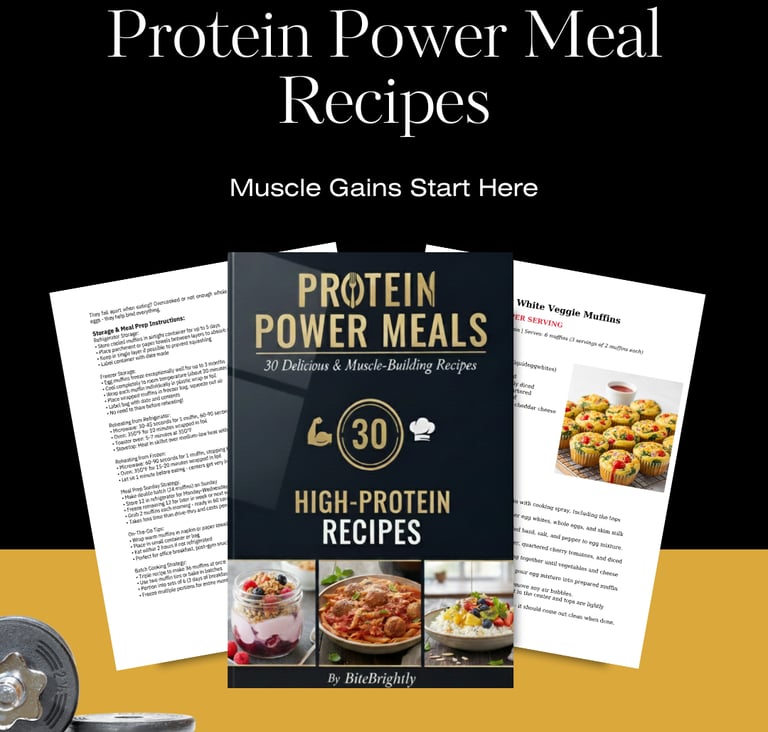
There are 30 complete meals just like these in the Protein Power Meals ebook — 10 breakfasts, 10 lunches and dinners, and 10 protein-packed snacks, each with complete ingredient lists, step-by-step instructions, full nutritional breakdown, chef's tips, and meal prep guidance.
Every meal provides 25–45g of protein per serving. Every recipe is designed to be genuinely delicious rather than tolerated. And every meal can be prepped in advance for the week.
Get all 30 recipes instantly — Protein Power Meals ebook →
Frequently Asked Questions
How much protein do I actually need per day?
The most commonly cited target for people actively trying to build or maintain muscle is 0.7–1g of protein per pound of bodyweight per day — so a 150lb person would aim for 105–150g daily. Distributing this across 3–4 meals of 25–40g each is more effective for muscle protein synthesis than consuming the same total in one or two large servings. Research confirms that each protein-rich meal activates the leucine-mTORC1 muscle protein synthesis pathway independently — meaning spreading protein evenly through the day produces better results than front- or back-loading.
Can I hit my protein goals without eating meat?
Yes — several of the 30 recipes in the Protein Power Meals ebook are built around plant and dairy protein sources including Greek yogurt, eggs, edamame, and cottage cheese. The shrimp Buddha bowl above shows how seafood provides a complete protein source with a different culinary profile from land animal protein. Greek yogurt appears in multiple recipes — both sweet and savoury — as a versatile high-protein base.
What is the best way to meal prep these recipes?
The turkey meatball marinara (Recipe 3) is the most meal-prep-efficient recipe in this post — the full batch makes 4 servings and improves over days 2 and 3. The blackened chicken (Recipe 1) stores well refrigerated for 3 days and is excellent cold over a fresh salad without reheating. The chimichurri from Recipe 4 keeps for a week and works as a marinade and sauce across multiple meals. The Protein Power Meals ebook includes specific meal prep and storage instructions for all 30 recipes.
References and Further Reading
Witard OC et al. — American Journal of Clinical Nutrition (2014) — Myofibrillar muscle protein synthesis rates subsequent to a meal in response to small and large bolus doses of dairy and soy protein Confirming that 25–40g of protein per meal maximally activates muscle protein synthesis through the leucine threshold and mTORC1 signalling.
Halton TL and Hu FB — Journal of the American College of Nutrition (2004) — The effects of high protein diets on thermogenesis, satiety, and weight loss Review confirming that dietary protein has the highest satiety-per-calorie of all macronutrients and supports body composition through multiple independent mechanisms.
Hetherington MM et al. — Physiology and Behavior (2006) — Sensory-specific satiety — food variety and eating patterns Research on sensory-specific satiety confirming that food monotony is a primary driver of dietary non-adherence and that variety in a nutrition plan is a functional strategy rather than an indulgence.
Phillips SM and Van Loon LJC — Journal of Sports Sciences (2011) — Dietary protein for athletes: From requirements to optimum adaptation Comprehensive review of protein distribution, meal timing, and the practical strategies that produce optimal muscle protein synthesis for active individuals.
About the Author
I'm Judith, a wellness enthusiast and Applied Bio Sciences and Biotechnology graduate behind BiteBrightly. With a deep-rooted belief in the healing power of food, my nutrition journey began with a personal transformation — I improved my eyesight through targeted dietary changes. This life-changing experience sparked my mission to empower others by sharing evidence-based insights into food as medicine.
The Protein Power Meals ebook was created for everyone who knows they should eat more protein but cannot face another container of plain chicken and rice. 30 complete recipes. Real food. Genuine flavour. Full nutritional breakdowns. All 30 available instantly.
Get the Protein Power Meals ebook here →
Follow me on Pinterest for daily health tips, recipes, and nutrition inspiration.
Important Notice: The information and recipes in this article are for educational and general wellness purposes only and are not intended as medical advice. Individual protein needs vary based on body weight, activity level, health status, and personal goals. People with kidney disease or other conditions affecting protein metabolism should consult their healthcare provider before significantly increasing dietary protein.
Related Posts
Connect
Join our newsletter for fresh health tips
© 2026. All rights reserved.