How to Drink Chia Seeds in Water
Chia seeds absorb 12x their weight in water — forming a gel that keeps you full for hours. How to drink them + 4 healthy recipes. Full method + safety notes.
by BiteBrightly
6/14/202614 min read
How to Drink Chia Seeds in Water: Benefits, Method, and 4 Healthy Recipes
By BiteBrightly 14 June 2026: This post might contain affiliate links.
Chia seeds soaked in water is one of the simplest, most accessible health habits you can build into your daily routine. Two tablespoons of chia seeds stirred into a glass of water, left to soak for a few minutes, and drunk throughout the morning — that is the entirety of it. No blending, no cooking, no specialist equipment, and no expensive ingredients.
But the simplicity of the habit belies the genuine nutritional significance of what those two tablespoons contain. Chia seeds are one of the most nutrient-dense foods available per gram — providing omega-3 fatty acids, fibre, protein, magnesium, calcium, and zinc in a format that takes under 60 seconds to prepare and costs almost nothing per serving.
This guide covers exactly how to drink chia seeds in water correctly, what benefits the research actually supports, how to make it taste genuinely pleasant, and four healthy chia water recipes that go well beyond plain chia water while remaining simple and quick.
What Happens When Chia Seeds Meet Water
This is the first thing to understand about chia seeds in water — and the reason the soaking step matters.
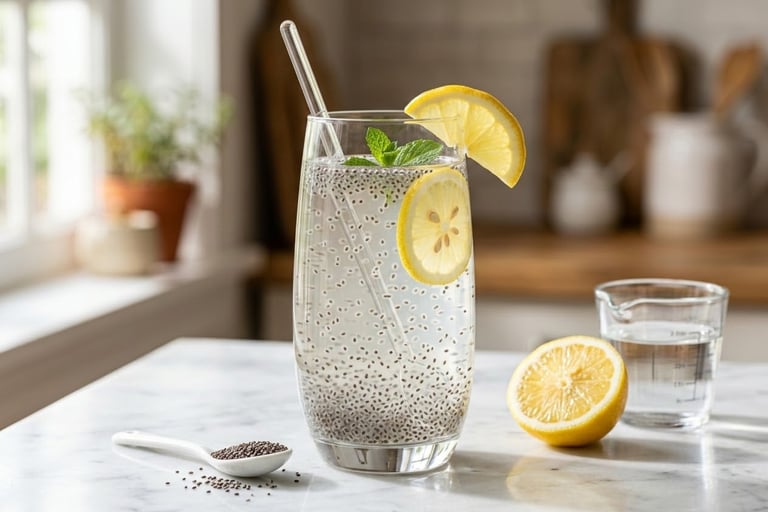
Chia seeds are coated in mucilage — a soluble fibre that absorbs water and swells into a gel. When chia seeds are added to water and allowed to soak, each seed absorbs up to 10–12 times its own weight in liquid. The seeds expand and become surrounded by a transparent gel coating, creating a slightly thick, tapioca-like drink.
This hydrogel is not a textural quirk — it is nutritionally significant. The gel slows gastric emptying (the rate at which the stomach empties its contents into the small intestine), producing physical fullness that lasts significantly longer than the same volume of plain water. The gel also moderates the digestion of carbohydrates consumed alongside it, producing a more moderate blood glucose response.
The gel forms within approximately 5–10 minutes at room temperature, and fully within 20–30 minutes. This is why soaking time matters — dry chia seeds added directly to water and drunk immediately provide less of the hydrogel effect and can expand in the stomach, which is uncomfortable for some people.
Key Takeaways
Two tablespoons of chia seeds provide 138 calories, 9.8g of fibre (35% RDA), 4.7g of plant protein, 4.9g of ALA omega-3, 179mg of calcium (14% RDA), 95mg of magnesium (24% RDA), and 1.6mg of iron
The ALA omega-3 in chia seeds is a plant-based precursor to EPA and DHA — the conversion rate in the body is modest (approximately 5–15%), making chia seeds a useful contribution to omega-3 intake rather than a complete replacement for oily fish
Chia seeds must be soaked before drinking in water — consuming dry chia seeds directly with a small amount of liquid can cause them to expand in the oesophagus, which is uncomfortable and has caused rare but documented choking incidents
Research published in the Journal of Functional Foods confirmed that chia seeds significantly reduced postprandial blood glucose response when consumed alongside carbohydrate-containing foods — supporting the blood sugar-moderating effect of the hydrogel
Chia seeds are not a complete solution for any specific health condition — they are a genuinely excellent whole food addition to a varied, balanced diet
How to Drink Chia Seeds in Water — The Correct Method
What You Need
2 tablespoons of chia seeds (approximately 28g)
240–300ml (1–1.25 cups) of water
A glass or jar with enough room to stir
A spoon
Step by Step
Step 1 — Measure your chia seeds: Two tablespoons is the standard starting dose. If you are new to chia seeds, begin with one tablespoon and work up — the fibre content can cause digestive discomfort (bloating, gas) if your gut is not accustomed to high-fibre foods. The fibre benefit builds gradually; start small and increase over 1–2 weeks.
Step 2 — Add the water: Pour 240–300ml of water into your glass. The ratio matters — too little water produces a very thick gel that is harder to drink; too much produces a very thin, barely perceptible gel. One cup (240ml) to 1.25 cups (300ml) per 2 tablespoons is the ideal range.
Step 3 — Stir immediately and vigorously: Add the chia seeds to the water and stir immediately for 30 seconds. This prevents the seeds from clumping together in one mass. Chia seeds begin absorbing water and forming gel almost immediately — if you do not stir within the first 30 seconds, they will clump at the bottom.
Step 4 — Stir again after 2 minutes: After 2 minutes, stir again to break up any clumps that have formed and distribute the seeds evenly through the water.
Step 5 — Soak for a minimum of 10 minutes: Leave the chia water to soak at room temperature for at least 10 minutes before drinking. The hydrogel needs this time to form. For maximum gel development, soak for 20–30 minutes, or prepare it the evening before and refrigerate overnight — the cold gel is arguably more pleasant to drink than the room temperature version.
Step 6 — Stir once more and drink: Stir the chia water one final time before drinking to redistribute any settled seeds. Drink slowly — chia water is more substantial than plain water and is best sipped rather than gulped.
What It Tastes Like
Plain chia water has almost no flavour — the seeds themselves are neutral and the water carries whatever flavour you add to it. The texture is the primary sensory experience: slightly thick, with small soft gel-coated seeds throughout. The texture takes getting used to for some people. If the texture is challenging initially, adding lemon juice, a little honey, or fruit to the water makes the experience significantly more pleasant — and the four recipes below are specifically designed to make chia water genuinely enjoyable rather than merely tolerable.
Important Safety Notes
Always soak before drinking. Dry or insufficiently soaked chia seeds can expand after swallowing, which in rare cases has caused oesophageal blockages. Always ensure adequate soaking time (minimum 10 minutes) before consuming.
Start with smaller amounts. Two tablespoons is a meaningful fibre dose. Starting with one tablespoon and increasing gradually over 1–2 weeks allows your gut microbiome to adjust and prevents the digestive discomfort (bloating, gas) that can accompany a sudden large increase in dietary fibre.
Drink adequate water throughout the day. Because chia seeds absorb significant amounts of water, increasing your chia seed intake without also increasing your total fluid intake can theoretically contribute to constipation rather than relieving it.
Chia seeds interact with blood thinners. The ALA omega-3 content of chia seeds has mild blood-thinning properties. People taking warfarin or other anticoagulant medications should discuss regular chia seed consumption with their doctor or pharmacist.
What the Research Actually Says About Chia Seeds
Hydration and Satiety
The hydrogel-forming property of chia seeds produces physical fullness through slowed gastric emptying — the stomach processes the gel-containing water more slowly than plain water, extending the period of satiety. This is the most practically significant and most well-supported benefit of drinking chia seeds in water.
Research has confirmed meaningful reductions in short-term appetite and food intake following chia seed consumption. For people who find themselves hungry between meals, drinking chia water 20–30 minutes before a meal or as a mid-morning snack can meaningfully reduce the hunger that drives overeating at the next meal.
Blood Sugar Moderation
The viscous gel formed by chia seeds slows the digestion and absorption of carbohydrates consumed alongside it. When chia water is consumed with a meal or shortly before one, the gel moderates the rate at which glucose enters the bloodstream — producing a more moderate postprandial (after-meal) blood glucose response.
This effect is particularly relevant for people who experience energy crashes after meals, have blood sugar management as a health goal, or are looking to moderate the glycaemic impact of a carbohydrate-containing meal.
Omega-3 Fatty Acids
Chia seeds are one of the richest plant sources of ALA (alpha-linolenic acid) — the plant-based omega-3 fatty acid. Two tablespoons provide 4.9g of ALA. The body converts some ALA to EPA and DHA (the more anti-inflammatory long-chain omega-3 from oily fish), but the conversion rate is modest — approximately 5–15% for EPA and less than 1% for DHA in most healthy adults.
Chia seeds are therefore a useful plant-based omega-3 source — particularly for vegans and vegetarians who do not eat oily fish — but are not equivalent to the direct EPA and DHA from salmon or mackerel. They contribute meaningfully to omega-3 status as part of a varied diet.
Fibre and Gut Health
The 9.8g of dietary fibre per 2 tablespoons of chia seeds (35% of the daily RDA in a single serving) provides both soluble fibre (the mucilage that forms the hydrogel) and insoluble fibre that supports bowel regularity. The soluble fibre is fermented by beneficial gut bacteria — particularly Bifidobacterium and Lactobacillus — to produce short-chain fatty acids including butyrate, which maintains gut lining integrity and reduces intestinal inflammation.
4 Healthy Chia Seed Water Recipes
These four recipes turn plain chia water into something genuinely enjoyable — providing the hydrogel benefits alongside genuinely pleasant flavours that make the daily habit easy to maintain.
Recipe 1: Lemon Ginger Chia Water
The most classic and most recommended starting recipe for anyone new to chia seeds in water. The bright lemon and warming ginger completely mask the neutral chia seeds, turning plain chia water into something refreshing and genuinely pleasant. The lemon provides vitamin C alongside citric acid that slightly thins the gel and improves the drink's drinkability. The ginger provides gingerols with direct anti-inflammatory and digestive benefits.
Why this is genuinely healthy: Vitamin C from lemon juice (47mg per lemon — 52% of the daily RDA) alongside ginger's gingerols, which directly inhibit COX-2 inflammatory enzyme production. The combination of hydration, vitamin C, and anti-inflammatory ginger alongside the chia seed benefits makes this one of the most genuinely multi-beneficial morning drinks available.
Ingredients (serves 1):
2 tablespoons chia seeds
300ml cold water or sparkling water
Juice of ½ lemon (approximately 2 tablespoons)
1cm fresh ginger, finely grated or sliced
1 teaspoon raw honey or maple syrup (optional)
A few mint leaves (optional)
Ice cubes if desired
How to make it:
Add chia seeds to a glass or jar
Pour in the water. Stir immediately and vigorously for 30 seconds
Add lemon juice, grated ginger, and honey if using
Stir again thoroughly — the lemon juice slightly thins the gel and makes everything easier to combine
Stir again after 2 minutes to prevent clumping
Leave to soak for minimum 15 minutes (or refrigerate overnight for a cold version)
Add ice and mint leaves if desired
Stir one final time before drinking
Per serving: Approximately 90 calories | 4.7g protein | 9.8g fibre | 4.9g ALA omega-3
Morning tip: Prepare this the evening before in a jar with a lid. Refrigerate overnight. In the morning, add ice if desired and drink within the first 30 minutes of waking — before breakfast, which allows the hydrogel satiety to set in before your first meal.
Recipe 2: Watermelon Lime Chia Fresca
Chia fresca — chia seeds in fruit-infused water — is a traditional Mexican drink with centuries of history. This watermelon lime version is the most refreshing of the four recipes, making it the ideal warm-weather morning drink or afternoon hydration option. Fresh watermelon juice provides lycopene (10mg per 2 cups — one of the highest lycopene concentrations of any commonly eaten food) alongside citrulline that supports nitric oxide production and vascular health.
Why this is genuinely healthy: Watermelon lycopene has documented cardiovascular protective and anti-inflammatory activity. Lime juice provides vitamin C (30mg per lime — 33% of the daily RDA) and citric acid. The combination of watermelon hydration (watermelon is 92% water), chia hydrogel sustained fullness, and lycopene anti-inflammatory compounds makes this one of the most genuinely nourishing summer drinks available.
Ingredients (serves 1):
2 tablespoons chia seeds
200ml fresh watermelon juice (blend approximately 2 cups of watermelon cubes and strain, or use a juicer)
100ml cold still or sparkling water
Juice of ½ lime
Pinch of sea salt (enhances the watermelon flavour significantly)
A few fresh mint leaves
Ice cubes
How to make it:
Blend watermelon cubes until liquid. Strain through a fine mesh sieve if you want a clearer drink, or use unstrained for more fibre
Combine watermelon juice and water in a glass or jar
Add chia seeds and stir immediately and vigorously for 30 seconds
Add lime juice and sea salt. Stir well
Stir again after 2 minutes
Leave to soak for minimum 15 minutes at room temperature or prepare ahead and refrigerate
Add ice and mint leaves to serve
Stir before drinking
Per serving: Approximately 115 calories | 5g protein | 10g fibre | 4.9g ALA omega-3
The salt tip: A small pinch of sea salt in a watermelon drink is one of those flavour techniques that sounds counterintuitive and produces extraordinary results — it amplifies the sweetness and depth of the watermelon dramatically. Do not skip it.
Recipe 3: Berry Hibiscus Chia Water
This recipe produces the most visually beautiful chia drink in this guide — a deep ruby-red hibiscus tea base with fresh mixed berries, and the chia seeds suspended throughout in their transparent gel. Hibiscus tea has one of the most remarkable antioxidant profiles of any commonly available herbal tea, and research has found it specifically effective for blood pressure reduction.
Why this is genuinely healthy: Research published in the Journal of Nutrition found that consuming hibiscus tea significantly reduced systolic and diastolic blood pressure in adults with elevated blood pressure — establishing hibiscus as one of the most evidence-supported herbal teas for cardiovascular health. The anthocyanins in hibiscus and in the mixed berries both inhibit NF-kB inflammatory signalling and have documented anti-inflammatory activity. Combined with the chia seed fibre and omega-3, this drink is genuinely one of the most nutrient-dense beverages you can incorporate daily.
Ingredients (serves 1):
2 tablespoons chia seeds
300ml strongly brewed hibiscus tea (brewed and cooled to room temperature or chilled)
½ cup mixed berries — blueberries, raspberries, or strawberries
1 teaspoon raw honey or maple syrup (optional — hibiscus is naturally tart)
Juice of ¼ lemon
Ice cubes
How to make it:
Brew hibiscus tea strongly — 2 hibiscus tea bags or 2 tablespoons of dried hibiscus flowers in 350ml of boiling water for 5 minutes. Remove bags/flowers and allow to cool completely (or refrigerate). This step can be done the evening before
Add chia seeds to the cooled hibiscus tea. Stir immediately for 30 seconds
Add honey and lemon juice. Stir again
Stir after 2 minutes to prevent clumping
Soak for minimum 15 minutes
To serve: add ice to a glass, pour the chia hibiscus over the ice, and add fresh mixed berries
Stir before drinking
Per serving: Approximately 100 calories | 4.7g protein | 10g fibre | 4.9g ALA omega-3
Make-ahead: The hibiscus chia base keeps refrigerated for 2 days — make a double batch and refrigerate. Add fresh berries and ice on the morning of drinking.
Recipe 4: Golden Anti-Inflammatory Chia Water
This recipe combines chia seeds with turmeric, black pepper, ginger, cinnamon, and honey — creating a warm (or cold) anti-inflammatory drink that layers the hydrogel benefits of chia seeds with the NF-kB inhibitory curcumin from turmeric, the COX-2 inhibitory gingerols from ginger, and the blood sugar-stabilising cinnamic acid from cinnamon.
Why this is genuinely healthy: This is the most nutritionally multi-beneficial chia water recipe in the guide. Turmeric's curcumin directly inhibits NF-kB — the master inflammatory transcription factor. Black pepper's piperine increases curcumin bioavailability by up to 2,000% — this pairing is essential. Ginger's gingerols inhibit COX-2, the same enzyme targeted by ibuprofen. Cinnamon reduces postprandial blood glucose response through inhibition of starch-digesting enzymes. Combined with the chia hydrogel's blood sugar moderating effect and fibre, this is one of the most genuinely anti-inflammatory drinks available from whole food ingredients.
The golden drink — served warm or cold: This drink works as a warm morning drink (a golden chia water alternative to coffee) or as a cold drink over ice. The warm version is more soothing and more bioavailable for the fat-soluble curcumin (the warm water and honey provide slightly more fat for absorption than cold water alone — for maximum absorption, prepare it in warm plant milk rather than water).
Ingredients (serves 1):
2 tablespoons chia seeds
280ml warm (not boiling) water or warm unsweetened plant milk (oat milk or almond milk — plant milk provides fat for curcumin absorption)
½ teaspoon ground turmeric
¼ teaspoon freshly grated or ground ginger
¼ teaspoon ground cinnamon
⅛ teaspoon black pepper — ESSENTIAL (piperine increases curcumin absorption 2,000%)
1 teaspoon raw honey
Optional: a small pinch of cayenne for additional warmth
How to make it:
Warm the water or plant milk to approximately 60°C — warm to the touch but not boiling (boiling water can destroy some of the bioactive compounds in the spices)
Add turmeric, ginger, cinnamon, black pepper, and honey to the warm liquid. Stir until completely dissolved
Allow to cool slightly for 2–3 minutes until comfortable to handle (approximately 50°C)
Add chia seeds and stir immediately for 30 seconds
Stir again after 2 minutes — the gel forms more slowly in warm liquid, so this stir is particularly important
Soak for 15–20 minutes
Stir one final time and drink warm
For a cold version: Prepare as above but use room temperature water, allow to cool completely, then refrigerate for a minimum of 2 hours. Serve over ice with an extra squeeze of lemon.
Per serving (with water): Approximately 100 calories | 4.7g protein | 9.8g fibre | 4.9g ALA omega-3
The curcumin absorption reminder: The black pepper is not optional. Piperine in black pepper inhibits the liver and intestinal enzymes that metabolise curcumin before it reaches circulation — without it, the curcumin in the turmeric is largely wasted. The tiny amount of black pepper required (⅛ teaspoon) is imperceptible in the flavour of the drink.
Building the Chia Water Daily Habit
When to drink chia water: The most common and most effective timing is first thing in the morning on an empty stomach or 20–30 minutes before the first meal of the day. This timing maximises the satiety effect — the hydrogel establishes fullness that moderates appetite at breakfast. It also provides hydration first thing in the morning when the body has been without water for 7–8 hours overnight.
Other effective timing options:
20–30 minutes before lunch — to reduce lunchtime overeating
As a mid-afternoon snack replacement — the fibre and protein combination satisfies the 3pm hunger dip more effectively than most snack alternatives
As an evening drink — the magnesium in chia seeds supports GABA receptor activation and sleep quality
How often: Daily chia water is safe and beneficial for most healthy adults. Start with one tablespoon per day for the first week, increase to two tablespoons in week two, and maintain two tablespoons daily as the ongoing habit.
Storing prepared chia water: Prepared chia water can be refrigerated for up to 2 days — the gel continues to develop in the fridge and the drink becomes progressively thicker. If you prefer a thinner consistency, add a little additional water and stir before drinking refrigerated chia water.
Frequently Asked Questions
Can I add chia seeds to any drink?
Yes — chia seeds can be added to any cold or warm (not hot) drink. They work well in water, coconut water, plant milk, fruit juice, herbal tea, and smoothies. The gel formation is the same regardless of the liquid used. Avoid adding chia seeds to very hot liquids above approximately 70°C — high temperatures can break down some of the beneficial compounds.
Do chia seeds need to be ground to absorb properly?
Unlike flaxseeds (which pass through the digestive tract largely undigested if eaten whole), chia seeds do not need to be ground — their outer shell is permeable and nutrients are absorbed even from whole seeds. The gel that forms around whole chia seeds in water is already absorbing into the body effectively. Ground chia seeds are absorbed slightly faster but provide essentially the same nutritional benefit as whole soaked chia seeds.
How long do chia seeds keep?
Dry chia seeds keep for up to 4–5 years stored in an airtight container in a cool, dry place — they have a naturally high antioxidant content that prevents the oils from going rancid. This makes them one of the most cost-effective health food purchases available. Buy in bulk, store in an airtight jar, and the cost per serving drops significantly.
Is chia water safe during pregnancy?
Chia seeds are generally considered safe during pregnancy and provide useful nutrients including calcium, folate, and omega-3 ALA. However, the blood-thinning properties of the ALA omega-3 mean that very high intake should be discussed with a midwife or obstetrician, and women on anticoagulant medications should discuss chia seed consumption with their doctor. At the standard two-tablespoon daily serving, chia seeds are considered safe for most pregnant women.
References and Further Reading
Vuksan V et al. — Nutrition Research (2010) — Supplementation of conventional therapy with the novel grain Salba (Salvia hispanica L.) improves major cardiovascular risk factors Research confirming that chia seed consumption significantly increased satiety and reduced short-term food intake — establishing the hydrogel satiety mechanism as clinically meaningful.
Ayaz A et al. — Journal of Functional Foods (2017) — Chia seed consumption reduces postprandial blood glucose Research confirming that chia seeds significantly reduced postprandial blood glucose response when consumed alongside carbohydrate-containing foods.
Hopkins AL et al. — Journal of Nutrition (2013) — Hibiscus sabdariffa L. in the treatment of hypertension and hyperlipidaemia Research confirming that hibiscus tea consumption significantly reduced both systolic and diastolic blood pressure in adults with elevated blood pressure.
Muñoz LA et al. — Journal of Biomedicine and Biotechnology (2012) — Chia seed: Technological and nutritional aspects Comprehensive nutritional analysis of chia seeds confirming their omega-3, fibre, protein, calcium, and magnesium content alongside the mucilage hydrogel formation mechanism.
About the Author
I'm Judith, a wellness enthusiast and Applied Bio Sciences and Biotechnology graduate behind BiteBrightly. With a deep-rooted belief in the healing power of food, my nutrition journey began with a personal transformation — I improved my eyesight through targeted dietary changes. This life-changing experience sparked my mission to empower others by sharing evidence-based insights into food as medicine.
Follow me on Pinterest for daily health tips, recipes, and wellness inspiration.
Important Notice: The information in this article is for educational purposes only and is not intended as medical advice. I am not a medical doctor or registered dietitian. Chia seeds are a whole food with a strong nutritional profile — they are not a treatment for any medical condition. People with swallowing difficulties should exercise particular caution with chia water and ensure adequate soaking time. People taking blood-thinning medications (warfarin, aspirin, or similar) should consult their healthcare provider before consuming chia seeds regularly. People with digestive conditions should introduce chia seeds gradually and consult a healthcare provider if symptoms worsen. These statements have not been evaluated by the FDA.
Related Posts
Connect
Join our newsletter for fresh health tips
© 2026. All rights reserved.