Healthy Snacks That Help You Lose Weight: Recipes That Actually Satisfy
Almonds reduce hunger at the next meal (research). Protein activates 3 satiety hormones. 15 healthy snack recipes that actually help you lose weight — with science.
by BiteBrightly
5/5/202622 min read
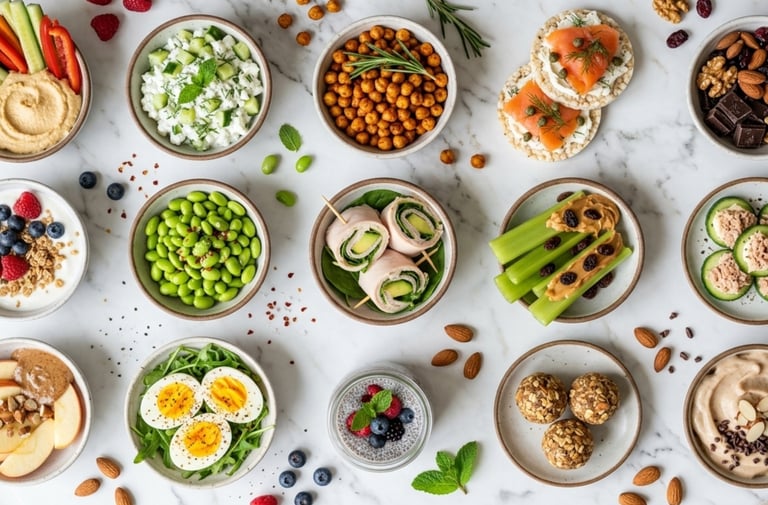
Healthy Snacks That Help You Lose Weight: Recipes That Actually Satisfy
By BiteBrightly 5 May 2026: This post might contain affiliate links.
Here is something most diet advice gets completely wrong about snacking: the goal is not to eat as little as possible between meals. The goal is to eat the right things so you do not arrive at your next meal ravenous, make poor choices, and eat far more than you intended. Strategic, well-chosen snacks are not the enemy of weight loss. Unplanned, reactive snacking on whatever is nearby when hunger hits — that is the enemy.
The difference between a snack that helps you lose weight and one that works against you comes down to three things: protein, fibre, and glycemic impact. A snack with adequate protein activates the satiety hormones GLP-1 and PYY that tell your brain to stop eating. A snack with fibre slows digestion and extends fullness between meals. And a snack with low glycemic impact avoids the blood sugar spike and crash that triggers hunger again within an hour — and along with it, cravings for more sugar and refined carbohydrates.
This guide gives you 15 healthy snacks that genuinely help with weight loss, each with a simple recipe, the science behind why it works, and practical tips for making it a consistent part of your eating routine.
Key Takeaways
Protein is the most important macronutrient for weight loss snacking — it activates GLP-1 and PYY satiety hormones and has the highest thermic effect of food (your body burns more calories digesting protein than carbohydrates or fat)
Snacking on high-protein, high-fibre foods between meals reduces total daily caloric intake by reducing hunger at the next meal — research consistently shows this effect is stronger from whole food snacks than from refined snacks of equal calories
Blood sugar stability is the secret weapon of successful weight loss snacking — choosing snacks that avoid sharp glucose spikes prevents the cortisol and adrenaline surges that create intense hunger and cravings 30–90 minutes after eating
Research published in the Journal of Nutrition found that snacking on almonds significantly reduced hunger and desire to eat at the next meal without increasing overall caloric intake — one of the clearest demonstrations that the right snack reduces rather than adds to total daily calories
Portion awareness matters enormously with calorie-dense healthy foods like nuts and nut butters — a handful of almonds is a weight-loss snack; a large bowl of almonds eaten mindlessly is not
Preparation is the most important practical factor in healthy snacking — if your healthy snacks require more effort to access than the nearest vending machine or biscuit tin, you will consistently choose the easier option
Why Most Snacks Work Against Weight Loss
Before we get to the recipes, it helps to understand what is happening when a snack does not satisfy you — because this explains exactly why the 15 snacks in this guide are different.
The Blood Sugar Rollercoaster
Most commercial snacks — crisps, biscuits, flavoured rice cakes, fruit juice, cereal bars, even many "healthy" granola bars — are primarily refined carbohydrates and sugar. When you eat them, your blood sugar spikes rapidly. Your body releases insulin to bring it back down. Sometimes it overshoots — blood sugar drops below normal (reactive hypoglycaemia). Your body detects the drop and releases cortisol and adrenaline as an emergency response.
The result: thirty to ninety minutes after eating your snack, you feel anxious, irritable, tired, and intensely hungry again. You ate something, but it made your hunger worse rather than better. This is the blood sugar rollercoaster — and most commercial snacks put you on it.
What a Good Snack Does Instead
A good weight-loss snack keeps blood sugar stable by slowing the rate of glucose absorption through protein, fibre, and moderate healthy fat. It activates satiety hormones that genuinely signal fullness to your brain. And it satisfies long enough to bridge the gap to your next meal without creating cravings for more food.
The 15 Best Healthy Weight-Loss Snacks (With Recipes)
1. Apple Slices With Almond Butter
This is one of the most classic weight-loss snacks — and it earns its reputation. The fibre and natural sweetness of apple satisfies the sweet craving that strikes mid-afternoon, while almond butter adds protein and healthy fat that extends fullness for two to three hours.
Why it works for weight loss: Apple pectin is a soluble fibre that forms a gel in your stomach, slowing gastric emptying and extending the fullness feeling. The low-GI natural sugars in apple (GI approximately 36) release glucose gently, avoiding a blood sugar spike. Almond butter adds approximately 7g of protein and 18g of healthy fat per two tablespoons — the fat and protein combination delays gastric emptying further and activates satiety hormones.
The Recipe:
1 medium apple, cored and sliced into 8 wedges
2 tablespoons natural almond butter (ingredients: almonds only, no added oil or sugar)
Optional: a sprinkle of cinnamon (cinnamon improves insulin sensitivity and adds flavour without calories)
Optional: a few cacao nibs for crunch and antioxidants
Slice the apple and arrange on a plate. Divide the almond butter into a small bowl for dipping. Dust with cinnamon if using. Total preparation time: 2 minutes.
Nutrition: Approximately 250 calories | 7g protein | 6g fibre | 18g healthy fat
Weight-loss tip: Use a single medium apple and measure your almond butter — it is easy to double the portion mindlessly and turn a 250-calorie snack into a 400-calorie one. One medium apple (not large) and exactly two tablespoons is the right portion for a weight-loss snack.
2. Greek Yogurt With Berries and Seeds
Plain Greek yogurt is the most protein-dense convenient snack available — providing 17–20g of complete protein per cup alongside live probiotic cultures and calcium. Adding berries and seeds transforms it from a simple dairy snack into a genuinely complete weight-loss food.
Why it works for weight loss: Greek yogurt activates GLP-1, PYY, and CCK — the three primary satiety hormones — through its protein content. Research has shown that high-protein snacks like Greek yogurt produce significantly greater reduction in hunger and appetite before the next meal than high-fat or high-carbohydrate snacks of equal calories — making protein the single most important macronutrient for weight-loss snacking.
The Recipe:
¾ cup plain full-fat Greek yogurt (not low-fat — the fat supports satiety and fat-soluble vitamin absorption)
½ cup mixed berries (blueberries, strawberries, raspberries — fresh or frozen and defrosted)
1 tablespoon pumpkin seeds
1 tablespoon hemp seeds
Optional: a drizzle of honey (½ teaspoon maximum for weight loss)
Spoon Greek yogurt into a bowl. Top with berries, pumpkin seeds, and hemp seeds. Drizzle with honey if using. Total preparation time: 2 minutes.
Nutrition: Approximately 280 calories | 20g protein | 5g fibre | 12g healthy fat
Weight-loss tip: Always choose plain yogurt and add your own toppings — flavoured yogurts typically contain 15–25g of added sugar, which spikes blood sugar and undermines every weight-loss benefit of the yogurt itself. The berries and optional honey provide more than enough sweetness with far less sugar and far more fibre.
3. Hummus and Vegetable Sticks
Hummus and raw vegetables is one of the most filling low-calorie snacks available — combining plant protein and healthy fat from chickpeas and tahini with the high-volume, near-zero-calorie fibre from raw vegetables to fill your stomach with minimal caloric cost.
Why it works for weight loss: Raw vegetable sticks fill your stomach through volume (activating stretch receptors that signal fullness) with almost no calories — a large portion of cucumber, carrot, and celery sticks provides genuine stomach volume for under 50 calories. Hummus adds protein (approximately 5g per three tablespoons) and fibre from chickpeas, alongside the oleic acid from olive oil that activates OEA satiety signalling through the vagus nerve.
The Recipe (Homemade Hummus):
1 can (400g) chickpeas, drained and rinsed (reserve 3 tablespoons of the liquid)
3 tablespoons tahini
2 tablespoons extra-virgin olive oil
Juice of 1 lemon
1 small garlic clove
½ teaspoon sea salt
½ teaspoon ground cumin
For the vegetables:
1 medium cucumber, cut into sticks
2 medium carrots, cut into sticks
4 celery stalks, cut into sticks
½ red bell pepper, cut into strips
How to make the hummus:
Add chickpeas, tahini, olive oil, lemon juice, garlic, salt, and cumin to a food processor
Blend for 1 minute, then scrape down the sides
With the motor running, add the reserved chickpea liquid one tablespoon at a time until you reach a smooth, creamy consistency
Taste and adjust — more lemon for brightness, more tahini for richness, more garlic for punch
Store in a sealed container in the fridge for up to 5 days
Serving: 3 tablespoons hummus with the vegetable sticks.
Nutrition (per serving with vegetables): Approximately 220 calories | 8g protein | 8g fibre | 12g healthy fat
Weight-loss tip: Make a large batch of hummus on Sunday and portion into small containers for the week. Pre-cut the vegetables and store in water in sealed containers — they stay crisp for three to four days and are ready in seconds.
4. Hard-Boiled Eggs With Everything Bagel Seasoning
Hard-boiled eggs are one of the most portable, most protein-dense, most convenient weight-loss snacks available. Two eggs provide 12g of complete protein with zero carbohydrates — activating the maximum satiety hormone response with virtually no glycemic impact.
Why it works for weight loss: The leucine content of eggs (approximately 1.8g per two eggs) activates mTORC1 — the molecular switch for protein synthesis — which also signals satiety to the brain. The fat in egg yolks slows gastric emptying, extending fullness well beyond what the protein alone would provide. Choline from egg yolks additionally supports the regulation of cortisol — the stress hormone that drives hunger and cravings.
The Recipe:
2 large eggs
½ teaspoon everything bagel seasoning (sesame seeds, poppy seeds, dried garlic, dried onion, sea salt — buy pre-made or make your own)
Optional: a few drops of hot sauce
Optional: a small handful of cherry tomatoes alongside
How to boil eggs perfectly:
Place eggs in a single layer in a saucepan and cover with cold water by 3cm
Bring to a boil over medium-high heat
Reduce to a gentle simmer and cook for exactly 10 minutes for fully set yolks
Transfer immediately to a bowl of cold water and ice — this stops the cooking and makes peeling much easier
Peel when cool (within 30 minutes for easiest peeling)
To serve: Halve the eggs, sprinkle with everything bagel seasoning and a few drops of hot sauce if using.
Nutrition: Approximately 160 calories | 12g protein | 0g fibre | 10g fat
Weight-loss tip: Boil a batch of 6 eggs at the beginning of the week and store unpeeled in the fridge — they keep for up to a week and are ready to eat immediately. The most important preparation is doing this in advance, because when hunger hits, you need your healthy snack to be immediately accessible.
5. Edamame With Sea Salt and Chilli
Edamame — young green soybeans — is one of the most underrated weight-loss snacks available. One cup of shelled edamame provides 17g of complete protein (all nine essential amino acids), 8g of fibre, and only 189 calories — one of the best protein-to-calorie ratios of any whole food.
Why it works for weight loss: Edamame has a glycemic index of approximately 18 — one of the lowest of any food. This means it causes almost no blood sugar impact, keeping insulin low and allowing your body to continue burning stored fat for energy. The combination of complete protein and high fibre creates a dual satiety effect — protein activates GLP-1 and PYY while fibre extends their action through the fermentation of resistant starch to propionate in the large intestine.
The Recipe:
1 cup frozen edamame (in pods or shelled — both work)
½ teaspoon sea salt (or flaky sea salt for texture)
¼ teaspoon chilli flakes (adjust to taste)
Optional: a squeeze of fresh lemon
Optional: ½ teaspoon sesame oil drizzled over for extra flavour
How to make it:
Bring a small pot of water to a boil — add frozen edamame and cook for 3–4 minutes until bright green and heated through
Alternatively: microwave in a covered bowl with 2 tablespoons of water for 3 minutes
Drain well and pat dry — wet edamame does not hold seasoning
Toss immediately with sea salt and chilli flakes while still warm — the heat helps the seasoning adhere
Add a squeeze of lemon and sesame oil if using
Serve in a small bowl
Nutrition: Approximately 190 calories | 17g protein | 8g fibre | 8g healthy fat
Weight-loss tip: Frozen edamame is one of the most practical weight-loss snack staples to keep in your freezer — it cooks in 3 minutes and is one of the most filling low-calorie snacks available. Buy a large bag and it is always available when you need it.
6. Cottage Cheese With Cucumber and Everything Spice
Cottage cheese is one of the highest-protein, most filling foods available by calorie — providing 25g of protein per cup from casein, the slow-digesting dairy protein that releases amino acids over four to seven hours and supports sustained satiety between meals.
Why it works for weight loss: Casein protein is particularly effective for weight loss because its slow digestion profile means the satiety hormones it activates remain elevated for significantly longer than from fast-digesting proteins. Studies comparing casein and whey protein have found that casein produces greater fullness and lower food intake at the next meal — making cottage cheese one of the best snack foods for people who need to bridge a long gap between meals or manage late-afternoon hunger before dinner.
The Recipe:
¾ cup plain full-fat cottage cheese
½ medium cucumber, diced
¼ medium avocado, diced (optional — adds healthy fat for satiety extension)
½ teaspoon everything bagel seasoning or za'atar
A few cherry tomatoes, halved
Squeeze of lemon juice
Black pepper
How to make it:
Spoon cottage cheese into a bowl
Top with diced cucumber, avocado if using, and cherry tomatoes
Squeeze lemon juice over
Sprinkle with seasoning and black pepper
Stir lightly — the cucumber and tomato release a little juice that loosens the cottage cheese to a pleasant consistency
Nutrition: Approximately 220 calories | 22g protein | 3g fibre | 10g healthy fat
Weight-loss tip: The textures in this snack matter for satisfaction — the contrast between the creamy cottage cheese, the crunchy cucumber, and the soft avocado makes it genuinely satisfying in a way that reduces the desire to eat more immediately after. If you want even more crunch, add a few rice crackers on the side.
7. Chia Seed Pudding
Chia seed pudding is one of the most effective volume-eating snacks for weight loss — two tablespoons of chia seeds absorb ten times their weight in liquid and expand to become a substantial, filling pudding that provides 10g of fibre and 5g of protein while remaining relatively low in calories.
Why it works for weight loss: Chia seeds form a viscous gel when hydrated — similar to oat beta-glucan. This gel slows gastric emptying significantly, keeping you full for hours after eating. The omega-3 ALA in chia seeds (2,400mg per two tablespoons) reduces gut inflammation that can interfere with satiety signalling, and the fibre feeds the Akkermansia gut bacteria most associated with healthy weight and better insulin sensitivity.
The Recipe (makes 2 portions, prepare night before):
4 tablespoons chia seeds
300ml unsweetened almond milk or full-fat coconut milk (coconut milk makes a richer pudding)
1 teaspoon vanilla extract
1 tablespoon honey or maple syrup
Pinch of sea salt
Toppings:
½ cup fresh or frozen berries
1 tablespoon almond butter or nut butter of choice
Optional: a sprinkle of cacao nibs
How to make it:
Whisk chia seeds, milk, vanilla, honey, and salt together in a jar or bowl
Stir well — the key is to stir again after 5 minutes and once more after 10 minutes to prevent the seeds from clumping at the bottom
Cover and refrigerate overnight (or minimum 4 hours)
In the morning the pudding should be thick and set — if it is too thick, add a splash of milk and stir
Serve topped with berries and a drizzle of almond butter
Nutrition (one portion, without toppings): Approximately 200 calories | 7g protein | 11g fibre | 9g healthy fat
Weight-loss tip: Make four portions in individual jars on Sunday — they keep in the fridge for five days and are one of the best grab-and-go weight-loss snacks available, requiring zero preparation in the moment.
8. Turkey and Avocado Roll-Ups
This is the highest-protein snack in the guide — lean turkey provides complete protein with almost zero carbohydrates, while avocado adds the healthy fat and OEA satiety signalling that extends fullness significantly beyond the turkey alone.
Why it works for weight loss: Turkey breast is the leanest high-protein food available — 3oz provides 26g of protein with minimal fat and zero carbohydrates. This activates the maximum possible satiety hormone response with virtually zero glycemic impact. The combination with avocado specifically activates OEA (oleoylethanolamide) satiety signalling through the vagus nerve — a hunger-reducing mechanism that extends fullness well past what the protein alone would provide.
The Recipe (makes 4 roll-ups):
4 large slices (approximately 80g) of good quality roasted turkey breast (choose slices with no added sugar or preservatives where possible)
¼ ripe avocado
1 teaspoon Dijon mustard
4 large lettuce leaves (romaine or butter lettuce work well) — optional but adds crunch
4 cherry tomatoes, quartered
Salt, pepper, and a squeeze of lemon
How to make them:
Lay out the turkey slices flat on a clean surface
Mash the avocado with lemon juice, salt, and pepper until smooth but with some texture
Spread a thin layer of avocado on each turkey slice
Add a thin layer of Dijon mustard on top of the avocado
Place a lettuce leaf and a few cherry tomato pieces at one end of each turkey slice
Roll the turkey up tightly from the end with the filling — secure with a toothpick if needed
Arrange on a plate and eat immediately
Nutrition: Approximately 200 calories | 22g protein | 3g fibre | 10g healthy fat
Weight-loss tip: Prepare the avocado mash fresh each time — avocado oxidises quickly and pre-made roll-ups with avocado are unpleasant after even an hour. Keep your turkey slices in the fridge and a ripe avocado nearby, and this snack comes together in 3 minutes.
9. Spiced Roasted Chickpeas
Roasted chickpeas are a genuinely satisfying crunchy snack that replaces crisps and crackers with a far more nutritionally valuable alternative — providing protein, fibre, and complex carbohydrates in a form that keeps blood sugar stable and triggers genuine satiety rather than the empty crunch of refined snack foods.
Why it works for weight loss: Chickpeas have a glycemic index of approximately 28 — one of the lowest carbohydrate foods available. Their resistant starch is fermented by gut bacteria to produce propionate, which activates PYY satiety hormones for hours after eating. The protein (15g per cup) activates GLP-1 and PYY. And the fibre (12.5g per cup) feeds the gut microbiome that regulates appetite hormones throughout the day.
The Recipe:
1 can (400g) chickpeas, drained, rinsed, and thoroughly dried
1.5 tablespoons extra-virgin olive oil
1 teaspoon smoked paprika
½ teaspoon ground cumin
½ teaspoon garlic powder
¼ teaspoon cayenne pepper (optional)
½ teaspoon sea salt
¼ teaspoon black pepper
How to make them:
Preheat oven to 200°C (400°F / Gas mark 6)
The most important step: dry the chickpeas completely. Spread them on a clean tea towel and rub vigorously — remove as much moisture as possible. Remove any loose skins. Wet chickpeas will steam rather than roast and will not become crispy
Spread chickpeas in a single layer on a lined baking tray — do not overlap
Roast for 20 minutes, then shake the tray and roast for a further 15–20 minutes until golden, crunchy, and starting to darken slightly at the edges
Remove from oven and immediately toss in the olive oil and all spices while still hot
Allow to cool completely on the tray — they crisp up further as they cool
Nutrition (per ½ cup serving): Approximately 180 calories | 8g protein | 7g fibre | 7g healthy fat
Weight-loss tip: Make a large batch and store in an airtight container at room temperature for up to four days. They lose their crunch if stored in the fridge. If they soften, a quick 5-minute blast in the oven at 180°C restores the crunch.
10. Energy Balls (No-Bake Oat and Almond)
These no-bake energy balls are one of the best meal-prep weight-loss snacks available — made in 15 minutes, stored in the fridge for a week, and providing a complete combination of protein, complex carbohydrates, healthy fat, and fibre in a genuinely satisfying two-ball portion.
Why it works for weight loss: The oats provide beta-glucan soluble fibre that forms a gel in the stomach, slowing gastric emptying and stabilising blood sugar. The almond butter provides protein and healthy fat for satiety hormone activation. Rolled oats have a glycemic index of approximately 55 — moderate and stable rather than spiking. The small size and portion control of two balls per serving makes it much easier to avoid overeating compared to snacks eaten directly from a larger container.
The Recipe (makes approximately 16 balls):
1 cup rolled oats (old-fashioned, not instant)
½ cup natural almond butter or peanut butter
3 tablespoons raw honey or maple syrup
2 tablespoons ground flaxseed
2 tablespoons dark chocolate chips (70%+ cacao)
1 tablespoon chia seeds
1 teaspoon vanilla extract
Pinch of sea salt
How to make them:
Combine all ingredients in a large bowl and mix thoroughly — it will seem dry at first but will come together as the oats absorb moisture from the nut butter and honey. If too dry, add a teaspoon of honey. If too wet, add a tablespoon of oats
Cover the bowl and refrigerate for 30 minutes — this makes the mixture significantly easier to roll
Using slightly damp hands, roll the mixture into balls approximately 3cm in diameter — one tablespoon of mixture per ball
Place on a baking tray or plate lined with baking paper
Refrigerate for at least 1 hour before eating — they firm up considerably in the cold
Storage: Refrigerate in a sealed container for up to 7 days. Can also be frozen for up to 3 months.
Nutrition (per 2 balls): Approximately 220 calories | 7g protein | 4g fibre | 12g healthy fat
Weight-loss tip: Pre-count your portions — take 2 balls out of the container and close it. Eating directly from the container makes portion control nearly impossible with snacks this delicious.
11. Celery With Peanut Butter and Raisins (Ants on a Log)
This childhood classic is genuinely one of the best weight-loss snacks — combining the near-zero-calorie high-volume fibre of celery with the protein and fat of peanut butter and the quick natural energy of raisins into a snack that is fun to eat, genuinely satisfying, and takes under two minutes to prepare.
Why it works for weight loss: Celery is 95% water with only 6 calories per stalk — it provides significant stomach volume with almost no caloric cost. This volume activates stretch receptor satiety. Peanut butter adds 8g of protein and 16g of healthy fat per two tablespoons. The raisins provide fast natural sugars for an immediate energy lift alongside iron and potassium. Together they hit every flavour note — crunchy, creamy, sweet, and savoury — making the snack genuinely satisfying in a way that reduces the craving for further eating.
The Recipe:
3 celery stalks, washed and cut into 10–12cm pieces
2 tablespoons natural peanut butter (ingredients: peanuts and salt only)
1 tablespoon raisins or sultanas (use sparingly — 1 tablespoon maximum for weight loss)
Optional: a dusting of cinnamon
How to make it:
Cut celery stalks into even lengths — the standard is about 10cm, enough to hold in one hand
Fill the hollow of each celery stalk with peanut butter using a small spoon or butter knife
Press raisins into the peanut butter at regular intervals
Dust with cinnamon if using
Arrange on a plate and eat immediately
Nutrition: Approximately 230 calories | 8g protein | 4g fibre | 16g healthy fat
Weight-loss tip: This is an excellent snack for children as well as adults — it is fun to make, nutritionally complete, and satisfying enough to prevent the mid-afternoon hunger that leads to poor choices at dinner preparation time.
12. Rice Cakes With Smoked Salmon and Cream Cheese
This elegant snack looks and tastes far more indulgent than it is — providing the omega-3 and protein of smoked salmon with the satisfying crunch of rice cakes and the creamy richness of a thin spread of cream cheese for under 250 calories.
Why it works for weight loss: Smoked salmon provides omega-3 EPA and DHA alongside 16g of protein per 60g serving — the omega-3 activates PPARα (the fat-burning switch in cells) while the protein activates satiety hormones. Research has found that higher omega-3 status is associated with lower appetite and reduced caloric intake — making salmon one of the few protein foods that simultaneously supports fat burning and reduces hunger. The rice cakes provide fast-digesting carbohydrates for immediate energy (GI approximately 70–80) balanced by the protein and fat of the topping.
The Recipe:
2 plain rice cakes
1 tablespoon light cream cheese or full-fat cream cheese (a thin spread only)
60g smoked salmon
¼ cucumber, thinly sliced
Squeeze of fresh lemon
Black pepper
Optional: fresh dill, capers, or a few very thin red onion slices
How to make it:
Spread cream cheese thinly and evenly on each rice cake
Layer cucumber slices on the cream cheese
Drape smoked salmon over the cucumber
Squeeze lemon juice over generously
Season with black pepper and add fresh dill or capers if using
Eat immediately — rice cakes soften quickly once topped
Nutrition: Approximately 240 calories | 18g protein | 1g fibre | 8g healthy fat
Weight-loss tip: Buy smoked salmon in individual 60–80g packs so you do not open a large package and end up eating more than intended. Pre-sliced cucumber stored in water in a sealed container in the fridge means this snack comes together in under 2 minutes.
13. Frozen Banana Nice Cream
Nice cream is a completely natural, dairy-free frozen dessert made from blended frozen bananas — and it satisfies the ice cream craving that derails so many weight-loss efforts with a genuinely nutritious alternative that provides potassium, fibre, and natural sweetness with no added sugar.
Why it works for weight loss: A frozen banana blended smooth has a creamy texture that is nearly indistinguishable from soft-serve ice cream — the freeze changes the texture of the banana's cell structure in a way that, when blended, produces the smooth, creamy consistency of dairy ice cream. This provides the psychological and sensory satisfaction of an indulgent treat — which is genuinely important for sustainable weight loss — from a food that costs approximately 100 calories per banana and provides fibre, potassium, and B vitamins alongside the natural sugars.
The Base Recipe (serves 1):
2 frozen bananas (peel, break into chunks, and freeze for minimum 2 hours — overnight is better)
1–2 tablespoons plant milk (oat, almond, or coconut — add only if needed to help blending)
Flavour Variations:
Chocolate nice cream:
Base recipe + 1 tablespoon cacao powder + 1 tablespoon peanut butter
Strawberry nice cream:
Base recipe + ½ cup frozen strawberries
Mango tropical:
1 frozen banana + 1 cup frozen mango + squeeze of lime
How to make it:
Remove frozen banana chunks from the freezer and let sit 2–3 minutes to soften very slightly (this prevents breaking your blender)
Add frozen banana to a food processor or high-powered blender
Blend on high, stopping to scrape down the sides every 30 seconds — it will go through a crumbly stage and then suddenly become smooth and creamy after 2–3 minutes of total blending
Add the tiniest splash of plant milk only if the blender is struggling — too much liquid makes it too loose
Add flavour additions if using and blend for 10 seconds more
Eat immediately as soft-serve or freeze for 30 minutes for a firmer scoop consistency
Nutrition (banana base, 2 bananas): Approximately 210 calories | 2g protein | 6g fibre | 0g fat
Weight-loss tip: The key is having frozen bananas always available. When bananas start to over-ripen (which is actually when they are sweetest and most flavour-rich for nice cream), peel, break into chunks, and freeze them. Never let a ripe banana go to waste again.
14. Cucumber Rounds With Tuna and Lemon
This protein-dense snack provides the high protein of tuna — the highest protein-to-calorie ratio of any whole food — in a fresh, light format that uses cucumber rounds as a low-carbohydrate base instead of crackers, slashing the glycemic impact while keeping the satisfaction.
Why it works for weight loss: Tinned tuna in spring water provides 25g of protein per 100g with virtually zero carbohydrate and fat — the cleanest protein source available. This activates the maximum satiety hormone response with essentially zero glycemic impact or fat-slowed gastric emptying complications. The cucumber base provides volume and crunch for near zero calories.
The Recipe:
1 can (120g) tuna in spring water or olive oil, drained well
½ medium cucumber, cut into 1cm rounds
1 tablespoon mayonnaise (or Greek yogurt for lower calorie)
1 teaspoon Dijon mustard
Juice of ½ lemon
Salt and black pepper
Optional: 1 tablespoon capers, chopped dill, or a few drops of hot sauce
How to make it:
Drain the tuna very well — press with the back of a fork in the can to remove as much liquid as possible
Mix tuna with mayonnaise or Greek yogurt, mustard, lemon juice, salt, and pepper until well combined
Cut cucumber into thick rounds and arrange on a plate
Top each round with a spoonful of the tuna mixture
Add a caper or a small piece of dill on top of each if using
Eat immediately
Nutrition: Approximately 200 calories | 24g protein | 2g fibre | 8g fat
Weight-loss tip: Tinned tuna is one of the most protein-dense, most affordable, and most convenient weight-loss foods available. Keep a stock of small tins in your cupboard and a cucumber in the fridge and this snack is always four minutes away.
15. Dark Chocolate and Walnut Trail Mix
This is the most satisfying indulgent-feeling weight-loss snack in the guide — because the combination of dark chocolate, walnuts, and dried fruit satisfies the sweet-and-crunchy craving that is responsible for so much unplanned snacking, while providing the polyphenols, omega-3, and fibre that make it genuinely supportive of weight loss.
Why it works for weight loss: Dark chocolate (70%+ cacao) contains PEA (phenylethylamine) that triggers dopamine release, satisfying the reward-seeking that drives cravings. The flavanols reduce cortisol — the stress hormone that drives stress eating. Walnuts provide ALA omega-3, melatonin for sleep quality (which directly affects hunger hormones), and BDNF-stimulating polyphenols. The combination of fat, protein, and antioxidants from the nuts alongside the dark chocolate flavanols creates a snack that is far more satisfying per calorie than commercial chocolate or sweet snacks.
The Recipe (makes 4 portions):
60g dark chocolate (70%+ cacao), broken into small pieces
80g raw walnuts
40g raw almonds
30g dried cranberries (unsweetened where possible) or a small amount of raisins
20g pumpkin seeds
How to make it:
Simply combine all ingredients in a bowl and mix
Portion into 4 small zip-lock bags or small glass jars — approximately 4 tablespoons per portion
Store at room temperature in a cool place for up to 2 weeks
Nutrition (per portion): Approximately 260 calories | 8g protein | 4g fibre | 18g healthy fat
Weight-loss tip: Pre-portioning into individual bags or small jars is essential — trail mix eaten directly from a large container is one of the easiest snacks to overeat because the individual pieces are small enough that portion awareness is very difficult. Four tablespoons in a small sealed bag provides genuine satisfaction without the risk of consuming 600+ calories.
The Weight-Loss Snacking Strategy
How Many Snacks Per Day?
For most people managing their weight, one to two planned snacks per day works best — typically one in the mid-morning (if breakfast was early or light) and one in the mid-afternoon (to bridge the gap between lunch and dinner). Eating ad hoc whenever you feel hungry can lead to grazing behaviour where you never get truly hungry for a proper meal, which actually makes portion control harder.
The Preparation Rule
The single most important factor in consistent healthy snacking is preparation. Research consistently shows that when healthy options require more effort to access than convenient unhealthy ones, people choose the unhealthy option — not through lack of willpower, but through the basic human tendency to choose the path of least resistance.
Your action plan: Spend 20–30 minutes at the start of each week preparing your snacks. Boil eggs. Cut vegetables. Portion trail mix. Make chia pudding jars. Make energy balls. Wash and store berries. When your healthy snacks are as quick and easy to access as a packet of crisps, you will choose them consistently.
Eat Your Snack, Then Wait
Eat your planned snack, then wait 20 minutes before deciding whether you need to eat more. Satiety hormones take approximately 20 minutes to fully signal to the brain that you have eaten. If you eat a snack and immediately feel that it was not enough, you may simply be experiencing the delay in satiety signalling. Waiting 20 minutes before deciding to eat more prevents the cumulative overeating that this delay can otherwise cause.
Frequently Asked Questions
How many calories should a weight-loss snack have?
For most adults managing their weight, a snack of 150–250 calories is the right range — enough to genuinely reduce hunger before the next meal, but not so much that it undermines the caloric gap needed for fat loss. The 15 snacks in this guide all fall within the 150–280 calorie range when portioned as described. If you are very active, the higher end of this range is appropriate. If you are sedentary, the lower end.
Is it better to snack or not snack when trying to lose weight?
This depends on the individual. Some people do very well with intermittent fasting approaches that eliminate snacking altogether. Others find that planned healthy snacks between meals prevent the extreme hunger that leads to overeating at meal times. The research is clear that the content of snacks matters far more than whether you snack at all — a planned protein-and-fibre snack that reduces your hunger at dinner is more helpful for weight loss than skipping the snack and overeating by 400 calories at dinner.
Why am I always hungry 30 minutes after a snack?
This is almost always caused by a high-glycemic snack triggering the blood sugar spike-crash-cortisol cycle described in the introduction. If this happens consistently after your snacks, you are likely eating snacks that are primarily refined carbohydrates or sugar with insufficient protein and fibre. Replace these with protein-and-fibre anchored snacks like Greek yogurt, edamame, hard-boiled eggs, or cottage cheese — and the 30-minute hunger will disappear.
Can I snack late at night and still lose weight?
Late-night snacking is more likely to interfere with weight loss — not primarily because of when the calories are eaten, but because late-night snacking tends to be unplanned, driven by boredom or stress rather than genuine hunger, and typically involves higher-calorie, lower-nutrition foods. If genuine hunger occurs before bed, a small protein-focused snack (cottage cheese, Greek yogurt, or a hard-boiled egg) is far less likely to interfere with weight loss than carbohydrate-heavy late-night eating.
References and Further Reading
Mattes RD et al. — Journal of Nutrition (2008) — The effects of chronic consumption of almonds on body weight and body composition Research demonstrating that regular almond snacking significantly reduced hunger and desire to eat at the next meal without increasing overall caloric intake — one of the clearest demonstrations that the right snack reduces rather than adds to daily caloric consumption.
Leidy HJ et al. — Nutrition Journal (2011) — The effects of consuming frequent, higher protein meals on appetite and satiety during weight loss in overweight/obese men Research confirming that higher-protein snacks produced significantly greater reduction in hunger and appetite compared to lower-protein snacks of equal calories — establishing protein as the primary macronutrient for weight-loss snacking.
Trapp CBG et al. — ISRN Nutrition (2013) — The potential role of sugar-sweetened beverage consumption in the aetiology of obesity Research on the satiety and appetite effects of different macronutrient compositions in snacks — confirming the superiority of protein-anchored snacks for hunger reduction and weight management.
Kris-Etherton PM et al. — American Journal of Clinical Nutrition (1999) — High-monounsaturated fatty acid diets lower both plasma cholesterol and triacylglycerol concentrations Research establishing the role of healthy monounsaturated fats from sources like almond butter, avocado, and olive oil in weight management and metabolic health — supporting the inclusion of healthy fat in weight-loss snacks.
About the Author
I'm Judith, a wellness enthusiast and Applied Bio Sciences and Biotechnology graduate behind BiteBrightly. With a deep-rooted belief in the healing power of food, my nutrition journey began with a personal transformation—I improved my eyesight through targeted dietary changes. This life-changing experience sparked my mission to empower others by sharing evidence-based insights into food as medicine.
Drawing on my scientific background, personal experience, and ongoing research into nutrition and health, I focus on breaking down complex health topics into clear, practical, and actionable guidance. My approach combines scientific credibility with real-world application, making evidence-based nutrition accessible to everyone.
Follow me on Pinterest for daily health tips, recipes, and wellness inspiration.
Important Notice: The information in this article is for educational purposes only and is not intended as medical advice. I am not a medical doctor or registered dietitian. Individual caloric needs, dietary requirements, and weight management goals vary significantly. People with diabetes, eating disorder histories, metabolic conditions, or other health concerns should work with a qualified healthcare provider or registered dietitian before making significant dietary changes. Weight loss is a complex process influenced by many factors beyond diet alone. These statements have not been evaluated by the FDA.
Connect
Join our newsletter for fresh health tips
© 2026. All rights reserved.