Folate-Rich Foods for Brain Health and Pregnancy
Critical for pregnancy! 27 folate foods prevent neural tube defects. Lentils provide 358 mcg (60% pregnancy needs). Natural folate > folic acid. Start now.
by BiteBrightly
2/20/202621 min read
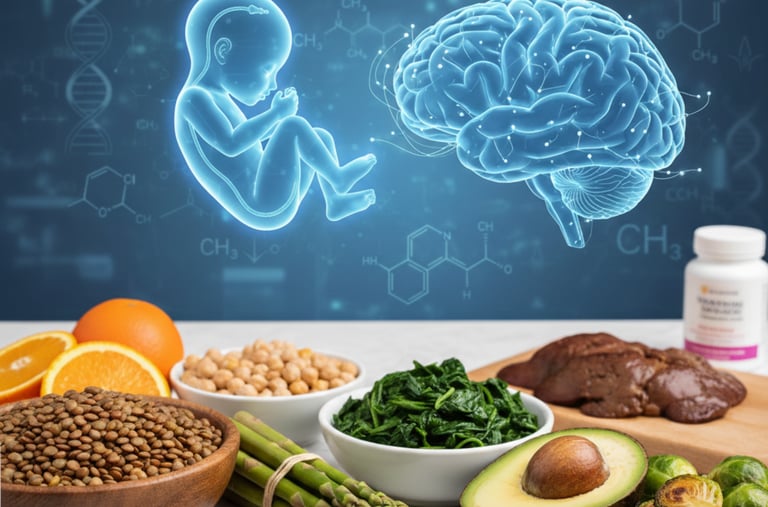
Folate-Rich Foods for Brain Health and Pregnancy
By BiteBrightly 20 February 2026: This post might contain affiliate links.
Your doctor just confirmed your pregnancy. The first thing she says: "Start taking folic acid immediately—it's critical for preventing neural tube defects." You pick up a prenatal vitamin and assume you're covered. But weeks later, you're exhausted, struggling with brain fog, and increasingly anxious. Meanwhile, your baby's neural tube is forming right now—in these critical first weeks—and adequate folate is the difference between healthy development and devastating birth defects. What your doctor didn't tell you: synthetic folic acid in supplements isn't the same as natural folate from food, and many people (up to 60% of certain populations) carry genetic variants that impair folic acid metabolism, meaning those supplements might not be working as well as you think. What if food-based folate—the form your body evolved to use—could provide superior neural protection for your developing baby, support your own mental clarity and mood, and reduce your risk of cognitive decline as you age? If you're pregnant, planning pregnancy, or concerned about brain health, you need to understand that folate isn't just important—it's foundational—and the source matters profoundly.
Folate (also called vitamin B9) is one of the most critical vitamins for human health, yet according to research from the CDC, many women of childbearing age have inadequate folate status. Folate deficiency during pregnancy dramatically increases the risk of neural tube defects—serious birth defects of the brain and spine including spina bifida and anencephaly. Since 1998, the United States has mandated folic acid fortification of grain products, which has reduced neural tube defects by approximately 35%. However, fortification provides synthetic folic acid, not natural folate, and emerging research suggests the distinction matters.
According to research in The American Journal of Clinical Nutrition, folate is essential for DNA synthesis, cell division, neurotransmitter production, and methylation—a biochemical process critical for gene expression, brain function, and detoxification. During pregnancy, folate requirements increase dramatically because of the rapid cell division required to form a baby. The neural tube (which becomes the brain and spinal cord) forms during weeks 3-4 of pregnancy—often before a woman even knows she's pregnant. Inadequate folate during this critical window causes neural tube defects.
Beyond pregnancy, folate is crucial throughout life. Folate deficiency is linked to elevated homocysteine (an amino acid that damages blood vessels and increases cardiovascular disease and dementia risk), depression (folate is required to produce serotonin and dopamine), cognitive decline (low folate status accelerates brain aging), and megaloblastic anemia (large, immature red blood cells that can't carry oxygen effectively).
The mechanisms are clear. Folate is required for one-carbon metabolism—the biochemical pathway that synthesizes DNA, produces neurotransmitters, and methylates genes to control their expression. During pregnancy, inadequate folate impairs DNA synthesis in rapidly dividing fetal cells, leading to neural tube defects and other developmental problems. In the brain throughout life, inadequate folate disrupts neurotransmitter production (contributing to depression and cognitive symptoms) and elevates homocysteine (which is neurotoxic and damages brain cells).
Here's the critical distinction most people miss: "Folic acid" (synthetic form in supplements and fortified foods) must be converted by the body into active folate forms. Many people carry MTHFR gene variants (affecting 30-60% of certain populations) that reduce the enzyme activity needed for this conversion. These individuals may have adequate folic acid intake but insufficient active folate, because they can't efficiently convert the synthetic form. Natural folate from food is already in bioavailable forms that bypass this conversion problem.
According to research in The Lancet, high folic acid intake (from fortified foods plus supplements) combined with low vitamin B12 can mask B12 deficiency while allowing neurological damage to progress—a concerning interaction that doesn't occur with natural folate from food.
This comprehensive guide reveals the richest folate food sources (both animal and plant-based) organized by folate content, why folate from food is superior to synthetic folic acid, how much folate you need for pregnancy, brain health, and general wellness, folate's role in preventing neural tube defects and supporting cognitive function, foods that enhance or impair folate absorption, and realistic strategies for meeting high pregnancy folate needs (600 mcg DFE daily) through food.
Key Takeaways
Folate (vitamin B9) is critical for DNA synthesis, cell division, neurotransmitter production, and methylation
RDA: 400 mcg DFE for adults, 600 mcg DFE for pregnant women, 500 mcg DFE for breastfeeding women
Neural tube forms weeks 3-4 of pregnancy (often before women know they're pregnant)—adequate folate must be present BEFORE conception
Folate deficiency causes neural tube defects (spina bifida, anencephaly), elevated homocysteine, depression, cognitive decline, megaloblastic anemia
Natural folate from food is superior to synthetic folic acid in supplements (bypasses MTHFR conversion issues)
30-60% of certain populations have MTHFR gene variants impairing folic acid conversion
Richest sources: Beef liver, lentils, asparagus, spinach, black-eyed peas, Brussels sprouts, avocado, broccoli
Folate is water-soluble and heat-sensitive—cooking methods matter (steaming > boiling)
Folate works synergistically with vitamins B12, B6, and B2 for optimal metabolism
Preconception folate status is critical—women planning pregnancy should optimize intake 3+ months before conceiving
Understanding Folate (Vitamin B9)
What is Folate?
Folate is the natural form of vitamin B9 found in foods. "Folic acid" is the synthetic form used in supplements and fortified foods. While often used interchangeably, they are biochemically different, and the distinction has important health implications.
Chemical forms:
Natural folate: Exists in multiple forms in food (5-methyltetrahydrofolate, tetrahydrofolate, 5-formyltetrahydrofolate, etc.)—already in bioavailable forms the body can use directly
Synthetic folic acid: Must be converted by the enzyme MTHFR (methylenetetrahydrofolate reductase) into active forms before the body can use it
Why this matters: People with MTHFR gene variants (very common—30-60% of populations depending on ethnicity) have reduced enzyme activity. They struggle to convert synthetic folic acid into active folate, potentially leading to inadequate functional folate despite "adequate" intake from fortified foods and supplements.
Folate's Critical Functions
DNA synthesis and cell division: Folate provides the one-carbon units required to synthesize DNA nucleotides (the building blocks of DNA). Without adequate folate, cells cannot replicate their DNA and therefore cannot divide. This is particularly critical during pregnancy (rapid fetal cell division), early childhood (growth), and in tissues with rapid cell turnover (bone marrow producing blood cells, GI tract lining).
Methylation: Folate is essential for methylation—the process of adding methyl groups (CH3) to DNA, proteins, and other molecules. Methylation controls gene expression (turning genes on/off), synthesizes neurotransmitters, produces myelin (insulation around nerves), and detoxifies harmful substances.
Neurotransmitter production: Folate is required to produce serotonin, dopamine, and norepinephrine—neurotransmitters essential for mood, motivation, focus, and emotional regulation. Low folate impairs neurotransmitter synthesis, contributing to depression, anxiety, and cognitive symptoms.
Homocysteine metabolism: Folate (along with vitamins B12 and B6) converts homocysteine to methionine. Without adequate folate, homocysteine accumulates. Elevated homocysteine is neurotoxic (damages brain cells), damages blood vessels (increases cardiovascular disease risk), and accelerates cognitive decline.
Red blood cell formation: Folate is required for DNA synthesis in bone marrow cells producing red blood cells. Severe folate deficiency causes megaloblastic anemia—large, immature red blood cells that cannot carry oxygen efficiently, resulting in fatigue, weakness, and shortness of breath.
Folate Requirements
RDA (Recommended Dietary Allowances) in mcg DFE:
Adults (19+ years): 400 mcg DFE
Pregnant women: 600 mcg DFE
Breastfeeding women: 500 mcg DFE
Children 1-3 years: 150 mcg DFE
Children 4-8 years: 200 mcg DFE
Children 9-13 years: 300 mcg DFE
Teens 14-18 years: 400 mcg DFE
DFE = Dietary Folate Equivalents (accounts for the fact that synthetic folic acid is more bioavailable than natural folate):
1 mcg food folate = 1 mcg DFE
1 mcg synthetic folic acid (from fortified food) = 1.7 mcg DFE
1 mcg synthetic folic acid (from supplement taken on empty stomach) = 2 mcg DFE
Upper Tolerable Limit: 1,000 mcg daily from synthetic folic acid (supplements and fortified foods). No upper limit for natural folate from food.
Folate Deficiency: Consequences
Neural tube defects (pregnancy): The most devastating consequence. Inadequate folate during the first 3-4 weeks of pregnancy (when the neural tube forms) causes:
Spina bifida: Incomplete closure of the spine, leading to nerve damage, paralysis, and bowel/bladder dysfunction
Anencephaly: Absence of major portions of the brain and skull—always fatal
Megaloblastic anemia: Large, immature red blood cells resulting from impaired DNA synthesis in bone marrow. Symptoms: severe fatigue, weakness, shortness of breath, pale skin, rapid heartbeat.
Elevated homocysteine: Leads to:
Cardiovascular disease (damages blood vessels)
Cognitive decline and dementia
Depression
Depression and anxiety: Impaired neurotransmitter synthesis contributes to mood disorders. Multiple studies show association between low folate status and depression.
Cognitive impairment: Poor memory, difficulty concentrating, mental fatigue. Folate deficiency accelerates cognitive decline in aging.
Pregnancy complications: Beyond neural tube defects, folate deficiency increases risk of preterm birth, low birth weight, and placental abruption.
Who's at Highest Risk for Deficiency?
Women of childbearing age (especially if not consuming fortified grains)
Pregnant and breastfeeding women (dramatically increased requirements)
People with malabsorption (celiac disease, Crohn's disease, intestinal surgery)
Heavy alcohol users (alcohol impairs folate absorption and metabolism)
People taking certain medications (methotrexate, sulfasalazine, some antiepileptics)
Elderly adults (reduced absorption, poor diet quality)
People with MTHFR gene variants taking only synthetic folic acid
Vegans not eating fortified foods (plant foods have folate but absorption can be lower)
Folate-Rich Foods: Animal Sources
1. Beef Liver
The folate champion: 3 oz cooked beef liver provides 215 mcg folate (54% DFE for adults, 36% for pregnant women).
Why it's exceptional: Liver is the most concentrated food source of folate, plus it provides vitamin B12 (works synergistically with folate), iron, vitamin A, and complete protein. The folate in liver is highly bioavailable.
Caution for pregnancy: Liver is very high in preformed vitamin A (retinol). Excessive vitamin A during pregnancy can cause birth defects. Pregnant women should limit liver to 1-2 servings per week maximum, not daily.
How to use: 3 oz serving 1-2x weekly. Sauté with onions, make pâté, or mix into ground beef dishes.
2. Chicken Liver
Why it's valuable: 3 oz cooked chicken liver provides approximately 160 mcg folate (40% DFE for adults, 27% for pregnant women). Milder flavor than beef liver. Also provides B12, iron, and vitamin A.
Same pregnancy caution: Limit to 1-2 servings weekly due to high vitamin A content.
How to use: 3 oz serving 1-2x weekly. Make chicken liver pâté, sauté with mushrooms and onions.
3. Eggs
Why they help: 1 large egg provides approximately 24 mcg folate (6% DFE). While not high per egg, eggs are a consistent folate source plus they provide choline (another critical nutrient for fetal brain development).
How to use: 2-3 eggs daily during pregnancy is beneficial (provides ~50 mcg folate plus substantial choline).
Folate-Rich Foods: Legumes and Beans
Legumes are among the richest plant sources of folate and should be emphasized in any folate-optimizing diet.
4. Lentils
Folate powerhouse: 1 cup cooked lentils provides 358 mcg folate (90% DFE for adults, 60% for pregnant women)—one of the highest plant sources!
Why they're ideal: Lentils are inexpensive, versatile, easy to prepare, and provide folate plus fiber, iron, and protein. Red lentils cook in 15-20 minutes, making them practical for frequent use.
How to use: 1 cup 4-5x weekly. Lentil soup, dal, lentil bolognese, add to salads.
5. Black-Eyed Peas
Excellent folate: 1 cup cooked black-eyed peas provides 358 mcg folate (90% DFE for adults, 60% for pregnant women)—equal to lentils!
How to use: 1 cup 3-4x weekly. Southern-style with greens, in salads, or as side dish.
6. Kidney Beans
High folate: 1 cup cooked kidney beans provides 230 mcg folate (58% DFE for adults, 38% for pregnant women).
How to use: 1 cup 3-4x weekly. Chili, three-bean salad, burritos.
7. Chickpeas (Garbanzo Beans)
Substantial folate: 1 cup cooked chickpeas provides 282 mcg folate (71% DFE for adults, 47% for pregnant women).
How to use: 1 cup regularly. Hummus (with lemon—vitamin C!), roasted chickpeas, chickpea curry, salads.
8. Pinto Beans
Good folate: 1 cup cooked pinto beans provides 294 mcg folate (74% DFE for adults, 49% for pregnant women).
How to use: 1 cup 3-4x weekly. Refried beans, burritos, bean soup.
9. Lima Beans
High folate: 1 cup cooked lima beans provides 156 mcg folate (39% DFE for adults, 26% for pregnant women).
How to use: 1 cup 2-3x weekly. Succotash, butter bean soup, as side dish.
Folate-Rich Foods: Vegetables
Many vegetables provide substantial folate, particularly dark leafy greens and certain other vegetables.
10. Asparagus
Exceptionally high: 1 cup cooked asparagus (6-8 spears) provides 268 mcg folate (67% DFE for adults, 45% for pregnant women)—one of the highest vegetable sources!
Why it's valuable: Asparagus is a spring vegetable that can be eaten frequently during its season, providing a major folate boost.
How to use: 1 cup (6-8 spears) 3-4x weekly. Roasted, steamed, grilled, or sautéed.
11. Spinach
High folate (cooked): 1 cup cooked spinach provides 263 mcg folate (66% DFE for adults, 44% for pregnant women). Raw spinach provides much less per cup (58 mcg per cup raw) because cooking concentrates the volume.
How to use: Emphasize cooked spinach. 1-2 cups cooked 4-5x weekly. Sautéed with garlic, in soups, omelets, pasta.
12. Brussels Sprouts
Substantial folate: 1 cup cooked Brussels sprouts provides 157 mcg folate (39% DFE for adults, 26% for pregnant women).
How to use: 1 cup 3-4x weekly. Roasted with olive oil, sautéed, in pasta.
13. Broccoli
Good folate: 1 cup cooked broccoli provides 168 mcg folate (42% DFE for adults, 28% for pregnant women).
How to use: 1 cup 4-5x weekly. Steamed, roasted, stir-fried.
14. Romaine Lettuce
Moderate folate: 2 cups raw romaine provides 128 mcg folate (32% DFE for adults, 21% for pregnant women).
How to use: Large salads daily. Base for Caesar salads, wraps.
15. Beets and Beet Greens
Beets: 1 cup cooked beets provides 136 mcg folate (34% DFE). Beet greens: 1 cup cooked beet greens provides 20 mcg folate (less than beets themselves, but nutritious).
How to use: 1 cup beets 2-3x weekly. Roasted, pickled, in salads.
16. Turnip Greens
Good folate: 1 cup cooked turnip greens provides 170 mcg folate (43% DFE).
How to use: 1 cup 2-3x weekly. Southern-style with bacon, in soups.
17. Mustard Greens
Good folate: 1 cup cooked mustard greens provides 103 mcg folate (26% DFE).
How to use: 1 cup 2-3x weekly. Sautéed, in soups, Southern-style preparation.
18. Bok Choy
Moderate folate: 1 cup cooked bok choy provides 70 mcg folate (18% DFE).
How to use: 1-2 cups 2-3x weekly. Stir-fries, soups.
Folate-Rich Foods: Fruits
While most fruits provide modest folate compared to legumes and vegetables, a few are notable sources.
19. Avocado
Substantial folate: 1 whole avocado provides 163 mcg folate (41% DFE for adults, 27% for pregnant women).
Why it's valuable: Avocado provides healthy monounsaturated fats that support nutrient absorption, plus folate, fiber, and potassium.
How to use: 1/2 to 1 avocado daily. In salads, on toast, in smoothies, guacamole.
20. Oranges and Orange Juice
Moderate folate:
1 large orange: 55 mcg folate (14% DFE)
1 cup orange juice (not from concentrate): 74 mcg folate (19% DFE)
How to use: 1 orange or 1 cup orange juice daily.
21. Papaya
Good folate: 1 medium papaya provides 115 mcg folate (29% DFE).
How to use: 1 medium papaya 2-3x weekly. Fresh, in fruit salads, smoothies.
22. Bananas
Moderate folate: 1 medium banana provides 24 mcg folate (6% DFE).
How to use: 1-2 bananas daily. While not high-folate individually, bananas are consumed frequently and contribute consistently.
Folate-Rich Foods: Nuts and Seeds
23. Sunflower Seeds
Good folate: 1/4 cup (1 oz) sunflower seeds provides 76 mcg folate (19% DFE).
How to use: 1/4 cup daily. In salads, trail mix, on yogurt, sunflower seed butter.
24. Peanuts
Good folate: 1 oz peanuts provides 68 mcg folate (17% DFE).
How to use: 1-2 oz daily. As snack, peanut butter (2 tablespoons = ~30 mcg folate).
Folate-Rich Foods: Whole Grains and Fortified Products
In the United States, enriched grains (flour, bread, pasta, rice, cereal) are fortified with synthetic folic acid. This provides substantial folic acid intake for most Americans.
25. Fortified Breakfast Cereals
Very high folic acid: Many breakfast cereals are fortified with 100-400 mcg folic acid per serving (170-680 mcg DFE—check labels).
Note: This is synthetic folic acid, not natural folate. For people with MTHFR variants or concerns about high folic acid intake, emphasize natural folate from food rather than relying heavily on fortified cereals.
How to use: If using fortified cereals, 1 serving daily can provide substantial folic acid.
26. Enriched Bread, Pasta, Rice
Moderate folic acid from fortification:
1 slice enriched white/wheat bread: ~50 mcg folic acid (85 mcg DFE)
1 cup cooked enriched pasta: ~100 mcg folic acid (170 mcg DFE)
1 cup cooked enriched white rice: ~90 mcg folic acid (153 mcg DFE)
Whole grain versions (that aren't enriched) don't have added folic acid but provide natural folate (though in lower amounts than enriched versions).
27. Wheat Germ
Very high folate: 1/4 cup wheat germ provides 80 mcg folate (20% DFE).
How to use: 2-4 tablespoons daily. Sprinkle on yogurt, oatmeal, salads, or blend into smoothies.
Strategic Eating for High Folate Intake
The High-Folate Plate
Emphasize legumes (daily): 1 cup lentils, black-eyed peas, or chickpeas provides 280-360 mcg folate—nearly half of adult needs, approaching half of pregnancy needs from one food!
Include folate-dense vegetables (daily): Asparagus, cooked spinach, Brussels sprouts, broccoli.
Add avocado (daily): 1/2 to 1 avocado provides 80-160 mcg folate plus healthy fats.
Incorporate organ meats (1-2x weekly): Beef or chicken liver provides 160-215 mcg folate per serving.
Include eggs (daily): 2-3 eggs provide ~50-70 mcg folate plus choline.
Eat folate-rich fruits: Oranges, papaya, bananas contribute consistently.
Consider fortified foods (if appropriate): Enriched grains and fortified cereals provide synthetic folic acid—acceptable for people without MTHFR concerns, though natural food sources are preferable.
Cooking Methods to Preserve Folate
Folate is water-soluble and heat-sensitive—significant amounts can be lost during cooking.
Best methods (minimize folate loss):
Steaming: Minimal contact with water, gentle heat
Microwaving: Quick cooking, minimal water
Stir-frying: Quick, high heat, minimal water
Roasting: Dry heat, though longer cooking time (moderate folate retention)
Methods that reduce folate:
Boiling: Folate leaches into cooking water. If boiling, use the cooking water in soups/stews to recover leached folate.
Prolonged cooking: Extended heat exposure degrades folate
Example: Boiling spinach can reduce folate content by 50%+. Steaming spinach retains 80-90% of folate.
Sample High-Folate Days
Sample Day 1: Pregnancy-Optimized (600+ mcg DFE target)
2 scrambled eggs (48 mcg folate)
1 slice whole grain toast with 1/2 avocado (80 mcg folate)
1 orange (55 mcg folate)
Total: 183 mcg folate
1/4 cup sunflower seeds (76 mcg folate)
Large salad: 2 cups romaine lettuce (128 mcg folate)
1 cup cooked chickpeas (282 mcg folate)
Cherry tomatoes, cucumber, olive oil dressing
Total: 410 mcg folate
Snack:
1 banana (24 mcg)
2 tablespoons peanut butter (~30 mcg)
3 oz chicken breast
1 cup cooked broccoli (168 mcg folate)
1 cup cooked lentils (358 mcg folate)
Olive oil, garlic
Total: 526 mcg folate
Daily Total: ~1,307 mcg folate (exceeds 600 mcg pregnancy target significantly!)
Key strategies:
Emphasized legumes twice (chickpeas + lentils = 640 mcg!)
Included multiple folate vegetables
Added avocado and eggs (plus choline)
All natural folate from food
Sample Day 2: Vegetarian High-Folate
Breakfast:
1 cup cooked oatmeal with 2 tablespoons wheat germ (80 mcg folate)
1 medium papaya (115 mcg folate)
1/4 cup walnuts
Total: 195 mcg
Snack:
1 cup orange juice (74 mcg)
Lunch:
Lentil soup: 1.5 cups cooked lentils (537 mcg folate!)
Side salad with romaine
Whole grain roll
Total: ~580 mcg
Snack:
Hummus (1/2 cup chickpeas = ~140 mcg folate) with vegetables
Dinner:
1 cup cooked asparagus (268 mcg folate)
1 cup cooked kidney beans (230 mcg folate)
1 cup cooked brown rice
Total: 498 mcg
Daily Total: ~1,487 mcg folate
Sample Day 3: Including Liver (1x weekly)
Breakfast:
2 eggs with 1 cup sautéed spinach (263 mcg folate)
Whole grain toast
Total: 311 mcg
Lunch:
3 oz beef liver sautéed with onions (215 mcg folate!)
1 cup roasted Brussels sprouts (157 mcg folate)
Sweet potato
Total: 372 mcg
Snack:
1 avocado (163 mcg)
Dinner:
Stir-fry: chicken, bok choy (70 mcg), broccoli (168 mcg), bell peppers
1 cup brown rice
Total: 238 mcg
Daily Total: ~1,084 mcg folate
Note: This day includes liver (once weekly max for pregnant women due to vitamin A).
Folate During Pregnancy: Special Considerations
Preconception Folate is Critical
The neural tube forms during weeks 3-4 of pregnancy—often before a woman knows she's pregnant. By the time pregnancy is confirmed, this critical window may have passed.
Therefore: Women planning pregnancy should optimize folate intake 3+ months before conceiving. This ensures adequate folate stores and circulating folate when conception occurs.
CDC recommendation: All women of childbearing age who could become pregnant should consume 400 mcg folic acid daily (or equivalent from food) regardless of pregnancy plans, because 50% of pregnancies are unplanned.
Pregnancy Folate Strategy
Target: 600 mcg DFE daily
Approach 1 (food-focused, ideal):
Emphasize legumes daily (1-1.5 cups provides 350-540 mcg!)
Include 1-2 cups cooked folate-rich vegetables (asparagus, spinach, broccoli) daily
Eat 1/2 to 1 avocado daily
Include eggs daily (folate + choline)
Add sunflower seeds or peanuts
Liver 1x weekly (not more—vitamin A concerns)
This approach can provide 600+ mcg folate from food, which is ideal.
Approach 2 (food + supplement):
Emphasize folate-rich foods (aim for 400+ mcg from food)
Add prenatal vitamin with 400-600 mcg folic acid
Total: 800-1,000 mcg DFE (well above 600 target, which is safe and appropriate during pregnancy)
Approach 3 (for MTHFR concerns):
Emphasize food folate (same strategy as Approach 1)
Choose prenatal with methylfolate (5-MTHF) instead of folic acid—already in active form, bypasses MTHFR conversion
Many prenatal vitamins now offer methylfolate options
Beyond Folate: Synergistic Nutrients
Vitamin B12: Works with folate in one-carbon metabolism and homocysteine conversion. Deficiency of either causes similar problems. Pregnant women need adequate B12 (animal products, fortified foods, or supplements for vegans).
Vitamin B6: Works with folate and B12 to metabolize homocysteine. Found in poultry, fish, potatoes, chickpeas, bananas.
Vitamin B2 (riboflavin): Required for MTHFR enzyme function (converts folic acid to active folate). Found in dairy, eggs, meat, almonds, spinach.
Choline: Critical for fetal brain development, works synergistically with folate. Found in eggs (richest source), beef liver, chicken, fish, soybeans. Pregnant women need 450 mg daily.
Zinc: Required for folate metabolism. Found in meat, shellfish, legumes, seeds, nuts.
MTHFR Gene Variants: What You Need to Know
What is MTHFR?
MTHFR (methylenetetrahydrofolate reductase) is the enzyme that converts synthetic folic acid and dietary folate into the active form 5-methyltetrahydrofolate (5-MTHF).
Common MTHFR variants:
C677T variant: Reduces enzyme activity by 30-70% (depending on whether you have one or two copies). Found in 30-40% of populations (varies by ethnicity).
A1298C variant: Reduces enzyme activity by 10-20%.
Why it matters: People with these variants, especially C677T, may have difficulty converting synthetic folic acid into active folate. This can result in:
Inadequate active folate despite consuming fortified foods/supplements
Elevated homocysteine
Increased risk of neural tube defects if folate status is inadequate
Accumulation of unmetabolized folic acid (potential concerns)
If You Have MTHFR Variants
Prioritize food folate: Natural folate from food is already in bioavailable forms that bypass the MTHFR bottleneck.
Choose methylfolate supplements: If supplementing, use methylfolate (5-MTHF or L-methylfolate) instead of folic acid. Methylfolate is already in active form.
Ensure adequate B12, B6, B2: These support folate metabolism.
Monitor homocysteine: Test homocysteine levels to ensure folate/B12/B6 status is adequate.
Don't panic: MTHFR variants are common and manageable with appropriate nutrition. They don't doom you to deficiency—they just mean you need to be more strategic about folate sources.
Timeline: When Will You See Benefits?
Immediate (pregnancy): Adequate folate must be present when the neural tube forms (weeks 3-4). Benefits are preventive—you won't "feel" anything, but you're protecting your baby from devastating birth defects.
Weeks 2-4 (general health): Improved red blood cell production, better oxygen delivery (if anemic). More energy, less fatigue.
Weeks 4-8: Normalized homocysteine levels (if elevated). Improved cardiovascular and brain health markers.
Months 1-3 (mood/cognition): Improved neurotransmitter production may enhance mood, reduce depression symptoms, improve mental clarity. Research shows folate supplementation (especially methylfolate) can improve depression treatment outcomes.
Long-term (years): Adequate folate throughout life supports healthy aging, reduces cognitive decline risk, protects cardiovascular health.
Conclusion
Folate is foundational—not optional. During pregnancy, adequate folate is the difference between healthy neural tube closure and catastrophic birth defects. Throughout life, folate determines whether your brain produces adequate neurotransmitters, whether your cardiovascular system stays healthy, and whether your cognitive function remains sharp as you age.
The richest folate sources—lentils (358 mcg/cup), black-eyed peas (358 mcg/cup), asparagus (268 mcg/cup), cooked spinach (263 mcg/cup), chickpeas (282 mcg/cup), and beef liver (215 mcg per 3 oz)—should become dietary staples. One cup of lentils provides 60% of pregnancy folate needs and 90% of general adult needs from a single food! Including 1-1.5 cups of legumes daily plus folate-rich vegetables (asparagus, spinach, broccoli, Brussels sprouts) and avocado can easily provide 600+ mcg folate from food alone—meeting even pregnancy requirements without relying heavily on synthetic folic acid.
For women planning pregnancy, preconception folate status is critical. The neural tube forms during weeks 3-4—often before pregnancy is confirmed. Women should optimize folate intake 3+ months before conception through folate-rich foods (and prenatal vitamins if appropriate). Don't wait until you see the positive pregnancy test—by then, the most critical window may have passed.
The synthetic folic acid vs. natural folate distinction matters. While folic acid fortification has reduced neural tube defects significantly, natural folate from food is superior for several reasons: it's already in bioavailable forms (bypassing MTHFR conversion issues affecting 30-60% of populations), it doesn't create the potentially concerning accumulation of unmetabolized folic acid, and it doesn't mask vitamin B12 deficiency while allowing neurological damage. Emphasize food folate whenever possible.
Beyond pregnancy, folate supports mental health (producing serotonin and dopamine), protects brain function (preventing cognitive decline), maintains cardiovascular health (converting harmful homocysteine), and ensures healthy red blood cell production. Low folate status contributes to depression, cognitive decline, elevated cardiovascular risk, and anemia—all preventable through adequate intake.
Cook folate-rich foods gently to preserve folate content—steaming, microwaving, and stir-frying preserve more folate than boiling. Pair folate-rich meals with adequate B12, B6, B2, and choline for optimal metabolism and synergistic benefits.
Whether you're pregnant, planning pregnancy, concerned about mood and cognitive function, or supporting long-term brain and cardiovascular health, folate-rich foods are non-negotiable. Your brain, your baby, and your long-term health depend on it.
To healthy brains, healthy pregnancies, and optimal folate status!
References and Further Reading
Centers for Disease Control and Prevention - Folic Acid Recommendations
National Institutes of Health Office of Dietary Supplements - Folate Fact Sheet for Health Professionals
American College of Obstetricians and Gynecologists - Neural Tube Defects
Frequently Asked Questions
What's the difference between folate and folic acid and does it matter?
Folate is the natural form of vitamin B9 found in foods. Folic acid is the synthetic form used in supplements and fortified foods. The difference matters significantly: Natural folate is already in bioavailable forms the body can use directly. Synthetic folic acid must be converted by the MTHFR enzyme into active forms. 30-60% of people carry MTHFR gene variants that reduce this enzyme's activity, meaning they may struggle to convert folic acid efficiently despite "adequate" intake. These individuals may have inadequate active folate even while consuming fortified foods and supplements. Food folate bypasses this conversion issue and is generally preferred.
How much folate do I need during pregnancy and can I get it from food alone?
Pregnant women need 600 mcg DFE (dietary folate equivalents) daily. You CAN achieve this from food alone by emphasizing folate-rich foods: 1 cup lentils (358 mcg) + 1 cup cooked spinach (263 mcg) + 1/2 avocado (80 mcg) + 2 eggs (48 mcg) + 1 cup broccoli (168 mcg) = 917 mcg folate—well above 600 mcg target! The key is daily legumes (lentils, chickpeas, black-eyed peas), cooked folate-rich vegetables (asparagus, spinach, broccoli), and consistent avocado/eggs. However, many prenatal vitamins include 400-600 mcg folic acid as insurance, which is reasonable alongside food sources.
When should I start taking folate for pregnancy—when I get pregnant or before?
BEFORE! This is critical. The neural tube (which becomes the brain and spinal cord) forms during weeks 3-4 of pregnancy—often before women know they're pregnant. By the time you see a positive pregnancy test, the most critical window may have passed. Women planning pregnancy should optimize folate intake 3+ months before conception through folate-rich foods and/or prenatal vitamins. This ensures adequate folate stores and circulating folate when conception occurs. The CDC recommends all women of childbearing age consume 400 mcg folic acid daily regardless of pregnancy plans (50% of pregnancies are unplanned).
Do I have MTHFR gene variants and should I get tested?
MTHFR variants are extremely common—the C677T variant affects 30-40% of populations (varies by ethnicity). You can get tested through genetic testing companies or request the test from your doctor (simple blood test). However, many experts argue testing isn't necessary for most people—instead, just assume you might have variants and act accordingly: Emphasize natural folate from food, choose methylfolate (not folic acid) if supplementing, ensure adequate B12/B6/B2, and monitor homocysteine levels if concerned. This approach works whether you have variants or not and avoids unnecessary testing costs and anxiety.
Can I rely on fortified grains for folate or should I focus on natural food sources?
Fortified grains (bread, pasta, rice, cereal) provide substantial synthetic folic acid for most Americans—the fortification program reduced neural tube defects by 35%. However, natural food sources are preferable for several reasons: they're already in bioavailable forms (no MTHFR conversion required), they don't create potentially concerning accumulation of unmetabolized folic acid, they provide synergistic nutrients (fiber, vitamins, minerals), and they don't mask vitamin B12 deficiency (high folic acid with low B12 can hide B12 deficiency while allowing neurological damage). Emphasize food folate from legumes, vegetables, liver, and fruits, using fortified grains as supplementary, not primary, sources.
What foods have the most folate per serving?
The highest folate foods per typical serving are: Lentils and black-eyed peas (358 mcg per cup—tied for highest!), chickpeas (282 mcg per cup), asparagus (268 mcg per cup cooked), spinach cooked (263 mcg per cup), pinto beans (294 mcg per cup), kidney beans (230 mcg per cup), beef liver (215 mcg per 3 oz), Brussels sprouts (157 mcg per cup), broccoli (168 mcg per cup), and avocado (163 mcg per whole). One cup of lentils alone provides 60% of pregnancy folate needs! Emphasizing 1-2 cups of legumes daily plus folate-rich vegetables easily meets requirements.
Does cooking destroy folate in food?
Folate is water-soluble and heat-sensitive—cooking can reduce folate content by 15-50%+ depending on method. Best methods to preserve folate: steaming (retains 80-90%), microwaving (quick, minimal water), stir-frying (quick, high heat). Worst method: boiling (folate leaches into water—if boiling, use the cooking water in soups to recover lost folate). Example: Boiling spinach reduces folate by 50%+, while steaming retains 80-90%. Eat some folate foods raw when possible (salads), and use gentle cooking methods when cooking is required.
Can high folate intake be harmful?
There's no upper limit for natural folate from food—it's considered safe at any intake level from food. However, there IS an upper limit for synthetic folic acid: 1,000 mcg daily from supplements and fortified foods. Concerns about excessive folic acid include: masking vitamin B12 deficiency (high folic acid corrects the anemia from B12 deficiency but allows neurological damage to continue—a serious problem), accumulation of unmetabolized folic acid in blood (potential unknown effects), and possible increased cancer risk at very high intakes (controversial, not definitively proven). Emphasize food folate and use supplements judiciously under medical guidance, especially if taking more than one fortified product.
Should I take methylfolate supplements instead of folic acid?
If you have MTHFR gene variants (or suspect you might), are concerned about folic acid metabolism, or simply want the most bioavailable form, methylfolate (5-MTHF or L-methylfolate) is superior. It's already in active form, bypasses the MTHFR conversion step, and doesn't create unmetabolized folic acid accumulation. Many prenatal vitamins now offer methylfolate options. However, methylfolate supplements are more expensive than folic acid. For most people, emphasizing natural folate from food (which is also already bioavailable) alongside standard prenatal vitamins (if pregnant) is appropriate and effective. Methylfolate is particularly valuable for people with confirmed MTHFR variants, treatment-resistant depression, or elevated homocysteine.
What other nutrients work with folate for pregnancy and brain health?
Folate works synergistically with several B vitamins: Vitamin B12 (works with folate in one-carbon metabolism—deficiency of either causes similar problems; vegans need B12 supplements), vitamin B6 (works with folate and B12 to metabolize homocysteine—found in poultry, fish, potatoes, chickpeas), and vitamin B2/riboflavin (required for MTHFR enzyme function—found in dairy, eggs, meat, almonds, spinach). Additionally, choline is critical for fetal brain development and works synergistically with folate (found in eggs—richest source—beef liver, chicken, fish; pregnant women need 450 mg daily). Zinc is required for folate metabolism. A varied diet rich in these nutrients supports optimal folate function.
About Author
Judith Tsanga is an Applied Biosciences & Biotechnology graduate with an Advanced Level qualification in Food Science, and the founder of BiteBrightly. Her passion for food as medicine began with her own experience: after making targeted dietary changes, she noticed a meaningful improvement in her eyesight — a personal transformation that inspired her mission to share evidence-based nutrition insights that help others eat well and heal boldly. Content on BiteBrightly is for educational purposes and isn't a substitute for advice from your doctor or dietitian.
Follow on Pinterest for daily health tips, recipes, and wellness inspiration.
Important Notice: The information in this article is for educational purposes only and is not intended as medical advice or to replace professional medical treatment. Always consult your healthcare provider before making dietary changes or taking supplements, especially if you are pregnant, planning pregnancy, nursing, or have medical conditions. Folate recommendations during pregnancy should be discussed with your obstetrician. Neural tube defects have multiple risk factors beyond folate deficiency. This article does not replace prenatal care or genetic counseling. MTHFR testing and interpretation should be done under medical guidance. Excessive synthetic folic acid (>1,000 mcg daily from supplements/fortified foods) can mask vitamin B12 deficiency. Individual folate needs vary based on genetics, health status, and medications.
Related posts
Connect
Join our newsletter for fresh health tips
© 2026. All rights reserved.