Diabetic-Friendly Halloween Candy Recipes: 10 Treats Everyone Can Enjoy
10 diabetic-friendly Halloween candy recipes with carb counts. Dark choc peanut butter cups: 4g net carbs. Gummy worms: 0g. Full recipes.
by BiteBrightly
5/25/202618 min read


Diabetic-Friendly Halloween Candy Recipes: 10 Treats Everyone Can Enjoy
By BiteBrightly 25 May 2026: This post might contain affiliate links.
Halloween is one of the most candy-saturated days of the year — and for people managing diabetes, it can feel like navigating a minefield. Children with type 1 diabetes, adults with type 2 managing their blood sugar, and families where someone at the table needs to watch their carbohydrate intake all face the same challenge: how do you participate in a holiday built around sugar without the blood sugar consequences that come with it?
The answer is not to skip Halloween entirely. It is to make smarter sweets — treats that use lower-glycemic sweeteners, high-fibre ingredients, and quality fats to deliver the Halloween experience without the sharp blood sugar spike of standard candy.
This guide gives you 10 complete diabetic-friendly Halloween candy recipes — all lower in sugar than commercial alternatives, all with approximate carbohydrate counts per serving, and all genuinely delicious enough that the rest of the family will want them too.
Before we begin — an important note:
Every person managing diabetes has individual carbohydrate targets, insulin regimens, and blood sugar responses. What fits comfortably into one person's diabetes management plan may require adjustment for another. These recipes are designed as lower-sugar, lower-glycemic alternatives to standard Halloween candy — they are not a free pass to eat without counting. Please work with your healthcare team to understand how these recipes fit your specific carbohydrate targets, and monitor your blood glucose as you would with any new food. The carbohydrate counts provided are estimates — always check your specific ingredient brands, as nutritional content varies.
Key Takeaways
Standard Halloween candy is among the most glycemic-impact-dense food available — a single fun-size Snickers provides 18g of carbohydrates at a very high glycemic index, and most children (and adults) eat multiple pieces
The recipes in this guide use erythritol, monk fruit sweetener, stevia, and dark chocolate (70%+ cacao) to reduce the glycemic impact significantly — erythritol and monk fruit have a glycemic index of essentially zero and do not raise blood glucose
Fat and protein in these recipes (from nuts, nut butters, dark chocolate, Greek yogurt, and cream cheese) slow glucose absorption when carbohydrates are present — improving the glycemic response compared to the same carbohydrate load from pure sugar candy
Research confirmed that erythritol does not raise blood glucose or insulin levels in people with type 2 diabetes — making it one of the safest sugar substitutes for diabetes management available
Fibre in these recipes (from almond flour, oats, chia seeds, nuts) further slows glucose absorption — always a benefit for blood sugar management
Dark chocolate (70%+ cacao) has a glycemic index of approximately 23 — significantly lower than milk chocolate (43) or standard candy — and provides flavanols with insulin-sensitising activity
Understanding Sugar Substitutes for Diabetic Baking
Before the recipes, a quick guide to the sweeteners used throughout this guide:
Erythritol: A sugar alcohol that provides sweetness without raising blood glucose (GI of 0). It is approximately 70% as sweet as sugar and has a very clean flavour. It does not cause the digestive issues that some other sugar alcohols (particularly sorbitol and maltitol) can cause at moderate doses. The most practical sugar substitute for diabetic baking.
Monk fruit sweetener: Derived from monk fruit, it is 100–250 times sweeter than sugar with a GI of zero. Often combined with erythritol in commercial blends (such as Lakanto) for the best flavour and texture. No effect on blood glucose.
Stevia: A natural sweetener from the stevia plant, 200–300 times sweeter than sugar. GI of zero. Can have a slightly bitter aftertaste at higher doses — best used in small amounts or blended with erythritol.
Dark chocolate (70%+ cacao): Not a zero-sugar option but significantly lower glycemic than milk chocolate or standard candy. Provides beneficial flavanols alongside its modest carbohydrate content. Used in several recipes here because of its genuinely superior flavour and the meaningful nutritional benefits it provides.
Important: Maltitol (found in many commercial "sugar-free" candies) has a glycemic index of approximately 35 and can raise blood glucose significantly — not as much as sugar but meaningfully. The recipes in this guide avoid maltitol. Always check labels on commercial "sugar-free" products for maltitol content.
The 10 Diabetic-Friendly Halloween Candy Recipes
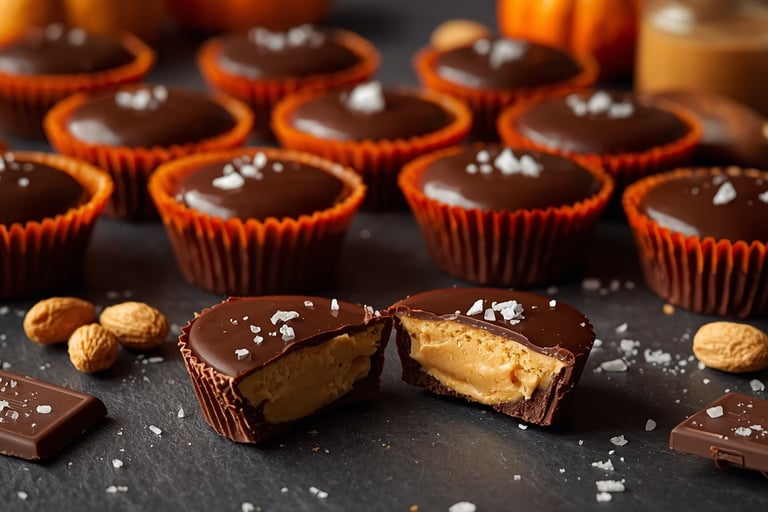
Recipe 1: Dark Chocolate Peanut Butter Cups
These are the Halloween treat that no one will know is diabetic-friendly — they taste genuinely better than the commercial version, take 20 minutes to make, and provide the protein and healthy fat that slows any glucose absorption from the dark chocolate.
Why they work for diabetes management: The dark chocolate layer provides flavanols that have documented insulin-sensitising activity alongside its modest carbohydrate content. The peanut butter filling is high in protein (7g per two tablespoons) and monounsaturated fat — both significantly slow the absorption of any carbohydrates present. Each cup provides approximately 4–5g of net carbohydrates.
Ingredients (makes 12 cups):
200g dark chocolate (70%+ cacao), chopped
2 tablespoons coconut oil
2 tablespoons erythritol or monk fruit sweetener (for the chocolate layer)
½ cup natural peanut butter (no added sugar — check labels)
3 tablespoons powdered erythritol or powdered monk fruit sweetener
1 teaspoon vanilla extract
Pinch of sea salt
How to make them:
Line a 12-cup mini muffin tin with small paper cases
Melt dark chocolate and coconut oil together in a heatproof bowl over simmering water (or microwave in 30-second bursts, stirring between each). Stir in the erythritol
Pour a thin layer of melted chocolate into the bottom of each paper case — approximately one teaspoon. Tilt each case to coat slightly up the sides
Freeze for 10 minutes until the chocolate layer is solid
Mix peanut butter with powdered erythritol, vanilla, and sea salt until smooth
Spoon a small mound of the peanut butter mixture into each chocolate cup — approximately one teaspoon, keeping it away from the edges
Pour the remaining melted chocolate over each cup to seal the peanut butter inside, covering completely
Refrigerate for at least 30 minutes until fully set
Store refrigerated for up to 2 weeks
Per cup: Approximately 4–5g net carbohydrates | 4g protein | 10g healthy fat | 120 calories
Halloween decoration: Press a small piece of orange zest or a few sea salt flakes on top before the chocolate sets for a professional finish.
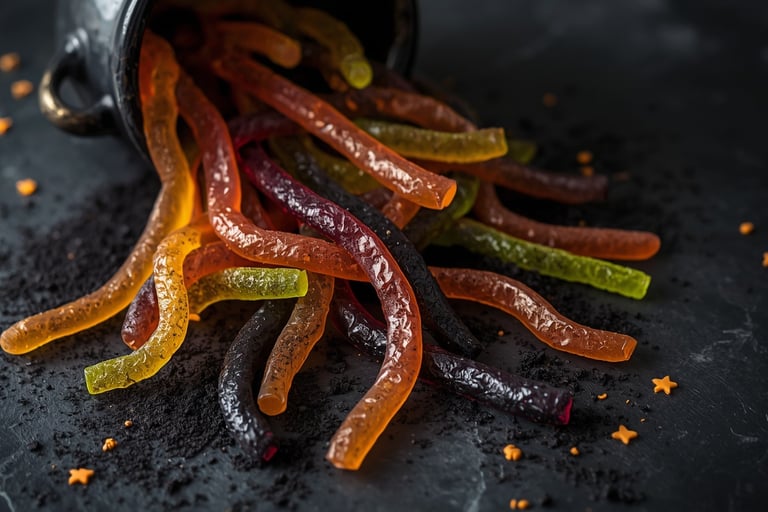
Recipe 2: Sugar-Free Gummy Worms
These gelatin-based gummies have zero added sugar and can be made in Halloween-appropriate colours — orange and black, green and purple — for the full Halloween visual experience.
Why they work for diabetes management: Gelatin itself contains no carbohydrates and no sugars. The sweetness here comes entirely from stevia or monk fruit with zero glycemic impact. The net carbohydrate content is essentially zero per serving (from the very small amount of fruit juice used for flavour and colour). Gelatin also provides collagen-supporting amino acids (glycine, proline) as a bonus.
Ingredients (makes approximately 40 gummies):
3 tablespoons unflavoured gelatin powder
200ml sugar-free flavoured liquid (options below)
1–2 tablespoons monk fruit sweetener or liquid stevia drops (adjust to taste)
Natural food colouring if desired
Flavour and colour options:
Orange Halloween worms: orange sugar-free drink mix + orange food colouring + a few drops of orange extract
Black licorice worms: black sugar-free drink mix + black food colouring + a tiny drop of anise extract
Green slime worms: lime sugar-free drink mix + green food colouring + lime zest
Purple grape worms: grape sugar-free drink mix + purple food colouring
How to make them:
Pour the sugar-free liquid into a small saucepan and sprinkle gelatin evenly over the surface
Let stand for 2 minutes (blooming) — the gelatin will absorb the liquid and soften
Heat over very low heat, stirring gently until gelatin is completely dissolved — do NOT boil
Remove from heat, stir in sweetener and food colouring
Pour into gummy worm moulds (silicone worm moulds are widely available) or into a flat dish to cut into strips once set
Refrigerate for minimum 2 hours until fully set
To make worm strips without moulds: pour into a shallow dish lined with baking paper, set, then cut into strips with scissors
Per serving (8 gummies): Approximately 0–1g net carbohydrates | 2g protein | 0g fat | 10 calories
Recipe 3: Chocolate Bark With Nuts and Seeds
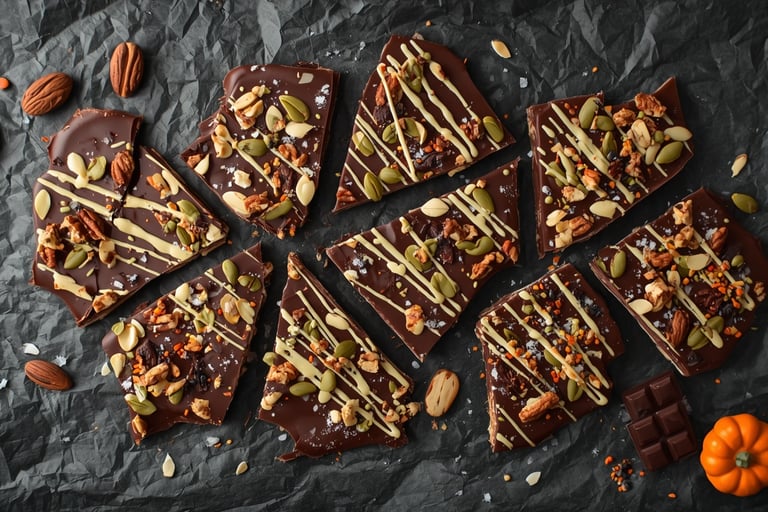
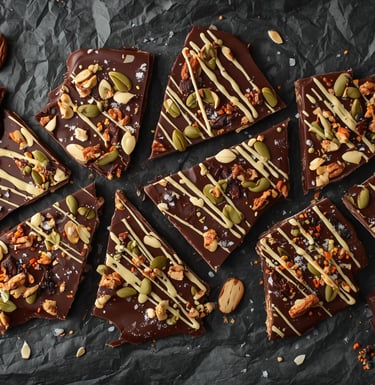
Bark is the fastest Halloween treat in this guide — 10 minutes of preparation producing a large tray of genuinely impressive treats that can be broken into irregular pieces and wrapped individually.
Why it works for diabetes management: This recipe is built on dark chocolate (GI approximately 23) combined with nuts and seeds that provide fat and protein to further slow any glucose absorption. The total glycemic impact of a serving of this bark is significantly lower than any commercial candy of equivalent serving size. Pumpkin seeds are particularly seasonal and provide zinc — a mineral that supports insulin signalling.
Ingredients (makes approximately 20 serving pieces):
300g dark chocolate (70%+ cacao), chopped
2 tablespoons erythritol (optional — the 70%+ dark chocolate provides sufficient sweetness for most people)
½ cup mixed nuts (almonds, walnuts, pecans), roughly chopped
¼ cup pumpkin seeds
¼ cup sunflower seeds
2 tablespoons unsweetened shredded coconut
½ teaspoon flaky sea salt
Optional Halloween decorations: sugar-free orange and black sprinkles, a drizzle of white sugar-free chocolate
How to make it:
Line a large baking tray (approximately 30×40cm) with baking paper
Melt dark chocolate (with erythritol if using) over a double boiler or in the microwave in 30-second bursts, stirring until smooth
Pour melted chocolate onto the lined tray and spread to approximately 0.5cm thickness using a spatula
Immediately scatter nuts, pumpkin seeds, sunflower seeds, and coconut evenly over the surface while the chocolate is still wet
Sprinkle flaky sea salt over everything
Add any Halloween decoration — a drizzle of white chocolate, orange and black sprinkles
Refrigerate for minimum 1 hour until completely set and firm
Break into irregular pieces using your hands — the irregular shapes are part of the charm
Store refrigerated or at cool room temperature for up to 2 weeks
Per piece (approximately 15g): Approximately 4–5g net carbohydrates | 2g protein | 8g healthy fat | 95 calories
Recipe 4: Frozen Greek Yogurt Ghosts
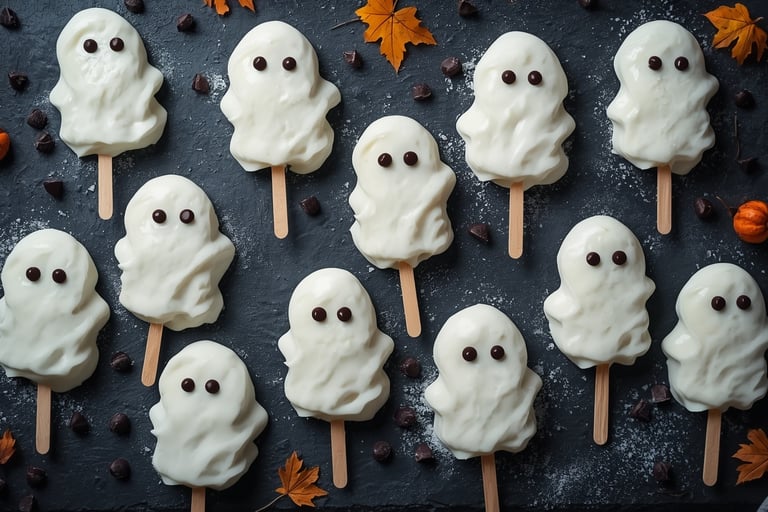
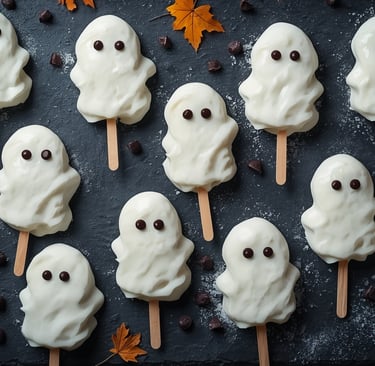
These frozen yogurt ghosts are the most visually delightful recipe in the guide — white ghost shapes made from thick plain Greek yogurt with dark chocolate chip eyes, frozen solid, and genuinely cooling on a warm Halloween evening.
Why they work for diabetes management: Plain full-fat Greek yogurt provides 17–20g of protein per cup — more than enough to significantly slow any glucose absorption from the small amount of natural sugars in the yogurt. The carbohydrate content is primarily lactose, which has a glycemic index of approximately 45 and is present in modest quantities in Greek yogurt after the straining process removes much of the whey. Each ghost provides approximately 4–5g of carbohydrates.
Ingredients (makes 12 ghosts):
2 cups plain full-fat Greek yogurt
2 tablespoons erythritol or monk fruit sweetener
1 teaspoon vanilla extract
24 dark chocolate chips (for eyes — 2 per ghost)
12 small wooden lolly sticks or toothpicks
How to make them:
Mix Greek yogurt with erythritol and vanilla until well combined and smooth
Line a baking tray with baking paper
Using a large spoon or piping bag fitted with a round tip, create ghost shapes on the lined tray — approximately the size of a golf ball with a slightly irregular, flowing bottom edge to suggest a ghost floating
Gently press two dark chocolate chips into each ghost for eyes — position them in the upper third of each ghost shape
Insert a lolly stick or toothpick into the bottom of each ghost
Freeze for minimum 3 hours until completely solid (overnight is best)
Serve directly from the freezer — they melt quickly at room temperature
Per ghost: Approximately 4–5g net carbohydrates | 5g protein | 3g fat | 65 calories
Make ahead: These freeze perfectly for up to 2 weeks. Make them a week before Halloween for genuinely stress-free preparation.
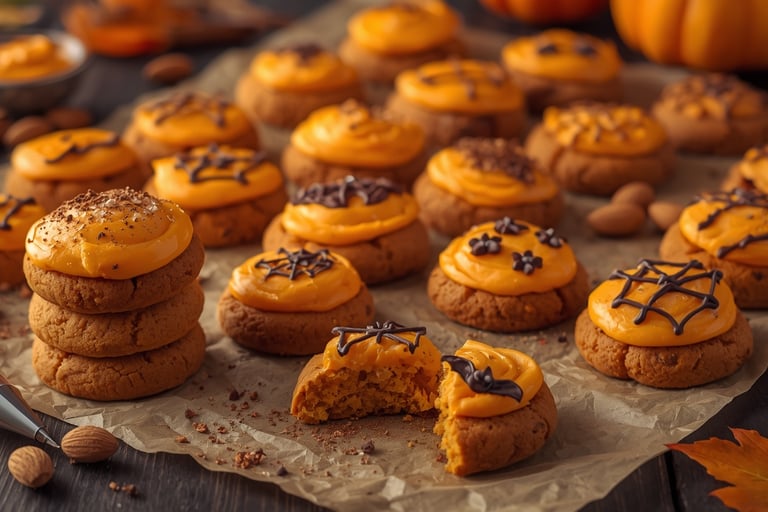
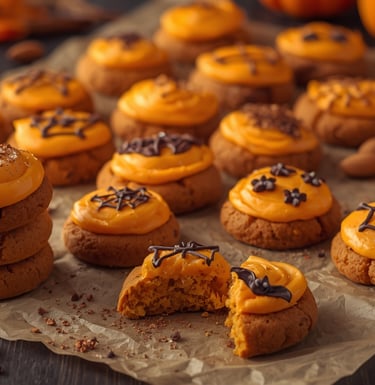
Recipe 5: Almond Flour Pumpkin Cookies
These soft, slightly cakey cookies are made with almond flour rather than wheat flour — providing significantly more protein and healthy fat alongside fewer carbohydrates and a much lower glycemic impact than standard cookies.
Why they work for diabetes management: Almond flour (made from blanched ground almonds) provides approximately 6g of protein and 14g of fat per quarter cup — transforming a cookie from a pure-carbohydrate food into a protein-fat-carbohydrate combination with dramatically slower glucose absorption. The net carbohydrates per cookie are approximately 4–5g (compared to 15–20g for a standard sugar cookie of equivalent size). Pumpkin puree provides beta-carotene and fibre.
Ingredients (makes 18 cookies):
2 cups almond flour (not almond meal — the finer texture produces better cookies)
¼ cup pure pumpkin puree (not pumpkin pie filling — check for no added sugar)
¼ cup erythritol or monk fruit sweetener
1 large egg
2 tablespoons coconut oil, melted
1 teaspoon vanilla extract
1 teaspoon pumpkin pie spice (or ½ tsp cinnamon + ¼ tsp ginger + ¼ tsp nutmeg)
½ teaspoon baking soda
Pinch of salt
For decoration:
Sugar-free orange icing: 2 tablespoons cream cheese + 1 tablespoon powdered erythritol + orange food colouring + a drop of vanilla
Dark chocolate for spider web or bat details
How to make them:
Preheat oven to 175°C (350°F / Gas mark 4)
Mix almond flour, erythritol, pumpkin pie spice, baking soda, and salt in a large bowl
In a separate bowl, whisk together pumpkin puree, egg, melted coconut oil, and vanilla
Pour the wet ingredients into the dry and mix until a soft dough forms — it will be slightly sticky
Roll the dough into balls (approximately one heaped tablespoon each) and place on a lined baking tray, spaced 3cm apart
Flatten each ball slightly with your palm or the back of a spoon — almond flour cookies do not spread in the oven, so shape them as you want them to look
Bake for 10–12 minutes until the edges are golden and the tops are set — do not overbake, they firm as they cool
Cool completely on the tray before decorating
Decorate with the cream cheese orange icing and dark chocolate details
Per cookie: Approximately 4–5g net carbohydrates | 3g protein | 7g fat | 85 calories
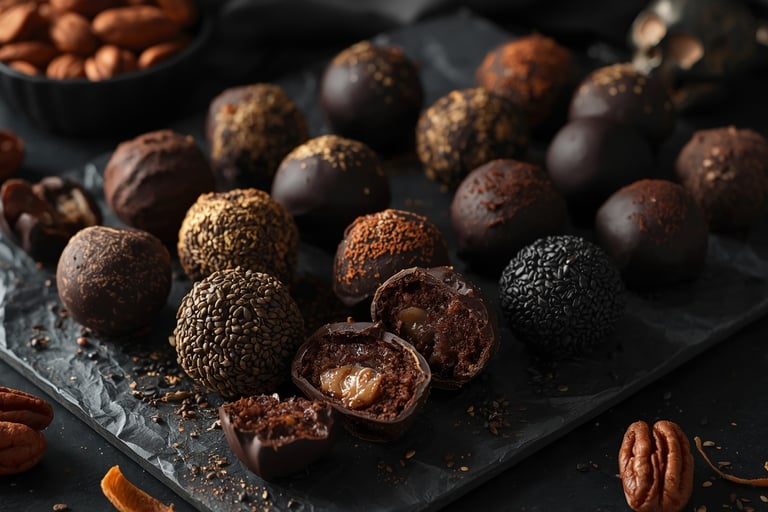
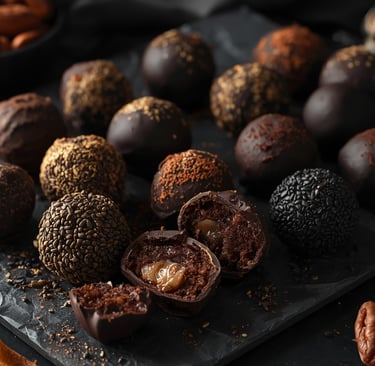
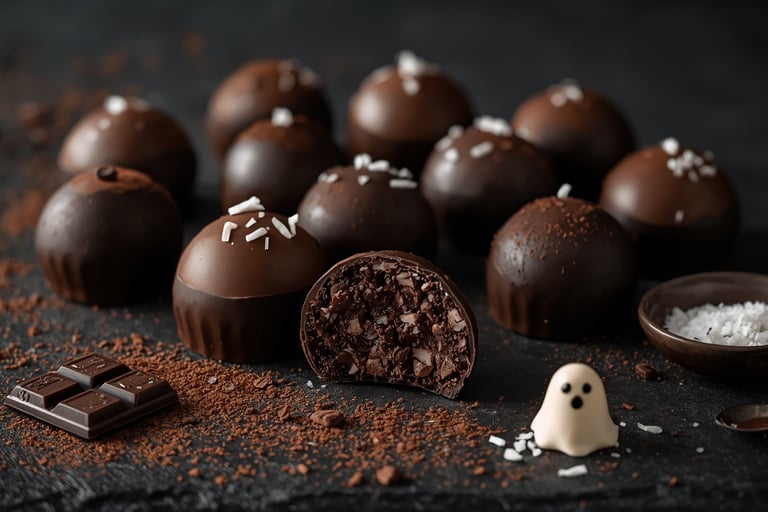
Recipe 6: No-Bake Dark Chocolate Pecan Truffles
These dense, rich, no-bake truffles are rolled in cacao powder and shaped into balls — visually similar to traditional chocolate truffles but made without any refined sugar and with a protein and fat base that makes them genuinely satisfying.
Why they work for diabetes management: The base is dates (natural sugar, but the fibre within the date significantly slows its glucose absorption) combined with pecans (healthy fat and protein that slow glucose further) and dark chocolate. The glycemic impact per truffle is approximately 6–8g net carbohydrates — lower than most commercial small candies and accompanied by fat, protein, and fibre that smooth the blood glucose curve.
Ingredients (makes 16 truffles):
1 cup pitted Medjool dates (approximately 10–12 dates)
1 cup raw pecans
3 tablespoons raw cacao powder or dark cocoa powder
2 tablespoons natural almond butter
1 teaspoon vanilla extract
Pinch of sea salt
Extra cacao powder or crushed nuts for rolling
Halloween variations:
Roll in orange zest mixed with cacao for a citrus chocolate effect
Roll in black sesame seeds for a dramatic dark coating
Dust with a little edible gold or orange luster dust
How to make them:
Place dates in a bowl and cover with warm water. Soak for 10 minutes to soften, then drain and pat dry
Add pecans to a food processor and pulse until finely chopped but not a paste — you want some texture
Add dates, cacao powder, almond butter, vanilla, and sea salt to the food processor
Process until the mixture comes together into a sticky ball — approximately 60 seconds. If too sticky, add a few more chopped pecans. If too dry, add a teaspoon of water
Roll the mixture into 16 equal balls (approximately one tablespoon each) using your hands — slightly wet hands prevent sticking
Roll each ball in cacao powder, crushed nuts, or black sesame seeds to coat
Refrigerate for at least 30 minutes to firm up
Store refrigerated for up to 2 weeks or frozen for 3 months
Per truffle: Approximately 10g net carbohydrates | 2g protein | 6g fat | 100 calories
Note: These truffles are higher in carbohydrates than some other recipes in this guide because of the dates — count these carefully and factor them into your total carbohydrate plan for the day.
Recipe 7: Chocolate Coconut Fat Bombs
Fat bombs are a concept from low-carbohydrate eating — small, intensely rich bites designed to provide sustained energy from fat with minimal carbohydrate impact. These chocolate coconut versions are genuinely one of the most satisfying Halloween treats in the guide.
Why they work for diabetes management: These fat bombs contain almost no digestible carbohydrates — the sweetness comes entirely from erythritol and the chocolate from 85%+ cacao dark chocolate. The fat content (primarily from coconut oil and MCTs) provides sustained energy without any blood glucose impact. They are one of the most truly diabetes-safe treats in this guide.
Ingredients (makes 16 fat bombs):
½ cup coconut oil, softened (not fully melted — it should be scoopable)
½ cup unsweetened shredded coconut
3 tablespoons raw cacao powder
3 tablespoons powdered erythritol or powdered monk fruit sweetener
1 teaspoon vanilla extract
Pinch of sea salt
Optional: 50g dark chocolate (85%+ cacao), melted, for dipping
How to make them:
Mix coconut oil, cacao powder, powdered erythritol, vanilla, and sea salt until fully combined and smooth
Stir in shredded coconut
Spoon the mixture into silicone ice cube moulds or small candy moulds, filling each approximately three-quarters full
Tap the mould gently on the counter to remove air bubbles and level the surface
Freeze for 30 minutes until solid
If dipping in dark chocolate: melt the 85% chocolate and dip each fat bomb halfway, then return to the freezer for 15 minutes to set the chocolate coating
Store in the freezer and remove 2–3 minutes before eating for the ideal texture — slightly softened from frozen
Per fat bomb: Approximately 1–2g net carbohydrates | 1g protein | 10g fat | 95 calories
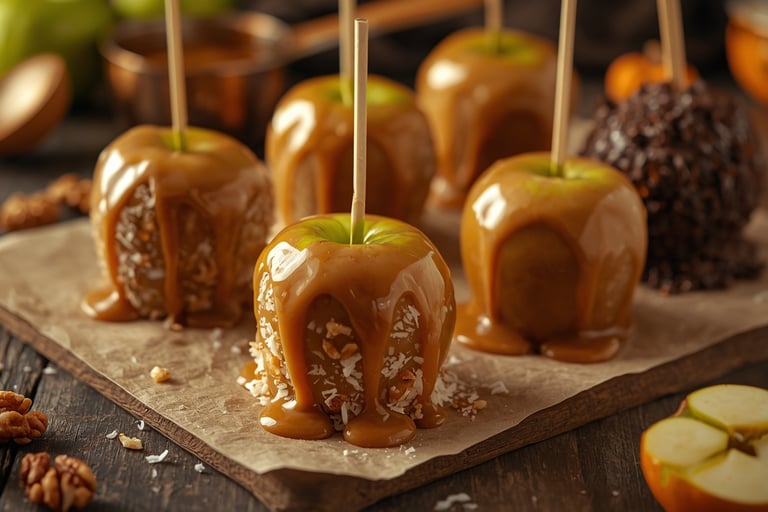
Recipe 8: Sugar-Free Caramel Apples (Mini Version)
Caramel apples are a classic Halloween treat — but standard caramel is essentially liquid sugar. This version uses a sugar-free caramel made with erythritol and heavy cream that provides the caramel experience at a dramatically reduced glycemic impact. Using small apples and serving as slices further manages the portion.
Why they work for diabetes management: Green apples (Granny Smith) have a lower glycemic index than red apples (approximately 30 vs 38) and provide malic acid and pectin fibre that slow glucose absorption. The sugar-free caramel sauce has essentially zero glycemic impact from the sweetener component. The total carbohydrates per serving are primarily from the apple itself — approximately 12–15g per half small apple — which needs to be factored into the daily carbohydrate plan.
Ingredients (serves 8):
4 small Granny Smith apples, halved and cored (or sliced into wedges for easier serving)
8 wooden skewers or lolly sticks
Sugar-free caramel sauce:
½ cup erythritol (granulated)
¼ cup heavy cream
2 tablespoons unsalted butter
½ teaspoon vanilla extract
Pinch of sea salt
¼ teaspoon caramel extract (optional but adds authentic caramel flavour)
Toppings:
Crushed sugar-free chocolate
Chopped unsalted nuts
Unsweetened shredded coconut
How to make them:
Make the caramel: heat erythritol in a small heavy-bottomed saucepan over medium heat, stirring constantly. Erythritol behaves differently from sugar — it will melt and then crystallise somewhat; keep stirring and it will eventually smooth out into a golden liquid
Remove from heat and CAREFULLY add heavy cream (it will bubble vigorously) — stir quickly
Add butter and return to low heat, stirring until smooth
Remove from heat, stir in vanilla, salt, and caramel extract
Let cool for 15–20 minutes until slightly thickened
Insert a skewer into each apple half through the flat side
Dip into the caramel sauce and let the excess drip off
Immediately roll in chosen toppings (nuts, coconut)
Place on a lined tray and refrigerate for 30 minutes until the caramel is set
Per half apple with caramel: Approximately 12–14g net carbohydrates | 1g protein | 7g fat | 110 calories
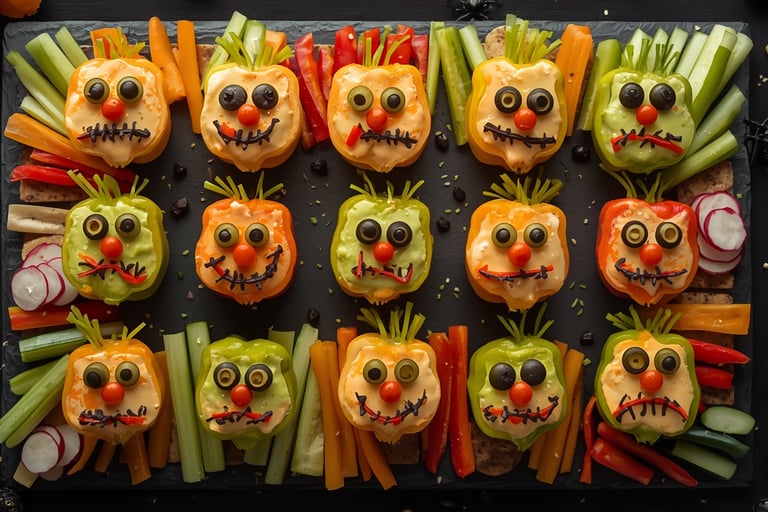
Recipe 9: Spooky Monster Cheese and Veggie Cups
Not all Halloween treats need to be sweet — and for people managing blood sugar, a savoury Halloween snack with essentially zero glycemic impact is genuinely welcome. These monster cheese cups are fun, festive, and safe for virtually any carbohydrate target.
Why they work for diabetes management: Cream cheese, cheddar, and vegetables provide essentially no glycemic impact. Cucumber, celery, and bell pepper strips have a GI of approximately 10–15. These cups are as close to zero blood glucose impact as a Halloween treat can be, while still being visually fun and genuinely enjoyable.
Ingredients (makes 12 cups):
200g cream cheese, softened
½ cup cheddar cheese, grated
1 tablespoon chives or spring onion, finely chopped
½ teaspoon garlic powder
Salt and pepper to taste
Orange food colouring (optional — for Halloween orange monsters)
Green food colouring (optional — for green monsters)
Toppings for monster faces:
Olive slices (eyes)
Cherry tomato halves (noses)
Sliced spring onion (hair or antennae)
Black sesame seeds (pupils)
Thin strips of red pepper (mouths)
Dippers:
Cucumber sticks
Celery sticks
Red and yellow bell pepper strips
Radishes
Whole grain crackers for those who can include them
How to make them:
Beat cream cheese until smooth. Mix in grated cheddar, chives, garlic powder, salt, and pepper
Divide into two portions if making multiple colours — add orange food colouring to one, green to another
Spoon into small cups, ramekins, or hollowed-out mini bell peppers
Create monster faces on top of each cup using olive slices for eyes, cherry tomato for nose, red pepper strips for mouths, and sesame seeds for pupils
Arrange dippers around each cup and serve immediately
Per cup (without crackers): Approximately 1–2g net carbohydrates | 4g protein | 10g fat | 110 calories
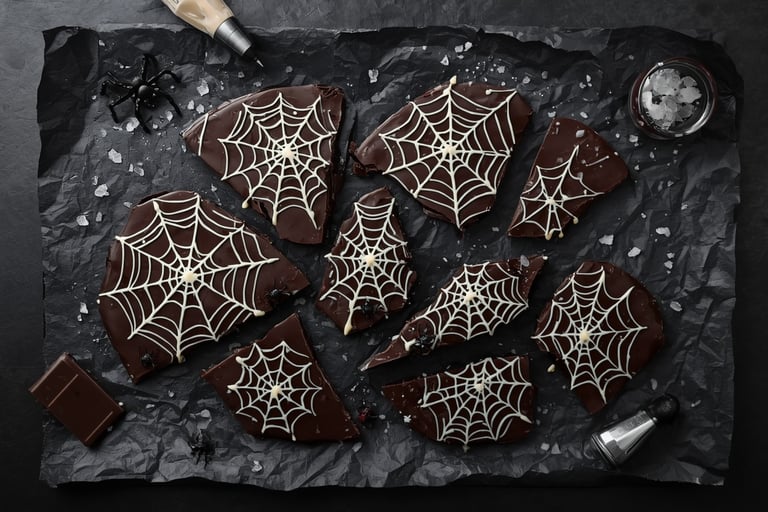
Recipe 10: Dark Chocolate Bark Spider Webs
This recipe turns the classic bark format into a specifically Halloween visual piece — dark chocolate with white sugar-free chocolate piped in spider web patterns across the surface.
Why it works for diabetes management: Made entirely from 70–85% dark chocolate with erythritol for any additional sweetness, this bark has the same low-GI profile as the nut bark (Recipe 3) with the visual drama of a proper Halloween centrepiece. The spider web effect is created with melted white chocolate (sugar-free) piped in concentric circles and dragged with a toothpick — genuinely impressive for minimal effort.
Ingredients (makes approximately 20 pieces):
300g dark chocolate (70%+ cacao), chopped
2 tablespoons erythritol (optional)
100g white chocolate chips or white chocolate bar, sugar-free version
½ teaspoon coconut oil (for the white chocolate — improves piping consistency)
Pinch of flaky sea salt
Small plastic or edible spider decorations (optional)
How to make it:
Line a large baking tray with baking paper
Melt dark chocolate with erythritol if using. Pour onto lined tray and spread to approximately 0.5cm thickness
Working quickly before the dark chocolate sets: melt white sugar-free chocolate with coconut oil
Pour the white chocolate into a small piping bag or zip-lock bag with a tiny corner snipped off
Pipe concentric circles across the entire surface of the dark chocolate — starting from the center of each planned web section, working outward in circles approximately 1cm apart
Immediately drag a toothpick from the center of each circle outward in straight lines (like spokes of a wheel) — this creates the web pattern
Add a small plastic spider to each web if using
Sprinkle flaky sea salt across the surface
Refrigerate for minimum 1 hour until completely set
Break into pieces along the web lines
Per piece: Approximately 4–5g net carbohydrates | 2g protein | 7g fat | 90 calories
Halloween Carbohydrate Planning Guide
General Principles for Halloween Night
Halloween presents a specific challenge: multiple small treats consumed over several hours rather than a single, planned portion at a meal. A few principles for managing this:
Count everything: Even small treats with modest carbohydrate counts add up quickly across the evening. Having an approximate carbohydrate budget for Halloween treats and tracking as you go is more manageable than trying to estimate totals afterward.
Pair with protein and fat: The recipes in this guide are already designed with protein and fat to slow glucose absorption. If commercial candies do appear (and at Halloween, they often do), pairing them with cheese, nuts, or any protein source meaningfully reduces their glycemic impact.
Timing matters: Eating treats alongside a meal that contains protein, fat, and fibre produces a much more moderate blood glucose response than eating the same treats on an empty stomach.
Children with type 1 diabetes: Halloween is manageable with type 1 diabetes with pre-planning. Many families use the "candy buyback" approach (trading candy for a non-food prize), use insulin adjustments planned with their diabetes care team, or allow a planned portion of Halloween candy with appropriate insulin coverage. These decisions are best made with your child's endocrinologist or diabetes nurse specialist before the holiday.
Frequently Asked Questions
Are sugar-free sweets safe for everyone with diabetes?
Most sugar substitutes used in this guide — erythritol, monk fruit, stevia — are well-tolerated and have essentially zero glycemic impact. However, individual responses vary, and some people find that even zero-calorie sweeteners can produce a modest insulin response or affect blood sugar through indirect mechanisms. The only reliable way to know your individual response is to monitor your blood glucose after trying a new recipe. If you notice unexpected blood glucose changes, discuss with your diabetes care team.
Can children with diabetes eat these recipes?
These recipes are designed to be appropriate for children with diabetes, with lower carbohydrate counts and zero-glycemic sweeteners. However, children with type 1 diabetes still need their carbohydrates counted and insulin managed appropriately — a lower-carbohydrate treat still requires consideration within the overall carbohydrate plan. The monsters cheese cups (Recipe 9) and the gummy worms (Recipe 2) are the lowest-carbohydrate options for children with very tight carbohydrate targets.
What about the dates in the chocolate pecan truffles?
Dates are natural sugar and do contribute meaningful carbohydrates (approximately 10g net carbs per truffle). These truffles are the highest-carbohydrate recipe in this guide. They are listed because their fibre, protein, and fat content significantly moderate the glycemic impact compared to equivalent carbohydrates from pure sugar candy — but they should be planned for carefully and may not be appropriate for everyone depending on their individual targets.
Where do I find sugar-free chocolate and white chocolate?
Most large supermarkets carry Lily's or similar sugar-free chocolate brands sweetened with erythritol or stevia. Online retailers carry a wider range. When buying commercial sugar-free chocolate, always check the sweetener used — choose erythritol or monk fruit-sweetened options over maltitol-sweetened ones, which have a meaningful glycemic impact.
References and Further Reading
Bornet FR et al. — European Journal of Clinical Nutrition (1996) — Insulin and glycaemic responses in healthy humans to native starches processed in different ways Research establishing the glycemic index framework used to evaluate the ingredient choices in these recipes — confirming why almond flour, dark chocolate, and fat-protein combinations produce more favourable glycemic responses than refined flour and sugar.
Noda K et al. — Regulatory Toxicology and Pharmacology (1994) — Erythritol — a novel sweetener Confirming that erythritol does not raise blood glucose or insulin levels — the safety basis for its use as the primary sweetener throughout this guide.
Vlachos D et al. — Nutrients (2020) — Glycemic Index (GI) or Glycemic Load (GL) and Dietary Interventions for Optimizing Postprandial Hyperglycemia in Patients with T2 Diabetes Review confirming that dietary fat and protein consumed alongside carbohydrates significantly reduces postprandial blood glucose — the scientific basis for the protein-and-fat-with-carbohydrate design of these recipes.
Djoussé L et al. — Clinical Nutrition (2011) — Chocolate consumption is inversely associated with prevalent coronary heart disease Research supporting the cardiovascular benefits of dark chocolate flavanols — establishing the nutritional case for using 70%+ dark chocolate as the primary chocolate in these recipes rather than milk chocolate.
About the Author
I'm Judith, a wellness enthusiast and Applied Bio Sciences and Biotechnology graduate behind BiteBrightly. With a deep-rooted belief in the healing power of food, my nutrition journey began with a personal transformation — I improved my eyesight through targeted dietary changes. This life-changing experience sparked my mission to empower others by sharing evidence-based insights into food as medicine.
Drawing on my scientific background, personal experience, and ongoing research into nutrition and health, I focus on breaking down complex health topics into clear, practical, and actionable guidance. My approach combines scientific credibility with real-world application, making evidence-based nutrition accessible to everyone.
Follow me on Pinterest for daily health tips, recipes, and wellness inspiration.
Important Notice: The information and recipes in this article are for educational purposes only and are not intended as medical advice. I am not a medical doctor, registered dietitian, or certified diabetes educator. People managing diabetes — whether type 1, type 2, gestational, or other forms — should work with their healthcare team to understand how these recipes fit their individual carbohydrate targets, insulin regimens, and blood glucose management plans. Blood glucose responses to foods are highly individual. The carbohydrate counts provided are estimates based on standard ingredient nutritional information — always verify with your specific ingredient brands, as values vary. These recipes are lower-sugar alternatives to standard Halloween candy, not a prescription for unlimited consumption. Never adjust insulin or diabetes medication based on recipes or general nutritional information without guidance from your diabetes care team. These statements have not been evaluated by the FDA.


Connect
Join our newsletter for fresh health tips
© 2026. All rights reserved.