5-Ingredient Glow Juices for Energy and Skin Health — Nature's Daily Boost
Beta-carotene from carrot produces measurable skin glow. Turmeric always with black pepper in juice. 5 skin and energy juices — full recipes with the science.
by BiteBrightly
7/26/202611 min read
5-Ingredient Glow Juices for Energy and Skin Health — Nature's Daily Boost
By BiteBrightly 26 July 2026: This post might contain affiliate links.
Fresh juice made from the right ingredients is one of the most efficient ways to deliver concentrated skin-supporting nutrients in a single glass. Vitamin C from citrus and bell peppers activates the enzymes required for collagen synthesis. Beta-carotene from carrots and sweet potato converts to vitamin A — the nutrient that regulates skin cell turnover. Silica from cucumber supports the connective tissue structure that gives skin its elasticity. Polyphenols from berries and beetroot neutralise the free radicals that break down collagen and accelerate skin ageing.
These five recipes are built around that nutritional logic — each one a five-ingredient combination specifically chosen to address a different skin and energy mechanism, with every ingredient pulling its weight. They are genuinely delicious, genuinely achievable on a weekday morning, and honestly framed: fresh juice contributes meaningfully to skin health as part of a varied, whole-food diet — it does not replace it.
For more on how gut health connects to skin appearance — and the meals that address both simultaneously — see our guide on The Gut-Skin Connection at bitebrightly.com.
Key Takeaways
Vitamin C is an essential cofactor for collagen synthesis — the enzymes that stabilise collagen's molecular structure (prolyl hydroxylase and lysyl hydroxylase) require vitamin C to function; without adequate daily vitamin C intake, the body cannot produce stable collagen regardless of protein intake
Beta-carotene from orange and yellow vegetables converts to vitamin A in the body — vitamin A regulates skin cell turnover, maintains sebaceous gland function, and is the deficiency most visibly associated with dry, rough, keratinised skin; dietary carotenoids also contribute to the skin's antioxidant capacity and can absorb UV radiation
Research published in Nutrients confirmed that dietary polyphenols significantly reduce photoaging markers including loss of elasticity, wrinkles, and hyperpigmentation — with polyphenols from berries and beetroot among the most studied for skin photoprotection
Silica from cucumber supports the cross-linking of collagen fibres in connective tissue — it is not the most discussed skin mineral but it plays a direct structural role in the matrix that gives skin its firmness and elasticity
These juices support skin health most effectively when consumed consistently as part of a varied diet — not as a cleanse or short-term fix; visible skin improvements from consistent nutrient intake typically appear over 4–8 weeks as new skin cells formed under improved nutritional conditions reach the surface
Cold-pressing (as opposed to centrifugal juicing) preserves more vitamins and antioxidants from heat-sensitive compounds; where possible, cold press or use a masticating juicer, and consume all juices immediately after making — vitamin C degrades rapidly with exposure to air, heat, and light
The Skin-Energy Nutrients — What Each Ingredient Delivers
Before the recipes, a brief guide to the six most skin-relevant nutritional categories and the ingredients that best provide them:
Vitamin C (collagen synthesis + antioxidant): Red and yellow bell peppers (the most concentrated source per gram — more than citrus), kiwi, lemon, lime, orange, grapefruit, pineapple, strawberries. Vitamin C is water-soluble and not stored — consistent daily intake matters.
Beta-carotene → Vitamin A (skin cell turnover + sebum regulation): Carrot, sweet potato, mango, papaya, cantaloupe melon, spinach, kale, apricot. The vivid orange and yellow colours signal beta-carotene content.
Polyphenols (antioxidant + anti-inflammatory): Blueberries, raspberries, beetroot (betalains), pomegranate (ellagitannins), red grapes, dark cherries. Different colours represent different polyphenol classes — variety provides broader protection.
Silica (collagen cross-linking): Cucumber (one of the most concentrated silica sources in a juicing context), celery, green apple. Silica supports the structural integrity of connective tissue.
Hydration + electrolytes (skin plumping + elasticity): Cucumber, watermelon, coconut water, celery. Skin cells that are adequately hydrated have better elasticity and a more plump, less-lined appearance.
Anti-inflammatory compounds (gut-skin axis + cellular protection): Ginger (gingerols), turmeric (curcumin — always with black pepper), lemon (flavonoids), leafy greens (vitamin K, lutein).
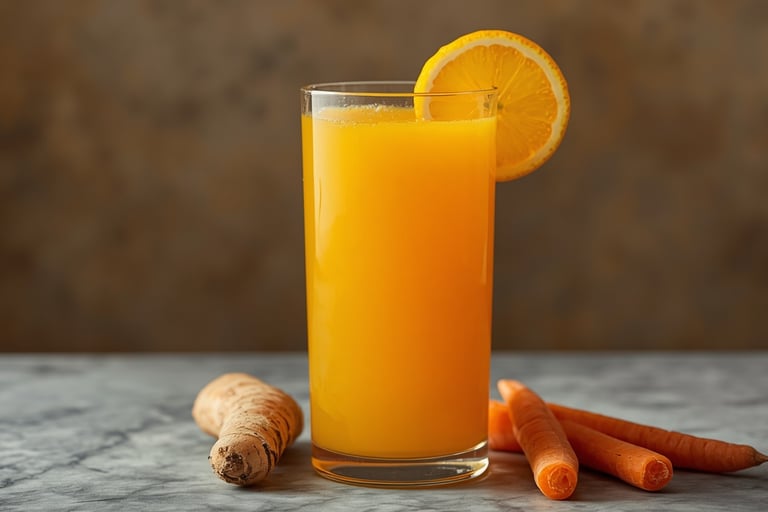
Juice 1: The Golden Glow — Carrot, Orange, Ginger, Turmeric, Lemon
Skin focus: Collagen synthesis + beta-carotene skin protection + anti-inflammatory Energy focus: Natural glucose + vitamin C + anti-inflammatory circulation support Makes: 1 large glass (approximately 350ml)
The most complete single-glass skin nutrition combination in this guide. Carrot provides beta-carotene — the most abundant dietary precursor to vitamin A, which regulates skin cell turnover and sebum balance. Orange provides vitamin C for collagen synthesis alongside natural glucose for immediate energy. Ginger provides gingerols that inhibit COX-2 and improve circulation — bringing nutrients to skin cells more effectively. Turmeric provides curcumin for NF-kB inhibition. Lemon adds additional vitamin C and brightening flavonoids.
The turmeric + black pepper rule applies here: Add a pinch of black pepper to the finished juice — piperine increases curcumin absorption by up to 2,000%. The flavour impact is undetectable at a pinch; the absorption difference is significant.
Ingredients:
4 large carrots, scrubbed
2 large oranges, peeled
2cm piece of fresh ginger root
½ teaspoon ground turmeric (or a 2cm piece of fresh turmeric root)
Juice of 1 lemon
Pinch of black pepper (essential for curcumin absorption)
How to make it:
Juice the carrots, oranges, and ginger through your juicer
Stir in the turmeric (or add fresh turmeric root to the juicer)
Add lemon juice and stir
Add a pinch of black pepper and stir
Drink immediately — vitamin C degrades within 15–20 minutes of exposure to air
Why it glows: The vivid golden-orange colour tells you exactly what this juice is providing — beta-carotene at high concentration. Research has found that regular carotenoid intake from food produces a measurable golden skin tone that independent studies have found rated as more attractive than either UV tan or pale skin — a genuine, visible nutritional skin effect.
Skin nutrients per glass: Beta-carotene (~7mg), vitamin C (~90mg from orange + lemon — close to the daily RDA), gingerols, curcumin.
Juice 2: The Green Clarity — Cucumber, Spinach, Green Apple, Celery, Lemon
Skin focus: Silica for collagen cross-linking + vitamin K for skin healing + deep hydration Energy focus: Electrolytes + chlorophyll + B vitamins from spinach Makes: 1 large glass (approximately 400ml)
The most hydrating juice in this guide and the highest silica source. Cucumber provides both silica (supporting connective tissue structure) and 96% water content for deep cellular hydration. Celery provides potassium and natural sodium — electrolytes relevant to skin cell hydration. Spinach provides vitamin K (which reduces redness and supports skin healing), folate, and iron (relevant to the oxygen delivery that gives skin its colour and vitality). Green apple provides vitamin C and quercetin — an anti-inflammatory flavonoid. Lemon adds vitamin C and brightening citric acid.
Ingredients:
1 whole cucumber (do not peel — the skin contains the highest silica concentration)
2 large handfuls fresh spinach
1 green apple, cored
3 stalks celery
Juice of 1 lemon
How to make it:
Juice the cucumber (with skin), spinach, apple, and celery
Stir in the lemon juice after juicing (adding lemon juice directly preserves more vitamin C than juicing it through a machine)
Serve over ice — this juice is best cold
Drink immediately
Why it glows: The deep cellular hydration from cucumber and celery produces the most immediate visible skin effect of any juice in this guide — plumped, less-lined skin within hours of adequate hydration. This is the juice that answers the question of why the skin looks better the morning after high water intake.
Skin nutrients per glass: Silica (from cucumber skin), vitamin K (~200mcg from spinach — close to daily RDA), vitamin C (~40mg from apple + lemon), folate, potassium, quercetin.
Juice 3: The Berry Antioxidant — Blueberry, Beetroot, Pomegranate, Lemon, Ginger
Skin focus: Polyphenol photoprotection + betalains + ellagitannins for collagen preservation Energy focus: Natural iron from beetroot + nitrates for circulation and oxygen delivery Makes: 1 medium glass (approximately 300ml)
The highest antioxidant juice in this guide — and the most strikingly beautiful, a deep ruby-purple that signals the concentration of polyphenols inside. Blueberries provide anthocyanins that neutralise the free radicals that break down collagen and accelerate UV-related skin ageing. Beetroot provides betalains — vivid purple-red pigments with antioxidant activity — alongside nitrates that support nitric oxide production and improve circulation. Pomegranate provides ellagitannins that convert in the gut to urolithins with anti-inflammatory activity. Lemon brightens and preserves the vitamin content. Ginger adds anti-inflammatory gingerols.
A note on beetroot staining: Beetroot will stain everything it contacts — fingers, the juicer, the glass, and occasionally the urine (harmless, but alarming if unexpected). Rinse the juicer immediately after use.
Ingredients:
150g fresh or frozen blueberries
1 medium beetroot, scrubbed and roughly chopped (no need to peel)
125ml pure pomegranate juice (or juice of ½ pomegranate if using a juicer)
Juice of 1 lemon
2cm piece of fresh ginger
How to make it:
If using a juicer: juice the blueberries, beetroot, and ginger together, then stir in pomegranate juice and lemon juice
If using a blender: blend all ingredients together, then strain through a fine mesh sieve or nut milk bag for a smooth juice consistency
Serve chilled or over ice
Why it glows: Research confirmed in Nutrients that dietary polyphenols significantly reduce photoaging markers — this juice provides three distinct polyphenol classes (anthocyanins, betalains, ellagitannins) that each address different aspects of oxidative skin stress. The combination is more protective than any single source.
Skin nutrients per glass: Anthocyanins (~200mg from blueberries), betalains (beetroot), ellagitannins (pomegranate), vitamin C (~40mg), gingerols, natural nitrates.
Juice 4: The Tropical Brightener — Pineapple, Mango, Kiwi, Lime, Coconut Water
Skin focus: Bromelain enzyme + vitamin C for collagen + tropical antioxidants Energy focus: Natural electrolytes from coconut water + natural glucose for sustained energy Makes: 1 large glass (approximately 400ml)
The most energising juice in this guide and the most naturally sweet — making it the easiest entry point for anyone new to juice making. Pineapple provides bromelain — a proteolytic enzyme studied for anti-inflammatory effects and for supporting collagen structure by breaking down proteins that may inhibit collagen cross-linking. Mango provides beta-carotene and vitamins C and E alongside natural glucose for energy. Kiwi provides the highest vitamin C per gram of any fruit in this recipe (~90mg per fruit). Lime adds additional vitamin C and brightening citric acid. Coconut water provides natural electrolytes — potassium, magnesium, and sodium — that support cellular hydration without added sugar.
Ingredients:
200g fresh pineapple chunks
1 ripe mango, peeled and stone removed
2 kiwi fruits, peeled
Juice of 1 lime
200ml pure coconut water (no added sugar)
How to make it:
Juice the pineapple through a juicer, or blend pineapple and mango together in a blender
Add kiwi — blend or juice
Stir in lime juice and coconut water
Serve immediately over ice
Blender method: Blend all ingredients together — the result is a thick, smoothie-like consistency rather than a clear juice; strain through a fine mesh sieve for a clearer juice, or enjoy the fibre as a thicker drink.
Why it glows: The combination of bromelain from pineapple, vitamin C from kiwi and lime, and beta-carotene from mango addresses collagen synthesis, collagen structural support, and skin cell turnover simultaneously — three distinct skin mechanisms from five ingredients.
Skin nutrients per glass: Bromelain (pineapple), vitamin C (~180mg from kiwi + lime + pineapple — well above the daily RDA), beta-carotene (mango), vitamin E (mango), natural electrolytes (coconut water).
Juice 5: The Skin Repair — Red Pepper, Strawberry, Cucumber, Apple, Lemon
Skin focus: Maximum vitamin C for collagen + hydration + skin brightening Energy focus: Natural B vitamins + iron from strawberries + vitamin C for energy metabolism Makes: 1 large glass (approximately 350ml)
The highest vitamin C juice in this guide — and the one most directly focused on collagen synthesis as the primary mechanism. Red bell pepper is the single highest vitamin C food source per gram — providing approximately 190mg per pepper, more than twice the daily RDA in a single vegetable. Strawberries add anthocyanins alongside additional vitamin C and manganese (a cofactor for the superoxide dismutase antioxidant enzyme). Cucumber provides silica and hydration. Apple adds quercetin and natural sweetness. Lemon brings additional vitamin C and skin-brightening citric acid.
This is the most practically useful juice for anyone specifically focused on collagen support — every ingredient either provides vitamin C directly or supports the skin environment in which vitamin C performs its collagen synthesis function.
Ingredients:
1 large red bell pepper, deseeded
200g fresh strawberries, hulled
½ cucumber
1 green or red apple, cored
Juice of 1 lemon
How to make it:
Juice the red pepper, strawberries, cucumber, and apple
Stir in lemon juice after juicing
The colour will be a vivid pink-red from the strawberries and pepper combination
Serve immediately — the vitamin C in this juice degrades faster than any other in the guide due to the very high concentration
Why it glows: One large red pepper alone provides close to 190mg of vitamin C — approximately 2x the daily RDA. Combined with the additional vitamin C from strawberries, apple, and lemon, this juice provides one of the highest single-serving vitamin C concentrations available from whole food sources without supplements.
Skin nutrients per glass: Vitamin C (~250mg from all sources — 2–3x the daily RDA), anthocyanins (strawberries), silica (cucumber), quercetin (apple), beta-carotene (red pepper).
Making the Most of Your Juices — Practical Tips
Drink immediately: Vitamin C begins degrading within 15–20 minutes of exposure to air and light. All five juices are at their maximum nutritional value immediately after making.
Cold press if possible: Cold-press (masticating) juicers use pressure rather than heat-generating blades, preserving more heat-sensitive vitamins and antioxidants than centrifugal juicers. If a cold press juicer is not available, a blender plus a fine mesh sieve produces comparable nutritional results.
Rotate the recipes: Different juices provide different polyphenol and vitamin classes. Drinking the same juice daily provides one set of nutrients consistently; rotating across the five recipes across the week provides a broader nutritional spectrum.
Include the lemon juice after juicing: Adding citrus juice after the main juicing step rather than putting it through the juicer preserves more of its vitamin C — the heat and oxidation during juicing degrades some of the vitamin C before it reaches the glass.
Pair with fat where possible: Beta-carotene (from the carrot-orange juice and tropical brightener) is fat-soluble — consuming these juices alongside or after a meal containing fat significantly improves beta-carotene absorption. A handful of nuts, avocado, or a small amount of olive oil alongside a beta-carotene-rich juice improves the actual nutrient delivery.
The Honest Note on Juicing and Skin Health
These juices provide genuinely useful concentrations of skin-supportive nutrients. They are not a substitute for a varied, whole-food diet or a replacement for sun protection, adequate sleep, and appropriate skincare.
Visible skin improvements from consistent dietary changes — whether from these juices or from the gut-skin salads in our gut-skin guide at bitebrightly.com — typically appear over 4–8 weeks as new skin cells formed under improved nutritional conditions reach the surface. Drinking one juice does not produce visible skin change; drinking a nutrient-rich juice consistently, as part of an overall diet that supports skin health, contributes to the cumulative nutritional environment in which skin cells form and mature.
The gut-skin axis research — confirming that gut microbiome diversity and gut barrier integrity influence skin health through systemic inflammatory pathways — also means that the fibre removed during juicing has value that the juice itself does not fully replace. Where possible, including some whole fruit and vegetables alongside juicing maintains the prebiotic fibre that supports the gut bacteria whose activity benefits skin appearance through the gut-skin pathway.
Frequently Asked Questions
Is cold-pressed juice better than centrifugal for skin health?
Cold-pressed juicing uses pressure rather than fast-spinning blades, which generate heat and introduce oxygen — both of which degrade heat-sensitive vitamins including vitamin C. Cold-pressed juices preserve more vitamin C, polyphenols, and enzymes than centrifugal juices. For skin health specifically, where vitamin C for collagen synthesis is one of the primary mechanisms, cold-pressed is genuinely preferable. However, the difference between a fresh centrifugal juice consumed immediately and a cold-pressed juice is smaller than the difference between any fresh juice and a bottled or shelf-stable version.
Can I make these juices in advance and refrigerate them?
Yes, but with significant vitamin C loss. Vitamin C degrades relatively quickly once the juice is exposed to air — refrigerating in an airtight container slows but does not stop this degradation. Refrigerated juices retain acceptable nutritional value for approximately 24 hours in an airtight container (a glass jar filled to the very top to minimise air contact works best). After 24 hours the vitamin C content drops significantly, though other nutrients including beta-carotene are more stable. For the maximum skin benefit — particularly from vitamin C — freshly made and immediately consumed is the clear recommendation.
Should I add protein powder or collagen powder to these juices?
Collagen peptide supplements are a reasonable addition to juices for anyone specifically targeting collagen support — the amino acids (particularly proline, hydroxyproline, and glycine) from hydrolysed collagen combined with the vitamin C from these juices creates a meal that addresses both the substrate and the cofactor for collagen synthesis simultaneously. Unflavoured collagen peptides dissolve well in all five juices and do not significantly alter the flavour. Note that collagen peptide supplements are not the same as dietary collagen — the body breaks down ingested collagen into constituent amino acids and redistibutes them; the skin benefit from collagen supplements is from providing these specific amino acids in convenient form alongside the cofactors (vitamin C) needed for new collagen production.
References and Further Reading
Nutrients (2015) — Dietary polyphenols significantly reduce photoaging markers including wrinkles, elasticity loss, and hyperpigmentation — confirming the skin photoprotection role of polyphenols from berries and beetroot.
Hurom.ca (2025) — A Korean study found that regular juice intake increased measurable antioxidant levels in the skin, showing that nutrients from juice stay active and protect against ageing — confirming that dietary antioxidants from fresh juice are bioavailable and reach the skin.
Juices4Life (2026) — What you eat and drink directly affects skin hydration, elasticity, inflammation levels, cell turnover, and collagen production — with cold-pressed juices preserving more vitamins and antioxidants than regular juices Review confirming the link between nutrition and skin health and the specific nutrients most relevant to skin appearance.
About the Author
I'm Judith, a wellness enthusiast and Applied Bio Sciences and Biotechnology graduate behind BiteBrightly. With a deep-rooted belief in the healing power of food, my nutrition journey began with a personal transformation — I improved my eyesight through targeted dietary changes. This life-changing experience sparked my mission to empower others by sharing evidence-based insights into food as medicine.
Follow me on Pinterest for daily health tips, recipes, and wellness inspiration.
Important Notice: The information and recipes in this article are for educational purposes only and are not intended as medical advice. I am not a medical doctor, dermatologist, or registered dietitian. Fresh juices provide concentrated micronutrients that support skin health as part of a varied, whole-food diet — they do not treat, cure, or prevent any skin condition or medical condition. People with diabetes or blood sugar management concerns should be aware that fruit juices are concentrated sources of natural sugar and should consult a healthcare provider before significantly increasing juice consumption. These statements have not been evaluated by the FDA.
Related posts
Connect
Join our newsletter for fresh health tips
© 2026. All rights reserved.