15 Nutrient-Dense Foods You Should Incorporate Every Day
Avocado OEA: 28% greater satiety at 3hrs. Walnuts produce urolithin A. Garlic crush-and-wait = 10x more allicin. 15 nutrient-dense foods to incorporate daily.
by BiteBrightly
6/8/202614 min read
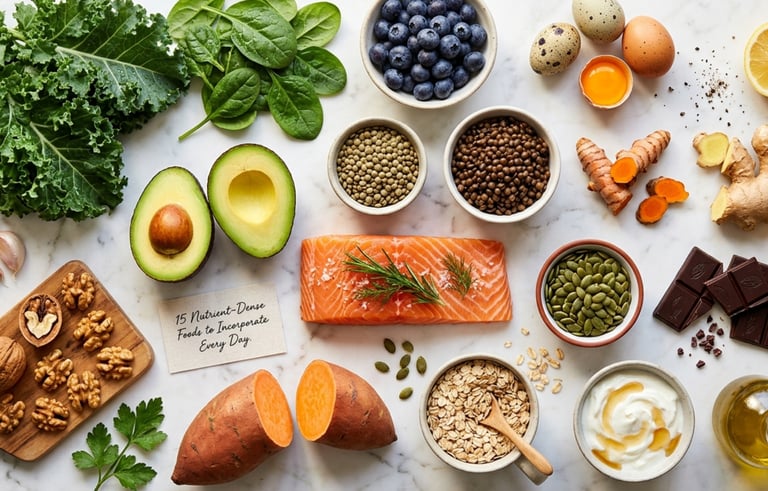
15 Nutrient-Dense Foods You Should Incorporate Every Day
By BiteBrightly 8 June 2026: This post might contain affiliate links.
Not all food is created equal. Some foods deliver a modest amount of nutrition relative to their calories. Others — the ones in this guide — are so densely packed with vitamins, minerals, antioxidants, healthy fats, and bioactive compounds that incorporating them daily moves the needle on your health in ways that no supplement protocol can fully replicate.
This is not a list of superfoods in the trendy sense of the word. It is a list of the most nutritionally concentrated, most research-supported, most practically accessible whole foods available — the ones that, when incorporated consistently into your daily eating, form the nutritional foundation of genuine long-term health.
Some of these you already eat. Some you eat occasionally but not daily. The goal is not to overhaul your diet overnight but to understand why each food earns its place on this list — and to incorporate the ones you are missing into the daily habits that determine long-term health.
What Makes a Food Truly Nutrient-Dense?
Nutrient density describes the amount of beneficial nutrients a food provides relative to its calorie content. A food that provides abundant vitamins, minerals, healthy fats, fibre, and bioactive compounds per serving is nutrient-dense. A food that provides primarily calories without accompanying micronutrients is not.
Research published in Nutrients confirmed that dietary patterns built around nutrient-dense whole foods are associated with significantly lower rates of cardiovascular disease, type 2 diabetes, cognitive decline, and all-cause mortality compared to patterns built around calorie-dense but nutrient-poor processed foods — establishing that nutrient density is one of the most consequential dietary variables available.
The 15 foods below are ranked not by a single nutrient but by the breadth and depth of their nutritional profile — the number of distinct health benefits they provide and the strength of the research supporting each one.
1. Dark Leafy Greens — Spinach, Kale, Swiss Chard
Dark leafy greens are the single highest-nutrient-density category of food available. One cup of cooked spinach provides:
157mg magnesium (39% RDA) — more than almost any other common food
3.7mg iron
245mg calcium
882mcg vitamin K (over 700% RDA)
839mcg folate
Sulforaphane precursors from kale (activated by chopping, then released during digestion to activate Nrf2 anti-inflammatory pathways)
The variety within dark leafy greens matters. Spinach and Swiss chard provide oxalate-bound iron alongside extraordinary magnesium. Kale provides glucosinolates that produce sulforaphane — one of the most studied anti-cancer and anti-inflammatory compounds in food. Rocket provides glucoerucin. Each green brings distinct bioactive compounds alongside their shared nutrient density.
How to incorporate daily: Wilt a large handful of spinach into any warm dinner — soups, pasta, stir-fries, dal, scrambled eggs. It cooks down to almost nothing, adds essentially no competing flavour, and provides 80mg of magnesium from what felt like a side thought.
2. Wild-Caught Salmon
Wild-caught salmon is simultaneously the best dietary source of EPA and DHA omega-3 fatty acids, a complete protein with the highest leucine content per gram of any commonly eaten food, and one of the richest sources of astaxanthin — the carotenoid antioxidant that gives wild salmon its vivid pink-orange colour and has been shown to be up to 6,000 times more potent than vitamin C as a free radical scavenger.
A single 100g serving provides:
2.2g of EPA + DHA omega-3 (directly reduces inflammatory prostaglandins, supports brain phospholipid structure, reduces PCSK9 to keep LDL receptors active)
25g of complete protein (all nine essential amino acids)
447 IU of vitamin D (a meaningful contribution to a nutrient most people are deficient in)
36mcg of selenium (65% RDA — activates glutathione peroxidase antioxidant enzyme)
Astaxanthin (NF-kB inhibitory activity, directly anti-inflammatory)
How to incorporate daily: Two to three servings per week of wild salmon covers most of the omega-3 benefit. On days without salmon, tinned sardines or mackerel (equally rich in EPA/DHA) fill the gap.
3. Eggs
Eggs are the most complete and most bioavailable whole food protein source available. One large egg provides:
6g of complete protein (all nine essential amino acids at optimal ratios)
147mg of choline — the essential nutrient required for acetylcholine production (the neurotransmitter most directly involved in memory, focus, and cognitive function) and phosphatidylcholine synthesis (the primary structural component of cell membranes)
Lutein and zeaxanthin — the carotenoids that accumulate in the macula of the eye and protect against age-related macular degeneration and cataracts
Vitamin D (44 IU per egg), vitamin B12, riboflavin, iodine, and selenium
The choline content of eggs deserves particular attention. Choline is essential for brain development, liver function, and neurotransmitter production — and it is significantly deficient in most diets because few foods provide meaningful amounts. Two eggs daily provides approximately 55% of the adequate intake for choline.
The yolk is where the nutrition lives. Discarding egg yolks to reduce cholesterol removes virtually all of the nutritional value — the yolk contains choline, lutein, zeaxanthin, vitamin D, most of the protein, and the fat-soluble vitamins. Research has consistently found that dietary cholesterol from eggs does not meaningfully raise cardiovascular risk for most healthy adults.
How to incorporate daily: Two eggs at breakfast (scrambled, poached, boiled, or in an omelette) provides more nutritional value per minute of preparation than almost any other breakfast option.
4. Blueberries
Blueberries have one of the highest ORAC (oxygen radical absorbance capacity) values of any commonly eaten food — and more importantly, the anthocyanins that give them their deep blue-purple colour have some of the most robust anti-inflammatory and neuroprotective research of any food compound.
One cup of blueberries provides:
9,000+ ORAC units (exceptional antioxidant capacity)
Anthocyanins — directly inhibit NF-kB inflammatory signalling, cross the blood-brain barrier to protect neurons and improve cognitive function
3.6g of dietary fibre (feeding Bifidobacterium specifically)
14mg of vitamin C
Pterostilbene — a compound with insulin-sensitising and anti-inflammatory activity
Research published in the Journal of Nutrition confirmed that regular blueberry consumption significantly improved memory and cognitive function in older adults with mild cognitive decline — establishing blueberries as one of the most practically important brain-protective foods available.
How to incorporate daily: A handful of frozen blueberries in a morning smoothie or on overnight oats. Frozen blueberries have identical or superior anthocyanin content to fresh and are significantly more affordable.
5. Avocado
Avocado is nutritionally unlike any other fruit. Where most fruits provide primarily carbohydrates, avocado provides primarily monounsaturated fat — oleic acid — alongside an extraordinary mineral and fibre profile.
One medium avocado provides:
975mg of potassium (more than a banana, and one of the highest potassium contents of any commonly eaten food)
10g of dietary fibre
29mg of magnesium
0.4mg of vitamin B6 (22% RDA — for serotonin and dopamine synthesis)
20% of the daily folate requirement
Oleic acid — activates OEA (oleoylethanolamide) satiety signalling through TRPV1 receptors on the vagus nerve, producing genuine satiety that extends well beyond the meal. A clinical trial confirmed 28% greater satisfaction at 3 hours post-meal when avocado was included
Fat-soluble vitamin absorption enhancement — the monounsaturated fat in avocado increases the absorption of fat-soluble nutrients (vitamins A, D, E, K, lycopene, beta-carotene) from everything eaten alongside it
How to incorporate daily: Half an avocado on eggs, in a salad, alongside a grain bowl, or as a snack with salt and lemon. The absorption-enhancing effect means that eating avocado alongside vegetables meaningfully increases the nutritional value of those vegetables.
6. Lentils
Lentils are the most nutritionally extraordinary legume for daily incorporation — they require no soaking, cook in 20 minutes, cost almost nothing, and provide one of the most impressive combined nutritional profiles of any plant food.
One cup of cooked lentils provides:
18g of plant protein (activates GLP-1, PYY, and CCK satiety hormones simultaneously)
15.6g of dietary fibre (feeding Akkermansia, Bifidobacterium, and butyrate-producing bacteria)
GI of approximately 21 — one of the lowest carbohydrate foods available
6.6mg of iron (37% RDA for women)
358mcg of folate (90% RDA)
731mg of potassium
The combination of very low GI, high protein, and high fibre means lentils produce the most sustained satiety hormone activation of almost any food — explaining the research finding that replacing one daily meat serving with lentils is associated with greater weight loss than caloric restriction alone.
How to incorporate daily: Red lentil soup (cooks in 20 minutes, makes 4 servings, freezes perfectly). Lentils stirred into any soup or stew as a protein and fibre boost. Green lentils in salads. Dal as a weekly dinner staple.
7. Garlic
Garlic is one of the most biomedically studied foods in the world — and the research consistently confirms that its active compound allicin (produced when garlic is chopped or crushed and allowed to rest for 10 minutes before cooking) provides antimicrobial, anti-inflammatory, and cardiovascular-protective activity through multiple distinct mechanisms.
Regular garlic consumption is associated with:
Reduced systolic blood pressure (meta-analysis of 39 clinical trials)
Reduced LDL cholesterol and triglycerides
Inhibition of NF-kB inflammatory signalling
Antimicrobial activity against multiple pathogens (including some antibiotic-resistant strains)
Prebiotic activity (fructooligosaccharides in garlic specifically feed Bifidobacterium and Lactobacillus)
The crush-and-wait technique: Allicin is produced by the enzyme alliinase, which is released when the cell walls of garlic are broken. Heat inactivates alliinase, so garlic added directly to a hot pan produces very little allicin. Crushing or chopping garlic and allowing it to rest at room temperature for 10 minutes before cooking allows allicin to fully form before heat inactivates the enzyme — producing significantly more therapeutic benefit from the same quantity of garlic.
How to incorporate daily: One to two cloves in almost every savoury meal. Garlic is the flavour base of the entire global culinary tradition — using it generously and using the crush-and-wait technique costs nothing and transforms both the flavour and the health value of the food.
8. Walnuts
Walnuts are the most nutritionally valuable tree nut for daily incorporation — not because they have the most magnesium (almonds and cashews beat them there) but because they are the only nut to provide significant plant-based omega-3 (ALA at 2.5g per 28g serving) alongside ellagitannins that are converted by gut bacteria to urolithins — compounds with documented mitochondrial health and anti-cancer activity.
One 28g serving (approximately 14 walnut halves) provides:
2.5g of ALA omega-3 (the precursor to EPA and DHA)
4.3g of polyunsaturated fat
4g of protein
1.9g of fibre
44mg of magnesium
Ellagitannins → urolithin A (gut-converted compound that stimulates mitophagy — the clearance of damaged mitochondria)
Research published in the Journal of Nutrition confirmed that regular walnut consumption was associated with significantly improved cardiovascular risk markers including LDL cholesterol, blood pressure, and inflammatory biomarkers — with the omega-3 and ellagitannin content identified as the primary active mechanisms.
How to incorporate daily: A small handful (28g) as a snack, in oatmeal, in salads, or in stir-fries. The caloric density of walnuts means 28g is the appropriate daily serving — more than this begins to add significant calories without proportionally greater benefit.
9. Sweet Potato
Sweet potato is the most nutrient-dense starchy carbohydrate source available — providing significantly more nutritional value per calorie than white potato, pasta, or white rice through its extraordinary beta-carotene content, meaningful B6 provision, and moderate GI that supports sustained energy without blood glucose spikes.
One medium sweet potato provides:
21,900 IU of beta-carotene (converted to vitamin A — over 400% RDA in a single food)
450mg of potassium
0.5mg of vitamin B6 (28% RDA — for serotonin and dopamine synthesis)
3.8g of dietary fibre
GI of 44–63 depending on preparation (lower when boiled, higher when baked)
The resistant starch content of sweet potato increases significantly when cooled after cooking — making cold sweet potato in salads and grain bowls a more prebiotic-rich option than hot roasted sweet potato.
How to incorporate daily: Roasted sweet potato wedges alongside protein and greens. Sweet potato mash replacing white potato. Cold sweet potato in grain bowls. As a breakfast with eggs.
10. Olive Oil (Extra-Virgin)
Extra-virgin olive oil is the most evidence-supported dietary fat available — the PREDIMED trial, one of the largest and most rigorous dietary intervention studies ever conducted, found that a Mediterranean diet supplemented with extra-virgin olive oil significantly reduced cardiovascular events compared to a low-fat control diet.
The nutritional case for EVOO:
Oleocanthal — inhibits COX-1 and COX-2 inflammatory enzymes through the same mechanism as ibuprofen. Two tablespoons of quality extra-virgin olive oil provides approximately 200mg of oleocanthal daily
Oleic acid — monounsaturated fat that raises HDL cholesterol, lowers LDL oxidation, and activates anti-inflammatory PPAR pathways
Polyphenols (hydroxytyrosol, tyrosol) — antioxidant and cardioprotective activity
Vitamin E (1.9mg per tablespoon — an antioxidant vitamin)
Quality matters significantly. The oleocanthal and polyphenol content of olive oil varies enormously between producers — fresh, high-quality extra-virgin olive oil (with a peppery, slightly bitter finish — the sensation in the throat is the oleocanthal) contains substantially more bioactive compounds than old, low-quality, or refined olive oil. Buy in dark bottles, use within 6 months of the harvest date, and store away from heat and light.
How to incorporate daily: As the primary cooking oil for all savoury cooking. As a dressing base for salads and grain bowls. Drizzled over soups, grains, and roasted vegetables after cooking (finishing with EVOO preserves more polyphenols than high-heat cooking).
11. Oats
Oats are the whole grain with the most robust and specific clinical evidence for cardiovascular health — the beta-glucan soluble fibre in oats is the only dietary fibre with FDA-qualified health claims for LDL cholesterol reduction, based on the consistent finding in clinical trials that 3g of beta-glucan daily reduces LDL cholesterol by approximately 5–10%.
One cup of dry rolled oats provides:
4g of beta-glucan soluble fibre (LDL cholesterol reduction, gut microbiome feeding, satiety hormone activation)
10g of protein
3.4mg of iron
63mg of magnesium
Avenanthramides — unique polyphenols found only in oats, with direct NF-kB inhibitory anti-inflammatory activity
GI of 55 (moderate — sustained energy release without blood glucose spikes)
How to incorporate daily: Overnight oats — the single most convenient, most make-ahead-friendly, most nutritionally impressive breakfast available. One cup dry oats with plant milk, chia seeds, pumpkin seeds, and fruit provides approximately 300mg of magnesium before the rest of the day begins.
12. Greek Yogurt (Plain, Full-Fat)
Plain full-fat Greek yogurt is the most protein-dense dairy product available (17–20g of protein per cup), provides live probiotic cultures (Lactobacillus acidophilus and Bifidobacterium) that support gut microbiome diversity, and delivers calcium alongside the fat that enhances fat-soluble nutrient absorption.
One cup of plain full-fat Greek yogurt provides:
17–20g of complete protein (all nine essential amino acids)
200–250mg of calcium
Live active cultures (Lactobacillus and Bifidobacterium species)
Vitamin B12 (1.3mcg — 54% RDA)
Potassium, phosphorus, iodine
The full-fat versus low-fat distinction matters for satiety and for fat-soluble vitamin absorption — the fat in Greek yogurt is necessary for absorbing the fat-soluble vitamins it contains and produces genuinely more satisfying, more sustained satiety than lower-fat versions.
How to incorporate daily: As a breakfast base with fruit and seeds. As a replacement for sour cream, mayonnaise, and cream cheese in dressings, dips, and sauces. As a post-workout protein source. In smoothies for protein without protein powder.
13. Pumpkin Seeds
Pumpkin seeds earn a place on this list specifically because of their extraordinary combined magnesium and zinc content — two minerals that are frequently deficient and whose deficiency is directly associated with some of the most common health complaints: poor sleep, anxiety, poor immunity, skin problems, and reproductive health issues.
Two tablespoons of pumpkin seeds provide:
156mg of magnesium (39% RDA) — the most concentrated easily available magnesium source
2.2mg of zinc (20% RDA — immune function, testosterone production, skin health, wound healing)
2.5mg of iron
7g of protein
265mg of plant sterols (directly competitive with intestinal cholesterol absorption)
Tryptophan (the amino acid precursor to serotonin and melatonin)
The tryptophan content of pumpkin seeds alongside their magnesium makes them specifically useful before sleep — tryptophan converts to serotonin and then melatonin, while magnesium activates GABA receptors to support sleep onset.
How to incorporate daily: Two tablespoons on morning oatmeal or yogurt. As a snack. In salads, soups, and grain bowls. The daily habit that takes 30 seconds and covers 39% of the daily magnesium requirement.
14. Dark Chocolate (85%+ Cacao)
At 85%+ cacao content, dark chocolate is genuinely a nutrient-dense food rather than a indulgence — providing significant magnesium, iron, flavanols, and theobromine in a 28g serving that most people find deeply satisfying as a daily ritual.
One 28g serving of 85%+ dark chocolate provides:
64–90mg of magnesium (16–22% RDA)
3.4mg of iron
Flavanols — directly inhibit NF-kB, activate BDNF (brain-derived neurotrophic factor) production, improve endothelial function and blood flow
Theobromine — a mild stimulant that improves mood and focus without the cortisol-raising anxiety of caffeine
ORAC value among the highest of any food
The cacao percentage matters. The higher the cacao, the more flavanols, the more magnesium, and the less sugar. The anti-inflammatory and cardiovascular benefits are primarily in the cacao solids — not the fat, not the sugar. 85%+ is the threshold where the benefit genuinely outweighs the modest sugar content.
How to incorporate daily: One to two squares of 85%+ dark chocolate as an evening ritual. As raw cacao powder in smoothies, oatmeal, and energy balls. The most enjoyable daily nutrient-dense food habit on this list.
15. Ginger and Turmeric (Together)
These two spices earn the final position on this list as a combined entry — because while neither is a significant source of macronutrients, their anti-inflammatory bioactive compounds (gingerols and curcumin respectively) have the most extensive research backing of any food spice and work through complementary mechanisms that make them especially powerful together.
Ginger: Gingerols and shogaols inhibit COX-2 (the inflammatory enzyme targeted by ibuprofen) and 5-LOX (leukotriene synthesis — another inflammatory pathway). Clinical trials have found ginger as effective as ibuprofen for period pain and as effective as metoclopramide for chemotherapy-induced nausea. Fresh ginger provides more active gingerols than dried.
Turmeric: Curcumin directly inhibits NF-kB — the master inflammatory transcription factor that drives systemic inflammation. Curcumin is poorly absorbed without piperine from black pepper — together, they provide anti-inflammatory activity comparable to some pharmaceutical anti-inflammatories at the doses used in clinical research.
Research published in the Journal of Medicinal Food confirmed that the combination of ginger and turmeric provided significantly greater NF-kB inhibitory activity than either compound alone — establishing synergistic anti-inflammatory activity.
How to incorporate daily: Ginger in tea, smoothies, soups, stir-fries, and curries. Turmeric in scrambled eggs, oatmeal, golden milk, and any spiced dish — always with black pepper. Together in curry pastes, spiced soups, and warming drinks.
Building Your Daily Nutrient-Dense Foundation
Incorporating all 15 of these foods does not require an elaborate or expensive dietary overhaul. Many of them pair naturally and can be built into a simple daily framework:
Morning: Overnight oats (oats, blueberries, pumpkin seeds, chia seeds, Greek yogurt) + two eggs scrambled with wilted spinach and turmeric (with black pepper) + black coffee or ginger lemon tea
Midday: A large salad or grain bowl with dark leafy greens, lentils, avocado, olive oil dressing, and walnuts — or a lentil soup with garlic, ginger, and wilted greens
Evening: Salmon or sardines with roasted sweet potato and steamed greens — or any protein with olive oil and garlic as the base, sweet potato as the carbohydrate, and a large portion of dark leafy greens
Daily additions: Two squares of 85%+ dark chocolate. A handful of walnuts. Pumpkin seeds on whatever needs crunch.
This framework incorporates all 15 nutrient-dense foods across a day of eating that is practical, genuinely delicious, and provides the micronutrient density that determines long-term health.
Frequently Asked Questions
Do I need to eat all 15 of these every single day?
No — and trying to incorporate all 15 every day from a standing start is the fastest way to make this feel like a burden rather than a sustainable habit. Start with the three that you currently eat least and that your body would most benefit from. For most people, this is dark leafy greens (consistently underconsumed), oily fish (most people eat far less than optimal omega-3), and lentils (consistently underconsumed in Western diets despite their extraordinary nutritional profile). Add one new food per week and build the habit gradually rather than all at once.
Are organic versions significantly better?
For some foods — yes meaningfully, for others the difference is modest. The clearest benefit of organic produce is lower pesticide residue on thin-skinned fruits and vegetables (blueberries and leafy greens are among the "Dirty Dozen" with higher conventional pesticide loads). For thicker-skinned items or for whole categories like lentils, eggs, and olive oil, the nutritional difference between organic and conventional is less significant than the difference between eating these foods regularly versus not eating them. Prioritise incorporating the foods over optimising for organic if budget is a constraint.
What about supplements — can they replace these foods?
Supplements can address specific documented deficiencies and provide standardised doses of specific compounds. But whole foods provide nutrients in matrices — alongside cofactors, synergistic compounds, and fibre — that supplements cannot fully replicate. The blueberry anthocyanins work alongside fibre and vitamin C. The salmon omega-3 is delivered alongside astaxanthin, vitamin D, and selenium. The spinach magnesium comes with iron, calcium, and folate that interact beneficially. Eat the foods. Supplement specific deficiencies where documented by blood testing.
References and Further Reading
Estruch R et al. — New England Journal of Medicine (2013) — PREDIMED Trial: Primary Prevention of Cardiovascular Disease with a Mediterranean Diet Landmark clinical trial confirming that dietary patterns built around extra-virgin olive oil, nuts, legumes, and oily fish significantly reduce cardiovascular events — establishing the evidence base for many of the foods in this guide.
Slavin J — Nutrients (2013) — Fiber and Prebiotics: Mechanisms and Health Benefits Comprehensive review confirming that dietary fibre from legumes and whole grains feeds beneficial gut bacteria and is associated with lower cardiovascular disease, type 2 diabetes, and all-cause mortality risk.
Krikorian R et al. — Journal of Nutrition (2010) — Blueberry Supplementation Improves Memory in Older Adults Randomised controlled trial confirming that blueberry consumption significantly improved memory and cognitive function — establishing blueberries as one of the most practically important brain-protective foods available.
Ros E — British Journal of Nutrition (2010) — Walnuts and cardiovascular risk markers Meta-analysis confirming that regular walnut consumption significantly improves cardiovascular risk markers including LDL cholesterol, blood pressure, and inflammatory biomarkers.
About the Author
I'm Judith, a wellness enthusiast and Applied Bio Sciences and Biotechnology graduate behind BiteBrightly. With a deep-rooted belief in the healing power of food, my nutrition journey began with a personal transformation — I improved my eyesight through targeted dietary changes. This life-changing experience sparked my mission to empower others by sharing evidence-based insights into food as medicine.
Follow me on Pinterest for daily health tips, recipes, and wellness inspiration.
Important Notice: The information in this article is for educational purposes only and is not intended as medical advice. I am not a medical doctor or registered dietitian. Individual nutritional needs vary based on age, health status, dietary requirements, and personal circumstances. People with specific health conditions, food allergies, or dietary restrictions should consult a qualified healthcare provider or registered dietitian before making significant dietary changes. These statements have not been evaluated by the FDA.
Related Posts
Connect
Join our newsletter for fresh health tips
© 2026. All rights reserved.