10 Foods for Younger Skin: The Best Anti-Aging Foods for Youthful, Firm, and Glowing Skin
80% of visible skin aging comes from UV and oxidative stress. These 10 foods support your skin's defenses from within. Evidence-based, not hype.
by BiteBrightly
6/20/20268 min read
10 Foods for Younger Skin: The Best Anti-Aging Foods for Youthful, Firm, and Glowing Skin
By BiteBrightly 20 June 2026: This post might contain affiliate links.
Skincare products work on the surface. What you eat works underneath it — feeding the collagen production, antioxidant defences, and cellular repair processes that actually determine how your skin ages over time. No food will replace sunscreen or undo decades of sun damage overnight, but a growing body of research confirms that specific nutrients meaningfully support skin elasticity, hydration, firmness, and the visible signs most people associate with youthful skin.
This guide covers the ten foods with the strongest evidence behind them — the specific compounds they provide, the mechanisms by which they support skin health, and how to incorporate them into your daily eating in a way that is sustainable rather than restrictive.
Key Takeaways
Collagen — the structural protein responsible for skin firmness and elasticity — naturally declines by approximately 1% per year after the age of 20, accelerating further after menopause; diet can support the body's own collagen synthesis, though it cannot fully reverse this natural decline
Research published in Nutrients confirmed that dietary intake of vitamin C, omega-3 fatty acids, and polyphenols is significantly associated with improved skin elasticity, hydration, and reduced visible signs of photoaging — establishing a genuine evidence base for the food-skin connection
UV exposure and oxidative stress are the primary drivers of visible skin ageing (photoaging), responsible for an estimated 80% of visible facial ageing — meaning antioxidant-rich foods that combat oxidative stress are directly relevant to skin appearance, not just general health
Vitamin C is required as a cofactor for collagen synthesis — without adequate vitamin C, the body cannot properly form new collagen regardless of how much protein is consumed
Foods rich in sugar and refined carbohydrates accelerate a process called glycation, where excess sugar molecules bind to collagen and elastin fibres, making them stiff and brittle — this is one of the most significant and most overlooked dietary contributors to premature skin ageing
How Food Actually Affects Skin Ageing
Before the food list, it helps to understand the three primary mechanisms through which diet influences how skin ages — because this explains why certain foods appear repeatedly across skin health research.
Collagen synthesis support: Collagen is built from amino acids (particularly glycine, proline, and lysine) combined with vitamin C as an essential cofactor. Without sufficient vitamin C, the enzymes that stabilise collagen's structure cannot function properly, regardless of protein intake.
Oxidative stress and antioxidant defence: UV exposure generates free radicals that damage collagen and elastin fibres, accelerating visible ageing. Dietary antioxidants — vitamin C, vitamin E, carotenoids, and polyphenols — help neutralise this oxidative damage from the inside, complementing topical sun protection rather than replacing it.
Glycation: When blood sugar is chronically elevated, sugar molecules bind to collagen and elastin proteins through a process called glycation, forming advanced glycation end-products (AGEs) that make these structural proteins stiff, weakened, and less able to repair themselves. This is a primary mechanism by which a high-sugar diet accelerates visible skin ageing independent of sun exposure.
1. Oily Fish (Salmon, Mackerel, Sardines)
Oily fish provides EPA and DHA omega-3 fatty acids, which integrate into skin cell membranes and support the skin's lipid barrier — the structure responsible for retaining moisture and protecting against environmental damage. Omega-3s also reduce the inflammatory prostaglandins associated with accelerated collagen breakdown.
The mechanism: A compromised lipid barrier allows increased water loss, producing the dry, dull appearance associated with ageing skin. EPA specifically has been shown to reduce UV-induced inflammation in skin cells, offering a degree of internal protection against photoaging that complements topical sunscreen.
How to incorporate it: Two to three servings of oily fish weekly. Tinned sardines and mackerel provide the same omega-3 content as fresh fish.
2. Avocado
Avocado provides monounsaturated fat alongside vitamin E and carotenoids — a combination that supports the skin's lipid barrier while delivering fat-soluble antioxidants that require dietary fat for absorption.
The mechanism: Vitamin E works synergistically with vitamin C to neutralise free radicals generated by UV exposure — the two antioxidants regenerate each other in a continuous protective cycle. The monounsaturated fat in avocado also enhances the absorption of carotenoids from any other produce eaten in the same meal.
How to incorporate it: Half an avocado daily — on eggs, in a salad, or simply with lemon and sea salt.
3. Citrus Fruits and Berries (Vitamin C Sources)
Citrus fruits, strawberries, and kiwi provide the vitamin C that is absolutely required for collagen synthesis — the body cannot manufacture stable collagen without it.
The mechanism: Vitamin C is a cofactor for the enzymes prolyl hydroxylase and lysyl hydroxylase, which stabilise the collagen triple helix structure. Research has confirmed that higher dietary vitamin C intake is significantly associated with a lower likelihood of skin wrinkling and dryness, independent of other dietary factors. Vitamin C is also a primary antioxidant in skin tissue, neutralising UV-generated free radicals.
How to incorporate it: One serving of citrus or berries daily provides a meaningful contribution; vitamin C is water-soluble and not stored, so consistent daily intake matters more than occasional large amounts.
4. Tomatoes
Tomatoes, particularly when cooked, provide lycopene — a carotenoid antioxidant with some of the strongest research behind it for photoprotection from within.
The mechanism: Lycopene accumulates in skin tissue and has been shown in research to reduce UV-induced erythema (skin reddening, a marker of UV damage) when consumed regularly over weeks. Cooking tomatoes in a small amount of olive oil significantly increases lycopene's bioavailability by breaking down the cell walls that otherwise limit its absorption.
How to incorporate it: Cooked tomato dishes — pasta sauce, roasted tomatoes, or tomato-based soups — made with olive oil several times weekly.
5. Walnuts
Walnuts provide ALA omega-3, vitamin E, and biotin — a specific combination relevant to both skin lipid barrier function and the hair and nail health frequently considered alongside skin ageing.
The mechanism: Biotin deficiency is specifically associated with skin issues including dryness and rashes, although clinical deficiency is rare in people eating a varied diet. The combination of omega-3 and vitamin E in walnuts supports the same lipid barrier and antioxidant mechanisms described above for oily fish and avocado.
How to incorporate it: A small daily handful (28g, approximately 14 halves) as a snack or scattered over salads and oatmeal.
6. Bell Peppers (Especially Red)
Red bell peppers provide exceptionally high vitamin C content — more per gram than oranges — alongside beta-carotene, a precursor to vitamin A that supports skin cell turnover.
The mechanism: Vitamin A and its precursors regulate the rate at which skin cells are produced and shed, supporting the smooth, even texture associated with youthful skin. Combined with their vitamin C content, red peppers provide a dual mechanism for both collagen support and cell turnover regulation.
How to incorporate it: Raw in salads (raw preserves the most vitamin C) or roasted alongside other vegetables.
7. Dark Leafy Greens (Spinach, Kale)
Dark leafy greens provide lutein and zeaxanthin — carotenoids more commonly associated with eye health but increasingly studied for their role in skin antioxidant defence — alongside vitamin C, vitamin A precursors, and folate.
The mechanism: Lutein and zeaxanthin accumulate in skin tissue similarly to how they accumulate in the eye's macula, providing antioxidant protection against UV-generated oxidative stress. The folate in leafy greens supports the cellular turnover and DNA repair processes relevant to skin regeneration.
How to incorporate it: A large handful wilted into warm dishes daily, or as a salad base.
8. Dark Chocolate (70%+ Cacao)
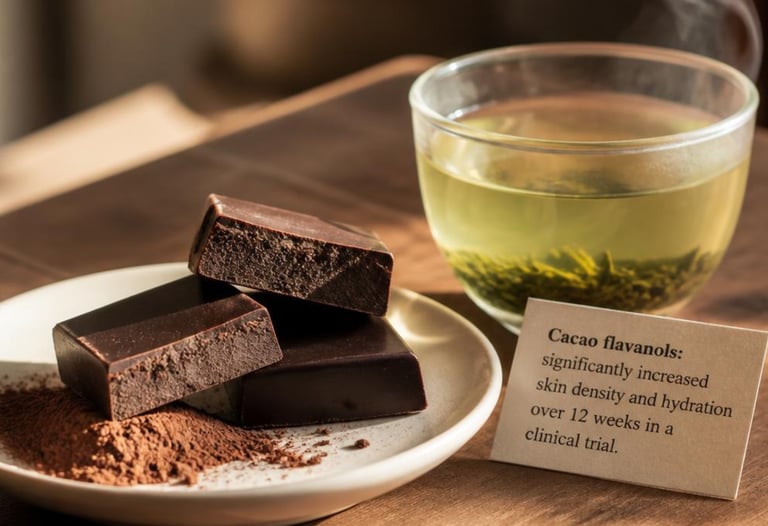
Dark chocolate provides cacao flavanols — polyphenols with some of the most specifically researched skin benefits of any food compound, including documented effects on skin hydration and protection against UV-induced damage.
The mechanism: Research has found that regular cacao flavanol intake over 12 weeks significantly increased skin density and hydration while reducing skin roughness and scaling, with additional research showing flavanols increase the minimal erythemal dose — the amount of UV exposure required to produce skin reddening — indicating a degree of internal photoprotection.
How to incorporate it: One to two squares of 70%+ dark chocolate daily; the flavanol content is concentrated in the cacao solids, not the sugar or milk fat, so higher cacao percentage chocolate provides meaningfully more benefit.
9. Green Tea
Green tea provides EGCG (epigallocatechin gallate), a catechin with extensively researched anti-inflammatory and antioxidant activity specific to skin.
The mechanism: EGCG has been shown to reduce UV-induced oxidative stress in skin cells and to inhibit the matrix metalloproteinase enzymes that break down collagen following UV exposure — directly addressing one of the primary mechanisms of photoaging at a cellular level.
How to incorporate it: Two to three cups daily; brewing for the full recommended time (typically 2–3 minutes) maximises catechin extraction.
10. Water (Adequate Hydration)
Not a food, but the most foundational element of skin health from within. Skin is approximately 64% water, and adequate hydration directly supports skin elasticity and the delivery of every nutrient discussed above to skin tissue.
The mechanism: Dehydration reduces skin turgor (firmness) and can make fine lines more visible. While drinking water alone will not eliminate wrinkles, consistent adequate hydration supports the skin's structural water content and the circulatory delivery of nutrients and oxygen to skin cells.
How to incorporate it: Individual needs vary, but a consistent intake throughout the day — rather than large amounts infrequently — better supports steady hydration status.
What to Moderate for Skin Health
The research connecting diet to skin ageing is not only about what to add — it also identifies dietary patterns that accelerate visible ageing:
Refined sugar and high-glycaemic carbohydrates drive the glycation process described earlier, stiffening collagen and elastin. Excess alcohol dehydrates skin tissue and depletes vitamin A. Highly processed foods high in trans fats and refined oils contribute to the inflammatory burden that accelerates collagen breakdown. None of this requires elimination — moderation alongside the foods above produces a meaningfully different dietary pattern for skin health.
Frequently Asked Questions
How long before I would notice a difference in my skin?
The cacao flavanol research showing improved skin hydration and density used a 12-week intervention period — consistent with how most nutrition-related skin changes work. Skin cell turnover itself takes approximately 4–6 weeks, meaning dietary changes need at least that long to influence newly formed skin tissue. Patience and consistency matter far more than any single meal or short-term change.
Can diet really compete with sunscreen for anti-aging?
No, and this is important to state clearly. UV protection through sunscreen, protective clothing, and sun avoidance during peak hours remains the single most impactful intervention for preventing photoaging — responsible for the majority of visible skin ageing. Dietary antioxidants offer a complementary, internal layer of protection; they do not replace topical sun protection.
Are supplements as effective as food sources?
Whole foods provide nutrients alongside fibre, cofactors, and synergistic compounds that isolated supplements cannot fully replicate — vitamin C from a red pepper comes with carotenoids and flavonoids that may enhance its activity in ways a vitamin C tablet alone does not. Supplements can be useful for addressing a documented deficiency, but whole food sources are the foundation this guide recommends building from.
References and Further Reading
Pilkington SM et al. — Nutrients (2021) — Diet and Skin Ageing — A Review Comprehensive review confirming associations between dietary vitamin C, omega-3, and polyphenol intake with improved skin elasticity, hydration, and reduced photoaging signs.
Heinrich U et al. — Journal of Nutrition (2006) — Cacao Flavanols Improve Skin Hydration and Photoprotection Clinical trial confirming that regular cacao flavanol intake over 12 weeks significantly increased skin density and hydration while improving UV photoprotection markers.
Stahl W and Sies H — American Journal of Clinical Nutrition (2012) — Carotenoids and Photoprotection Research confirming dietary carotenoid accumulation in skin tissue and reduced UV-induced erythema with regular intake.
About the Author
I'm Judith, a wellness enthusiast and Applied Bio Sciences and Biotechnology graduate behind BiteBrightly. With a deep-rooted belief in the healing power of food, my nutrition journey began with a personal transformation — I improved my eyesight through targeted dietary changes. This life-changing experience sparked my mission to empower others by sharing evidence-based insights into food as medicine.
Follow me on Pinterest for daily health tips, recipes, and wellness inspiration.
Important Notice: The information in this article is for educational purposes only and is not intended as medical advice. I am not a medical doctor, dermatologist, or registered dietitian. Diet is one of many factors influencing skin appearance and ageing, alongside genetics, sun exposure, sleep, stress, and skincare practices. It is not a substitute for sun protection or dermatological care. People with specific skin conditions should consult a dermatologist. These statements have not been evaluated by the FDA.
Related Posts
Connect
Join our newsletter for fresh health tips
© 2026. All rights reserved.