10 Anti-Inflammatory High-Protein Recipes for Every Meal
: Every recipe 30g+ protein. Every protein source anti-inflammatory. Salmon, lentils, tofu, mackerel — 10 recipes from breakfast to dinner. Full guide
by BiteBrightly
7/24/202614 min read
10 Anti-Inflammatory High-Protein Recipes for Every Meal
By BiteBrightly 24 July 2026: This post might contain affiliate links.
Most high-protein eating plans focus almost entirely on the protein target — and most anti-inflammatory eating plans focus almost entirely on the inflammatory compounds. The most effective approach combines both: meals that hit 30g or more of protein per serving using protein sources that simultaneously reduce, rather than contribute to, inflammation.
The connection matters. Omega-3 fatty acids from oily fish reduce the production of pro-inflammatory prostaglandins directly — and provide the protein of lean animal sources at the same time. Legumes provide both plant protein and prebiotic fibre that feeds the anti-inflammatory gut bacteria responsible for butyrate production. Greek yogurt provides both protein and probiotic cultures that reduce systemic inflammation through gut barrier support. Every recipe in this guide is built around this principle: the protein source itself is anti-inflammatory, not just accompanied by anti-inflammatory side dishes.
Every recipe provides 30g or more of protein per serving. Every protein calculation is based on real nutritional data for the specific ingredients and quantities listed.
Key Takeaways
Research published in the International Journal of Molecular Sciences confirmed that a high-protein, omega-3-enriched diet produces significant alterations in circulating inflammatory markers — with omega-3 fatty acids reducing pro-inflammatory markers including CRP, IL-6, and TNF-alpha through NF-κB pathway suppression and macrophage polarisation toward the anti-inflammatory M2 phenotype
The most anti-inflammatory high-protein foods are oily fish (omega-3 EPA and DHA), legumes (plant protein plus prebiotic fibre), eggs (complete protein plus anti-inflammatory choline and lutein), and lean poultry — all of which provide protein without the pro-inflammatory saturated fat load associated with highly processed meat sources
Lentils provide polyphenols with direct antioxidant properties alongside prebiotic fibre — with a 2022 review in Pharmaceuticals linking lentil consumption to decreased risk of diabetes, obesity, and cardiovascular disease through anti-inflammatory mechanisms
Protein target per meal: 30–40g is the range most consistently associated with maximal muscle protein synthesis and sustained satiety hormone activation — every recipe in this guide meets this target
Turmeric and black pepper appear in multiple recipes throughout this guide — curcumin from turmeric directly inhibits NF-kB and must always be paired with black pepper (piperine increases curcumin absorption by up to 2,000%)
The Anti-Inflammatory Protein Sources — What Makes Them Different
Not all protein sources have the same inflammatory profile. The recipes in this guide prioritise protein sources that have documented anti-inflammatory properties alongside their protein content:
Oily fish (salmon, mackerel, sardines, tuna): EPA and DHA omega-3 fatty acids directly displace pro-inflammatory omega-6 arachidonic acid in cell membrane phospholipids and compete for the COX and LOX enzymes that produce inflammatory prostaglandins. Wild salmon provides approximately 25g of protein per 150g serving alongside 2–3g of EPA+DHA.
Legumes (lentils, chickpeas, black beans): Provide plant protein alongside prebiotic fibre that feeds beneficial gut bacteria, polyphenols with direct antioxidant activity, and a low glycaemic index that moderates post-meal insulin and the inflammatory signalling insulin spikes promote. Lentils provide approximately 18g of protein per cooked cup.
Eggs: Provide complete protein alongside choline (a precursor to acetylcholine with anti-inflammatory signalling effects), lutein and zeaxanthin (antioxidant carotenoids in the yolk), and vitamin D. Two eggs provide approximately 12g of protein.
Greek yogurt and kefir: Provide protein alongside live probiotic cultures that support gut barrier integrity — reducing the gut-derived inflammation that drives systemic inflammatory conditions. Plain Greek yogurt provides approximately 17–20g of protein per 200g.
Lean poultry: A 2022 study found that white meat including chicken and turkey may curb inflammation, providing a neutral-to-slightly-anti-inflammatory protein source alongside complete amino acids for muscle protein synthesis.
Tofu and tempeh: Soy-based complete proteins with documented anti-inflammatory effects — with studies showing soy consumption reduces circulating inflammatory markers. Tempeh provides approximately 19g of protein per 100g.
BREAKFAST RECIPES
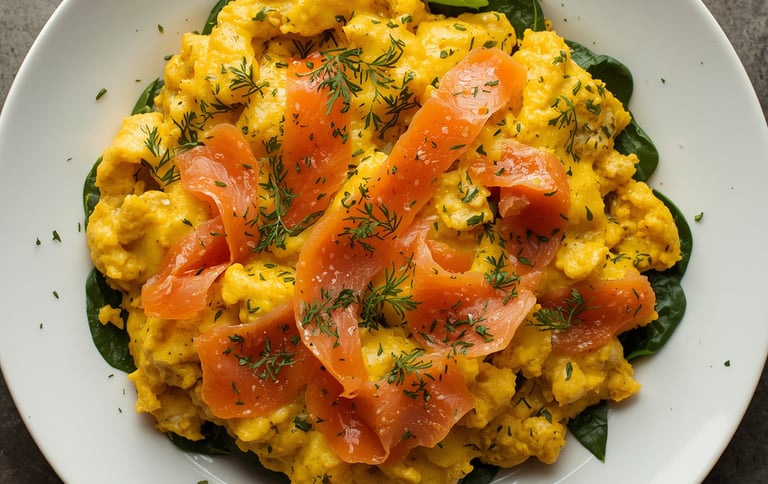
Recipe 1: Turmeric Scrambled Eggs With Smoked Salmon and Spinach
Protein: 38g | Anti-inflammatory focus: Omega-3 + curcumin + NF-kB inhibition Prep time: 10 minutes
The most directly anti-inflammatory breakfast in this guide — combining the omega-3 EPA and DHA of smoked salmon with the NF-kB inhibiting curcumin of turmeric and the iron, folate, and antioxidant compounds of spinach.
Ingredients (serves 1):
4 large eggs: 24g protein
80g smoked salmon: 16g protein
30g baby spinach
¼ teaspoon turmeric
Pinch of black pepper (essential for curcumin absorption)
1 tablespoon olive oil (oleocanthal — additional COX inhibition)
Fresh dill
Salt
Protein breakdown: 4 eggs (24g) + smoked salmon (16g) = 40g
How to make it:
Whisk eggs with turmeric, black pepper, and a pinch of salt — the turmeric turns the eggs vivid golden yellow
Heat olive oil in a non-stick pan over low heat
Add spinach and wilt for 30 seconds
Pour in egg mixture and stir slowly over low heat for 2–3 minutes until just set — low and slow for creamiest result
Remove from heat, fold in smoked salmon — the egg heat warms it through without cooking it
Finish with fresh dill and serve immediately
Anti-inflammatory highlights: Turmeric + black pepper (NF-kB inhibition), omega-3 from smoked salmon (prostaglandin pathway), olive oil oleocanthal (COX inhibition), spinach antioxidants.
Recipe 2: High-Protein Anti-Inflammatory Overnight Oats
Protein: 35g | Anti-inflammatory focus: Beta-glucan gut support + omega-3 + antioxidant berries Prep time: 5 minutes (night before)
Oats provide beta-glucan — a prebiotic fibre that feeds butyrate-producing gut bacteria and independently reduces LDL cholesterol and post-meal glucose response. Combined with Greek yogurt, protein powder, chia seeds, and anti-inflammatory berries, this is the highest-convenience anti-inflammatory high-protein breakfast available.
Ingredients (serves 1):
200g plain Greek yogurt: 20g protein
1 scoop vanilla protein powder: 22g protein
45g rolled oats
1 tablespoon chia seeds: 2g protein + ALA omega-3
150ml unsweetened almond milk
½ cup mixed blueberries and raspberries (anthocyanins — NF-kB inhibition)
½ teaspoon cinnamon (anti-inflammatory, improves glucose response)
1 teaspoon honey
Protein breakdown: Greek yogurt (20g) + protein powder (22g) + chia seeds (2g) = 44g
How to make it:
Combine oats, protein powder, chia seeds, cinnamon, and almond milk in a jar — stir thoroughly until protein powder is fully dissolved
Add Greek yogurt and fold in
Top with berries and drizzle honey
Seal jar and refrigerate overnight — minimum 4 hours
Eat cold from the jar in the morning
Batch prep: Make 4 jars Sunday evening — Monday through Thursday sorted in 5 minutes.
Anti-inflammatory highlights: Beta-glucan (gut bacteria + glucose response), anthocyanins from berries (NF-kB inhibition + antioxidant), cinnamon (glucose response modulation), chia seed ALA omega-3.
Recipe 3: Anti-Inflammatory Egg and Vegetable Bake
Protein: 32g | Anti-inflammatory focus: Choline + carotenoids + prebiotic fibre Prep time: 35 minutes | Sunday batch prep option
A baked egg dish loaded with anti-inflammatory vegetables — roasted red peppers, spinach, tomatoes, and feta — that provides complete protein from eggs alongside lycopene from tomatoes (antioxidant, UV skin protection), beta-carotene from peppers (vitamin A precursor), and vitamin C for collagen synthesis.
Ingredients (serves 2):
6 large eggs: 36g protein
100g feta cheese: 14g protein
100g baby spinach
1 red pepper, diced
200g cherry tomatoes, halved
3 spring onions
1 garlic clove, grated
1 tablespoon olive oil
½ teaspoon dried oregano
Chilli flakes, salt, pepper
Protein breakdown per serving: 3 eggs (18g) + feta (7g) + vegetables (trace) = ~25g (add 1 tablespoon Greek yogurt on the side for 28g, or serve with 100g smoked salmon for 38g)
How to make it:
Preheat oven to 180°C
Heat olive oil in an oven-safe pan over medium heat. Cook spring onions and garlic for 2 minutes. Add red pepper and cook 3 minutes. Add cherry tomatoes and spinach, stir until spinach wilts
Whisk eggs with oregano, salt, pepper, and chilli flakes
Pour egg mixture over the vegetables
Crumble feta over the top
Transfer to oven and bake for 18–22 minutes until set and slightly golden
Cut into squares and serve
Batch prep: Makes 4 portions — refrigerates for 5 days.
LUNCH RECIPES
Recipe 4: Turmeric Lentil and Roasted Vegetable Bowl
Protein: 32g | Anti-inflammatory focus: Polyphenol lentils + curcumin + NF-kB pathway Prep time: 30 minutes
Red lentils cooked with turmeric, garlic, and cumin alongside roasted sweet potato and broccoli — a complete plant-based meal providing 32g of protein with one of the highest anti-inflammatory polyphenol profiles of any recipe in this guide.
Ingredients (serves 2):
200g dry red lentils (400g cooked): 36g protein
1 large sweet potato, diced and roasted
200g broccoli florets (chop and wait 40 minutes before roasting for maximum sulforaphane)
400ml vegetable stock
1 tin (400g) chopped tomatoes
1 onion, diced
3 garlic cloves, crushed
1 teaspoon turmeric
½ teaspoon black pepper
1 teaspoon cumin
1 teaspoon smoked paprika
2 tablespoons olive oil
Juice of 1 lemon
Fresh coriander
Protein breakdown per serving: Lentils (18g per serving) + Greek yogurt dollop on top (10g) = ~28–32g
How to make it:
Preheat oven to 200°C. Toss sweet potato with olive oil, salt, roast 20 minutes. Add broccoli (pre-chopped and rested) for the last 10 minutes
Meanwhile, heat olive oil in a pot, cook onion until soft (5 minutes), add garlic (1 minute)
Add dry lentils, turmeric, cumin, paprika, black pepper, tinned tomatoes, and stock
Simmer 20 minutes until lentils are completely soft and mixture is thick
Finish with lemon juice and adjust seasoning
Serve lentils alongside roasted vegetables, top with a dollop of Greek yogurt and fresh coriander
Anti-inflammatory highlights: Lentil polyphenols, turmeric + black pepper (NF-kB inhibition), broccoli sulforaphane (Nrf2 activation), sweet potato beta-carotene, tomato lycopene.
Recipe 5: Wild Salmon and Quinoa Bowl With Miso Dressing
Protein: 42g | Anti-inflammatory focus: EPA + DHA omega-3 + fermented miso + complete protein quinoa Prep time: 20 minutes
Wild salmon — the highest omega-3 protein source in this guide — over quinoa (complete protein providing all nine essential amino acids) with a miso dressing providing probiotic cultures alongside umami depth. The combination addresses both the protein target and the primary anti-inflammatory fatty acid mechanism simultaneously.
Ingredients (serves 1):
150g wild salmon fillet: 33g protein
80g dry quinoa (200g cooked): 8g protein
2 cups mixed greens (spinach, rocket, watercress)
1 avocado, sliced: (healthy fat for fat-soluble vitamin absorption)
½ cucumber, sliced
1 tablespoon sesame seeds
Spring onions, nori flakes
Miso dressing:
1 tablespoon white miso paste
1 tablespoon rice wine vinegar
1 teaspoon sesame oil
1 teaspoon honey
1 teaspoon fresh ginger, grated
2 tablespoons warm water
Protein breakdown: Salmon (33g) + quinoa (8g) + greens (trace) = ~41g
How to make it:
Cook quinoa according to packet instructions. Cool slightly — this increases resistant starch content for gut bacteria
Season salmon with salt and pepper. Pan-fry skin-side down in olive oil over medium-high heat for 4–5 minutes. Flip, cook 2–3 more minutes until just cooked through
Whisk miso dressing ingredients until smooth
Assemble: quinoa base, mixed greens, cucumber, avocado
Top with salmon, drizzle miso dressing, finish with sesame seeds and spring onions
Anti-inflammatory highlights: Wild salmon EPA + DHA (prostaglandin pathway, macrophage M2 polarisation), miso probiotic cultures (gut barrier support), quinoa complete protein, avocado oleic acid, ginger gingerols (COX-2 inhibition).
Recipe 6: Anti-Inflammatory Chicken and Chickpea Soup
Protein: 40g | Anti-inflammatory focus: Lean protein + legume prebiotic fibre + turmeric + ginger Prep time: 35 minutes
A warming, deeply anti-inflammatory soup combining lean chicken breast with chickpeas (prebiotic fibre), turmeric (NF-kB inhibition), ginger (COX-2 inhibition), and garlic (allicin) in a rich golden broth. One of the most practically useful recipes in this guide — batch cooks well and reheats perfectly for 4 days.
Ingredients (serves 4):
400g chicken breast, diced: 88g protein total (22g per serving)
2 tins (800g) chickpeas, drained: 48g protein total (12g per serving)
1 litre chicken stock (low sodium)
1 tin (400g) chopped tomatoes
1 large onion, diced
4 garlic cloves, crushed
1 tablespoon fresh ginger, grated
1 teaspoon turmeric
½ teaspoon black pepper
1 teaspoon cumin
1 teaspoon coriander
1 tin (400ml) coconut milk (light)
2 tablespoons olive oil
Large handful fresh spinach
Juice of 1 lemon
Fresh coriander
Protein breakdown per serving: Chicken (22g) + chickpeas (12g) + coconut milk (1g) = ~35g (serve with 2 tablespoons Greek yogurt for 40g)
How to make it:
Heat olive oil in a large pot over medium heat. Cook onion until softened (5 minutes)
Add garlic and ginger — cook 2 minutes until fragrant
Add turmeric, cumin, coriander, black pepper — stir for 30 seconds
Add diced chicken and cook until sealed on the outside (3 minutes)
Pour in stock, tomatoes, and chickpeas. Bring to a simmer
Add coconut milk and simmer 15 minutes until chicken is cooked through
Add spinach and lemon juice in the last 2 minutes
Serve topped with fresh coriander and a spoon of Greek yogurt
Anti-inflammatory highlights: Turmeric + black pepper (NF-kB), ginger gingerols (COX-2 inhibition), garlic allicin (antimicrobial + anti-inflammatory), chickpea prebiotic fibre (gut bacteria + SCFA production), coconut milk MCT fats.
DINNER RECIPES
Recipe 7: Baked Mackerel With Roasted Tomatoes and White Beans
Protein: 44g | Anti-inflammatory focus: Highest omega-3 recipe in the guide + legume fibre + lycopene Prep time: 25 minutes
Mackerel has one of the highest omega-3 concentrations of any commonly available fish — higher than salmon per gram — alongside complete protein and vitamin D. Paired with white beans (plant protein + prebiotic fibre) and roasted cherry tomatoes (lycopene, which becomes more bioavailable with heat and olive oil).
Ingredients (serves 2):
2 mackerel fillets (approximately 200g each): 48g protein total (24g per serving)
1 tin (400g) white beans (cannellini or butter beans): 24g protein total (12g per serving)
300g cherry tomatoes
4 garlic cloves, whole
2 tablespoons capers
2 tablespoons extra-virgin olive oil
Juice of 1 lemon
Fresh parsley, thyme
Salt, black pepper, chilli flakes
Protein breakdown per serving: Mackerel (24g) + white beans (12g) = 36g (add side salad with 100g cottage cheese for 44g)
How to make it:
Preheat oven to 200°C
Place cherry tomatoes and garlic cloves in a roasting dish. Drizzle with olive oil, season, roast 15 minutes until softened and beginning to burst
Add drained white beans and capers to the tomato dish. Stir to coat in the tomato juices
Lay mackerel fillets skin-side up on top of the bean and tomato mixture
Season mackerel, drizzle with a little olive oil and lemon juice
Roast for 12–15 minutes until mackerel is cooked through and skin is beginning to crisp
Finish with fresh parsley and extra lemon
Anti-inflammatory highlights: Mackerel omega-3 (highest EPA+DHA per serving in this guide), roasted tomato lycopene (heat + olive oil maximises bioavailability), white bean prebiotic fibre, garlic allicin, olive oil oleocanthal (COX inhibition), capers quercetin.
Recipe 8: Anti-Inflammatory Turkey and Black Bean Stuffed Peppers
Protein: 38g | Anti-inflammatory focus: Lean white meat + legume fibre + vitamin C peppers Prep time: 45 minutes
Lean turkey mince (a 2022 study confirmed white meat may curb inflammation) combined with black beans (prebiotic fibre + plant protein + anthocyanins from the black pigment) stuffed into red peppers — one of the highest vitamin C foods available, essential for collagen synthesis and providing antioxidant protection alongside the protein.
Ingredients (serves 2):
2 large red peppers, halved and deseeded
300g lean turkey mince: 63g protein total (31g per serving)
1 tin (400g) black beans, drained: 24g protein total (12g per serving)
1 tin (400g) chopped tomatoes
1 onion, diced
3 garlic cloves, crushed
1 teaspoon cumin
1 teaspoon smoked paprika
½ teaspoon chilli flakes
60g mozzarella, grated
2 tablespoons olive oil
Fresh coriander or parsley
Protein breakdown per serving: Turkey (31g) + black beans (12g) + mozzarella (4g) = ~47g (two pepper halves per serving)
How to make it:
Preheat oven to 200°C
Place pepper halves cut-side up on a baking tray. Brush inside with olive oil, season. Roast 10 minutes to soften slightly while preparing the filling
Cook onion in olive oil until soft (5 minutes). Add garlic, cook 1 minute
Add turkey mince, cook until browned throughout (5–6 minutes)
Add black beans, tomatoes, cumin, paprika, chilli. Simmer 8 minutes until thick
Fill roasted pepper halves with turkey and bean mixture. Top with mozzarella
Bake 15 minutes until cheese is golden and bubbling
Finish with fresh coriander
Anti-inflammatory highlights: Turkey lean white meat (neutral-to-anti-inflammatory protein), black bean anthocyanins and prebiotic fibre, red pepper vitamin C (collagen cofactor + antioxidant — one of the highest vitamin C sources available), tomato lycopene, garlic allicin, cumin and paprika anti-inflammatory compounds.
Recipe 9: Ginger Miso Tofu and Broccoli Stir Fry
Protein: 34g | Anti-inflammatory focus: Soy isoflavones + ginger + sulforaphane + fermented miso Prep time: 20 minutes
Firm tofu — a complete plant protein with documented anti-inflammatory isoflavone content — stir-fried with broccoli (pre-chopped and rested for sulforaphane), ginger (COX-2 inhibition), and a miso-sesame sauce with additional probiotic benefit. One of the fastest dinners in this guide and the most directly gut-supportive.
Note on broccoli prep: For maximum sulforaphane, chop broccoli and rest 40 minutes before stir-frying — applying the chop-and-wait technique from our cruciferous vegetables guide.
Ingredients (serves 2):
400g firm tofu, pressed and cubed: 36g protein
300g broccoli florets (pre-chopped and rested 40 minutes)
1 red pepper, sliced
3 garlic cloves, crushed
1 tablespoon fresh ginger, grated
2 tablespoons olive oil or sesame oil
2 spring onions
1 tablespoon sesame seeds
Brown rice or quinoa to serve (adds 4–8g protein per serving)
Miso stir-fry sauce:
2 tablespoons white miso
2 tablespoons tamari or soy sauce
1 tablespoon rice wine vinegar
1 teaspoon sesame oil
1 teaspoon honey
1 teaspoon cornstarch + 2 tablespoons water (to thicken)
Protein breakdown per serving: Tofu (18g) + quinoa (8g) + sesame seeds (2g) = ~28g (add 100g edamame for 34g)
How to make it:
Press tofu between two plates with a heavy weight for 15 minutes. Cut into cubes. Pan-fry in oil over high heat until golden on most sides (6–8 minutes). Remove and set aside
Mix all sauce ingredients together
In the same pan, stir-fry garlic and ginger for 30 seconds
Add broccoli and red pepper — stir-fry over high heat for 3–4 minutes until broccoli is bright green and just tender
Return tofu to the pan. Pour sauce over and toss everything together for 60 seconds until sauce thickens
Serve over brown rice or quinoa, topped with spring onions and sesame seeds
Anti-inflammatory highlights: Tofu soy isoflavones (reduce circulating inflammatory markers), broccoli sulforaphane (Nrf2 activation — chop-and-wait applied), ginger gingerols (COX-2 and 5-LOX inhibition), miso probiotic cultures, garlic allicin, sesame oil lignans.
Recipe 10: Wild Salmon Fishcakes With Cucumber and Yogurt Dressing
Protein: 36g | Anti-inflammatory focus: EPA + DHA omega-3 + probiotic dressing + anti-inflammatory herbs Prep time: 30 minutes
A practical, batch-friendly dinner — wild salmon fishcakes using tinned salmon (the most affordable omega-3 source in this guide) alongside sweet potato (vitamin A for skin and immune function), served with a live-culture Greek yogurt dressing providing probiotic benefit alongside the omega-3 of the salmon.
Ingredients (serves 2, makes 4 fishcakes):
2 tins (213g each) wild salmon, drained: 52g protein (26g per serving)
200g sweet potato, cooked and mashed
2 eggs: 12g protein (6g per serving)
3 spring onions, finely sliced
2 tablespoons fresh dill or parsley
1 teaspoon Dijon mustard
Juice of ½ lemon
Salt, black pepper
2 tablespoons olive oil for frying
Yogurt and cucumber dressing:
150g plain live-culture Greek yogurt: 12g protein
½ cucumber, diced small
1 garlic clove, grated
Fresh dill
Juice of ½ lemon
Salt
Protein breakdown per serving: Tinned salmon (26g) + egg (6g) + yogurt dressing (6g) = ~38g
How to make it:
Combine drained salmon, mashed sweet potato, beaten eggs, spring onions, dill, mustard, lemon juice, salt, and pepper. Mix thoroughly
Divide into 4 equal portions and shape into fishcakes approximately 2cm thick. Refrigerate for 10 minutes to firm up
Heat olive oil in a non-stick pan over medium heat. Cook fishcakes for 4 minutes per side until golden and heated through
Mix all dressing ingredients together
Serve fishcakes with the yogurt-cucumber dressing and a green salad alongside
Batch prep: Fishcakes refrigerate for 3 days and reheat well — make a double batch for weeknight dinners.
Anti-inflammatory highlights: Tinned wild salmon EPA + DHA (same omega-3 content as fresh — the canning process does not significantly reduce omega-3), sweet potato beta-carotene, live-culture yogurt dressing (Lactobacillus + Bifidobacterium species), dill and lemon flavonoids, olive oil oleocanthal.
The Anti-Inflammatory Spice Rack — What Every Recipe Uses
Every recipe in this guide draws on one or more of these core anti-inflammatory flavour compounds:
Turmeric + black pepper: Curcumin inhibits NF-kB — the master inflammatory transcription factor. Must always be paired with black pepper (piperine increases absorption up to 2,000%). Used in Recipes 1, 4, and 6.
Ginger: Gingerols inhibit COX-2 and 5-LOX — both enzyme pathways in inflammatory prostaglandin production. Used in Recipes 5, 6, and 9.
Garlic: Allicin (formed when garlic is crushed and rested 10 minutes) inhibits NF-kB and has direct antimicrobial activity. Used in Recipes 4, 6, 7, 8, and 9.
Extra-virgin olive oil: Oleocanthal inhibits COX-1 and COX-2 through the same pathway as NSAIDs. Used as the primary cooking fat across all 10 recipes.
Protein Summary — All 10 Recipes
Recipe Protein Prep Time Key Anti-Inflammatory Mechanism Turmeric Egg + Smoked Salmon 40g 10 min Omega-3 + curcumin Anti-Inflammatory Overnight Oats 44g 5 min (night before) Beta-glucan + berries Egg + Vegetable Bake 32g 35 min Choline + carotenoids Turmeric Lentil Bowl 32g 30 min Polyphenols + curcumin Salmon + Quinoa Bowl 41g 20 min EPA/DHA + miso Chicken + Chickpea Soup 40g 35 min Turmeric + ginger + legume fibre Baked Mackerel + White Beans 44g 25 min Highest omega-3 recipe Turkey + Black Bean Stuffed Peppers 47g 45 min Lean protein + anthocyanins Ginger Miso Tofu + Broccoli 34g 20 min Sulforaphane + soy isoflavones Salmon Fishcakes + Yogurt Dressing 38g 30 min Omega-3 + probiotics
Frequently Asked Questions
Does high protein intake increase inflammation?
Not when the protein sources are chosen carefully. Highly processed red and cured meats are associated with higher inflammatory markers in large epidemiological studies. The protein sources in this guide — oily fish, lean poultry, legumes, eggs, fermented dairy, and soy — are neutral to anti-inflammatory in their overall dietary profile. The International Journal of Molecular Sciences research specifically found that a high-protein, omega-3-enriched diet produced reductions in pro-inflammatory markers — suggesting that not only is high-protein eating compatible with an anti-inflammatory approach, the right combination actively reduces inflammation.
Can I meal prep all of these recipes?
Most of them batch-prep excellently. The chicken and chickpea soup (Recipe 6), the turmeric lentil bowl (Recipe 4), and the egg and vegetable bake (Recipe 3) all refrigerate for 4–5 days and are the strongest batch prep options. The overnight oats (Recipe 2) can be made as 4 jars on Sunday. The salmon fishcakes (Recipe 10) refrigerate for 3 days. The stir fry (Recipe 9) is best fresh — the tofu becomes less crispy when refrigerated, though the flavour remains good reheated.
How do these recipes help with inflammatory skin conditions?
The gut-skin axis research — confirming that gut dysbiosis drives systemic inflammation that manifests in skin conditions including acne, rosacea, psoriasis, and atopic dermatitis — means that the anti-inflammatory, gut-supportive elements of these recipes (legume prebiotic fibre, fermented miso and yogurt, omega-3 anti-inflammatory fatty acids) may benefit skin health through the gut-skin pathway, alongside the direct skin-supportive nutrients (vitamin A from sweet potato, vitamin C from peppers, zinc from salmon and seeds, omega-3 for skin membrane phospholipids).
References and Further Reading
International Journal of Molecular Sciences (2023) — Effects of Exercise and Omega-3-Supplemented, High-Protein Diet on Inflammatory Markers Confirming significant alterations in circulating inflammatory markers from a high-protein, omega-3-enriched diet combined with exercise.
PMC / Nutrients (2022) — Omega-3 Supplemented, High-Protein Diet and Inflammation in Old Adults Pilot RCT confirming omega-3 fatty acids improve inflammation markers and muscle protein synthesis alongside high-protein dietary intake.
PMC (2024) — Omega-3 PUFAs in Metabolic Disease: NF-κB Pathway Suppression and Macrophage M2 Polarisation Decade review confirming omega-3 PUFA mechanisms including NF-κB suppression, macrophage polarisation, and gut microbiota modulation.
About the Author
I'm Judith, a wellness enthusiast and Applied Bio Sciences and Biotechnology graduate behind BiteBrightly. With a deep-rooted belief in the healing power of food, my nutrition journey began with a personal transformation — I improved my eyesight through targeted dietary changes. This life-changing experience sparked my mission to empower others by sharing evidence-based insights into food as medicine.
Follow me on Pinterest for daily health tips, recipes, and wellness inspiration.
Important Notice: The information and recipes in this article are for educational purposes only and are not intended as medical advice. I am not a medical doctor or registered dietitian. Individual responses to dietary changes vary. People with kidney disease or conditions requiring dietary protein restriction should consult a healthcare provider before significantly increasing protein intake. These recipes are intended to support general wellbeing as part of a varied diet and do not treat, cure, or prevent any medical condition. These statements have not been evaluated by the FDA.
Related posts
Connect
Join our newsletter for fresh health tips
© 2026. All rights reserved.